
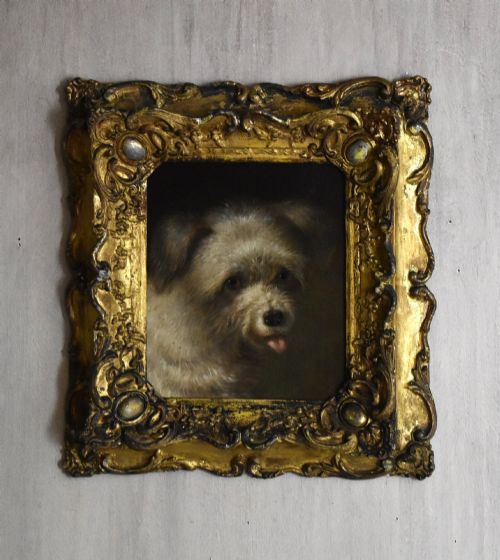


Canvas Pet Artwork
Canvas pet artwork captures historical bonds with dogs, cats, and birds through oil on canvas.
Canvas Pet Artwork
Canvas pet artwork comprises oil paintings depicting dogs, cats, rabbits, and birds alongside children or owners. These pieces span from the eighteenth century through the nineteenth century and into the mid twentieth century.
A buyer examining this selection encounters Victorian canine portraits and domestic scenes alongside Regency depictions. The physical medium relies consistently on oil paint applied to stretched canvas, frequently housed within giltwood and gesso frames.
Evaluating Quality and Execution
Quality rests upon the artist's ability to render animal anatomy, facial expression, and character with convincing realism. Superior brushwork defines individual hairs and lifelike glints in the eyes rather than relying on stiff formulaic strokes.
The sophistication of the composition and the condition of the original canvas surface distinguish finer works. Evidence of careful handling, minimal restoration, and harmonious framing elevates an example above simpler provincial output.
Current listings feature oil on canvas mediums framed in giltwood and gesso, spanning the eighteenth to the twentieth centuries.
Martin Theodore Ward·William Barraud·Agnes Augusta Talboys·Christian Lindner·John Henry Dell·M.E.Hankinson·Valentine Thomas Garland·Florence Mabel Hollams·Philip Eustace Stretton·Samuel John Carter·Frank Owen Salisbury
The Canvas Pet Artwork Glossary
- Oil on Canvas
- A painting technique using pigment suspended in a drying oil medium applied to woven canvas fabric. This combination allows for rich blending and enduring colour longevity.
- Giltwood
- Wood that has been coated with a thin layer of gold leaf or metallic powder. It provides decorative framing characteristic of period fine art.
- Gesso
- A plaster-like mixture applied to wooden frames as a smooth base for gilding. It enables crisp carved details to emerge beneath the gold finish.
- Genre Painting
- Artwork depicting scenes from everyday life, often featuring domestic animals and children. These compositions tell a narrative story about human and animal companionship.
- Provincial School
- Art created by regional painters working outside major metropolitan academies. These pieces often display charmingly direct observation and local character.
Canvas Pet Artwork: Frequently Asked Questions
What periods do these paintings date from?
The works span from the eighteenth century through the Victorian era and into the early twentieth century. Most examples cluster within the nineteenth century.
Creators ranged from provincial painters to established academic artists working in Britain and Europe.
How were these artworks originally displayed?
Owners hung these framed oil paintings in domestic interiors, parlours, and country houses to celebrate favoured animals. They served as personal tributes to prized pets and sporting champions.
Original giltwood frames were selected to complement the dark tones and rich palettes of the oil medium.
How do I care for an oil painting on canvas?
Keep the canvas away from direct sunlight and dramatic fluctuations in room temperature or humidity. This prevents the oil paint and wooden stretcher from warping or cracking.
Dust the surface gently with a soft dry brush and avoid using chemical cleaning agents.
How do I identify a Victorian animal portrait?
Victorian examples frequently display detailed realism, often focusing on named dogs, prize-winning greyhounds, or pampered domestic pets. The style prioritises sentimental narrative and accurate anatomical depiction.
Frames from this era often feature heavy gesso moulding finished in gilt wood.