



Original Animal Fine Art
Original animal fine art captures the character of beasts and birds through the skilled hands of painters and printmakers.
Original Animal Fine Art
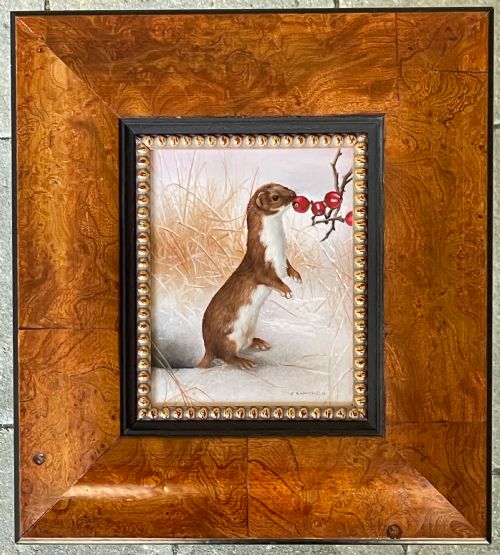
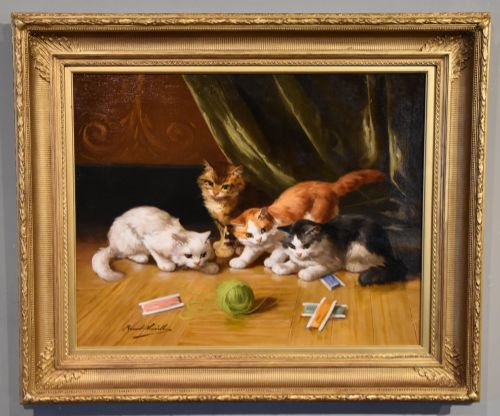
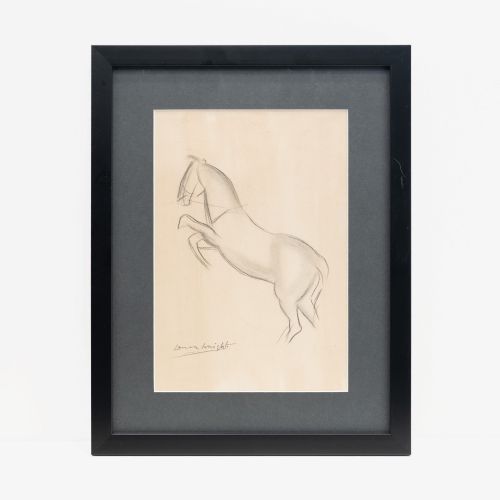
Original animal fine art brings together painted and etched depictions of creatures ranging from farm livestock to domestic pets and wild animals. Buyers searching for original animal fine art encounter works spanning the nineteenth century through the mid twentieth century, reflecting shifting tastes in animal portraiture.
The selection here leans heavily towards traditional oil paintings on canvas and panel, alongside occasional works in oil pastels and drypoint etching. Artists from various stylistic backgrounds, including British Naturalism and nineteenth century Romanticism, rendered these subjects with careful attention to anatomy and expression.
Materials and Methods
Artists relied primarily on oil paint applied to stretched canvas, wooden panels, or paper, building rich textures and deep tones. Oil paint allowed creators to render the sheen of a horse coat or the soft fur of a cat with convincing depth.
Printmakers utilised techniques such as drypoint etching on paper to create fine lines and tonal depth, as seen in works featuring detailed animal subjects. Many of these pieces retain their period frames, often constructed from wood with gilt enrichment.
The listings span from the nineteenth century through the 1960s, featuring oil, canvas, paper, and gilt wood materials.
Judging Quality
Quality in these works rests upon the artist's command of animal anatomy, posture, and living presence rather than mere technical finish. Superior pieces capture a convincing sense of movement and individual temperament, particularly in portraits of dogs, cats, and farm animals.
The handling of light and background detail further separates finer compositions from more formulaic examples. Works by documented painters and printmakers generally demonstrate a surer grasp of proportion and texture.
Eugène Verboeckhoven·Carl Whitfield·Alfred Arthur Brunel de Neuville·Dame Laura Knight·William McCance·Claude Cardon·Herbert Dicksee
The Original Animal Fine Art Glossary
- Oil painting
- A work created using pigments bound in a drying oil medium, typically applied to canvas or panel. This medium dominated fine art production through the nineteenth and twentieth centuries.
- Drypoint etching
- A printmaking process where an artist scratches an image directly onto a metal plate with a sharp needle. This technique produces velvety lines due to the burr raised along the groove.
- Oil pastels
- A painting and drawing medium formed from pigment mixed with a binder of oil and wax. It allows for direct application of rich colour onto paper supports.
- Canvas
- A heavy woven fabric stretched across a wooden frame to serve as a sturdy support for oil paintings. It provides a flexible yet durable surface for brushwork.
- Gilt wood
- Wood decorated with a thin layer of gold leaf or metallic gilt paint. Period frames often feature this finish to complement the artwork within.
Original Animal Fine Art: Frequently Asked Questions
How do I date an oil painting?
Dating relies on stylistic clues, framing methods, and the physical characteristics of the canvas or panel. Evidence from signatures and historical records often helps narrow the period.
Comparing brushwork and subject matter to known dated examples by similar artists provides further context for the creation date.
What subjects are most common?
Domestic pets such as dogs and cats appear frequently alongside horses, farm livestock, and occasional wildlife. Artists often portrayed these animals with distinct individual personalities.
Farmyard scenes combining animals with human figures also form a significant portion of available works.
How should I display oil paintings?
Keep paintings away from direct sunlight and sources of extreme heat to protect the oil pigments and canvas. Stable indoor humidity prevents warping of wooden panels and stretcher frames.
Ensure the artwork hangs securely using appropriate wall fixings suited to the weight of the frame.
Are etchings considered original works?
Drypoint etchings produced and signed by the artist are classified as original fine art prints. The artist creates the plate directly, making each impression an authentic piece.
Numbered editions and artist proofs demonstrate the limited nature of these print runs.