

Framed Dog Art
Framed dog art brings together centuries of portraiture and sporting subjects, capturing everything from working terriers to aristocratic hounds in oil, watercolour and print.
Framed Dog Art
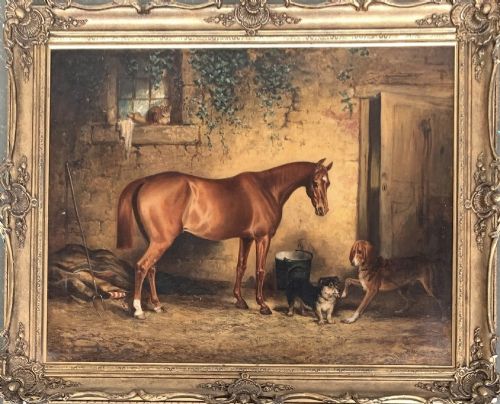
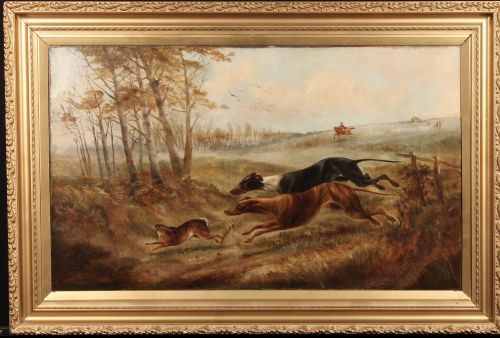
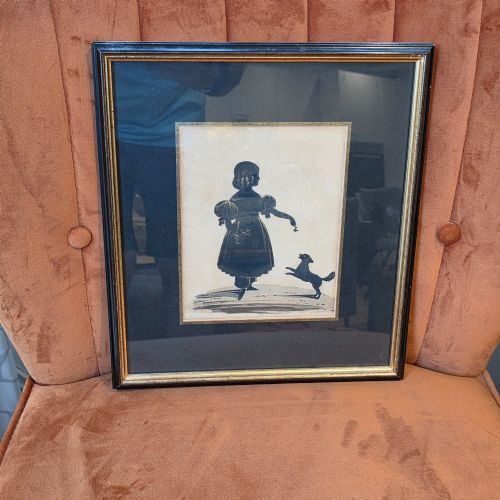
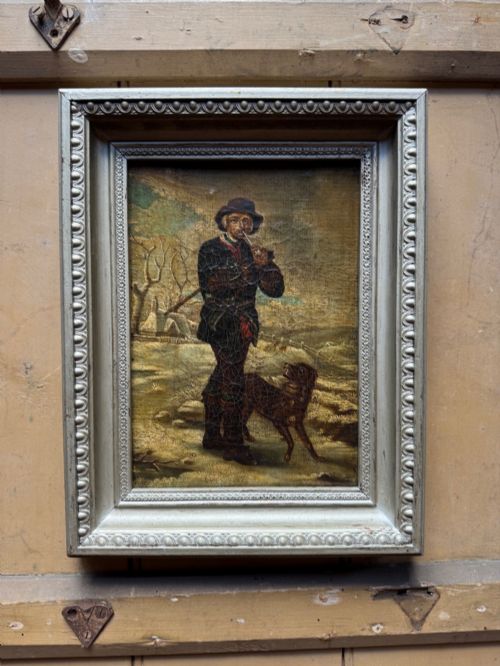
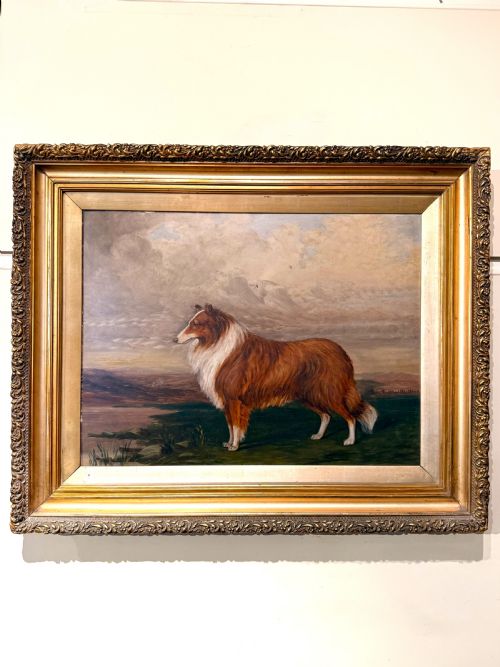
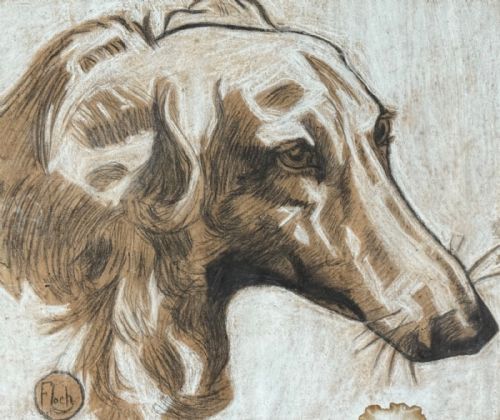
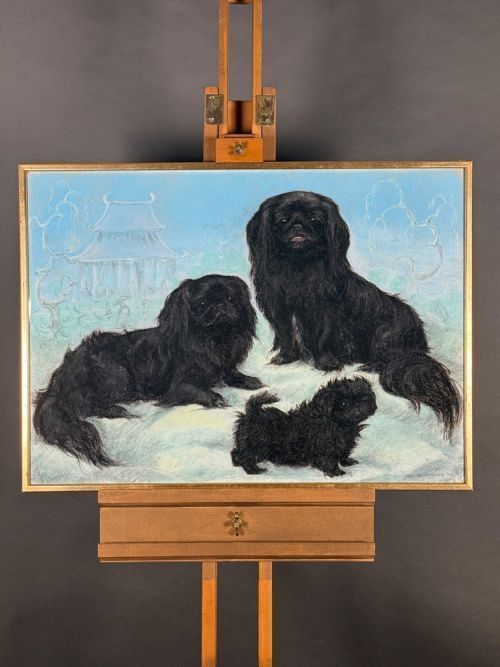
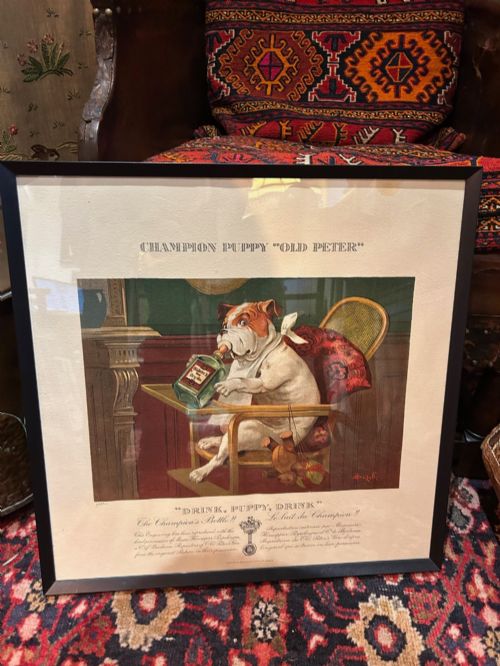
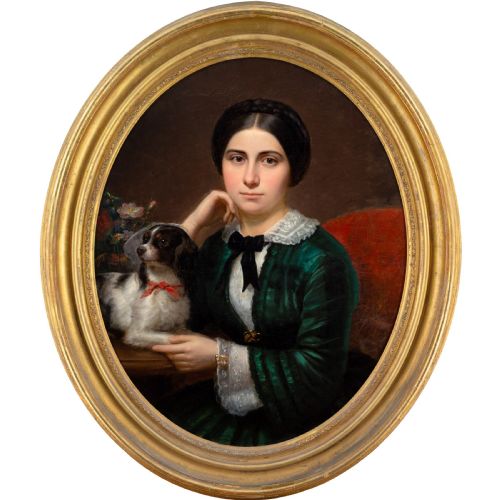
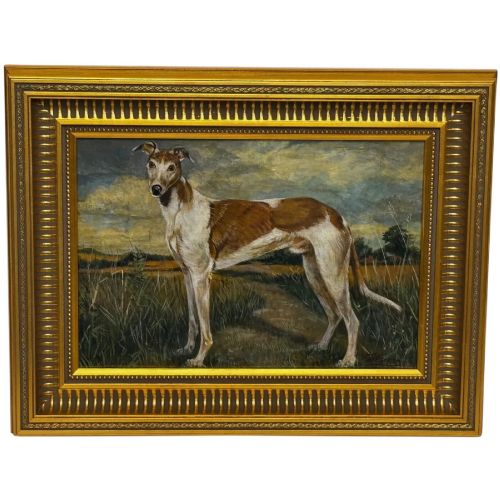
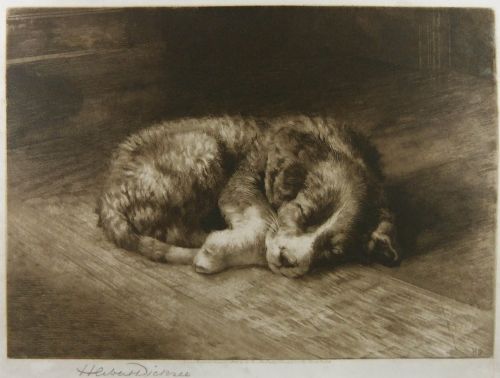
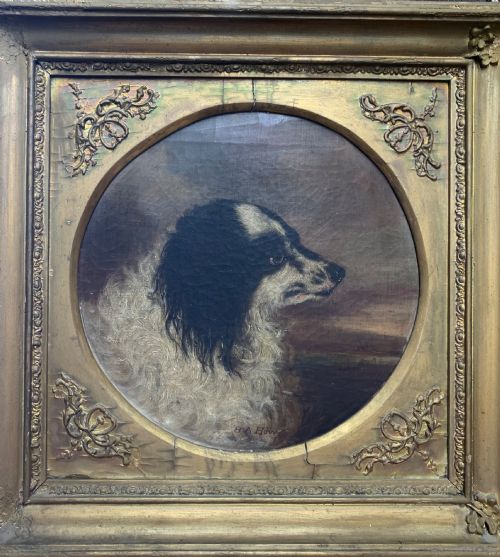
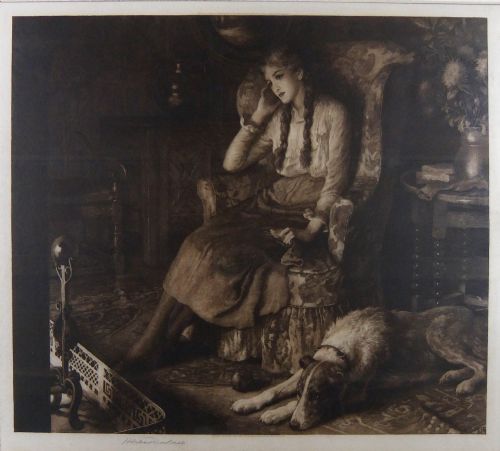
When you search for framed dog art, you encounter a varied selection of works ranging from detailed 19th-century oil portraits to early 20th-century etchings and pastel studies. The most common pieces on this page are 19th-century oil paintings and period prints that place dogs either as standalone subjects or alongside their owners.
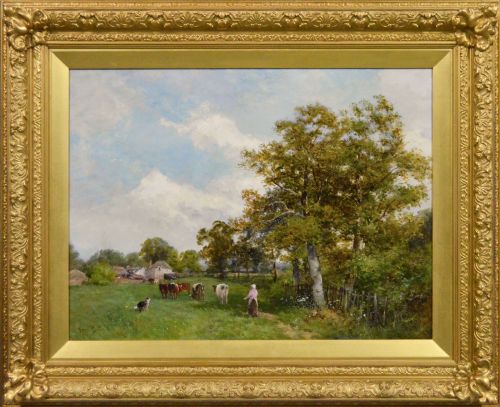
These works span several distinct styles, including Victorian sporting art, British sporting art, and 19th-century realism. You will find subjects stretching from individual spaniels and terriers to complex hunting scenes and pastoral landscapes.
The materials enclosing these works are integral to their character, with many retaining their original giltwood, burr maple, or simple wood frames under glass. This combination of period framing and canine portraiture forms the core of the available selection.
How they were made
The works rely primarily on oil paint applied to canvas or board, alongside watercolours, pastels, gouache and pencil on paper. Printmakers utilised etching, lithography, and chromolithography to produce multiples, often capturing fine detail in the animals' coats.
Makers housed these pieces in wood frames finished with gold leaf or giltwood, whilst others utilised burr maple for texture. Works on paper were typically mounted under glass to protect the delicate media from dust and moisture.
Listings feature works spanning from the 17th century through the Art Deco period, utilising oil, watercolour, etching, and pastel.
What varies in quality
Quality in these works rests heavily upon the artist's ability to render the anatomy and distinct expression of the breed convincingly. Stronger pieces display confident brushwork or precise line work that captures the texture of fur and the alertness of the animal.
The relationship between the artwork and its frame also dictates the overall standard. Pieces that retain their original period frames, such as burr maple or giltwood surrounds, hold greater visual and historical coherence.
William James Hubard·Valentine T Garland·Marcellin Auzolle·David Bates·Herbert Dicksee·B A Howe·Martin Theodore Ward·John Sargent Noble·Sir Edwin Henry Landseer·C H Weigall·C R Breytle·Horatio Henry Couldrey·Claude Cardon·Frans Snyders·John Emms·John Frederick Herring Senior·LM Webb·Arthur Wardle·Michael Lyne
The Framed Dog Art Glossary
- Etching
- A printmaking technique where lines are bitten into a metal plate with acid before being inked and pressed onto paper. This process allows for fine, hair-like detail suited to animal portraits.
- Chromolithography
- A planographic colour printing method that builds up multiple stone-drawn layers to reproduce the rich hues of an original painting. It was widely used for popular prints in the Victorian period.
- Giltwood
- Wood that has been coated with a thin layer of gold leaf or gilt paint. It is commonly found on 19th-century frames designed to enhance oil paintings.
- Needlework
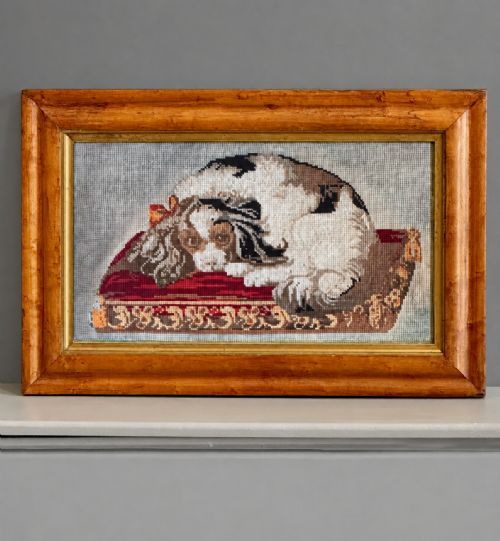
- Stitched textile art, such as Berlin work, where wool or silk is worked through a canvas grid. These pieces were often framed to serve as domestic wall decorations.
- Pastel
- A dry drawing medium composed of powdered pigment and a binder, offering rich, velvety colour. It requires protection under glass to prevent smudging.
Framed Dog Art: Frequently Asked Questions
How do I identify a 19th-century dog painting?
Nineteenth-century dog paintings typically display specific breed characteristics popular at the time, rendered through traditional oil techniques on canvas or board. Examine the substrate, stretcher frames, and the style of the signature for period indicators.
Many works also retain period framing, such as giltwood or burr maple surrounds, which help anchor the piece to its era of origin.
What is sporting art?
Sporting art encompasses depictions of field sports, hunting, shooting, and the animals associated with them. In the context of dogs, this often means gun dogs, hounds, and terriers shown in working environments.
These compositions focus on the action and utility of the animals within a rural or landscape setting.
How should I care for antique works on paper?
Works on paper, including etchings, watercolours, and pastels, require protection from direct sunlight to prevent fading. Keeping them behind glass shields the delicate media from atmospheric pollutants and humidity.
Ensure that framing materials are acid-free to prevent the paper from yellowing or degrading over time.
Why are some dog portraits unsigned?
Many period paintings and drawings were produced by regional artists, school practitioners, or amateurs who did not sign their commercial output. School attributions often categorize these pieces based on stylistic similarities to known painters.
An unsigned work can still possess high artistic merit and accurate anatomical study despite lacking a formal signature.