






Canvas Marine Painting
Canvas marine painting captures the movement of water and the power of historic vessels through layered oil on canvas.
Canvas Marine Painting
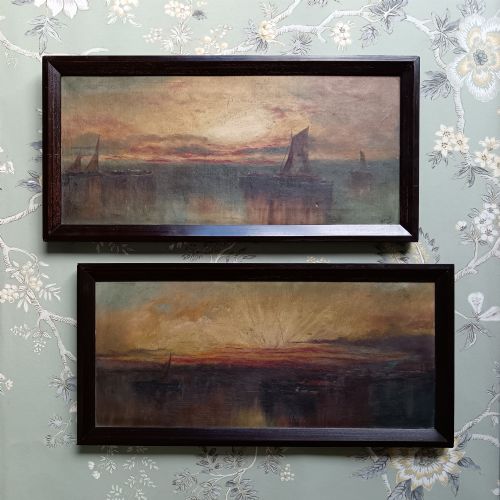
A canvas marine painting records maritime scenes, coastal views and shipping movements through oil pigment applied to woven fabric supports. Buyers seeking these works encounter coastal landforms, harbour anchorages and turbulent open water rendered across various historical periods. The selections available on this page lean heavily toward nineteenth-century Victorian maritime subjects and mid-twentieth-century interpretations.
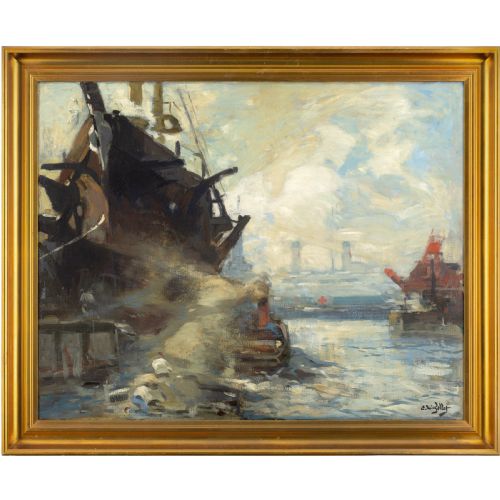
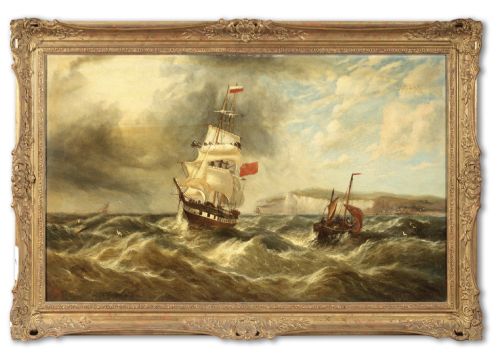
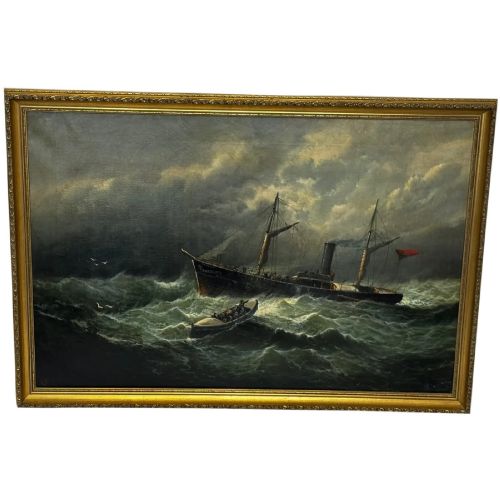
The historical scope ranges from seventeenth-century Dutch scenes to mid-twentieth-century coastal landscapes. Nineteenth-century works dominate the selection, often depicting merchant sailing ships, naval vessels and coastal rescue operations in varied weather conditions. Later twentieth-century examples shift towards simplified coastal compositions and post-impressionist harbour views.
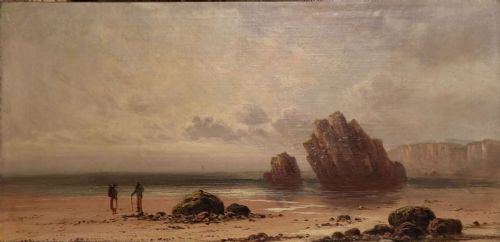
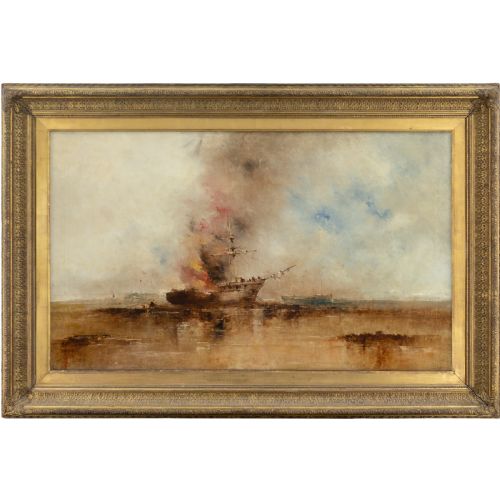
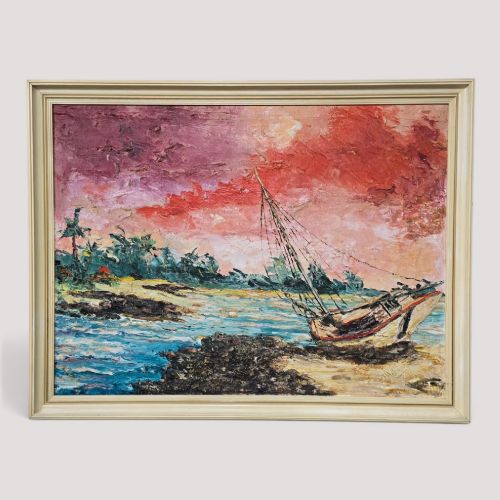
Subjects vary from serene river estuaries and quiet beach scenes to dramatic shipwrecks and gale-driven sailing vessels. Regional schools from Britain, France, Australia and the Netherlands offer distinct perspectives on local waters and shipping trade routes. These paintings function as both historical records of maritime commerce and studies in atmospheric light and water.
Assessing quality and execution
Quality in a canvas marine painting rests upon the artist's command of perspective, anatomy of rigging, and atmospheric depth. Superior works demonstrate accurate rendering of hull construction, sail tension, and wave movement rather than generic formulas for water and sky. The handling of light across water surface reflections and distant coastal mists distinguishes accomplished practitioners from routine studio copyists.
The preservation of the pigment layer and the tension of the original canvas significantly influence the integrity of the piece. Subtle tonal gradations in maritime skies and the crisp delineation of ship architecture indicate higher levels of technical skill. Provenance, signature clarity and exhibition history further elevate the standing of individual works within the broader field of marine art.
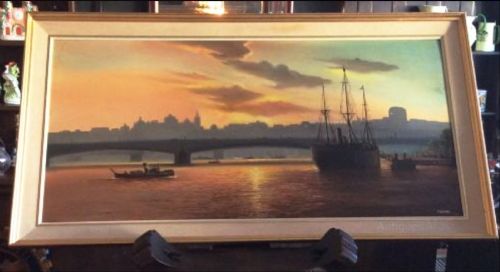
Represented subjects range from stormy open-water shipwrecks to calm river townscapes featuring bridges and working boats.
John Wilson Carmichael·Eugène-Louis Gillot·Joseph Farquharson·William Henry Williamson·Bonaventura Peeters
The Canvas Marine Painting Glossary
- Impasto
- Paint applied thickly to a canvas, standing out in relief from the surface. This technique is frequently employed in marine paintings to give physical texture to foaming waves and rough seas.
- Giltwood
- Timber carved and covered with a thin layer of gold leaf or gold paint. Frames of this material are commonly found enclosing nineteenth-century maritime paintings.
- Barque
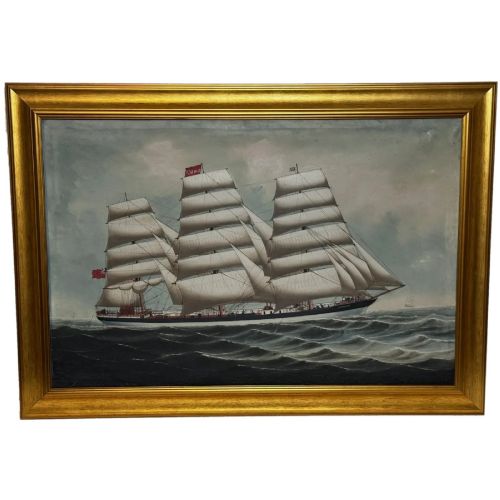
- A sailing vessel with three or more masts, square-rigged on the fore and main masts and fore-and-aft rigged on the mizzen. This specific ship type appears frequently in historical shipping art.
- Provenance
- The documented history of ownership of an artwork from its creation to the present day. Clear provenance helps verify the attribution and authenticity of signed marine paintings.
Canvas Marine Painting: Frequently Asked Questions
How do I date a canvas marine painting?
Dating relies upon stylistic markers, ship architecture, and framing techniques characteristic of specific decades. Costume details of figures on deck or ashore also provide reliable chronological indicators.
Pigment analysis and canvas weave patterns offer additional clues when signatures or dates are absent or indistinct. Comparing the work to documented pieces by the same school or artist helps narrow the production window.
What subjects are common in maritime art?
Common subjects include merchant sailing ships, naval engagements, coastal rescue operations, and quiet harbour anchorages. Artists frequently depicted specific regional waters, such as the Thames estuary or the Dutch coast.
Dramatic weather events like gales and shipwrecks share space in the genre with calm sunset coastal views and routine fishing activities. Each subject reflects the economic and cultural importance of the sea during the painting's creation.
How should I care for an oil on canvas?
Oil paintings require stable indoor humidity levels and protection from direct sunlight to prevent paint cracking and canvas degradation. Regular gentle dusting with a soft, dry brush keeps the surface clear of particulate matter.
Avoid hanging pieces near direct heat sources or damp exterior walls. Professional conservation should be sought if canvas sagging or paint flaking occurs over time.
Are all marine paintings signed?
Many historical marine paintings remain unsigned, often created by anonymous studio hands or regional painters who did not record their names. Unsigned works can sometimes be attributed to a specific school or circle through stylistic analysis.
Signatures were not universally applied to every commercial artwork produced in the nineteenth century. Monograms, initials, or indistinct inscriptions frequently require expert examination to interpret accurately.