

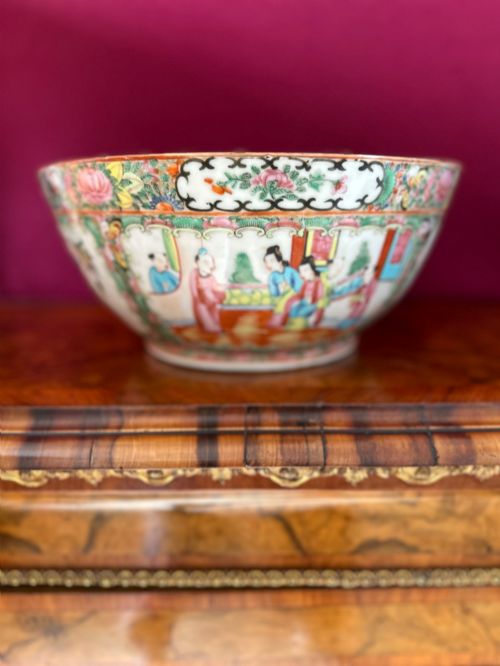
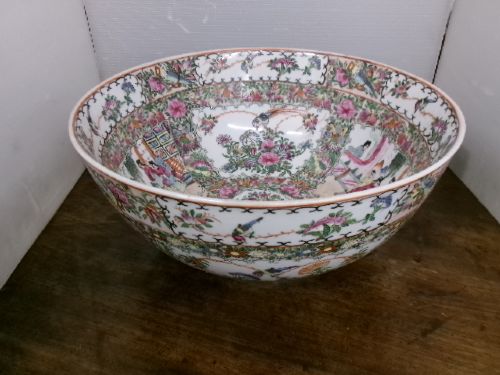


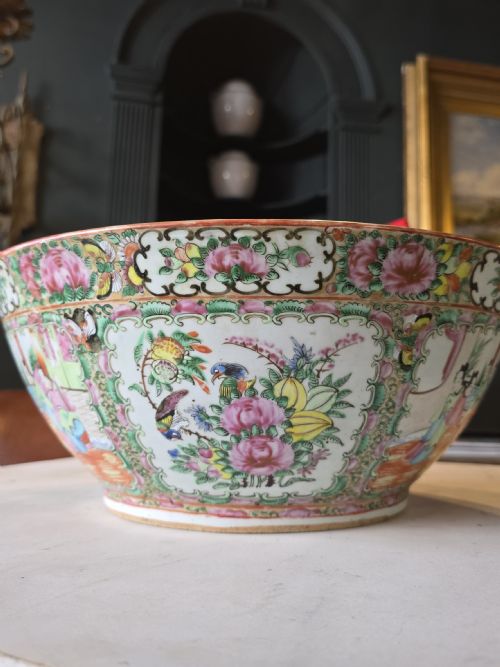


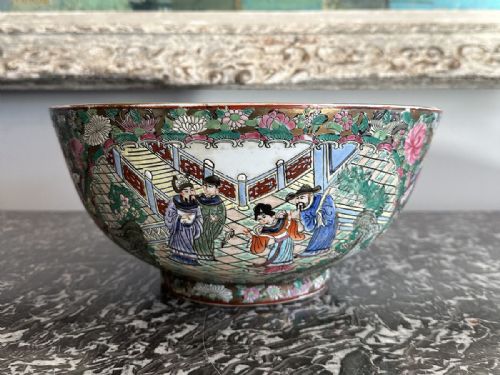


Canton Medallion Bowl
These canton medallion bowl pieces are vibrant Cantonese porcelains decorated with narrative scenes framed by intricate panels, offering rich colour and historic character for any interior.
Canton Medallion Bowl
A canton medallion bowl is a distinctive form of Chinese export porcelain produced for Western markets during the nineteenth century and earlier periods. These vessels range from standard decorative bowls to substantial punch bowls and large centrepiece bowls.
The most common examples encountered on this page date from the nineteenth century, including Victorian-era pieces and items mounted in gilt bronze or displayed on hardwood stands. They combine traditional Cantonese Famille Rose palettes with panelled compositions that immediately draw the eye.
Buyers seek these vessels for their striking scale, which often reaches sixteen to twenty inches in diameter. Each piece serves as a focal point, bringing historic Chinese export artistry directly into a room.
How they were made
Makers shaped these bowls from porcelain before applying overglaze enamel decoration by hand. The surface painting relies on a palette of rich colours that define the distinct Cantonese Famille Rose style.
Gold leaf and gilding highlight the intricate borders and frame the figural medallions. Some nineteenth-century examples incorporate gilt bronze mounts or rest upon carved hardwood stands to elevate the overall presentation.
Canton Medallion Bowl Retail Price Guide 2026
Typical asking prices for canton medallion bowl among the pieces listed under this phrase on Sellingantiques today, from the lower quarter to the upper quarter. They describe what is for sale here now, not the wider market.
Listings feature porcelain pieces spanning from the eighteenth century through the nineteenth century and into the twentieth century.
What varies in quality
Quality rests in the crispness of the hand-painted enamels and the precision of the gilt work outlining each medallion. Finer examples display meticulous detail in the figurative and floral scenes without blurring.
Scale and proportion also dictate the distinction between standard vessels and exceptional punch bowls. The presence of period mounts, such as gilt bronze or fitted stands, further elevates the stature of a piece.
The Canton Medallion Bowl Glossary
- Famille Rose
- A vibrant palette of opaque pink and rose enamels introduced to Chinese porcelain during the Qing dynasty. It dominates the floral and figural decoration found on these bowls.
- Overglaze enamel
- Pigments applied to a previously fired and glazed porcelain surface before undergoing a lower temperature second firing. This technique produces the raised, colourful finish characteristic of Cantonese export wares.
- Gilt bronze
- An alloy of copper, zinc, and tin treated with a layer of gold. Nineteenth-century makers frequently utilised this material to mount porcelain bowls for European interiors.
- Chinese export
- Porcelain specifically manufactured in China for Western markets from the eighteenth century onwards. These objects reflect a synthesis of Eastern production methods and European stylistic demands.
- Punch bowl
- A large vessel traditionally used for mixing and serving alcoholic punches at gatherings. In porcelain, these represent some of the most expansive and heavily decorated forms available.
Canton Medallion Bowl: Frequently Asked Questions
What is a canton medallion bowl?
A canton medallion bowl is a hand-painted piece of Chinese export porcelain featuring distinct panels or medallions filled with figures, birds, and flowers. These vessels were produced primarily in the nineteenth century for international markets.
They function as decorative centrepieces or punch bowls, showcasing the bright enamels and gilding typical of Cantonese workshops.
How old are these bowls?
The pieces available range from the eighteenth century through the Victorian era and into the early twentieth century. Most examples date from the nineteenth century.
Exact dating relies on stylistic indicators such as the complexity of the overglaze enamel palette and the presence of period mounts.
Were they used for food?
Many of the larger forms, particularly the punch bowls, were originally created for serving beverages at communal gatherings. Over time, their decorative qualities shifted them toward display roles.
Today, collectors primarily treat them as decorative centrepieces rather than utilitarian tableware.
How do I style one at home?
These bowls demand a secure surface due to their generous dimensions, which often exceed fifteen inches across. Placing them on a sturdy table or sideboard allows the painted panels to catch the light.
Some examples come with fitted hardwood stands or gilt bronze mounts that elevate the bowl and protect the base.
What defines Qing dynasty export pieces?
Qing dynasty export porcelain destined for the West combined traditional Chinese manufacturing techniques with motifs suited to European tastes. The resulting wares utilised extensive overglaze enamel and gilding.
This category encompasses the vibrant medallion designs that characterise Cantonese production during the period.