




Canton Export Porcelain Bowl
These canton export porcelain bowl pieces bring vibrant floral palettes and hand-painted artistry straight from nineteenth-century workshops to your table.
Canton Export Porcelain Bowl
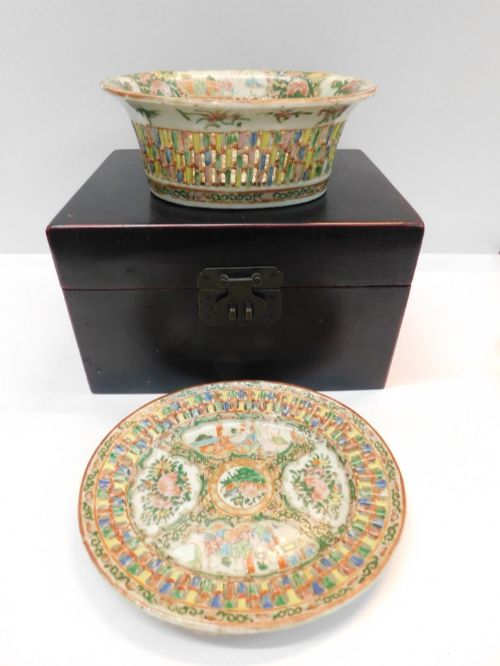
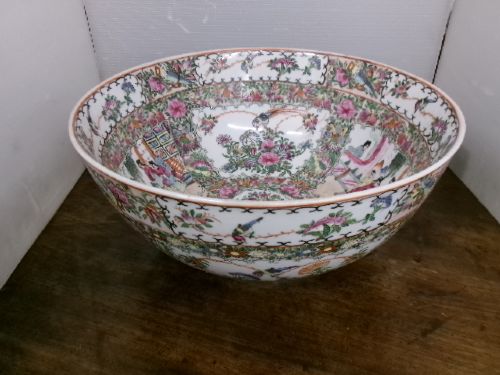
A canton export porcelain bowl typically appears as a generous punch bowl, centrepiece vessel, or reticulated chestnut basket originating from the Qing dynasty. These forms often span the nineteenth century, emerging from Victorian-era imports down to nineteen-forties survivals.
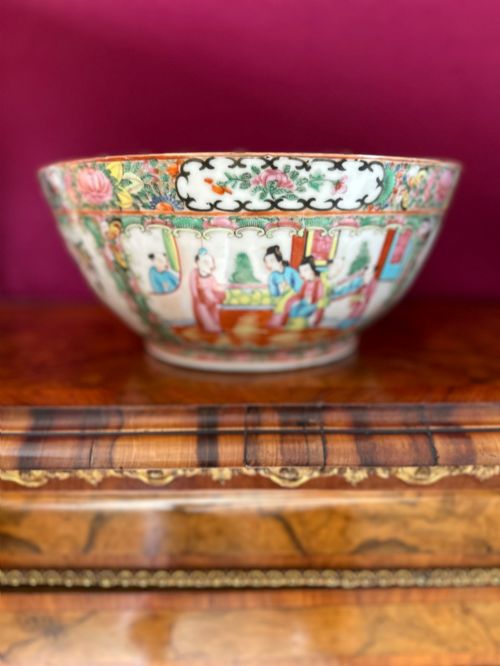
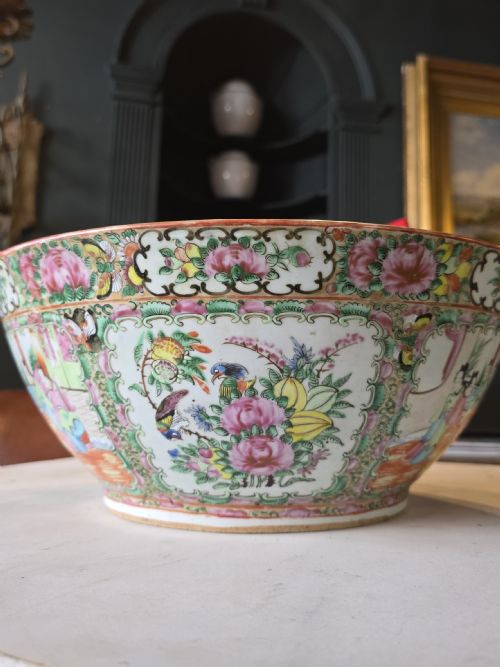
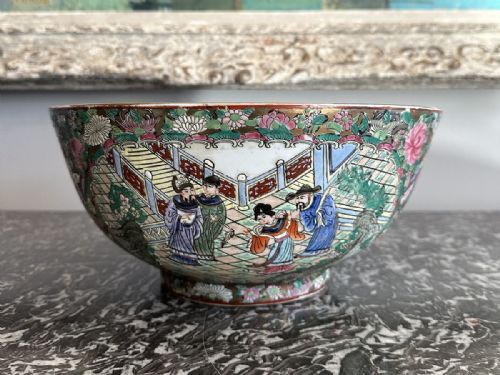
You will frequently encounter large hand-painted vessels measuring up to twenty inches in diameter alongside pedestals, dishes, and matched stands. Many examples incorporate rose medallion designs, butterfly motifs, and detailed figural panels.
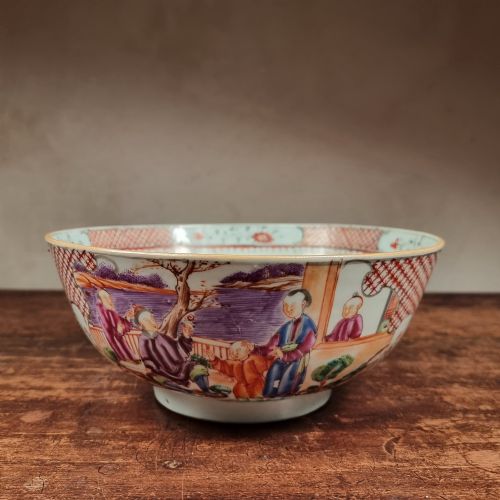
The aesthetic bridges traditional Chinese export porcelain with the exuberant palette of Cantonese famille rose decoration. Buyers select these statement bowls for their decorative presence and historical connection to global trade.
Materials and production methods
Potters shaped fine porcelain before applying rich overglaze enamel colours by hand. Artisans utilised distinctive pink and green tones alongside intricate gold leaf and gilt highlights.
Select nineteenth-century bowls received substantial gilt bronze or ormolu mounts. Other vessels were designed to rest securely upon carved hardwood stands.
Distinguishing finer examples
Superior execution shows in the precision and density of the hand-painted enamels across large surfaces. Finer punch bowls display crisp figural scenes and butterfly details that remain remarkably sharp.
The presence of original mounts, stands, or reticulated baskets elevates certain pieces above standard decorative bowls. Scale also dictates standing, with larger nineteen-inch and twenty-inch basins demanding closer inspection for overall proportion.
The Canton Export Porcelain Bowl Glossary
- Famille rose
- A major palette of Chinese ceramic glazes introduced in the Qing dynasty, distinguished by opaque pink or rose enamel colours. This pink enamel dominates nineteenth-century Cantonese export decoration.
- Rose medallion
- A specific decorative pattern featuring alternating panels of figures, birds, and flowers framed by intricate borders. These panels repeat geometrically around the interior and exterior of the bowl.
- Reticulated
- Pierced or openwork pottery design resembling a lattice or basket weave. This technique appears on nineteenth-century chestnut baskets and stands.
- Overglaze enamel
- Colours painted onto the already fired and glazed porcelain surface before undergoing a second, lower-temperature kiln firing. This method allows for brilliant, varied hues.
- Ormolu
- Gilded bronze mounts applied to the rim or base of porcelain vessels, particularly popular during the nineteenth century. These metal fittings enhance the architectural presence of the bowl.
Canton Export Porcelain Bowl: Frequently Asked Questions
How do I date a Canton bowl?
Examine the baseline porcelain body, enamel saturation, and stylistic markers typical of nineteenth-century Qing production. Victorian import records and nineteenth-century sizing conventions provide additional historical context.
Compare the intricacy of the rose medallion panels against known period pieces. Variations in brushwork technique help separate nineteenth-century originals from later twentieth-century iterations.
Were these bowls used for punch?
Large basins and punch bowls served functional roles at dining tables during global trade periods. They held communal drinks or displayed fruits at formal gatherings.
Over time, many of these vessels transitioned into purely decorative centrepieces. Their generous scale made them ideal focal points for nineteenth-century reception rooms.
How do I care for gilt porcelain?
Clean the porcelain surface gently using a soft, dry cloth to remove dust. Avoid chemical cleaners or abrasive sponges that might damage overglaze enamel and gold leaf.
Display the bowl away from direct sunlight to preserve the vibrancy of the pink enamels. Ensure any hardwood stand is treated with appropriate wood care products separately.
What is a rose medallion pattern?
Rose medallion is a compartmentalised design style featuring distinct panels of figures, butterflies, and flowers. Each section is painted by hand in bright Cantonese enamel colours.
This pattern covers the entire surface of export bowls in dense geometric arrangements. The repetition of panels creates a rich, textured visual effect.