


Caned Back Sofa
A caned back sofa brings open woven texture and wooden frames into a room, offering light seating rooted in historical revival styles.
Caned Back Sofa
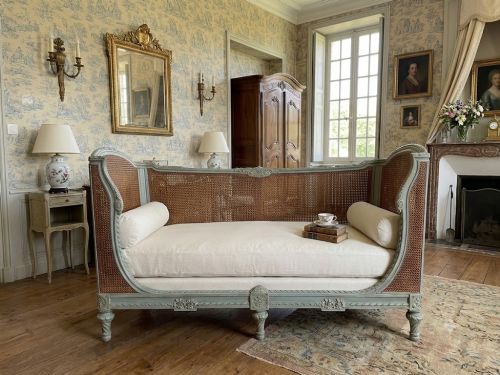
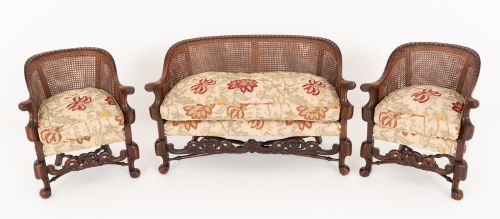
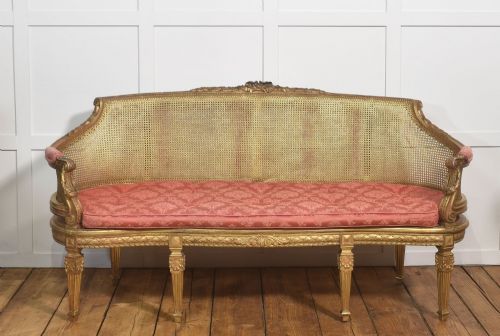
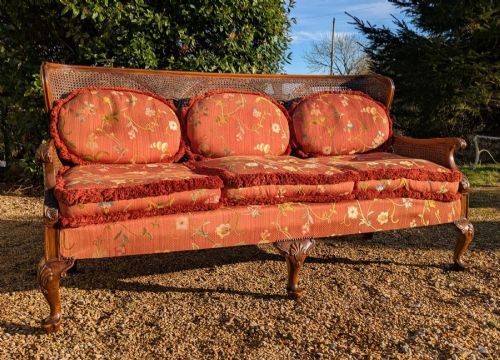
When you search for a caned back sofa, you encounter seating built from wood frames inset with woven panels, appearing across periods from the eighteenth century to the twentieth century. These pieces encompass varied forms such as settees, daybeds, and window seats shaped by distinct revival movements.
The versions most frequently met on this page combine wooden structures in walnut, beech, or painted finishes with woven cane panels. Styles range from French Louis XVI and Carolean revivals to Edwardian neoclassical designs and Viennese bentwood.
Makers and manufacturers adapted traditional seating patterns to suit changing domestic interiors across the nineteenth and twentieth centuries. The resulting furniture spans formal salon suites and relaxed daybeds designed for light living spaces.
Assessing quality and execution
Quality reveals itself in the tightness and regularity of the cane weave, alongside the structural integrity of the underlying wooden joinery. Superior examples maintain intact, tensioned canework and crisp carving on walnut or giltwood frames.
The balance of proportions and the fidelity of historical revival detailing distinguish finer pieces from standard production. Well-executed seating combines sturdy timber construction with harmonious decorative elements like carved scrollwork or painted finishes.
Current listings demonstrate a strong presence of walnut and beech frames paired with cane work, alongside painted and gilded decorative finishes.
The Caned Back Sofa Glossary
- Cane
- Split rattan woven into patterned panels to form breathable backs or seats on wooden frames. This material provides both structural support and visual lightness.
- Bergere
- An enclosed upholstered armchair or sofa featuring wooden frames and cane or fabric sides. These seats frequently include loose feather or down cushions.
- Carolean style
- English furniture design originating in the late seventeenth century, characterised by rich carving, scrollwork, and turned wooden members. Revival versions appeared frequently in the nineteenth century.
- Louis XVI style
- French classical revival aesthetic defined by straight tapering legs, rectangular backs, and restrained architectural ornament. This style dominated late eighteenth-century design and later nineteenth-century revivals.
Caned Back Sofa: Frequently Asked Questions
How do I clean caned furniture?
Maintain cane panels by dusting them regularly with a soft brush and wiping them occasionally with a damp cloth to keep the rattan supple.
Avoid soaking the woven material or placing the furniture near direct heat sources, which can cause the natural fibres to become brittle over time.
Are these sofas comfortable for daily use?
Many examples incorporate supportive upholstered seat cushions alongside woven backrests, making them suitable for everyday sitting in reception rooms.
Consider adding bolster or scatter cushions to adjust the seating depth and lumbar support according to your preference.
How do I identify a revival piece?
Revival furniture often exhibits machine-drilled holes for the cane work and secondary woods that differ from eighteenth-century practices, even when following earlier forms.
Examine the tool marks, joinery methods, and wear patterns on the frame to distinguish nineteenth or twentieth-century interpretations from older originals.
Can damaged cane panels be repaired?
Skilled restorers can re-weave damaged sections by matching the pattern of the original rattan strands to the existing frame holes.
Professional re-caning restores both the structural integrity and the visual continuity of the sofa without altering the historic wood frame.