
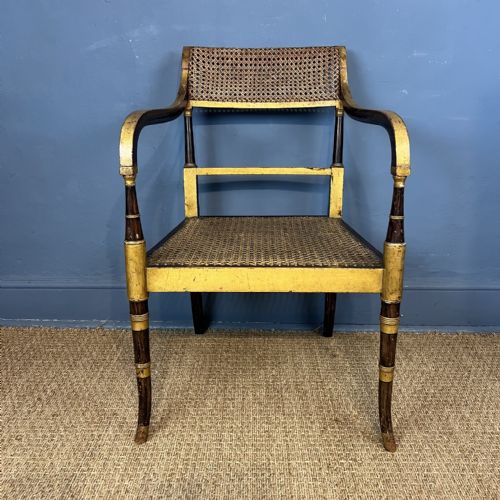
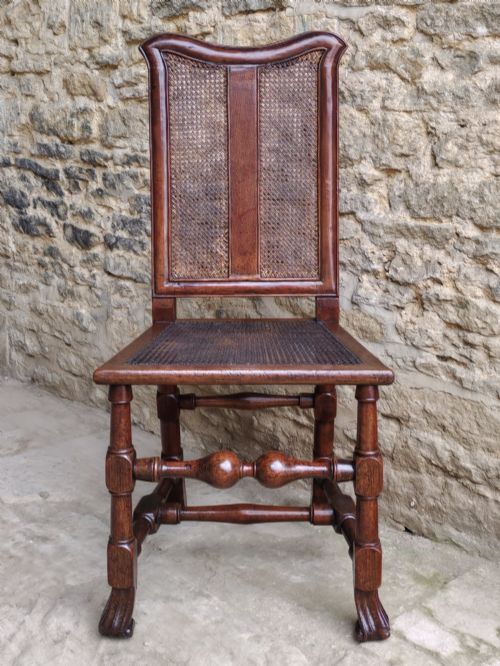
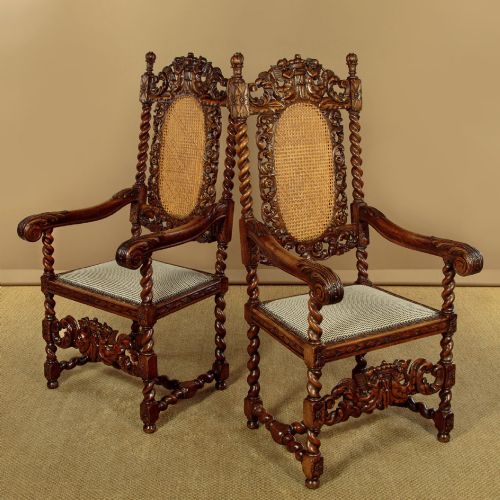
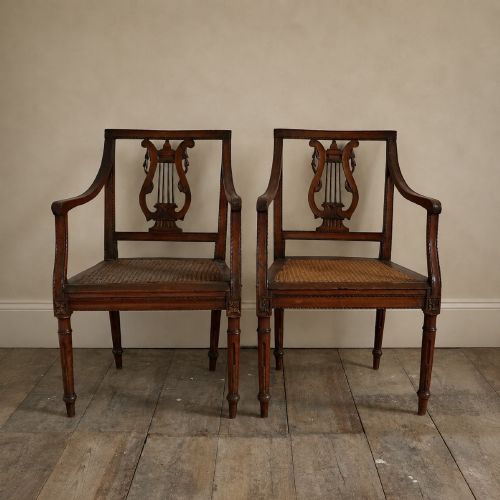


Caned Back Accent Chairs
Caned back accent chairs bring tactile woven texture and historic seating forms into a room, offering lightness and structural elegance.
Caned Back Accent Chairs
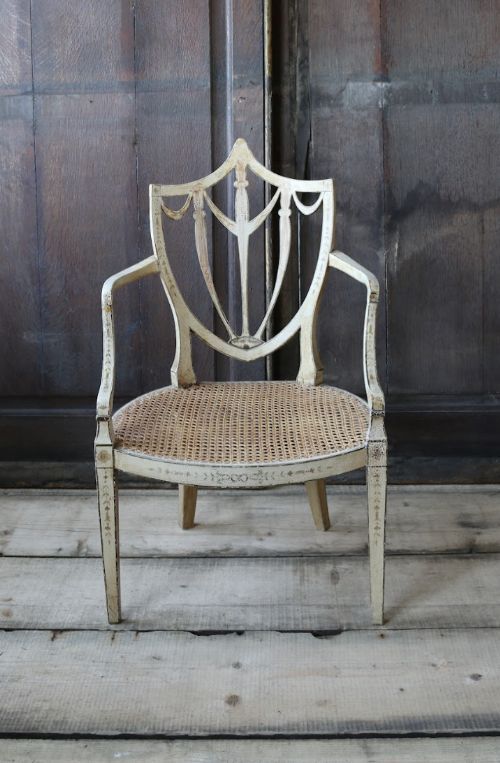
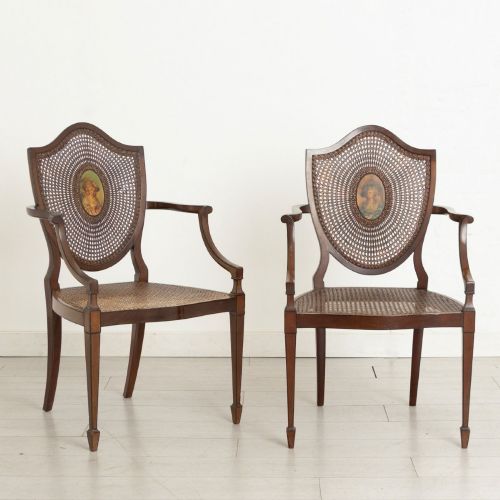
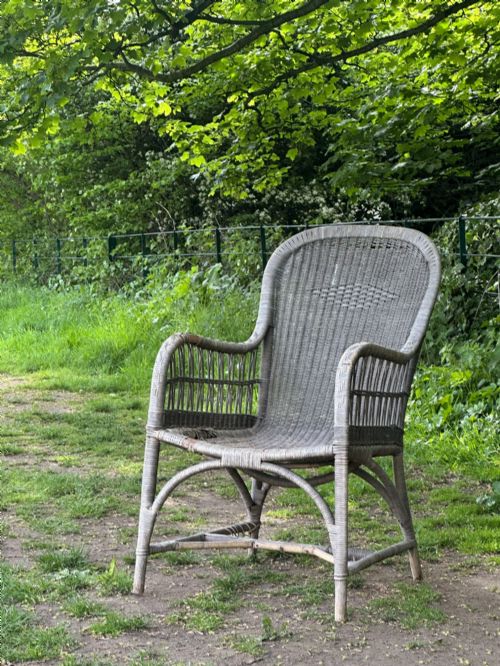
When searching for caned back accent chairs, buyers encounter seating designed to draw the eye while remaining visually light within a room. These pieces span centuries of design, encompassing open armchairs, side chairs, hall chairs, and occasional chairs.
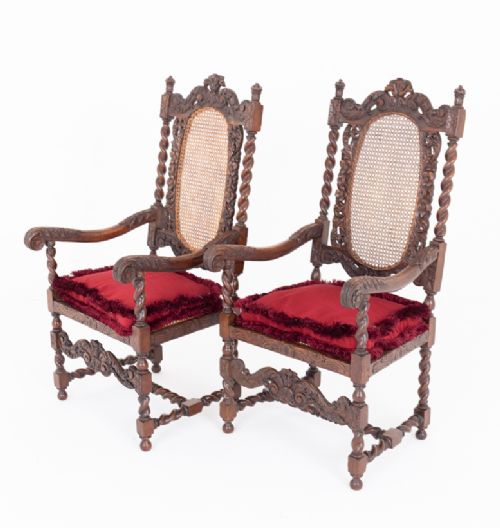
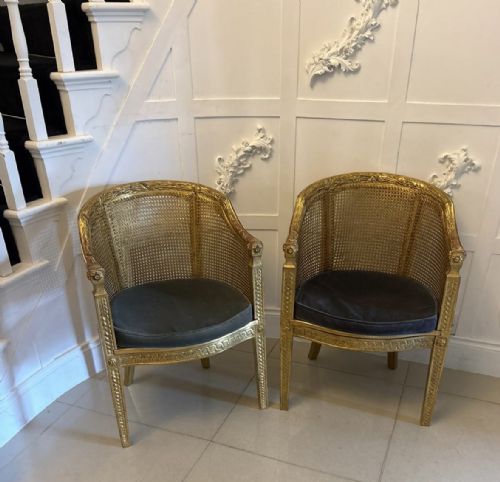
The selection ranges from early walnut models rooted in the seventeenth century to Regency and Victorian interpretations, alongside later revivals from the twentieth century. Forms such as the French bergere and the Anglo-Indian peacock chair appear alongside English and continental seating.
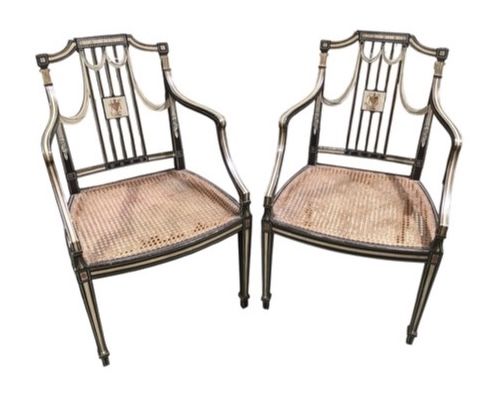
Makers and workshops utilised diverse silhouettes, from lyre backs and shield backs to high-backed William and Mary styles and carved Carolean frames. Each piece serves primarily as a decorative yet functional accent within a domestic interior.
Materials and construction methods
The construction of these chairs relies heavily on timber frames paired with handwoven natural cane panels. Hardwoods such as walnut, oak, and mahogany provide the structural integrity required for upright posts, legs, and arm supports, often enhanced by painted finishes, gilding, or parcel gilt details.
Weaving techniques involve threading split rattan or cane through drilled holes along the frame margins, creating porous yet supportive panels for backs and seats. Additional upholstery elements, including velvet, fabric cushions, and decorative bone inlays, frequently complement the exposed woodwork.
Evaluating craftsmanship and execution
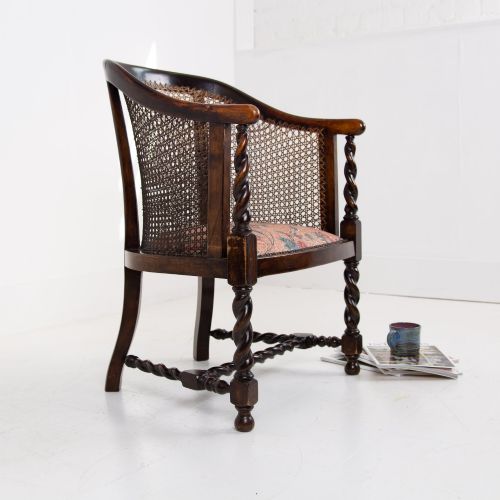
Quality in these chairs rests upon the crispness of the timber carving and the tightness of the woven cane work. Superior examples exhibit fluid lines in styles like Regency or French Neoclassical, where turned legs, barley twists, or carved medallions display deliberate hand execution.
The integrity of the frame joints and the uniformity of the cane patterning separate high-grade output from routine production. The integration of secondary materials, such as finely figured satinwood, ebony, or giltwood, indicates a higher tier of workshop output.
Dryad of Leicester·Waring & Gillow
The Caned Back Accent Chairs Glossary
- Bergere
- A French upholstered armchair featuring enclosed sides filled with cane or upholstery, popular during the eighteenth century and subsequent revival periods.
- Cane
- Strips of peeled rattan woven to create a resilient, open-patterned surface suitable for chair backs and seats.
- Carolean
- A British stylistic period spanning the mid to late seventeenth century, characterised by rich carving, scrollwork, and walnut frames.
- Regency
- An English design era defined by classical antiquity influences, painted finishes, faux rosewood, and graceful curved structural elements.
- Barley twist
- A type of furniture turning resembling a twisted rope, frequently found on the legs and stretchers of seventeenth century and revival oak chairs.
Caned Back Accent Chairs: Frequently Asked Questions
What defines a bergere chair?
A bergere is a French armchair style distinguished by solid upholstered or caned sides enclosed within a wooden frame. These chairs typically provide a wider seat than standard armchairs and often include a loose seat cushion.
Originally designed for indoor comfort and parlor use, they evolved through various periods, retaining a rounded or tub-like silhouette that invites relaxed seating.
How do I date a caned chair?
Dating relies on examining the timber species, the turning style of the legs, and the pattern of the cane work. Seventeenth and early eighteenth century examples often feature walnut with intricate carvings and high backs, whereas nineteenth century pieces frequently emulate Regency or French styles.
Later twentieth century revivals incorporate machine-woven cane or distinct manufacturing stamps, providing clues to their actual period of production rather than the style they imitate.
Where should I place an accent chair?
These chairs function effectively in corners, bedrooms, or sitting rooms where space is limited but visual interest is required. Because the woven cane back allows light to pass through, the chair maintains an airy presence without crowding the floor plan.
They pair well against solid walls or alongside larger upholstery pieces to introduce contrasting texture and historic form into a modern room layout.
Are cane seats comfortable?
Caned seating offers a springy, breathable surface that adapts slightly to the sitter. Many historical examples were designed to accommodate loose cushions or squabs covered in velvet or fabric for added comfort.
The natural flexibility of woven rattan provides firm yet yielding support, making them suitable for occasional sitting rather than extended lounging.