
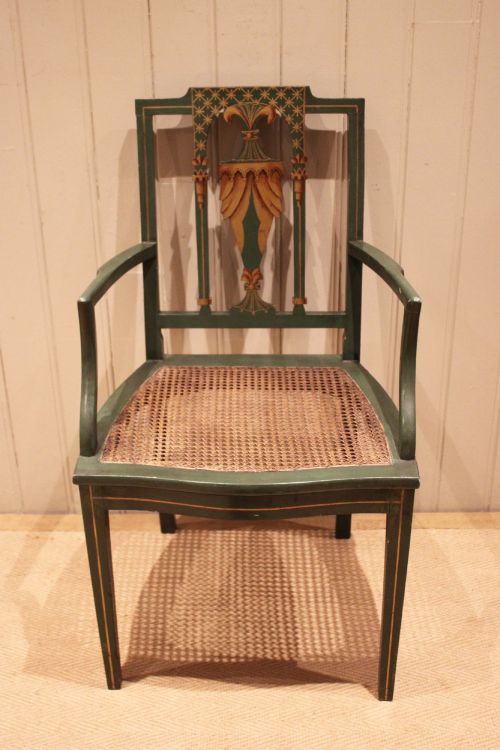
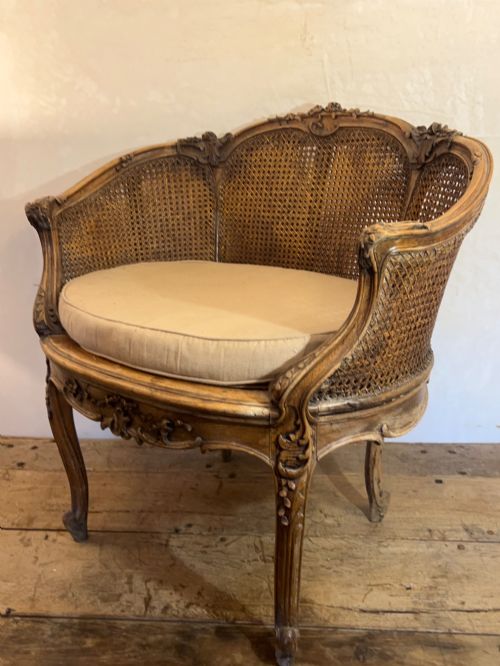
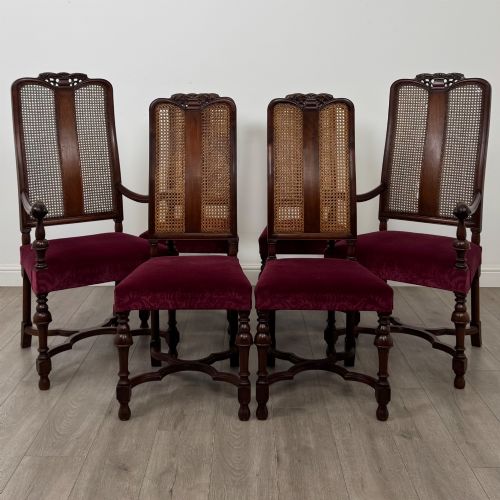
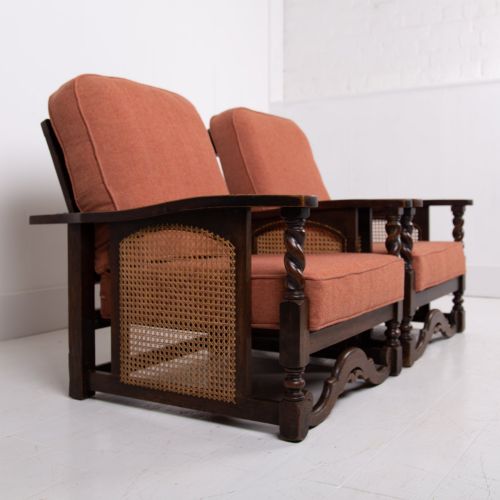
Cane Seated Armchair
A cane seated armchair brings textural warmth to a room through woven natural panels set into sturdy timber frames.
Cane Seated Armchair
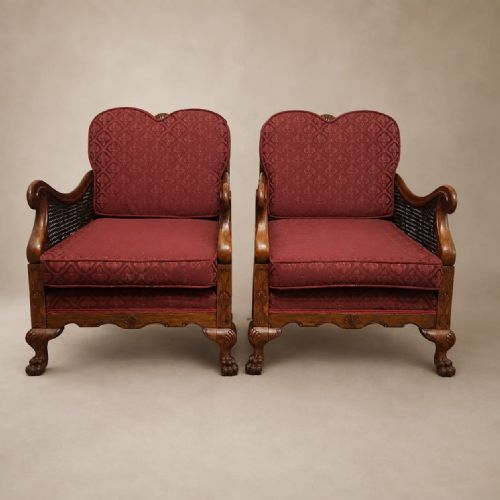
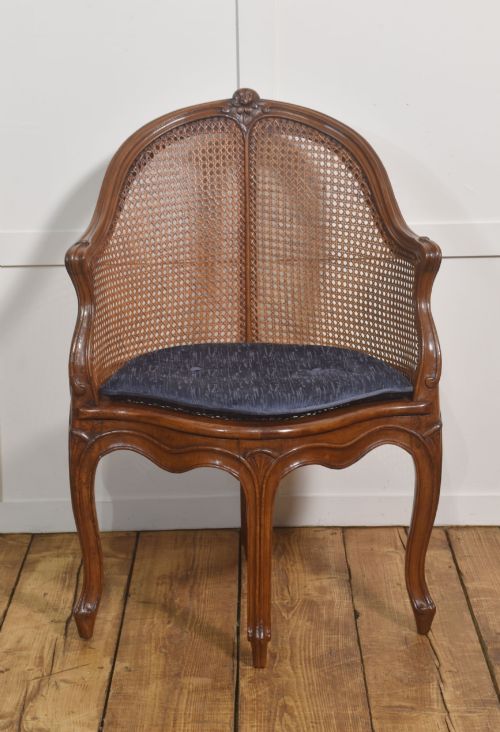
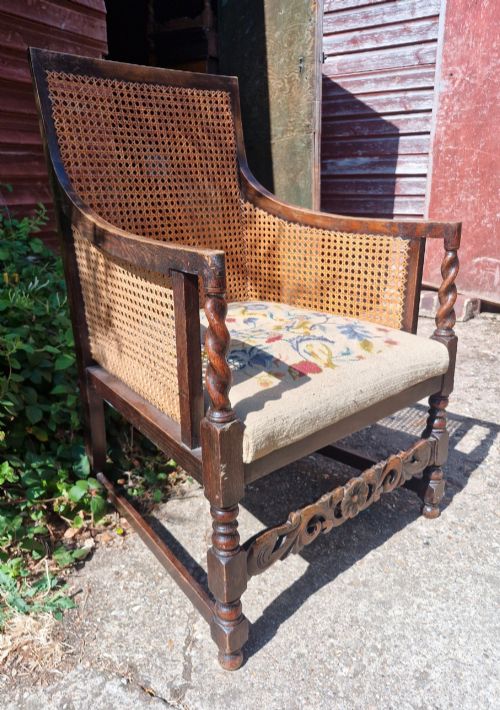
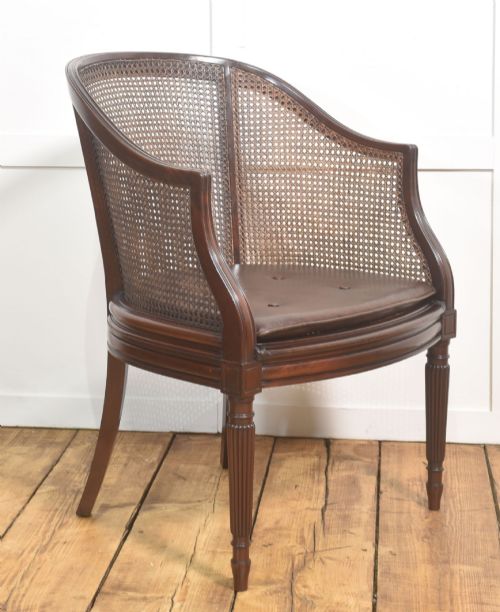
A cane seated armchair is a sturdy seat designed for repose, featuring woven plant material integrated into the frame. When exploring this selection, buyers encounter diverse forms ranging from library chairs to library bergères.
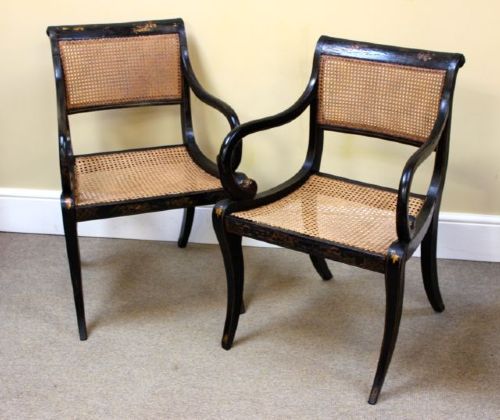
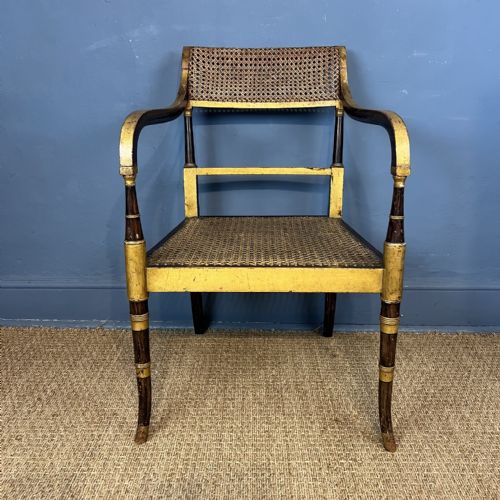
The materials and styles span centuries of craftsmanship. Examples appear in mahogany, oak, walnut, satinwood, and painted finishes reflecting Regency, Victorian, Edwardian, and revival tastes.
Origin and period heavily influence the available selection. Pieces emerge from nineteenth-century workshops as well as twentieth-century interpretations, including Anglo-Indian and French designs.
Materials and construction methods
Frames are constructed from hardwoods such as mahogany, oak, and walnut, often shaped through turning, carving, or painting. Some incorporate decorative elements like parcel gilding, brass, and leather.
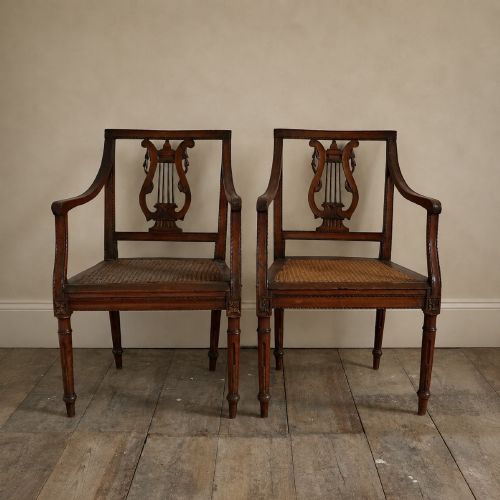
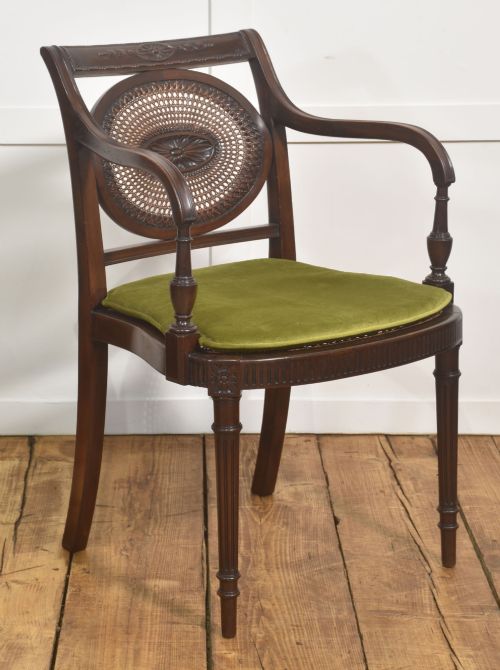
Seating and back panels utilise natural cane and rattan woven intricately through pre-drilled holes in the timber frame. This technique provides both flexibility and robust support for the user.
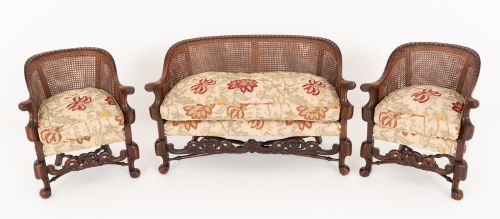
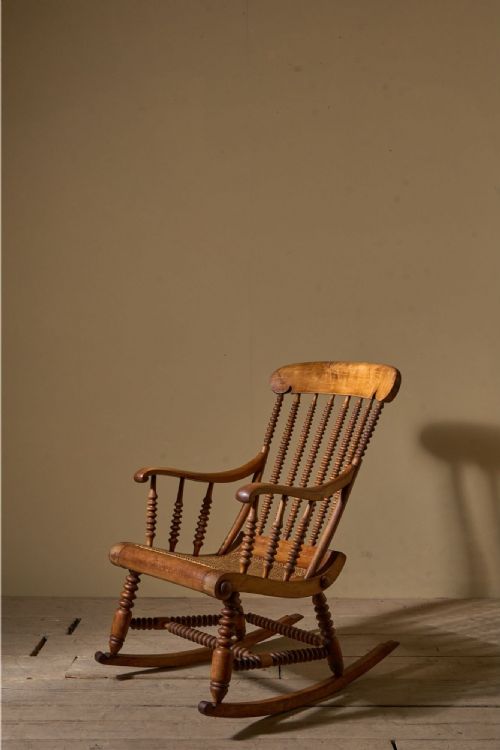
Seating styles on this site span standard armchairs, library bergères, rocking chairs, and matching dining suites.
Distinctions in craftsmanship
Quality rests in the tightness and uniformity of the cane weave and the solidity of the timber joinery. Superior examples maintain crisp carving and stable frames without structural fatigue.
The integrity of the wood and the precision of historical revival styles dictate the overall standing of an individual piece.
James Shoolbred·Dryad And Co
The Cane Seated Armchair Glossary
- Bergère
- An enclosed upholstered or caned armchair with solid sides, originating in France. These seats often feature exposed wooden frames in walnut or mahogany.
- Cane
- Strips of material derived from the outer bark of rattan palms, utilised for woven chair seats and backs. The technique allows for breathable and resilient panels.
- Regency
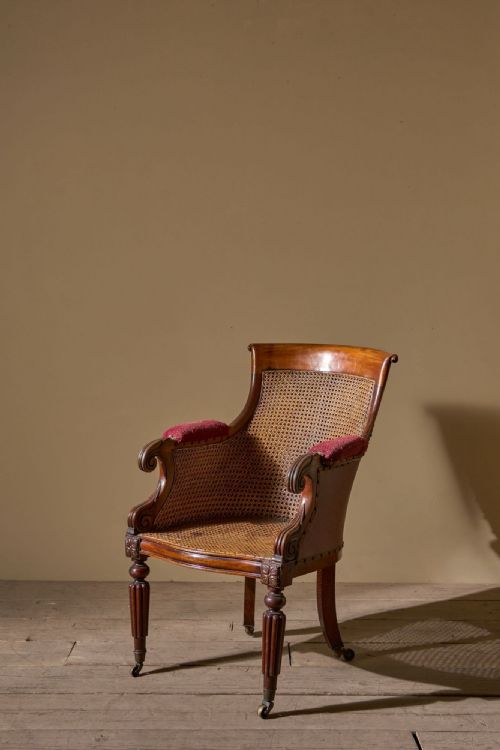
- A British design period spanning the early nineteenth century, characterised by classical influences and exotic woods. Pieces from this era often display clean lines and dark polished timbers.
- Carolean
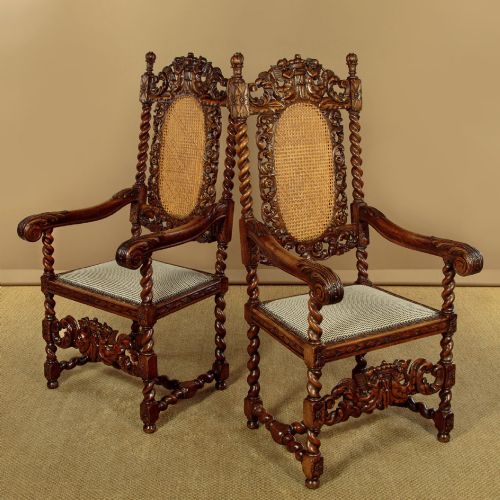
- A seventeenth-century revival style known for ornate scrollwork, crown motifs, and turned wooden framing. Chairs in this taste frequently combine cane backs with matching seats.
- Satinwood
- A luminous timber native to India and Sri Lanka, prized for its golden sheen and smooth grain. It appears frequently in decorative Edwardian furniture.
Cane Seated Armchair: Frequently Asked Questions
How do I care for cane seats?
Keep woven panels hydrated by wiping them gently with a damp cloth periodically. Avoid placing them near direct heat sources to prevent the natural material from becoming brittle.
Ensure weight is distributed evenly across the seat to protect the tension of the woven strands over years of daily use.
What is a bergere armchair?
A bergere is a French-style armchair featuring solid upholstered or caned sides enclosed within a wooden frame. They are typically deeper and wider than standard dining seats.
Many examples include loose seat cushions for added comfort, making them suited for sitting rooms and libraries.
How are different periods identified?
Distinguishing periods relies on observing the timber choice, carving motifs, and structural silhouette. Regency pieces favour dark polished hardwoods and classical restraint, while Edwardian examples often employ lighter woods and painted finishes.
Revival pieces copy earlier seventeenth-century or eighteenth-century aesthetics but retain the construction methods of their actual manufacturing date.
Can these chairs be used daily?
Solid wooden frames and sturdy woven panels allow these chairs to handle regular seating. Proper maintenance of the cane ensures it supports daily use without sagging.
Pairs and suites offer cohesive seating arrangements for living spaces and studies alike.