
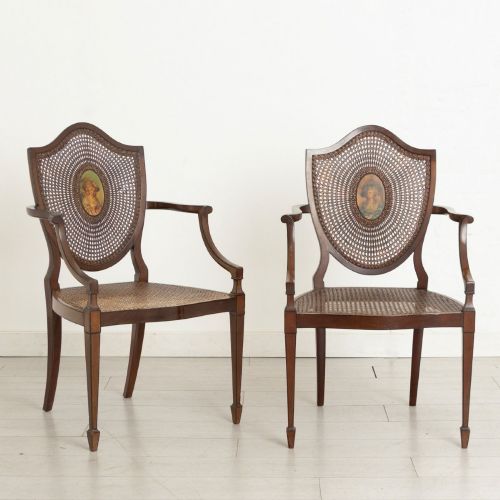
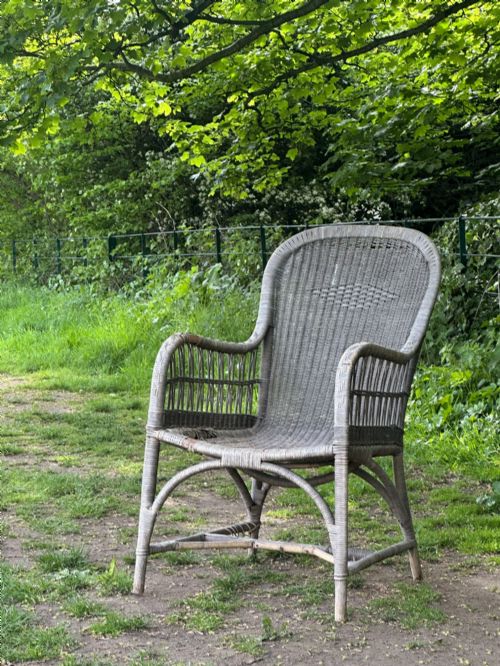


Cane Back Accent Chair
These cane back accent chair examples span from the seventeenth century to the twentieth, offering woven seating solutions for contemporary rooms.
Cane Back Accent Chair
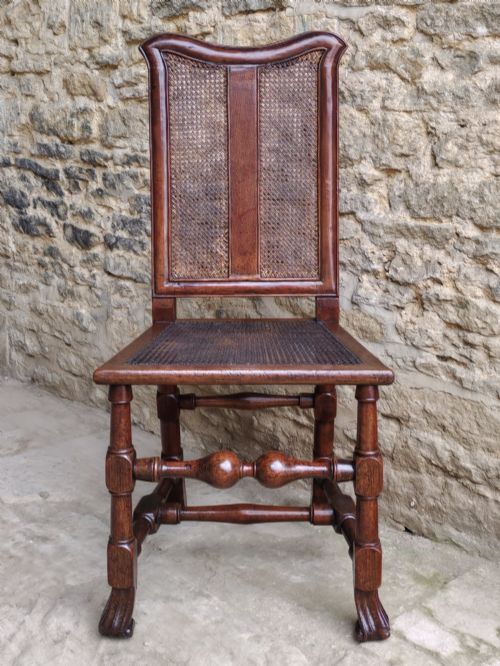
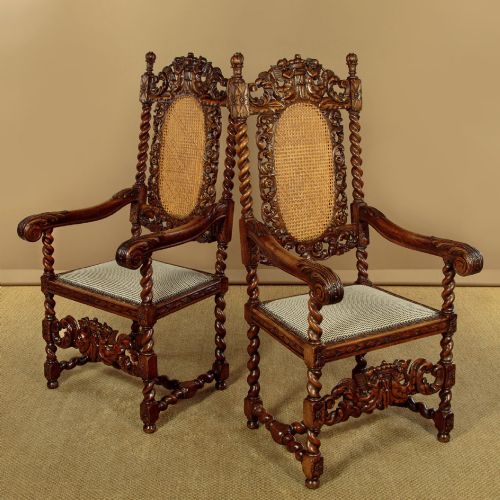
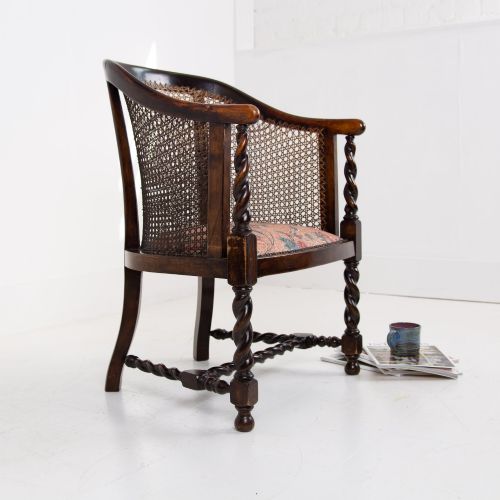
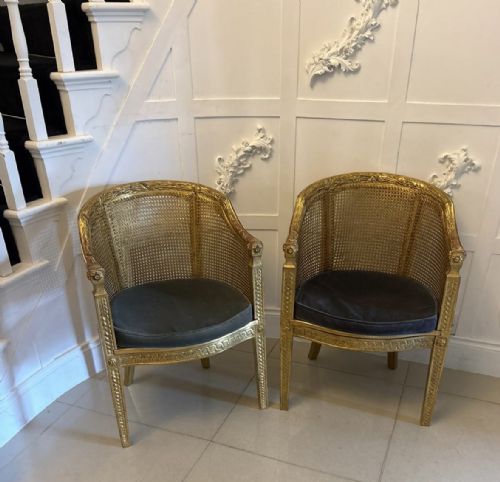
A cane back accent chair serves as a decorative and functional seat, drawing upon historical forms ranging from seventeenth-century walnut armchairs to Regency and Victorian mahogany designs. Buyers searching for a cane back accent chair encounter various regional interpretations, including French bergères, Anglo-Indian colonial pieces, and Chinese bamboo canework chairs.
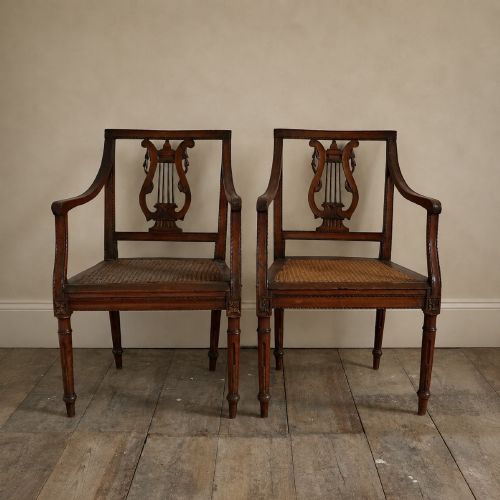
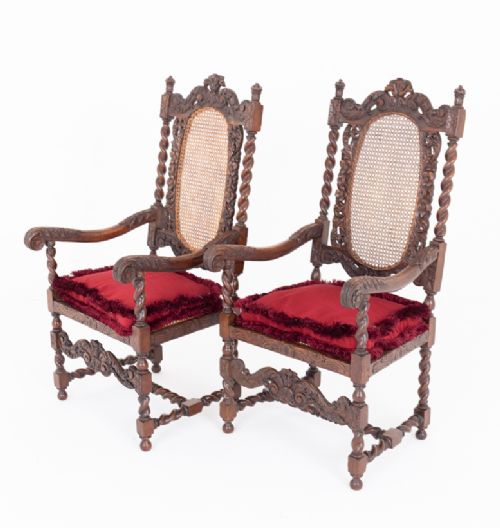
The selection includes armchairs, side chairs, hall chairs, and occasional chairs, often found in pairs. Many pieces reflect revivalist movements such as William and Mary, Jacobean, Carolean, and Regency styles, executed across multiple centuries.
Materials and construction
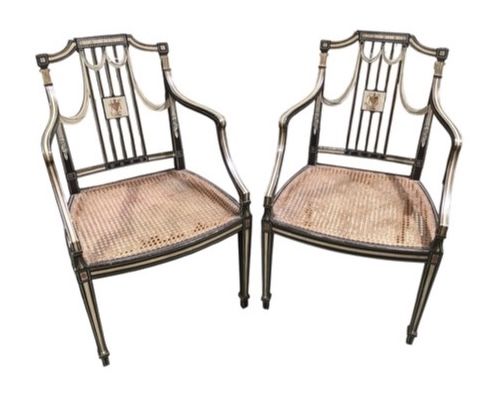
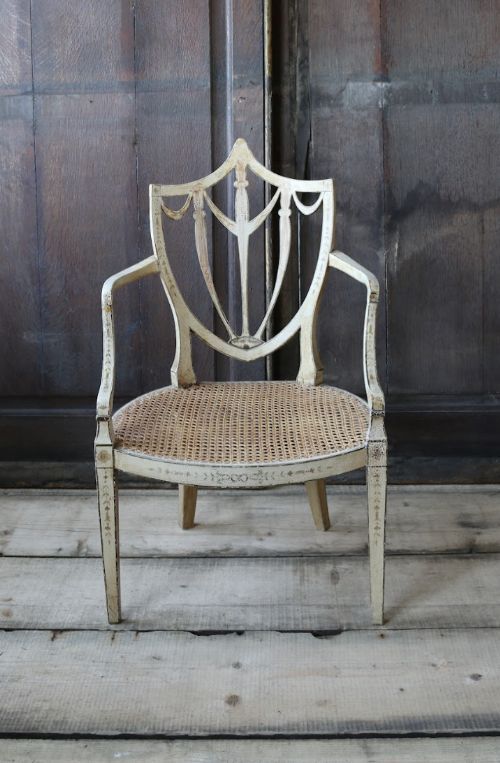
Makers constructed these frames using timbers such as walnut, oak, mahogany, satinwood, ebony, and giltwood, occasionally applying paint, parcel gilt, or faux rosewood finishes. Handwoven cane forms the backrests and seats, sometimes supplemented by fabric or velvet cushions.
Joinery techniques span from early pegged joints in seventeenth-century oak and walnut frames to later nineteenth- and twentieth-century turning, carving, and bone inlay work.
Design styles represented include Regency, Jacobean Revival, Carolean, William and Mary, French Neoclassical, and Anglo-Indian colonial.
Judging quality in cane seating
Quality rests in the crispness of the timber carving, the tightness and regularity of the handwoven cane work, and the structural integrity of the frame. Pieces featuring secondary materials like bone inlay, or sophisticated finishes such as parcel gilt and French giltwood, indicate higher workshops.
The harmony between the original timber frame and subsequent upholstery or seating repairs dictates the overall integrity of the piece.
Dryad of Leicester·Waring & Gillow
The Cane Back Accent Chair Glossary
- Cane
- Plant material split and woven into open patterns for chair backs and seats. It provides a lightweight, resilient surface.
- Bergère
- An enclosed upholstered or caned armchair with wooden framing, originating in France. It typically includes a loose seat cushion.
- Carolean
- A seventeenth-century English style associated with the reign of Charles II, known for rich carving and turned woodwork. It frequently employs walnut.
- Klismos
- An ancient Greek chair form with curved legs and a concave backrest, revived during the Regency and nineteenth-century periods. It offers an elegant profile.
- Lyre back
- A chair backrest shaped like a musical lyre, often centred in Regency mahogany designs. This motif reflects classical revival influences.
Cane Back Accent Chair: Frequently Asked Questions
How do I care for cane seating?
Keep caned panels hydrated with a damp cloth periodically to prevent the natural plant material from drying and snapping.
Avoid placing these chairs directly beside heat sources or in harsh sunlight, which weakens the woven strands over time.
Are these chairs comfortable for daily sitting?
Many examples include loose fabric, velvet, or leather cushions placed over the cane seat to provide added softness during extended use.
Open armchairs and bergères offer supportive side framing, though proportions vary significantly between seventeenth-century and twentieth-century models.
How do I distinguish seventeenth-century chairs from later revivals?
Seventeenth-century originals exhibit heavy walnut frames with deep patination, pegged joinery, and distinct wear patterns appropriate to their age.
Later revival pieces, such as those from the 1900s, often display machine-milled elements or cleaner timber surfaces despite adopting historical Carolean or William and Mary styles.
What is the difference between a side chair and an armchair?
Armchairs feature supporting side rests for the arms, making them suitable as primary accent pieces in living spaces or studies.
Side chairs lack arms, allowing them to tuck neatly around dining tables or function as bedroom and hall seating.