


Anglo Indian Planters Chair
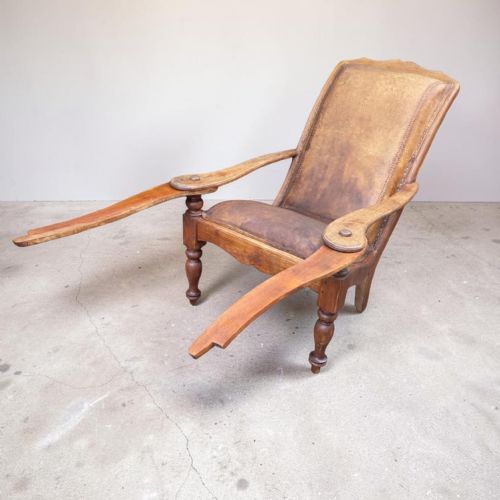
An anglo indian planters chair offers deep seating and reclining comfort, designed for colonial climates with extended arms to rest tired legs.
Anglo Indian Planters Chair
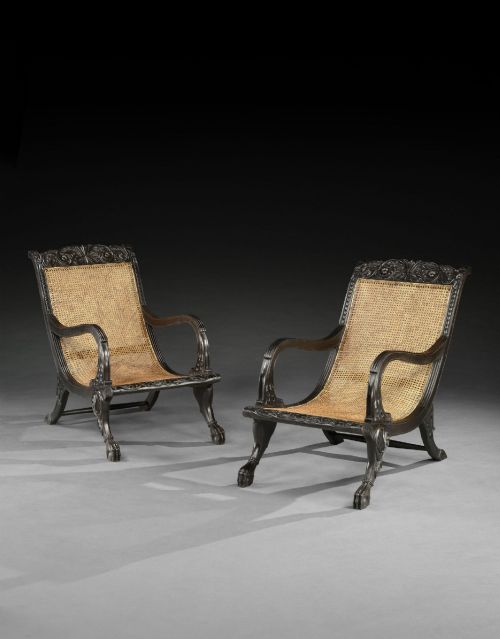
The anglo indian planters chair is a distinctive armchair built for colonial relaxation, featuring a deep seat and characteristic long extending arms that double as footrests. These pieces belong primarily to the nineteenth century, including Victorian periods up to the early twentieth century, spanning dates like 1860, 1880, 1890, 1910, and 1920.
Armchairs on this page emerge from Anglo-Indian Colonial and British Colonial traditions, reflecting design influences from regions such as Ceylon and Bombay. Surviving examples range from single armchairs to pairs, alongside folding variants recorded in archive sales.
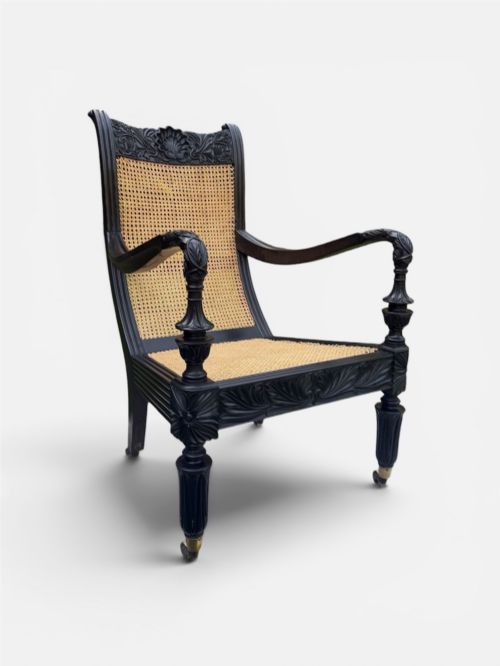
Most pieces encountered here are constructed from heavy tropical timbers with woven cane or original leather components. The defining feature remains the adjustable or extended armrests designed for elevated leg support during hot afternoons.
How they were made
Cabinetmakers utilised dense tropical woods such as teak, ebony, rosewood, and general hardwood to withstand warm climates and heavy use. These timbers were carved with solid craftsmanship, forming robust frames capable of supporting reclining mechanisms and extended arm structures.
Seating surfaces combined woven cane for breathability or fitted original leather for cushioned support. Metal elements like brass appear as subtle hardware accents, while structural joints relied on traditional joinery suited to heavy colonial furnishings.
Listings span the nineteenth and early twentieth centuries, featuring teak, ebony, rosewood, and cane.
What varies in quality
The choice of timber defines the baseline of quality, with dense solid ebony or finely figured Bombay rosewood sitting at the upper end compared to standard tropical hardwoods. The weight and grain of the wood dictate the presence and durability of the carved details.
Construction intricacy also separates standard seating from monumental or finely proportioned examples. Intact original leather and tightly woven cane panels demonstrate superior preservation over replaced elements, altering the visual weight of the chair.
The Anglo Indian Planters Chair Glossary
- Cane
- Woven material made from rattan palm used for breathable chair seats and backs. It allows air circulation in warm colonial environments.
- Teak
- A durable tropical hardwood resistant to moisture and insects. Cabinetmakers relied on it for heavy structural furniture.
- Ebony
- A dense, dark heartwood prized for its heavy weight and deep colour. It appears in high-status nineteenth-century seating.
- Rosewood
- A richly figured timber with varied grain patterns. Bombay examples often utilised this material for decorative impact.
- Extending arms
- Armrests designed to pull out or lengthen to support the sitter's legs. This is a primary functional attribute of the form.
Anglo Indian Planters Chair: Frequently Asked Questions
What is an anglo indian planters chair?
An anglo indian planters chair is a deep-seated armchair featuring extended armrests designed for reclining in colonial climates.
These pieces typically date from the nineteenth and early twentieth centuries, constructed by colonial makers for British residents abroad.
How do you use the extending arms?
The extending arms function as leg rests when the sitter leans back in the deep chair frame.
By swinging or sliding the wooden arms outward, the user can elevate their lower legs for resting.
What woods were used to build them?
Cabinetmakers utilised dense tropical timbers available in the regions, primarily teak, ebony, rosewood, and general hardwood.
These heavy woods ensured the chairs remained stable and durable in humid colonial environments.
How can you tell the period?
Dating relies on timber selection, joinery methods, and the style of carving present on the frame.
Nineteenth-century examples often feature solid ebony or rosewood, while later pieces extend into the early twentieth century with simpler hardwood construction.