
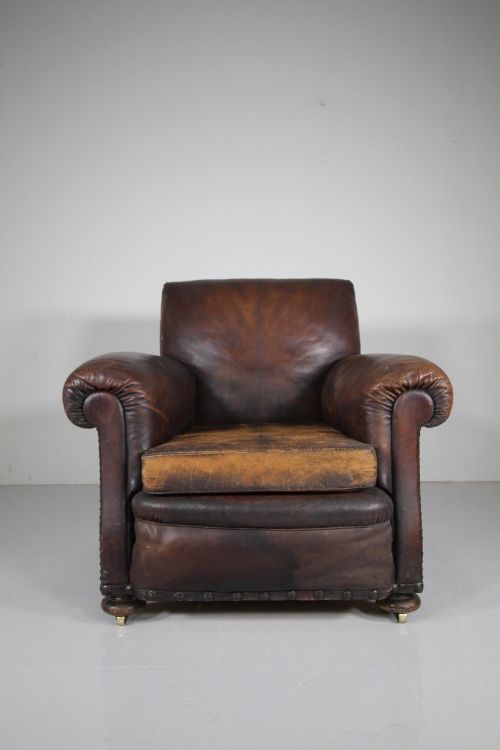


Tan Leather Arm Chair
A tan leather arm chair brings warmth and sturdy comfort to a room, spanning periods from Victorian libraries to Edwardian clubs.
Tan Leather Arm Chair
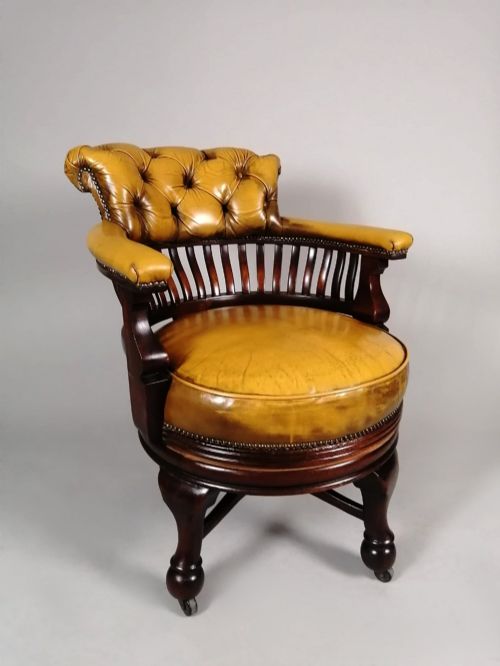
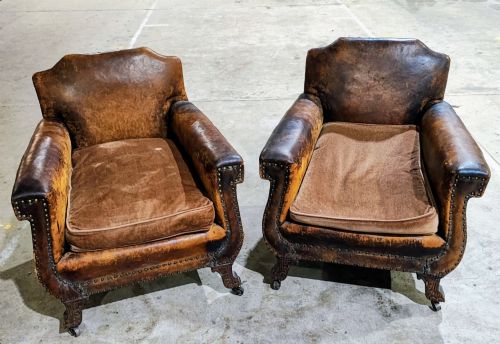
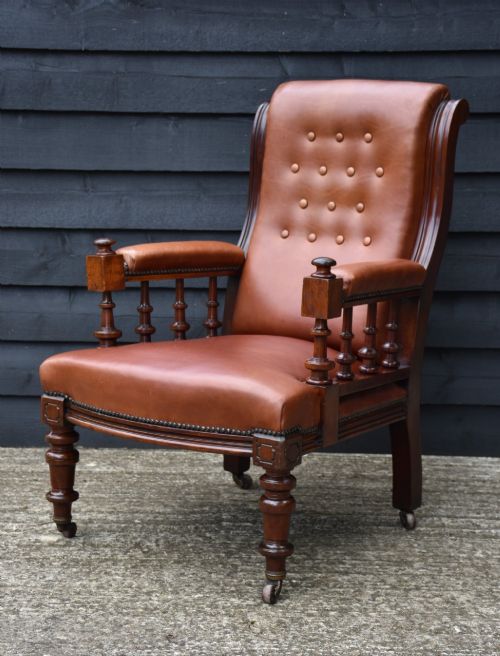
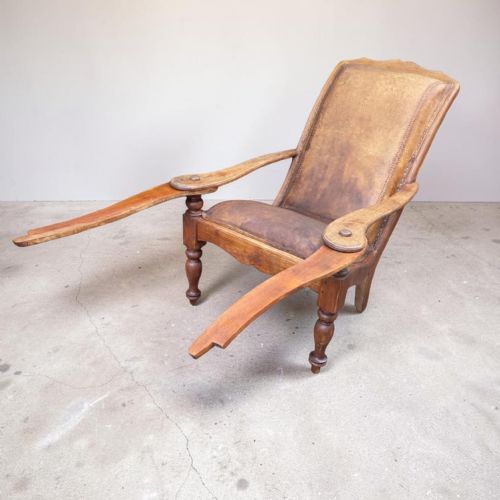
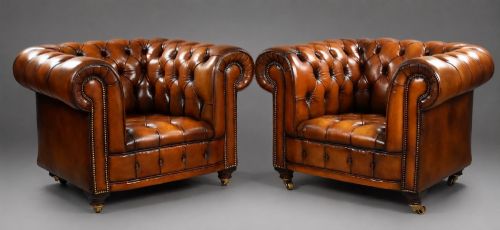
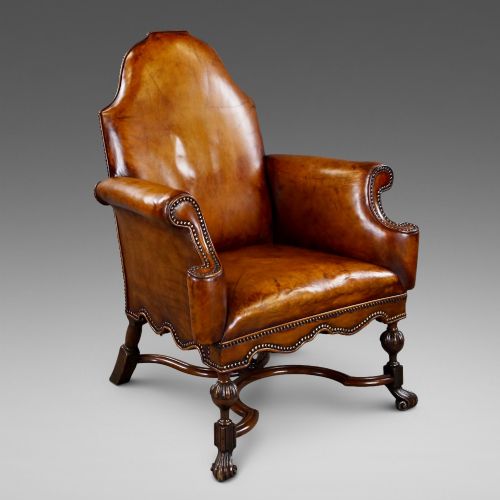
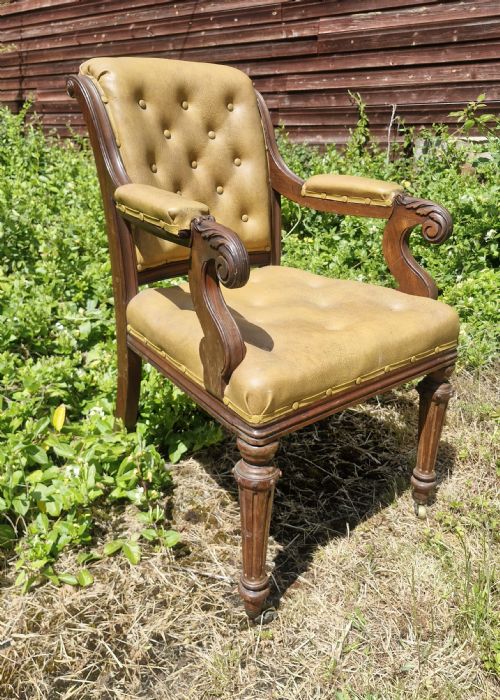
A tan leather arm chair brings together supportive seating and durable hides, taking forms such as library armchairs, desk chairs, and club chairs. Buyers encounter pieces originating from the nineteenth century onward, including Edwardian and Victorian examples.
The selection ranges from revolving desk chairs with brass details to substantial wingback chairs and low club armchairs. Mahogany, walnut, oak, and beech form the structural framework beneath the leather upholstery.
Materials and construction
Frames rely on hardwoods such as mahogany, oak, walnut, and beech, joined to support daily use and heavy seating. Metal components like brass studs secure the hide and provide structural accents.
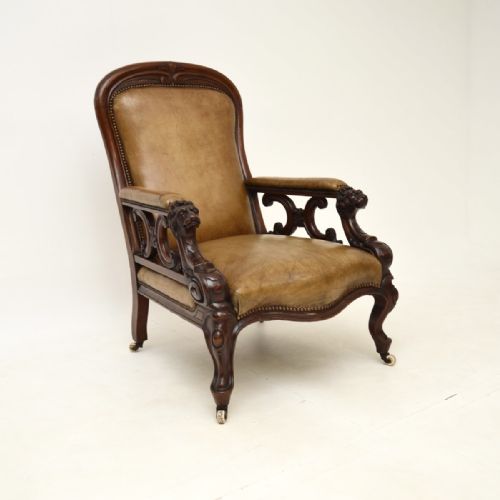
Upholstery utilises leather and hide, occasionally accented with velvet or paired with cast iron mechanisms for revolving desk chairs. Wood carving appears on legs and armrests, reflecting Victorian and Edwardian craftsmanship.
Seating history includes robust armchairs sourced directly from the Royal and Ancient Golf Club of St Andrews.
Evaluating quality and condition
Quality rests in the depth of the timber frame and the treatment of the hide, where hand-dyed and naturally aged leather displays distinct character. Carved details on walnut and mahogany frames indicate higher workmanship.
The integration of functional elements, such as revolving swivels and brass studwork, separates standard utility seating from refined library and office armchairs.
Warings
The Tan Leather Arm Chair Glossary
- Wingback
- An armchair with side panels designed to shield the sitter from draughts. These pieces often feature deep leather upholstery and substantial wooden legs.
- Club armchair
- A deep, low-set seat upholstered in leather, built for comfort and relaxation. Edwardian examples frequently appear in this form.
- Revolving desk chair
- A swivel seat designed for office and library use, often constructed from oak or mahogany with adjustable mechanisms. Brass hardware frequently supports the movement.
- Cabriole leg
- A furniture leg that curves outward and then tapers inward, commonly seen on Victorian seating. This style draws on eighteenth century design traditions.
Tan Leather Arm Chair: Frequently Asked Questions
How do I identify a Victorian tan leather arm chair?
Victorian examples often feature mahogany or oak frames with carved details and deep buttoned leather reading seats. Look for structural elements like cabriole legs or revolving office bases.
Period characteristics also include heavier wooden construction and distinct nineteenth century joinery methods, separating them from later Edwardian or twentieth century designs.
What is the difference between a club chair and a wingback chair?
Club chairs offer a low, deep seat designed for lounging, while wingback chairs incorporate side panels on the backrest. Both styles utilise tan leather upholstery across different historical periods.
Club chairs tend to prioritise open seating, whereas wingbacks provide enclosed comfort with traditional side wings.
Are these chairs suitable for daily office use?
Revolving desk chairs from the nineteenth and early twentieth centuries were specifically built for study and office environments. Their swivel functions and sturdy hardwood frames accommodate workspace tasks.
Oak and mahogany desk models provide the necessary durability for regular sitting, combining leather upholstery with functional mobility.
What woods are commonly found beneath the leather?
Frames are constructed from hardwoods including mahogany, oak, walnut, and beech. These timbers provide the structural strength required to support heavy leather upholstery and daily use.
Cabinetmakers matched the wood selection to the period, utilising rich mahogany in the nineteenth century and oak or walnut in Edwardian designs.