

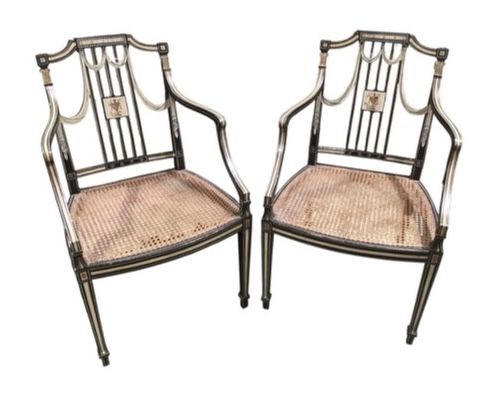


Regency Ebonised Armchairs
Regency ebonised armchairs combine dark, dramatic finishes with neoclassical forms, offering collectors a striking seat that anchors any room.
Regency Ebonised Armchairs
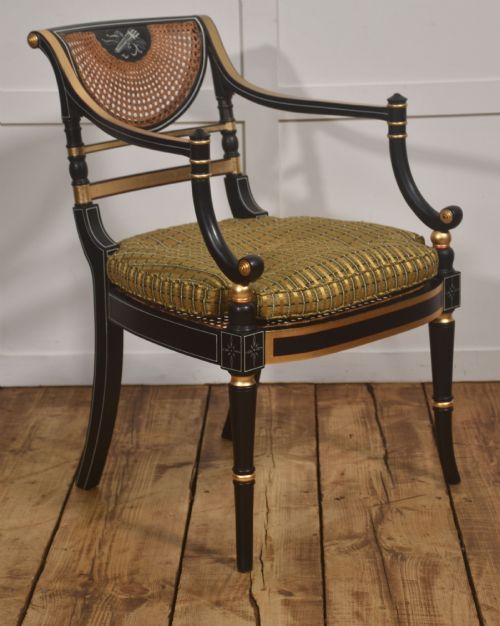
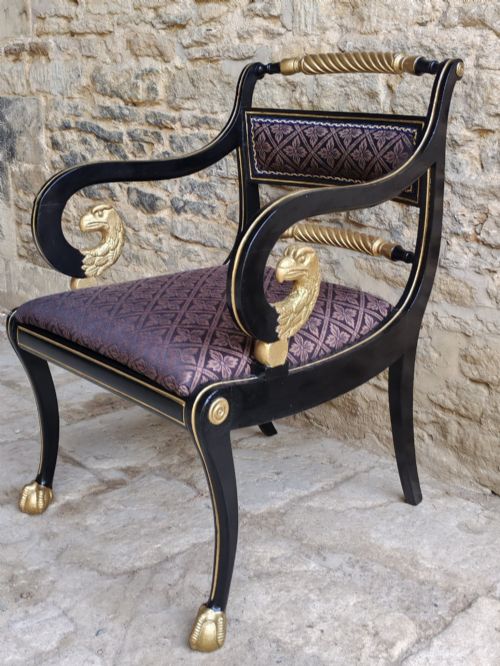
Regency ebonised armchairs span genuine period seating from the early nineteenth century alongside later Regency Revival pieces produced in the twentieth century. These chairs frequently feature ebonised wood surfaces, often accented with parcel gilt, paint, or gold leaf, creating high contrast against upholstery or cane panels.
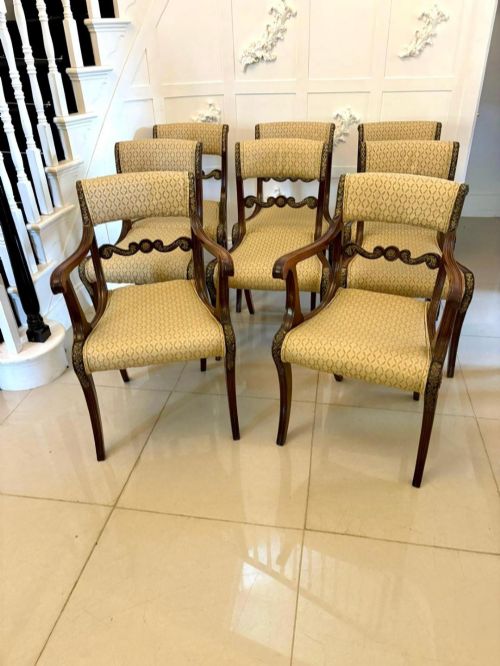
The forms on this page include library armchairs, bergères, elbow chairs, and dining chairs, drawing from both British Regency and Anglo-Indian colonial traditions. Buyers will encounter single library seats, matched pairs, and larger dining sets ranging up to fourteen chairs.
While true Regency examples date to the early nineteenth century, the twentieth century produced faithful revivals in the Regency style utilising similar painted and ebonised finishes. Each variant captures the classical proportions and dark finishes characteristic of the Regency aesthetic.
Materials and construction
Cabinetmakers constructed these frames using ebonised wood, ebony, and mahogany, frequently applying paint or dark finishes to simulate more expensive exotic timbers. Surfaces often incorporate parcel gilt or gold leaf highlights to accentuate carved classical details.
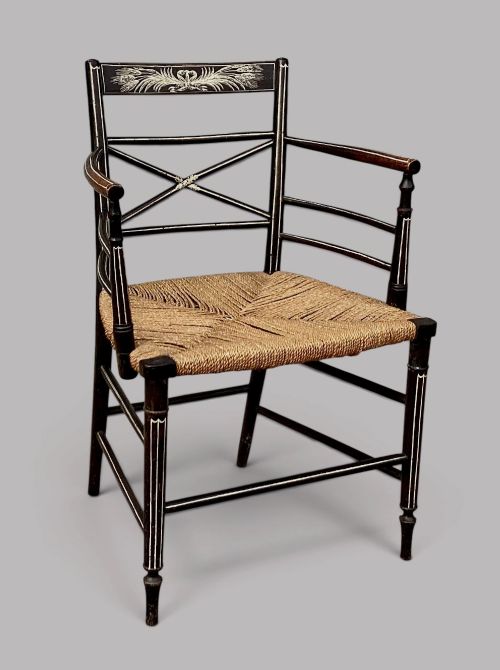
Seating areas utilise woven cane, brass mounts, and various fabrics, with some examples employing faux bamboo turning for decorative effect. Craftsmanship balances structural rigidity with the neat proportions demanded by Regency taste.
Regency Ebonised Armchairs Retail Price Guide 2026
Typical asking prices for regency ebonised armchairs among the pieces listed under this phrase on Sellingantiques today, from the lower quarter to the upper quarter. They describe what is for sale here now, not the wider market.
Several chairs manage to look severe in black yet cheerful with faux bamboo joints.
Judging quality
Quality rests in the crispness of the carving, the integrity of the ebonised or painted finish, and the preservation of original parcel gilding. Finer pieces demonstrate superior joinery in the arms and legs, maintaining stability without losing their refined proportions.
The distinction between genuine Regency period pieces and later revivals lies in the depth of the patina and the maturity of the timber beneath the surface finishes. Harmony between decorative elements like cane panels, brass detailing, and gilt highlights separates standard seating from exhibition quality examples.
Gillows
The Regency Ebonised Armchairs Glossary
- Ebonised wood
- Timber treated with a dark stain or finish to imitate the appearance of ebony. This technique was widely utilised during the Regency period to achieve a stark, classical look.
- Bergère
- An enclosed armchair featuring upholstered or cane sides and back. These seats offer a solid yet elegant profile.
- Parcel gilt
- A decorative technique where specific carved details or highlights on a piece are partially gilded with gold leaf. It contrasts sharply against dark ebonised surfaces.
- Faux bamboo
- Wood turned and carved to resemble natural bamboo stalks. This whimsical motif appeared frequently on seating from the Regency era.
- Elbow chair
- A term historically used for a dining or desk chair fitted with arms. They often accompanied larger sets of dining chairs.
Regency Ebonised Armchairs: Frequently Asked Questions
How do I spot a true period chair?
Examine the timber beneath the dark finish and look for the tool marks and construction methods consistent with nineteenth-century cabinetmaking. Genuine period pieces carry a mature patina that twentieth-century revivals struggle to replicate.
Compare the proportions and decorative restraint against documented examples from the Regency era. Subtle details in the turning and joint work often reveal the true age of the frame.
Are these chairs comfortable for daily use?
Most Regency seating was designed with upright posture in mind, reflecting the formal manners of the period. Library armchairs and bergères offer a more relaxed sit, especially when fitted with supportive squab cushions.
Dining chairs and elbow chairs work best for formal seating or occasional use around a desk. Their neat proportions mean they fit easily into modern spaces without overwhelming the room.
How should I care for ebonised surfaces?
Keep these chairs away from direct sunlight and steady heat sources to protect the dark finish and any underlying gilding from drying out. Dust them gently with a dry, soft cloth rather than using harsh commercial polishes.
Protect cane panels from sharp impacts and excessive moisture to prevent snapping. Proper humidity control in your home preserves both the wood and the delicate gilt highlights.
What is the difference between Regency and Regency Revival?
Genuine Regency pieces date from the early nineteenth century and carry the authentic wear of use from that era. Regency Revival pieces date from later periods, such as the early twentieth century, reproducing the earlier neoclassical style.
Both categories utilise ebonised wood, parcel gilt, and caning, but differ in their age and the manufacturing techniques used. Collectors value both for their decorative impact, though period pieces command greater historical interest.