
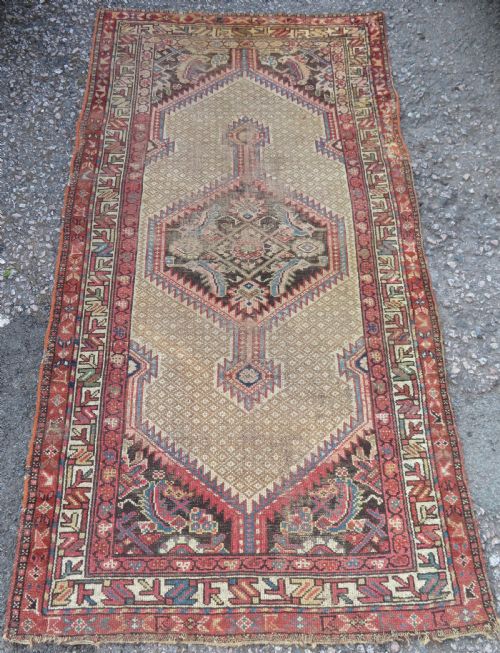


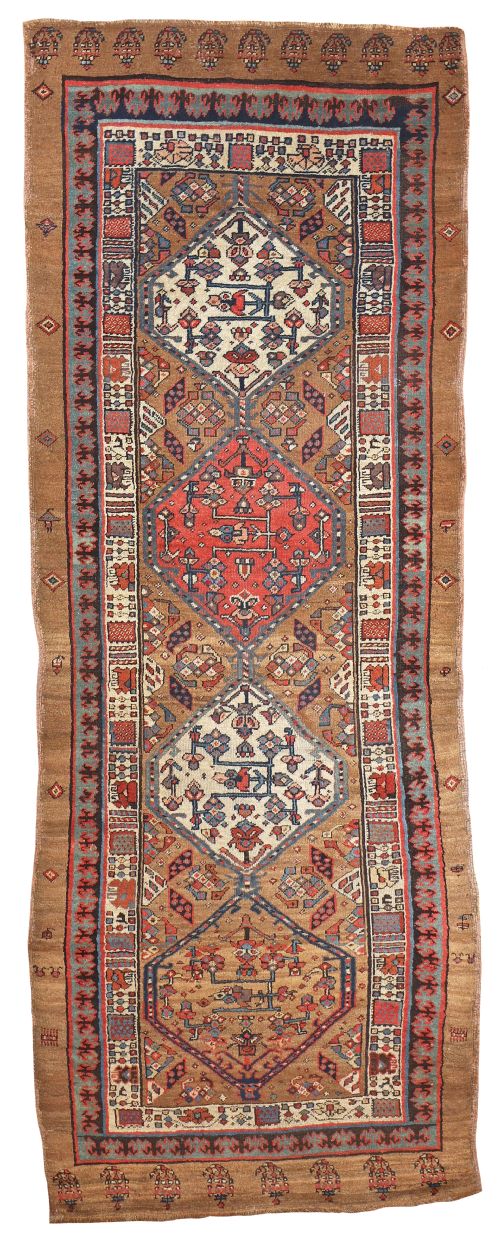
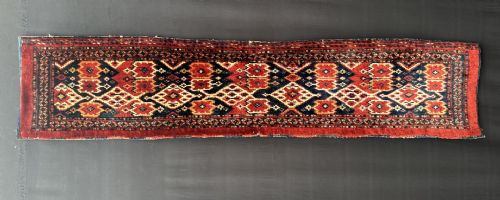
Camel Wool Runner Rug
A camel wool runner rug brings tribal warmth and enduring durability to a long hallway through its dense pile and earthy tones.
Camel Wool Runner Rug
A camel wool runner rug represents a distinct category of nomadic and village weaving originating primarily from Persian and Central Asian tribal groups. These elongated floor coverings were designed to withstand heavy traffic in domestic spaces while displaying traditional motifs.
Materials and construction
Weavers utilised natural wool, hand-spun wool, and genuine camel hair to form the dense pile of each rug. Cotton often appears in the foundational warps and wefts, providing structural stability to the elongated format.
Makers applied natural dyes to achieve the signature camel grounds and rich field colours characteristic of these nomadic textiles. The combination of resilient animal fibres and traditional knotting techniques accounts for the survival of these pieces through generations.
The listings span from the mid-nineteenth century to the mid-twentieth century, featuring materials such as camel hair, hand-spun wool, and natural dyes across Persian and Central Asian tribal forms.
Assessing quality in tribal runners
The refinement of the weave and the crispness of the tribal motifs set exceptional examples apart from simpler village work. Finer knotting allows intricate latch hook medallions or tree of life designs to emerge with greater clarity.
The integrity of the camel ground and the preservation of the original outer borders influence the desirability of a runner. Pieces retaining their full length and uniform width demonstrate superior original craftsmanship.
The Camel Wool Runner Rug Glossary
- Camel ground
- A background field utilising the undyed, warm brown or golden fleece of camels. This natural fibre provides a distinct neutral tone highly sought after in nomadic weaving.
- Runner
- A long, narrow carpet format specifically proportioned for hallways, corridors, and staircases. These pieces balance decorative impact with functional floor coverage.
- Torba
- A small tribal storage bag or trapping produced by Turkmen groups. These items frequently display intricate guls and rich secondary detailing.
- Prayer rug
- A small rug featuring a mihrab or arch design indicating the direction of prayer. These textiles often incorporate mixed techniques and camel wool elements.
Camel Wool Runner Rug: Frequently Asked Questions
Where were these runners made?
These textiles originate from nomadic and village weaving traditions across Persia, Turkmenistan, and Afghanistan. Tribal groups such as the Sarab, Baluch, and Ersari produced them for domestic use or ceremonial purposes.
The diverse geographic origins reflect the nomadic movements and regional aesthetics of Central Asia and North West Persia.
How do I care for a camel wool runner?
Vacuum the rug gently using suction without a rotating brush bar to protect the old pile and hand-spun foundations. Keep the runner out of direct sunlight to prevent fading of the natural dyes.
Rotate the piece periodically to ensure even wear across high-traffic hallway areas.
What is a camel ground?
A camel ground refers to the primary background colour of a rug created using undyed camel hair. This fibre offers a durable, warm earthy tone that serves as a neutral base for tribal motifs.
Runners with this feature often display contrasting medallion or tree designs.
How do I date an antique runner?
Dating relies on examining the materials, natural dye palette, structural characteristics, and traditional tribal designs. Mid-nineteenth to early twentieth-century pieces show characteristic hand-spun wool and regional motifs.
Comparing construction methods with documented tribal examples helps establish the likely period of manufacture.