

Cabriole Leg Walnut Cabinet
A cabriole leg walnut cabinet brings together fluid curved supports and figured timber, spanning the eighteenth century to the twentieth.
Cabriole Leg Walnut Cabinet
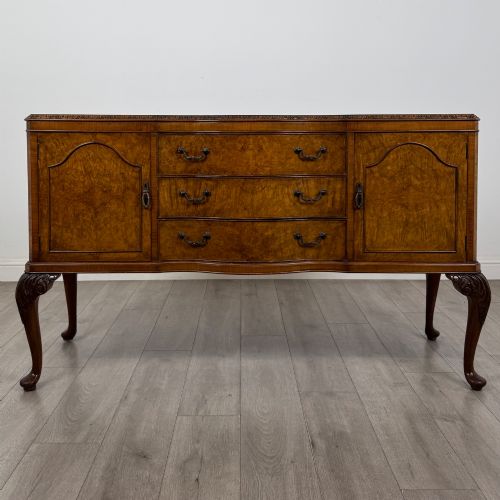
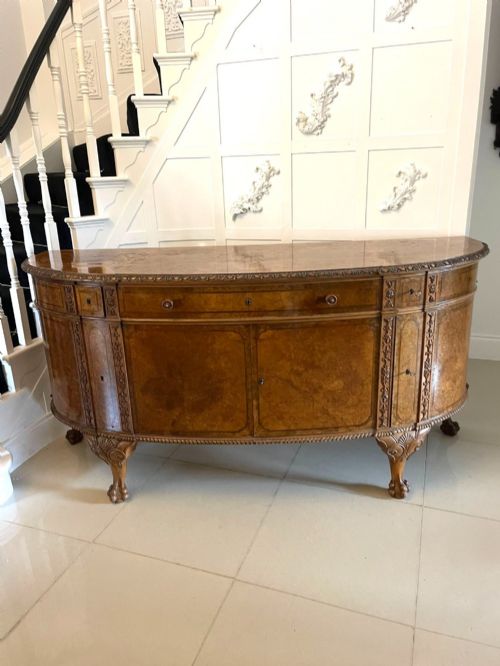
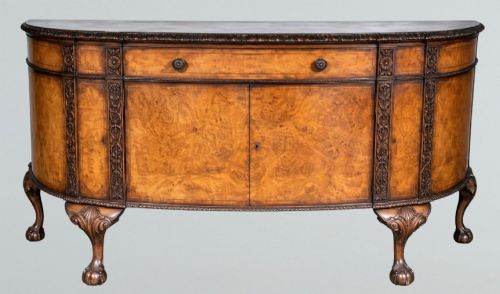
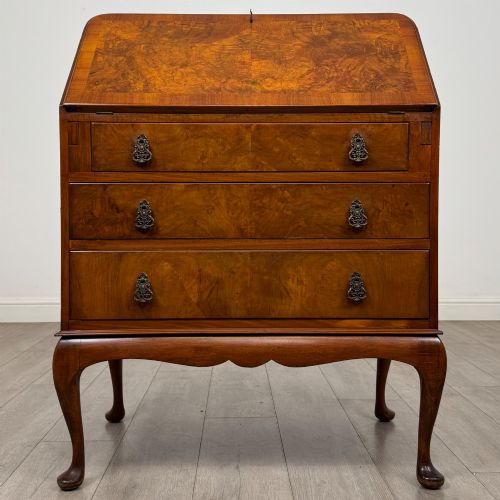
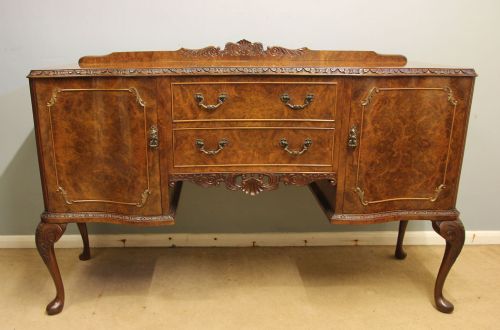
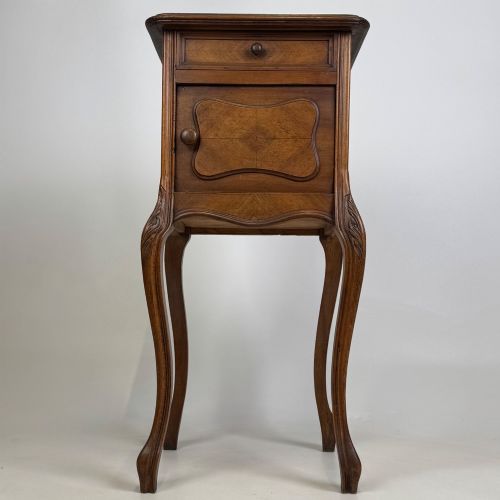
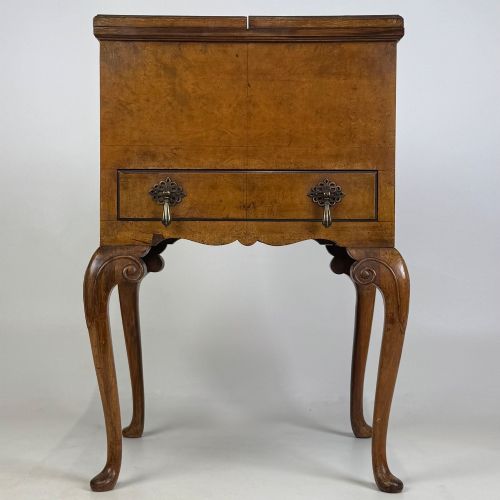
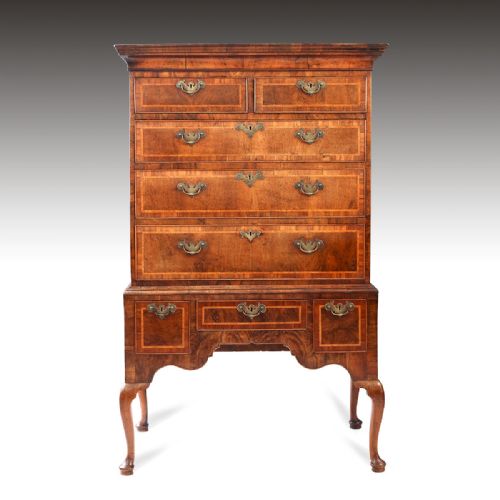
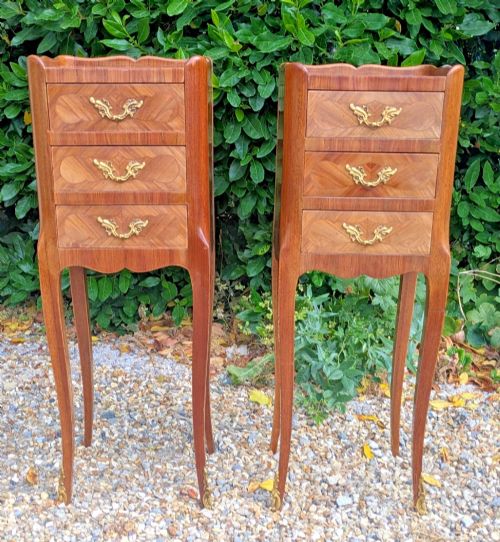
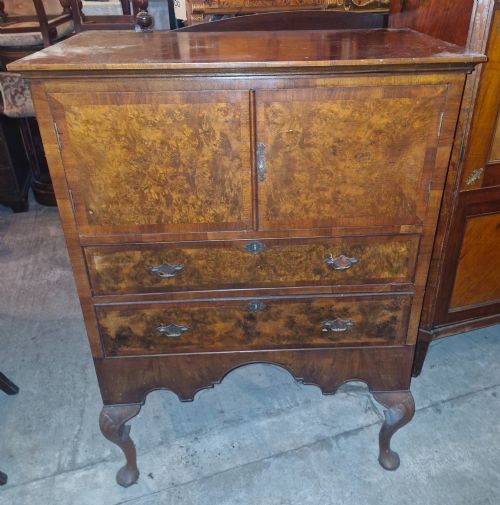
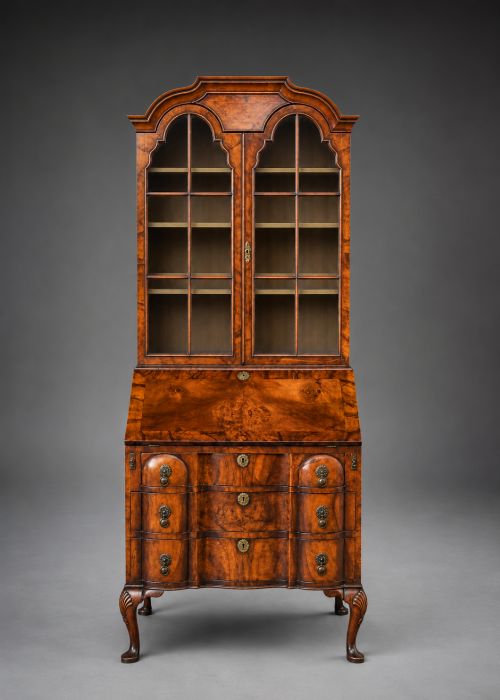
A cabriole leg walnut cabinet covers a range of practical storage forms, from compact bedside chests and lamp tables to tall display bookcases, bureaus, and serving sideboards. These pieces cross several eras, appearing in authentic eighteenth-century examples alongside Queen Anne revival pieces and twentieth-century interpretations.
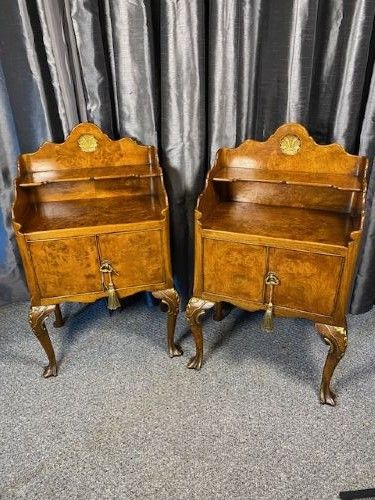
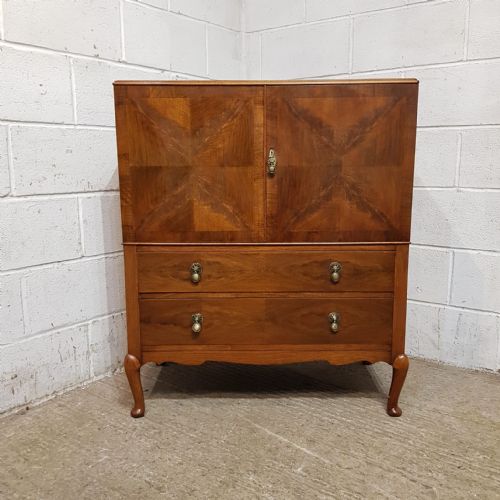
The version most commonly met on this page is the twentieth-century bedside cabinet or side cabinet in burr walnut, often built in pairs. Alongside these, buyers find larger display cabinets, sideboards, and cocktail cabinets reflecting Queen Anne and French Louis XV styles.
Origins span English workshops of the eighteenth century and later revivals, alongside French provincial cabinetmaking and Dutch veneered pieces. The unifying element across these diverse forms and periods remains the distinctive curved leg and walnut timber construction.
Materials and technique
Makers utilised solid walnut and decorative veneers like burr walnut and figured walnut, often applied over secondary timbers. Surfaces frequently receive crossbanding and marquetry inlay to accentuate the grain patterns of the wood.
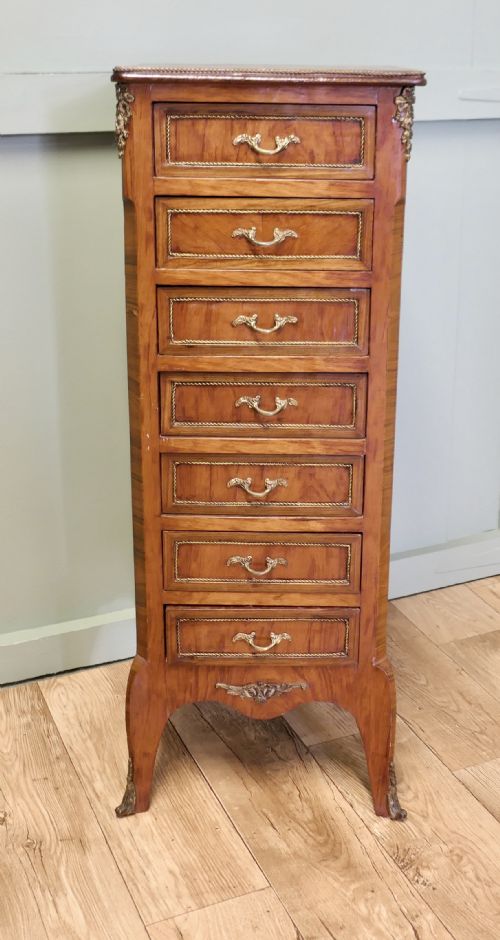
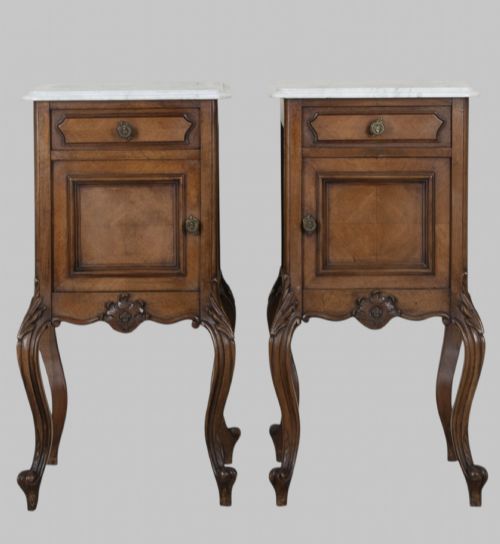
Structural embellishments include brass hardware, ormolu mounts, and inset marble tops, particularly on French provincial bedside cabinets. Glazed doors appear on display bookcases, while fitted interiors accommodate drawers, shelves, and cutlery sets.
Listings feature walnut furniture spanning from the eighteenth century to the 1930s, incorporating brass, marble, glass, and ormolu.
Craftsmanship and distinction
Quality rests on the selection and matching of the walnut veneers across the visible surfaces, where harmonious grain patterns elevate a piece beyond standard production. The execution of the carved or shaped cabriole leg demonstrates the cabinetmaker's skill in maintaining proportion and flowing line.
The integrity of the construction, from the precision of the marquetry inlay to the weight and finish of the brass or ormolu mounts, separates finer workshops from simpler commercial output.
Maple & Co.
The Cabriole Leg Walnut Cabinet Glossary
- Cabriole leg
- A furniture support that curves outward at the knee and inward at the ankle, finishing in a pad, claw, or scroll foot. This form derives from classical antiquity and became a defining feature of eighteenth-century and revival furniture.
- Burr walnut
- A specialised timber cut from the abnormal growth or burl of a walnut tree, yielding intricate, swirling grain patterns. Cabinetmakers prize this material for decorative veneer panels on prominent surfaces.
- Marquetry
- The art of applying decorative veneer pieces to a structural surface to form pictures or geometric patterns. Makers utilise various tinted woods to achieve contrast and detail.
- Crossbanding
- A border technique where narrow strips of veneer are laid perpendicular to the main grain direction. This frames panels on drawer fronts and cabinet doors.
- Ormolu
- Gilded bronze mounts applied to furniture for decorative effect. The technique gained widespread use in French cabinetmaking styles.
Cabriole Leg Walnut Cabinet: Frequently Asked Questions
What is a cabriole leg walnut cabinet?
A cabriole leg walnut cabinet is a piece of storage furniture raised on curved legs, constructed from walnut or walnut veneer. These items include bedside chests, sideboards, display cabinets, and bureaus.
They draw on design traditions from the eighteenth century through to twentieth-century revival periods, incorporating styles such as Queen Anne and French Louis XV.
How do I date a walnut cabinet?
Dating relies on examining construction methods, hardware, timber preparation, and stylistic cues. Eighteenth-century pieces often show hand-cut joinery and period timber patination, whereas revival pieces from the Victorian, Edwardian, and 1920s eras reflect later manufacturing standards.
Matching the specific style descriptors, such as Queen Anne revival or French provincial, helps narrow the production era.
Where were these cabinets used?
These cabinets served multiple domestic functions across bedrooms, sitting rooms, and dining spaces. Bedside tables and lamp tables provided surface space and enclosed storage beside seating or sleeping areas.
Larger sideboards, cocktail cabinets, and display bookcases furnished principal reception rooms for storage and display.
How do I care for walnut furniture?
Maintaining walnut furniture involves keeping pieces away from direct sunlight and consistent heat sources to protect the wood and veneer. Regular dusting with a soft cloth preserves the polished finish.
Moisture and spills require immediate attention to prevent marking the polished surfaces or lifting veneered elements.