
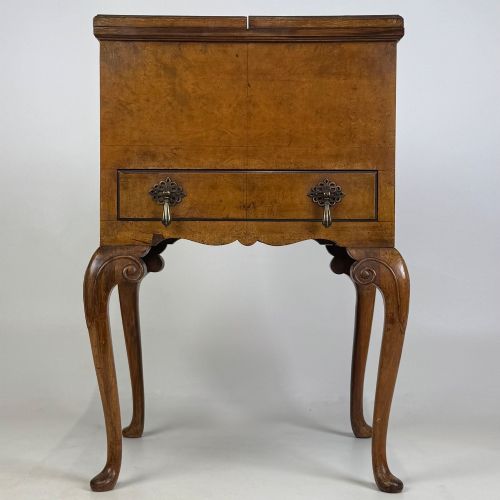
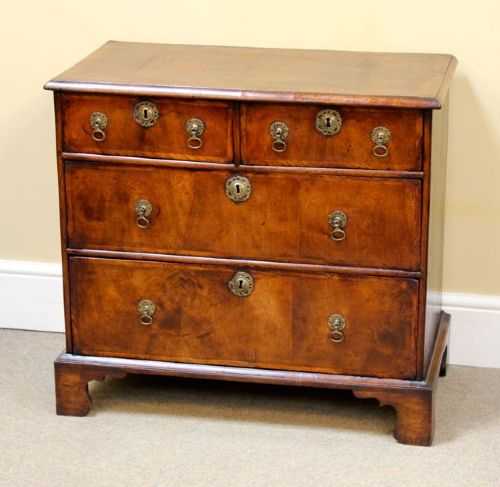
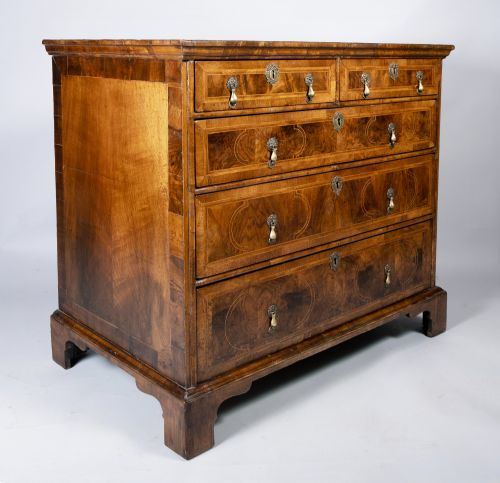


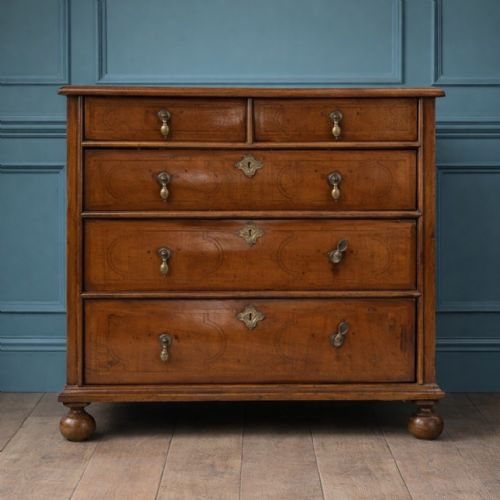


Walnut Drop Handle Cabinet
A walnut drop handle cabinet brings rich grain and period brasswork into a room, offering both practical storage and deep historical presence.
Walnut Drop Handle Cabinet
When you search for a walnut drop handle cabinet, you are looking at timber furniture spanning from the late seventeenth century through the Edwardian era, with roots in William and Mary, Queen Anne, and Georgian designs.
The pieces you meet most often on this page take the form of chests of drawers, chests on stands, and bedside tables rather than standalone cupboards.
Makers shaped these items across periods such as the eighteenth century and Victorian times, using figured timbers and traditional drop handles that define their functional character.
How they were made
Cabinet makers utilised solid walnut, burr walnut, and oak timbers to build these pieces, often applying fine inlay work to the visible surfaces.
Metalworkers cast the brass drop handles and mounts that fix to the drawer fronts, providing the distinctive hardware central to the form.
Current listings feature walnut furniture spanning from the late seventeenth century through to the Edwardian period, including pieces in William and Mary and Queen Anne styles.
What varies in quality
The sophistication of the timber figure and the crispness of the inlay set the finest examples apart from simpler pieces.
The integrity of the original brass drop handles and the skill shown in the cabinet construction determine the standing of each item within its period.
The Walnut Drop Handle Cabinet Glossary
- Burr walnut
- A specialised timber cut from the warted growths of walnut trees. It yields complex, swirling grain patterns highly valued by period cabinet makers.
- Drop handle
- A pendant-style metal pull hanging from a backplate. This hardware style dominates the early periods represented here.
- Chest on stand
- A tall drawer section raised on an open frame with legs. This form provides elevated storage while keeping a lighter visual footprint in a room.
- Inlay
- Pieces of contrasting timber or material fitted into depressions in the base surface. It creates decorative borders and geometric motifs on drawer fronts.
Walnut Drop Handle Cabinet: Frequently Asked Questions
How do I date a walnut cabinet?
Examine the timber selection, construction methods, and hardware styles to place a piece within its era. William and Mary and Queen Anne pieces show specific joining techniques and leg forms distinct from later Georgian or Victorian examples.
Look closely at the drawer linings and backboards for tool marks and timber shrinkage that indicate age. Comparing the brass drop handles to known period hardware helps confirm the date.
Where should I place a walnut chest?
These cabinets suit living rooms, hallways, and bedrooms where their warm timber tones can complement other wooden furniture. A bedside table or small chest fits easily into compact spaces while offering useful drawer storage.
Keep the piece away from direct sunlight and strong heat sources to protect the walnut veneer and polished finish from drying out over time.
What is burr walnut?
Burr walnut comes from a tree growth that produces dense, swirling grain patterns filled with small knots and eyes. Craftsmen sliced this timber into thin veneers to cover drawer fronts and primary surfaces.
Because of its striking visual movement, burr walnut was reserved for high-status furniture across the seventeenth and eighteenth centuries.
Are drop handles original?
Original drop handles match the screw spacing, metal composition, and wear patterns expected of the cabinet's period. Replacements often leave filled holes behind the backplate or use modern screw threads.
Inspect the interior of the drawer to see if the fixing holes align naturally with the age of the woodwork.