


Edwardian Walnut Vanity Box
An edwardian walnut vanity box brings warm timber and polished brass into a bedroom as a tidy place for daily small treasures.
Edwardian Walnut Vanity Box
When you search for an edwardian walnut vanity box, you are looking at small wooden containers designed to hold personal grooming items and jewellery. The selection ranges from compact cabinets to fitted storage chests spanning the late nineteenth and early twentieth centuries.
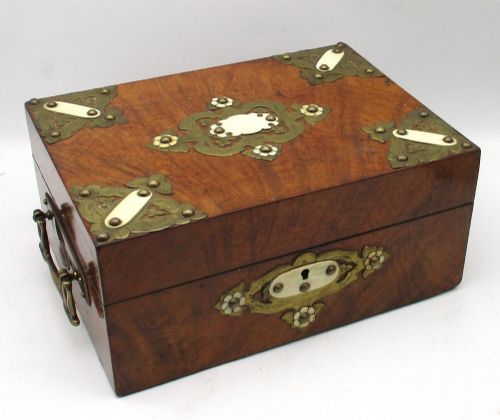
You are most likely to meet burr walnut boxes featuring contrasting grain patterns and hinged lids. Many examples include brass mounts or internal compartments lined in silk and velvet for delicate items.
Materials and construction
Cabinet makers utilised plain and burr walnut veneers applied to a solid timber carcass to create rich surface patterns. These wooden bodies were often reinforced with brass banding, corners and escutcheons to protect the edges during daily use.
Interiors frequently combined mixed timber framing with fitted trays lined in silk or velvet. Small bone details and glass components occasionally appeared in compartments designed for specific grooming tools.
One exceptional listing includes a seven-day razor set originating from The Waldorf Hotel, proving gentlemen took their grooming very seriously.
Judging quality and craftsmanship
Quality rests upon the selection of the burr walnut veneer and how seamlessly the grain matches across the lid and sides. Superior boxes display crisp brass mounts fitted flush into the timber rather than surface-fixed replacements.
The interior reveals much about standard of manufacture through tightly joined divider woods and well-preserved fabric linings. Better specimens retain their original working locks and hinges that operate smoothly without dropping.
The Edwardian Walnut Vanity Box Glossary
- Burr walnut
- A figured wood veneer taken from the warted growths of walnut trees, prized for its swirling patterns. It forms the decorative surface on many high-end dressing boxes.
- Escutcheon
- A protective plate surrounding a keyhole, usually made of brass in these pieces. It prevents the wood from splitting around the lock.
- Glove box
- A long, narrow container originally designed to store leather gloves. They share similar construction methods and timber choices with vanity boxes.
- Tunbridge ware
- A form of woodworking using thousands of tiny coloured wood blocks to create mosaic pictures. These detailed geometric designs often decorate nineteenth-century box lids.
Edwardian Walnut Vanity Box: Frequently Asked Questions
What fits inside an edwardian walnut vanity box?
These boxes accommodate small personal items such as rings, brooches, cuff links and small grooming accessories. Many feature internal trays and partitions designed to keep individual pieces separated.
Some variants include dedicated sections for razors, sewing implements or letters depending on the specific internal layout chosen by the original maker.
How do I care for burr walnut wood?
Keep the wood away from direct sunlight and strong heat sources to prevent the veneer from drying out or splitting. Dust gently with a dry, soft cloth and avoid chemical polishes that can damage old finishes.
Applying a light coat of specialist wax occasionally helps nourish the walnut surface and maintain its natural lustre without building up heavy residue.
Are these boxes waterproof?
No, antique wooden boxes are not waterproof and feature traditional glue and lining materials that moisture can easily ruin. Spills should be dried immediately from the timber and fabric.
Bathrooms are generally unsuitable locations for display due to high humidity levels which can warp the walnut carcass and lift delicate veneers.
How can I tell the period of a walnut box?
Dating relies on examining the construction methods, handle styles, lock types and internal fabrics. Victorian and Edwardian examples often display hand-cut dovetails and brass hardware characteristic of their decade.
Stylistic influences such as Arts and Crafts simplicity or Queen Anne revival tastes also provide clear clues to the manufacturing era.