
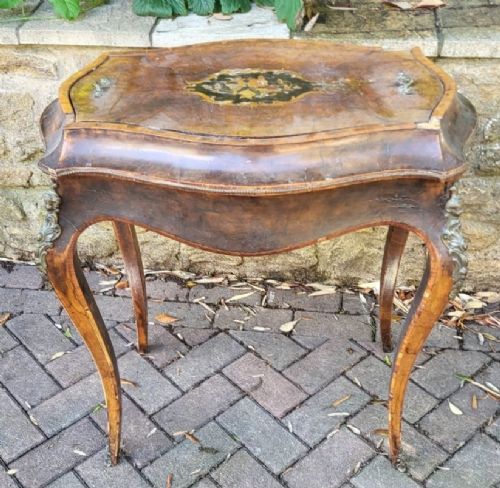
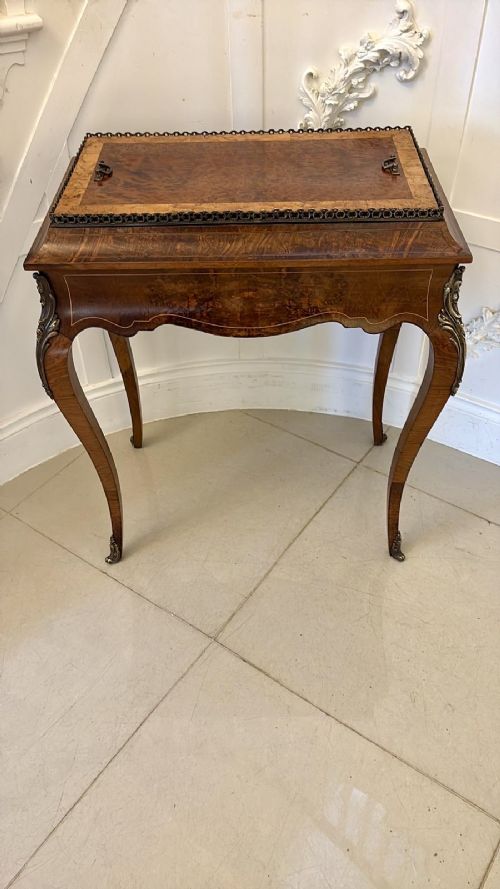


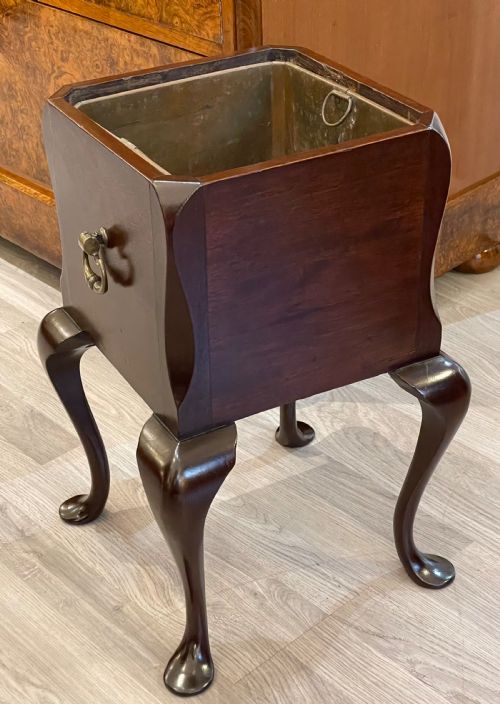


Cabriole Leg Planter
These cabriole leg planter pieces bring rich wood and metal plant stands into a room to hold greenery with period character.
Cabriole Leg Planter
A cabriole leg planter provides an elevated home for indoor greenery, taking forms such as jardiniere tables, plant stands, and side tables. These vessels range from Georgian mahogany and box tree examples to ornate Victorian and Belle Epoque pieces.
Most items on this page lean into French Louis XV Revival and Victorian Rococo Revival styles, featuring curved supports and decorative mounts. Walnut, burr walnut, and kingwood dominate the selection, often enriched with marquetry inlay or porcelain plaques.
Makers designed these stands for drawing rooms and parlours, combining botanical display with fine cabinetmaking. Buyers encounter freestanding vessels alongside lift-off lid designs and combination wine coolers.
How They Were Made
Cabinetmakers utilised dense timbers like walnut, satinwood, mahogany, and kingwood, frequently applying intricate marquetry patterns across the surfaces. Burr walnut veneer provides swirling grain figures that catch the light on curved bodies.
Ormolu mounts cast in bronze or brass accentuate the flowing contours of the woodwork, echoing the organic lines of the plant stands. Porcelain plaques and zinc liners insert directly into the framework to hold water and soil safely away from the wood.
Periods represented stretch from Georgian and Victorian eras through to Belle Epoque pieces.
What Varies in Quality
Depth of marquetry detail and precision of wood selection separate standard furniture from finer showpieces. Rich burr walnut veneers and crisp ormolu mounts indicate cabinetwork executed with greater ambition.
The integration of hand-painted porcelain plaques and specialised inserts marks out more elaborate examples. Structural balance across curved supports also dictates the sophistication of the piece.
The Cabriole Leg Planter Glossary
- Cabriole leg
- A furniture support that curves out and then in, mimicking animal limbs with a knee and foot. This profile defines much of the Louis XV style seen on these stands.
- Jardiniere
- An ornamental pot or stand for holding plants or flowers. These items often feature waterproof liners or internal troughs.
- Ormolu
- Gilded bronze ornamentation applied to furniture mounts and decorative hardware. It provides metallic contrast against dark woods like walnut and kingwood.
- Marquetry
- Decorative veneer work forming pictures or patterns using various coloured woods. Craftsmen cut and fitted these pieces into geometric or floral layouts.
- Burr walnut
- Timber taken from a tree growth showing complex, swirling grain patterns. Cabinetmakers prized this wood for high-end decorative surfaces.
Cabriole Leg Planter: Frequently Asked Questions
What is a jardiniere stand?
A jardiniere stand is a raised piece of furniture built specifically to display potted plants and floral arrangements inside a home.
These vessels lift greenery off the floor to showcase both the plant and the detailed woodwork of the stand itself.
How do I protect the wood?
Protecting the timber involves using the correct interior liners and avoiding direct contact between damp soil and the polished surface.
Most quality stands use removable metal or ceramic inserts to contain moisture during watering.
Are these suitable for real plants?
Many of these pieces were engineered to hold live plants using fitted metal liners or zinc trays.
Using potted plants inside secondary pots prevents water damage to the underlying veneers and marquetry.
How do I date these stands?
Dating relies on examining the timber species, manufacturing techniques, and decorative styles such as Georgian simplicity or Victorian revivalism.
Secondary woods and construction methods inside the frame offer further clues to the period of origin.