
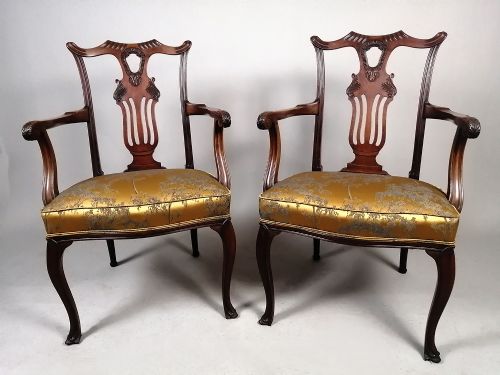
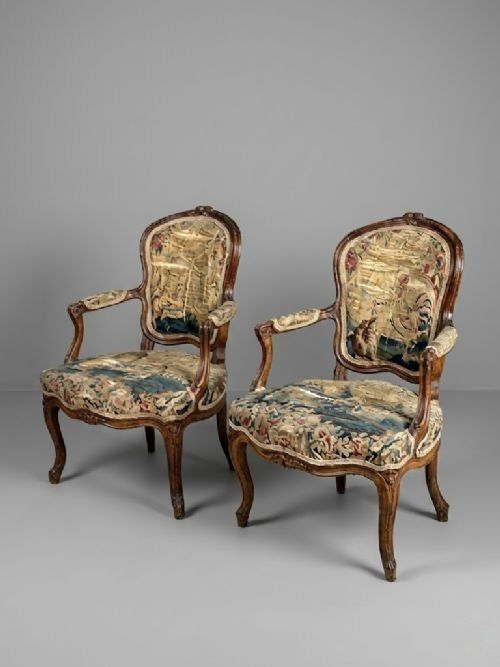
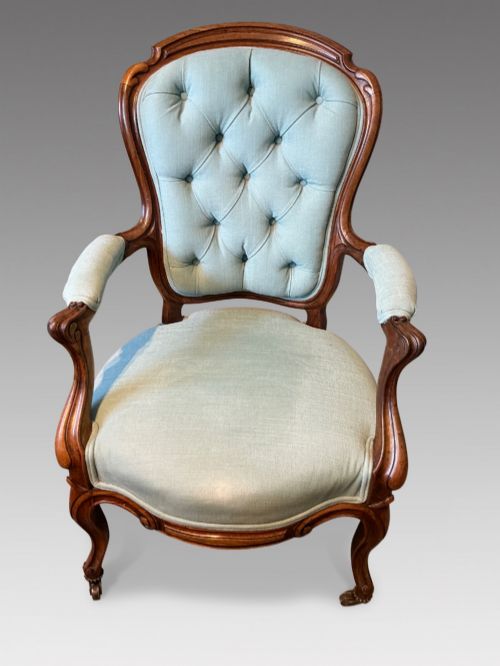
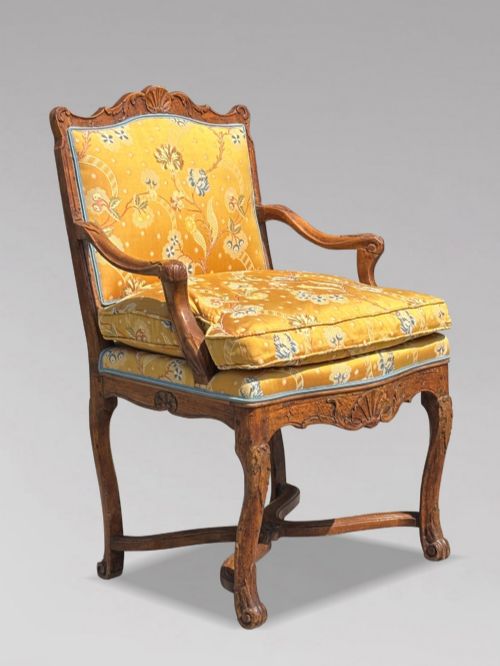
Cabriole Leg Open Chair
A cabriole leg open chair brings distinct curved lines and structured seating into a room, combining practical support with decorative appeal.
Cabriole Leg Open Chair
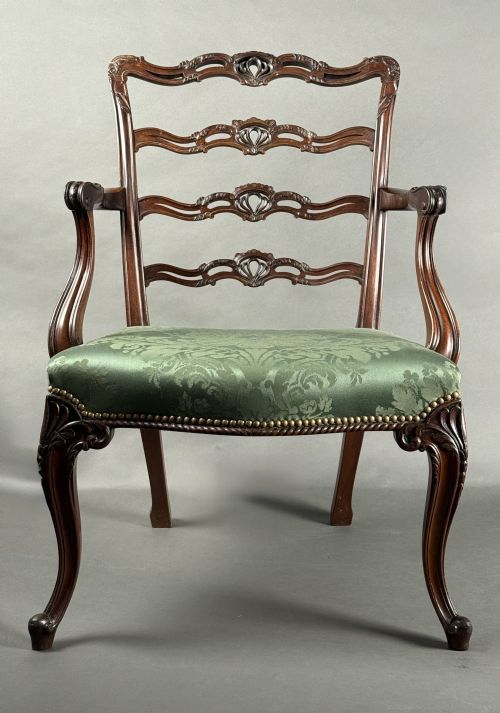
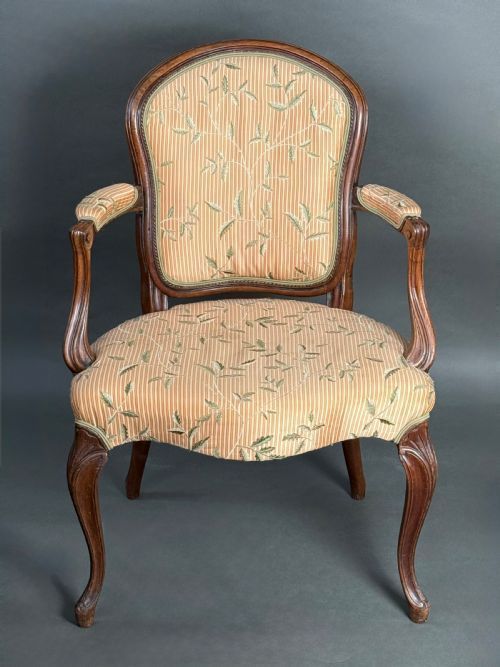
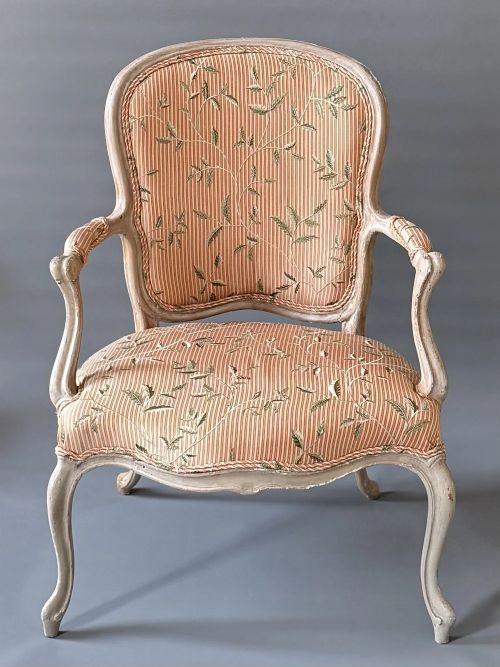
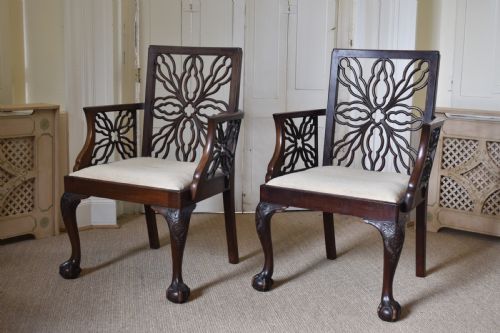
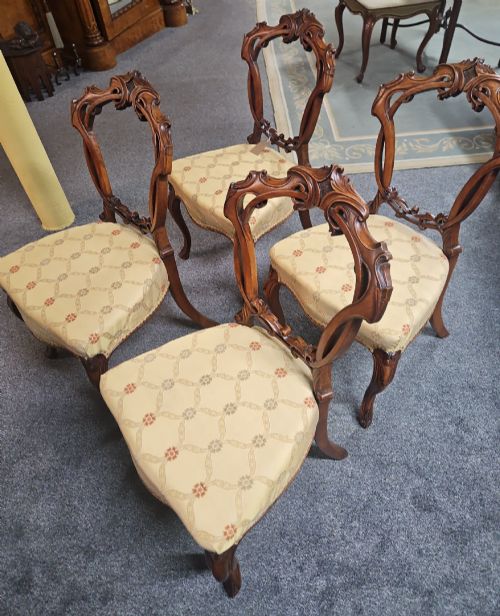
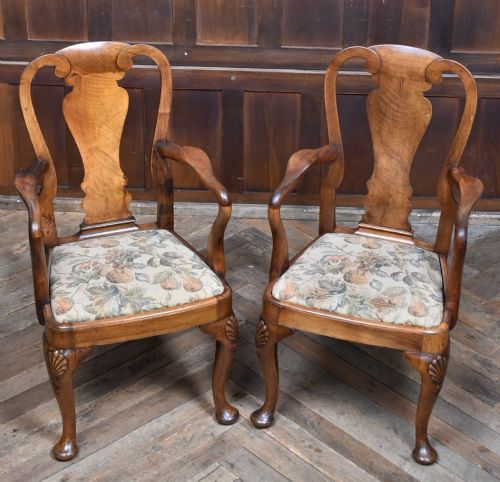
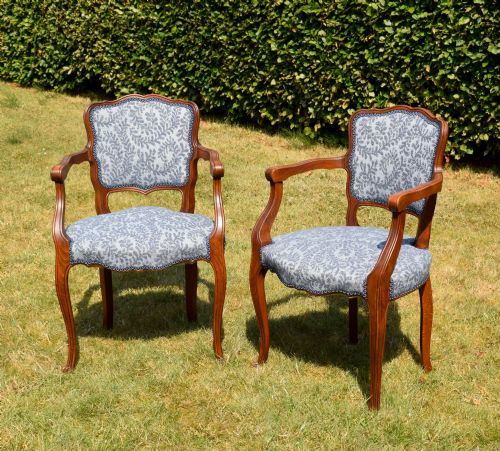
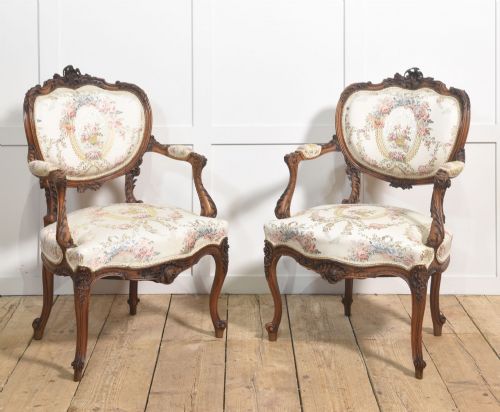
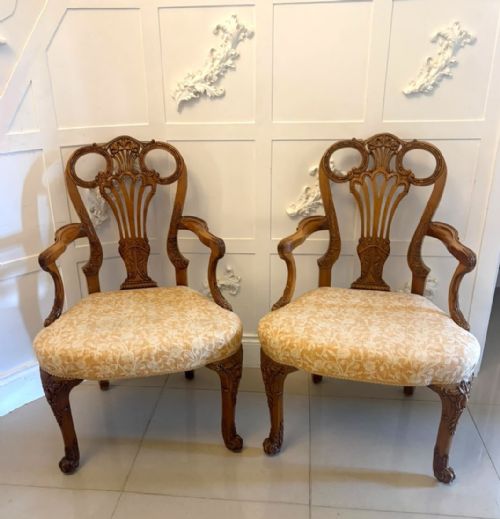
A cabriole leg open chair combines an exposed wooden frame with upholstered or open seating, designed with characteristic curving legs that sweep outward at the knee and inward at the foot. You will encounter pieces spanning the eighteenth century, the Victorian era, and early twentieth-century revivals.
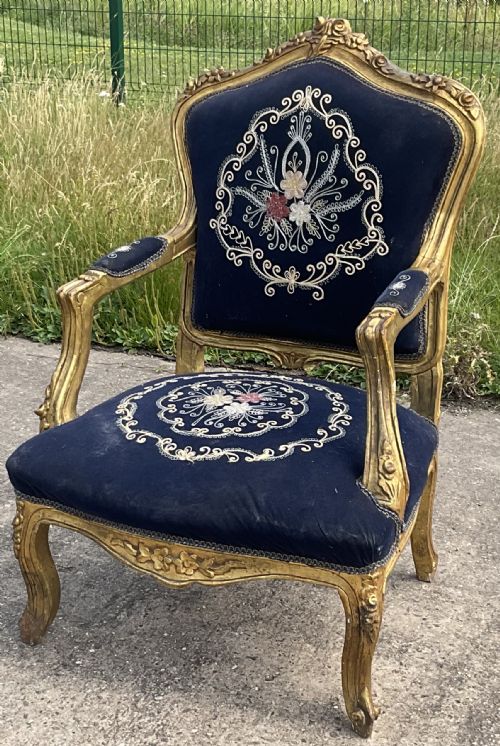
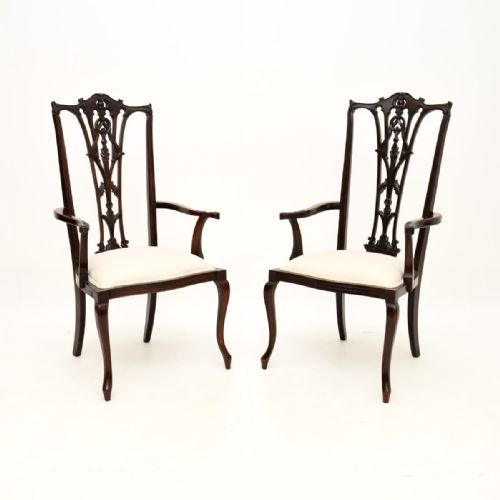
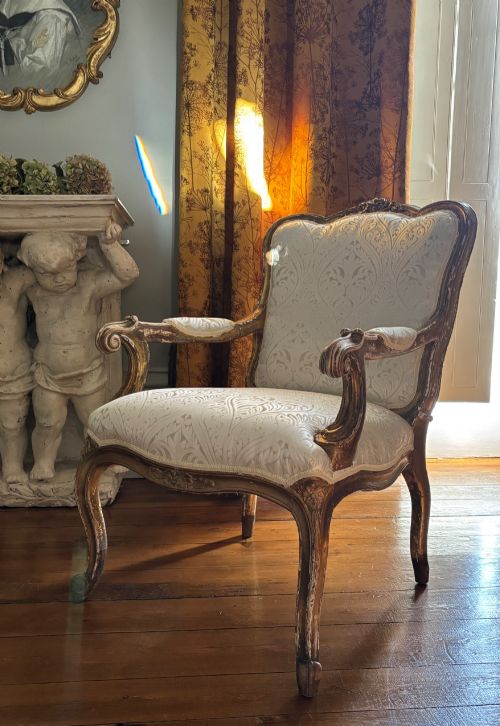
The selections on this page range from Georgian and George II originals to Chippendale revival, French Provincial, and Louis XV style pieces. Forms include armchairs, elbow chairs, library armchairs, and dining chairs constructed primarily in mahogany and walnut.
Materials and Construction
Makers shaped structural frames from hardwoods including mahogany and walnut, utilising carved wooden elements and joinery to support the open form. Selected pieces feature gilded finishes or painted wood surfaces.
Upholstery relies on traditional textiles such as silk, velvet, fabric, and needlework, secured alongside internal stuffing and sometimes finished with brass details.
The listings on this page span walnut, mahogany, and painted wood frames, upholstered in silk, velvet, and needlework across eighteenth-century and Victorian periods.
Judging Quality
Quality rests in the precision of the wood carving, particularly the sweep of the cabriole leg and the definition of associated scrollwork or floral motifs. Finer examples display harmonious proportions between the open arms, back support, and underframe.
The choice of primary timber and the execution of secondary woods dictate structural integrity, while the standard of upholstery and textile selection contribute significantly to the finished presence of the chair.
The Cabriole Leg Open Chair Glossary
- Cabriole leg
- A furniture leg that curves outward at the knee and tapers inward to an ankle and foot, mimicking an animal's limb. This form originated in antiquity and gained widespread popularity during the eighteenth century.
- Fauteuil
- An open-framed upholstered armchair with wooden armrests, originating in France. These chairs typically feature exposed wood around the back and seat rails.
- Chippendale style
- A furniture design style drawing on the mid-eighteenth-century patterns of Thomas Chippendale. Pieces often incorporate carved mahogany frames and cabriole legs ending in claw and ball feet.
- Gainsborough armchair
- A wide, low-seated upholstered armchair with open padded arms, designed in England during the mid-eighteenth century. They frequently stand on cabriole legs.
- Spoon back
- A padded chair back shaped with a concave contour resembling the bowl of a spoon, common in Victorian upholstery. This design fits the curve of the human spine.
Cabriole Leg Open Chair: Frequently Asked Questions
What is a cabriole leg?
A cabriole leg is a stylistic furniture support that curves out at the knee and curves inward at the ankle, ending in a pad, claw, or scroll foot.
This design draws inspiration from ancient animal legs and provides structural strength without heavy bracing.
How do I identify a Georgian chair?
Georgian chairs display solid hardwood construction, predominantly in mahogany or walnut, with hand-carved details and balanced proportions.
Look for traditional joinery methods and stylistic markers such as hipped cabriole legs or pierced splat backs.
Where should I place an open armchair?
Open armchairs function well in studies, drawing rooms, or bedrooms as reading chairs or occasional seating.
Their open wooden frames keep sightlines clear, making them suitable for spaces where bulkier upholstered furniture might crowd the room.
What is the difference between a fauteuil and an elbow chair?
A fauteuil is a distinct French upholstered armchair featuring an exposed wooden frame and padded armrests left open beneath.
An elbow chair is a broader British term for any dining or occasional chair fitted with short arms.