
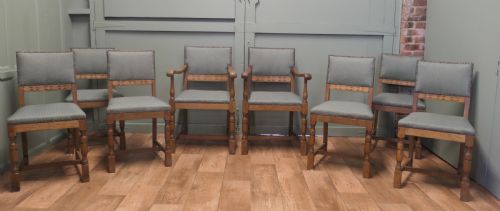
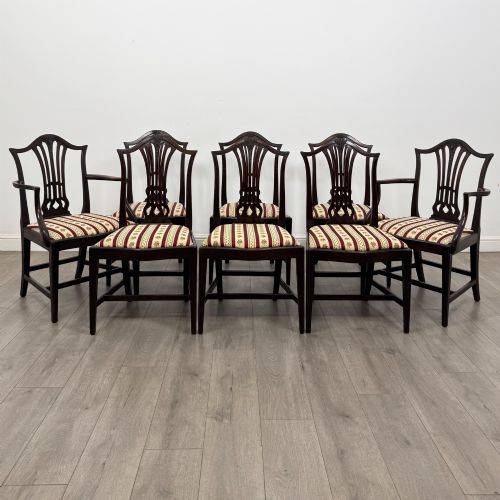
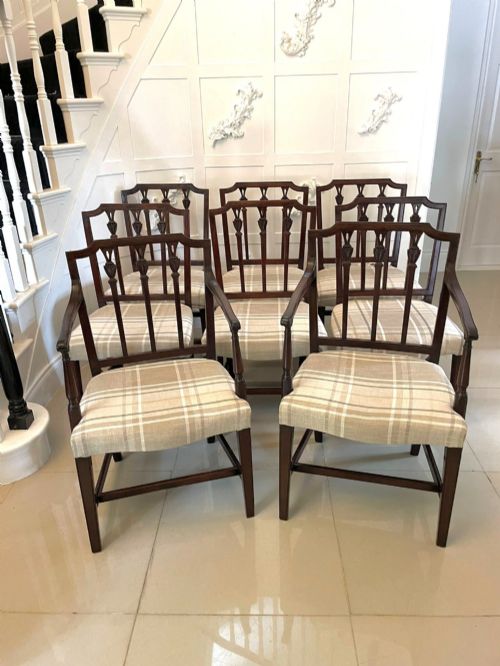
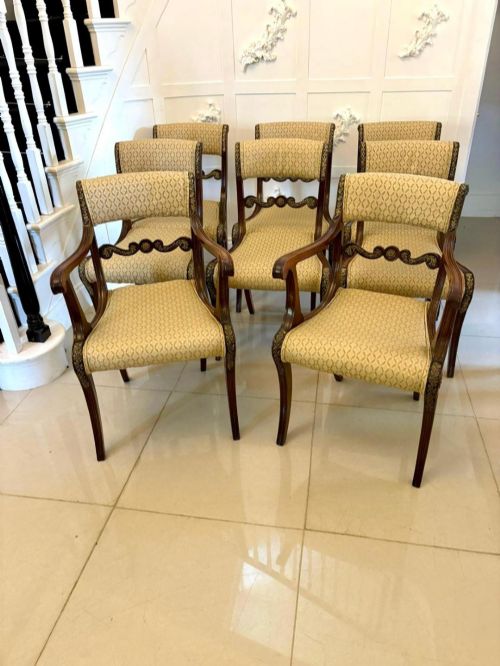
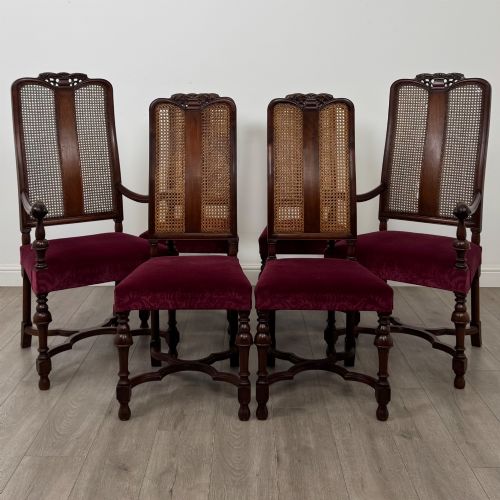
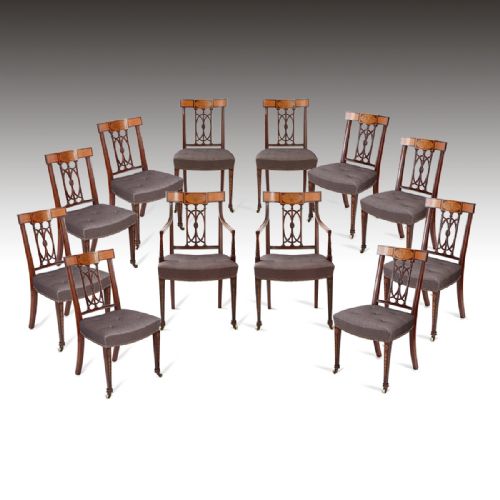
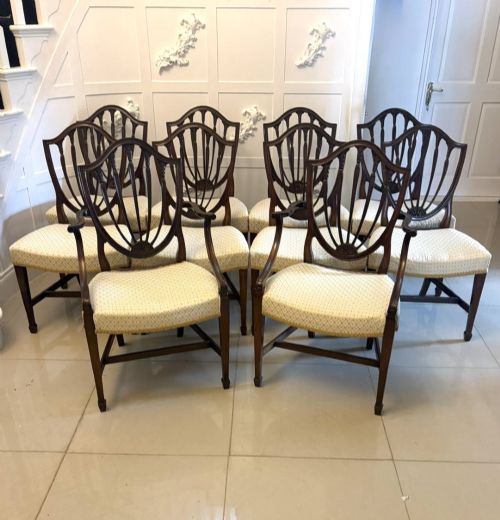
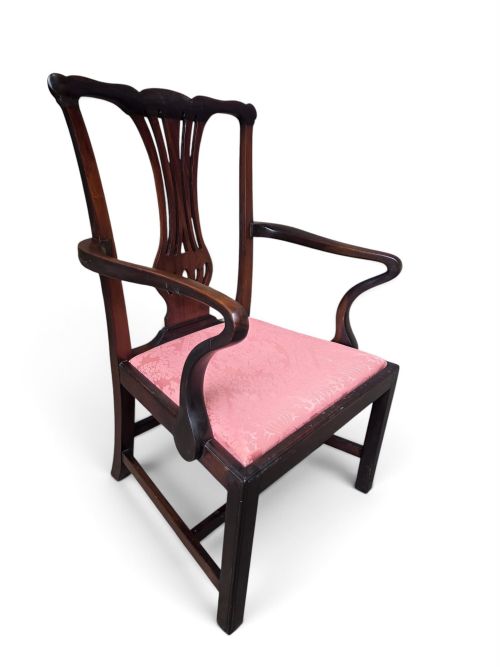
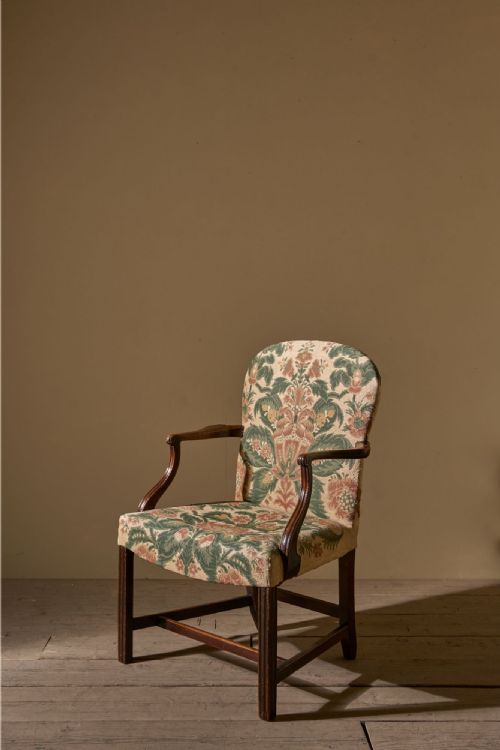
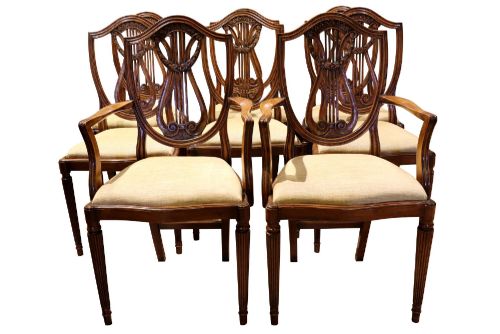
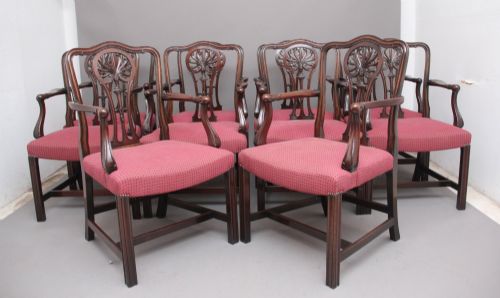
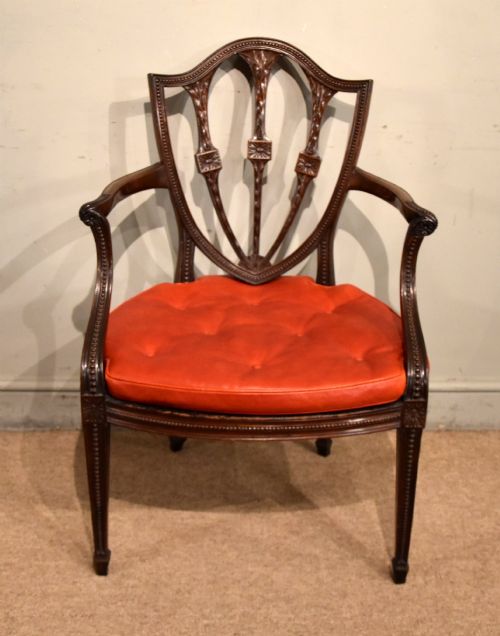
Traditional Upholstered Carver Chair
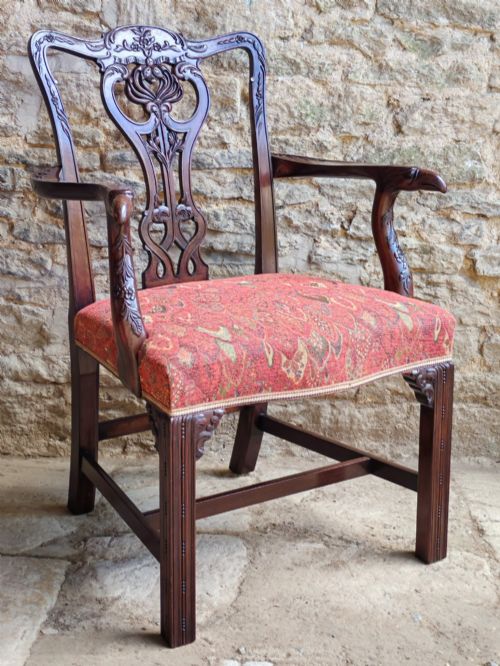
These traditional upholstered carver chair examples offer period seating with armrests, bringing solid timber construction and historic style to a dining table or study.
Traditional Upholstered Carver Chair
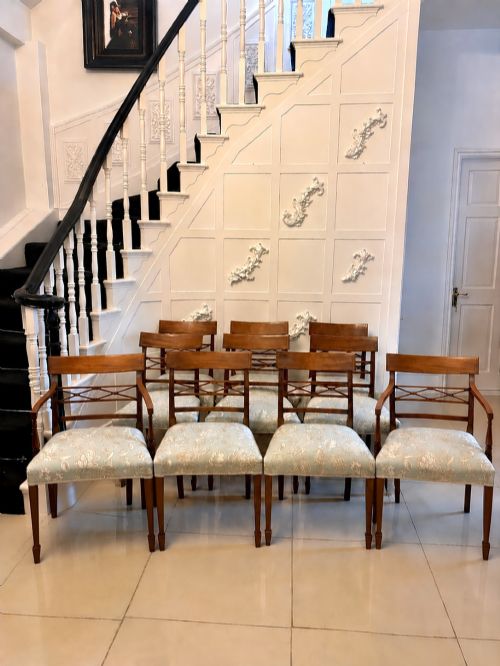
When you search for a traditional upholstered carver chair, you encounter single armchairs, desk chairs, and armchairs paired within larger sets of dining chairs. These items emerge from various periods spanning the eighteenth century through to the early twentieth century, including Georgian, Victorian, and Edwardian eras.
The materials visible in these pieces include mahogany, oak, walnut, and maple, paired with diverse coverings such as leather, tapestry fabric, and general upholstery fabric. Workshops created them in styles ranging from original George III and Regency designs to later Georgian, Hepplewhite, and Chippendale revivals.
What varies in quality
The refinement of the woodwork distinguishes different examples, particularly the depth, crispness, and complexity of carved details on the backs and arms. Timber selection also plays a part, with dense grains and well-figured mahogany or walnut elevating the piece.
The execution of the joinery and the integrity of the frame construction separate standard items from superior versions. Original periods and careful revival workmanship carry distinct characteristics compared to routine utility seating.
Listings feature woods including mahogany, oak, walnut, maple, and elm, spanning periods from the eighteenth century to the early twentieth century.
Howard and Sons·Maple and Co·Alfred Allen of Birmingham·Wheelers of Arncroach
The Traditional Upholstered Carver Chair Glossary
- Carver chair
- An armchair, typically designed for the head of a dining table or for use at a desk, featuring integrated armrests. These pieces match or complement standard dining chairs.
- Shield back
- A chair back shaped like a heraldic shield, popular during the eighteenth century and later revival periods. This form often incorporates carved splats.
- Open armchair
- A wooden armchair featuring unpadded wooden armrests rather than fully upholstered sides. Such chairs often display significant carved woodwork.
- Lyre back
- A chair back featuring a central splat shaped like a musical lyre. This motif appeared frequently in Regency design.
- Elbow chair
- An alternative historical term for an armchair or carver chair. These seats provide support for the arms of the sitter.
Traditional Upholstered Carver Chair: Frequently Asked Questions
How do I date a traditional chair?
Dating involves examining the timber species, construction methods, and stylistic vocabulary used in the frame. Characteristics from Georgian, Victorian, or Edwardian periods provide key indicators of age.
Revival styles from later decades often reproduce eighteenth or nineteenth-century forms, meaning construction details help determine the true manufacturing era.
Where should I place a carver chair?
These armchairs suit dining rooms when paired with a set of matching or complementary dining chairs around a table. They also function well as standalone desk chairs or occasional seating in a study.
The sturdy timber frames and upholstered seats provide practical seating combined with historic visual character.
What timber was used?
Makers relied heavily on dense hardwoods such as mahogany, oak, and walnut for the structural frames. Some examples feature alternative woods like maple or elm.
These materials were chosen for their strength and suitability for intricate carving and polished finishes.