


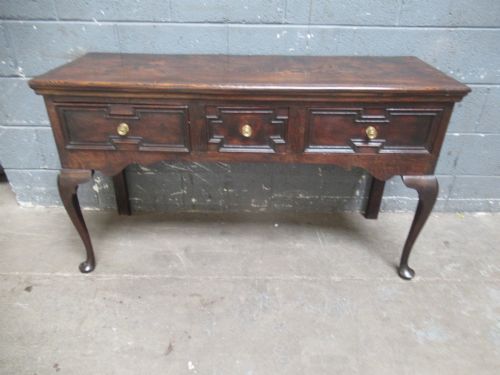
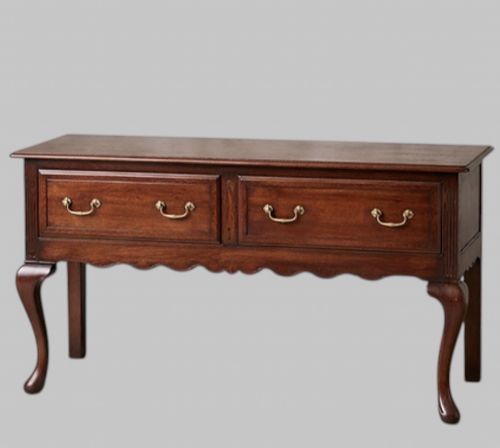


Cabriole Leg Oak Sideboard
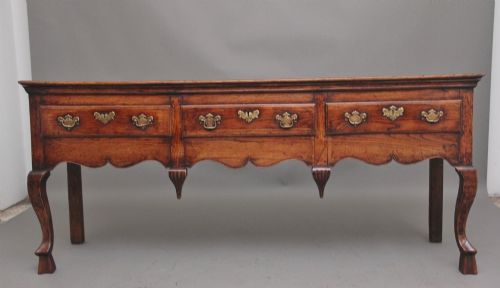
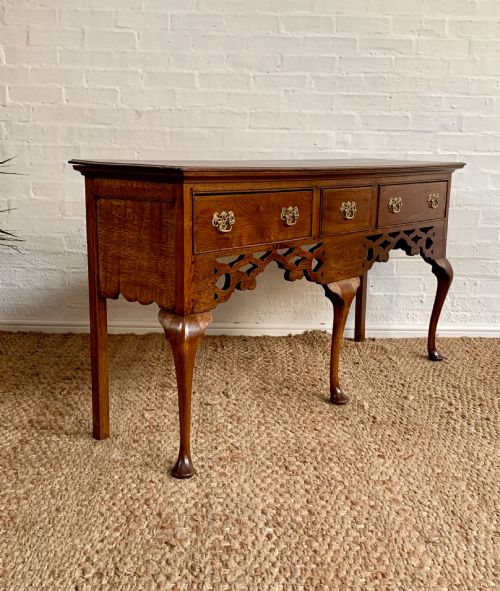
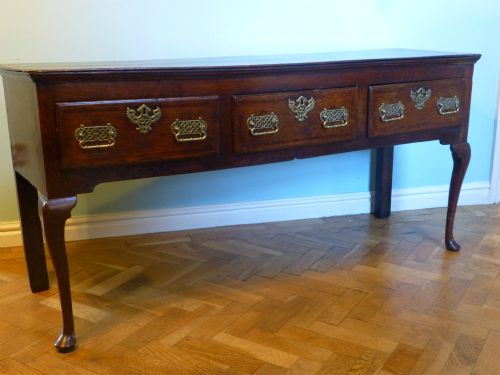
A cabriole leg oak sideboard brings substantial country timber and curved leg lines into a dining room or hall.
Cabriole Leg Oak Sideboard
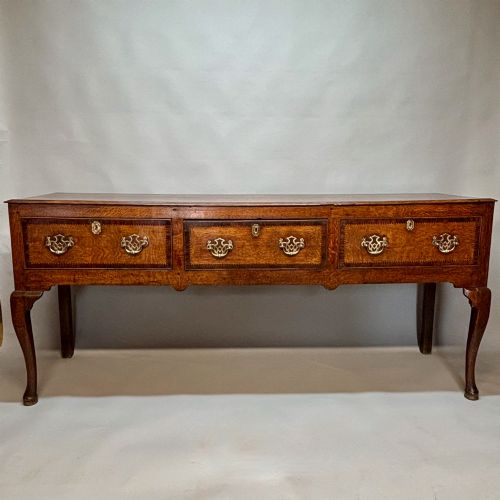
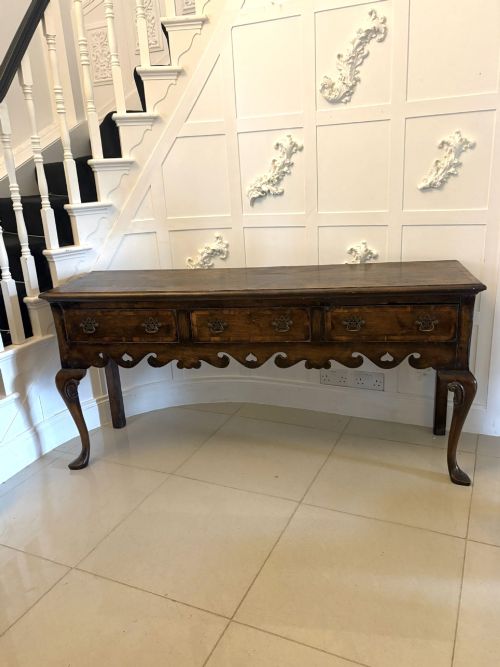
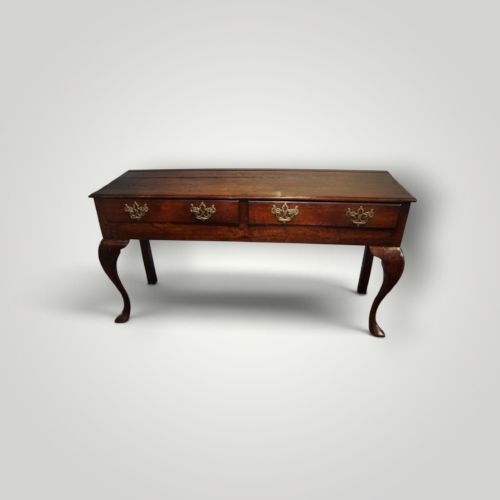
A cabriole leg oak sideboard combines the sturdy utility of a traditional dresser base with the graceful, curving profile of eighteenth-century furniture design. When searching for a cabriole leg oak sideboard, buyers encounter pieces spanning from the early eighteenth century through to later revival periods around nineteen hundred.
The form frequently overlaps with terms like dresser base, serving table, and console table. Surviving examples demonstrate a lineage stretching across Georgian, Victorian, and Edwardian eras, executed in both native English country workshops and continental traditions.
Most entries belong to the Georgian and Victorian periods, often presenting three drawers and standing upon characteristic pad or carved feet. These items served primarily for food preparation and storage in country houses before transitioning into decorative reception room furniture.
Materials and Construction
Solid oak provides the primary structural timber, complemented occasionally by mahogany, painted finishes, and parquetry tops. Cabinet makers worked the dense grain by hand, constructing bases to support heavy daily domestic use.
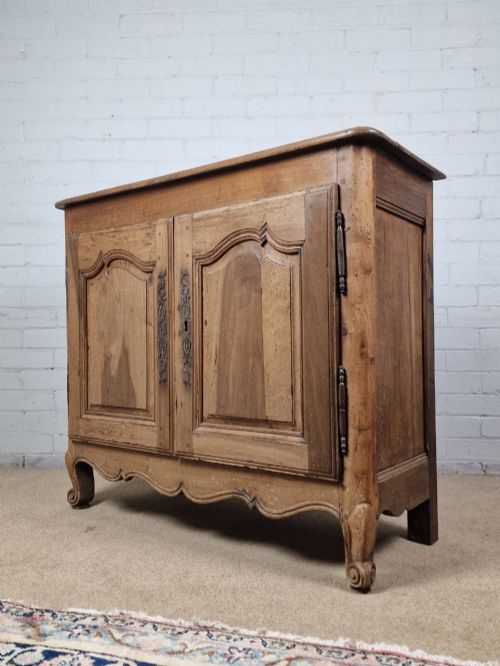
Hardware elements such as brass handles and wrought iron hinges finish the cabinetry. Selected items incorporate carved decoration, including green man motifs or geometric panels, alongside traditional dovetail joinery in the drawers.
Listings feature oak as the dominant material, alongside painted wood, mahogany, and metal hardware elements.
Defining Quality
The distinction between ordinary and exceptional pieces rests upon the crispness of the cabriole curve and the depth of the timber's natural patina. Superior examples display harmonious proportions where the legs integrate seamlessly into the frieze.
Originality of surface finish and the retention of period brassware elevate an item's standing. Finer construction shows careful selection of oak boards with matching grain patterns across the drawer fronts and top.
The Cabriole Leg Oak Sideboard Glossary
- Cabriole leg
- A furniture leg featuring a double curve, typically arching outward at the knee and tapering inward at the ankle to terminate in a pad or foot. This design appeared widely in eighteenth-century seating and support furniture.
- Dresser base
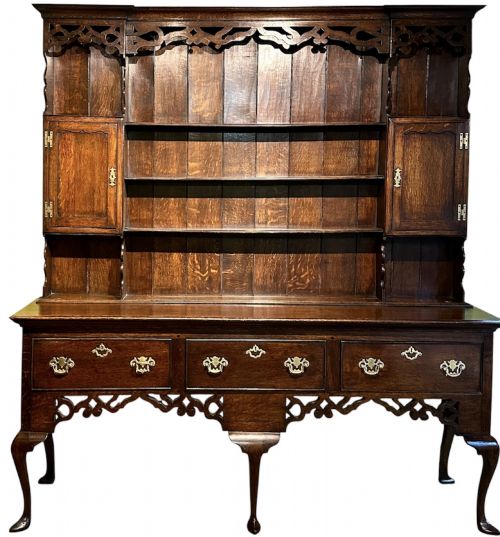
- The lower cabinet portion of a traditional kitchen dresser, often utilised independently as a sideboard or serving table. It typically incorporates multiple drawers above cupboards or an open pot board.
- Parquetry
- A geometric mosaic of wood pieces used for decorative surfacing on floors and tabletops. French provincial examples frequently employ this technique on top surfaces.
- Green man
- A sculptural architectural ornament depicting a human face surrounded by or entwined with foliage and vines. Victorian interpretations occasionally feature this motif on carved cabinet panels.
Cabriole Leg Oak Sideboard: Frequently Asked Questions
How are these sideboards used today?
These pieces function effectively as serving surfaces in dining rooms or as console tables in wide hallways. Their drawer capacity offers practical storage for tableware and linens.
In modern interiors, their warm timber tones anchor neutral colour schemes while providing a sturdy surface for lamps and displays.
How do I identify a Georgian piece?
Georgian construction relies on pegged mortise and tenon joints, hand-cut dovetails in the drawer boxes, and native English oak timber. The patination develops a deep amber hue through centuries of waxing and handling.
Revival pieces from around nineteen hundred often display machine-sawn timber marks, different interior secondary woods, and a more uniform surface finish.
What is a dresser base?
A dresser base is the standalone lower section of a traditional dining room or kitchen dresser. Unlike a standard sideboard, it was originally built for food preparation and storing heavy cookware.
Over time, many of these bases separated from their upper plate racks, leading to their modern classification as sideboards.
Where were these pieces made?
Surviving examples originate primarily from English country workshops, where local cabinet makers utilised regional oak stocks. French provincial alternatives also appear, demonstrating distinct continental stylistic traits.
Workshop production varied from individual rural joiners to larger regional cabinet-making establishments during the Victorian era.