
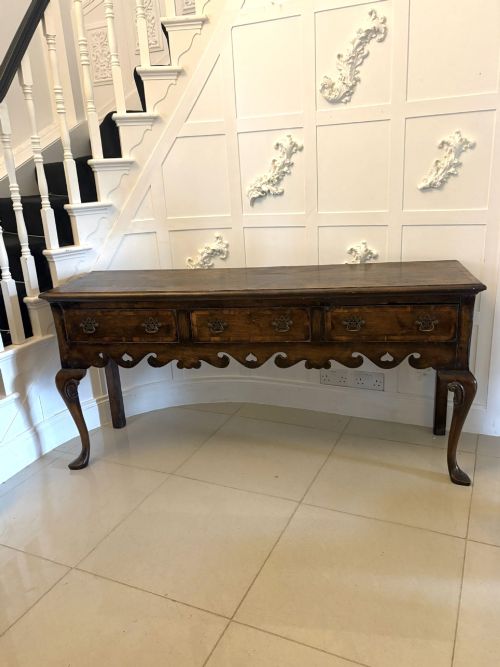
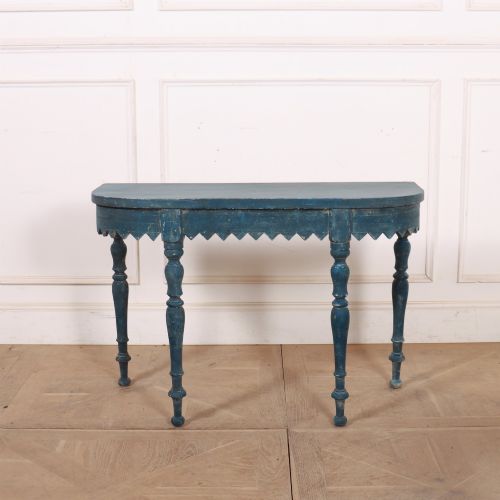

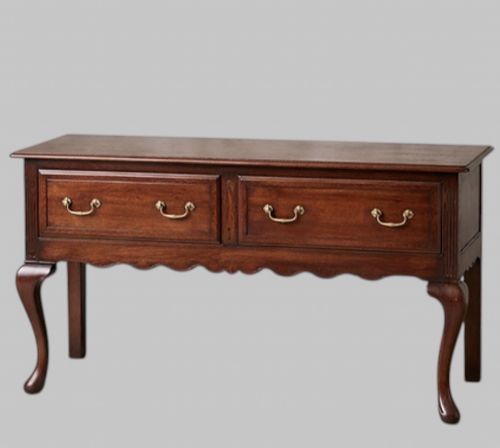
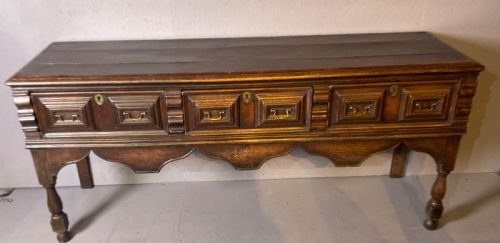


Scalloped Apron Console Table
These scalloped apron console table pieces combine functional side furniture with distinct period woodworking, offering practical surfaces for period interiors.
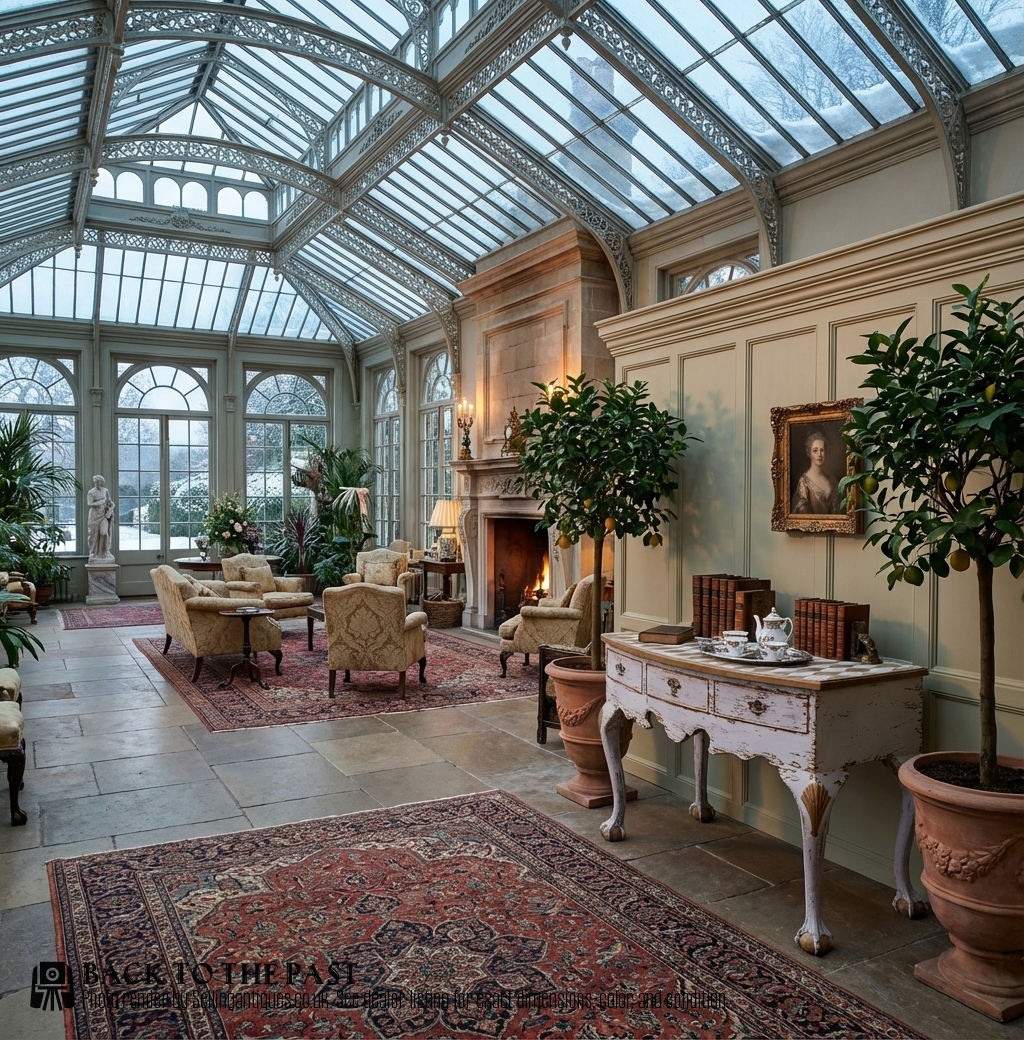
Scalloped Apron Console Table
A scalloped apron console table functions primarily as a side or serving table, originating across multiple centuries of English and European cabinetmaking. When searching for a scalloped apron console table, buyers encounter forms that overlap with dresser bases, lowboys, and sideboards.
The pieces listed span from the seventeenth century through the Victorian era, utilising woods like oak, mahogany, and fruitwood. Many examples reflect Georgian styles, English country traditions, and occasional French provincial influences.
Common forms include open pot board dressers, serving tables, and lowboys adapted for use against walls. These items serve as traditional display and storage surfaces in domestic settings.
Materials and construction methods
Cabinetmakers constructed these tables predominantly using solid timbers such as oak and mahogany, often enhanced by painted surfaces or timber inlay. Structural integrity relied on traditional joinery methods suited to supporting heavy serving vessels and household objects.
Decorative detailing on these pieces involves carved woodwork, cabriole legs, and shaped aprons finished by hand. Workshops utilised local woods like fruitwood alongside imported mahogany depending on the period and regional style.
Some tables spent centuries holding heavy pewter pots before retiring to hold modern lamps.
Assessing quality in period tables
Quality in these tables rests upon the selection of timber and the precision of the joinery connecting the legs and top. Tables featuring well-proportioned cabriole legs and carefully shaped aprons demonstrate higher levels of craftsmanship.
The degree of original surface preservation also dictates the character of each piece, distinguishing utilitarian items from finer parlor furniture. Structural harmony between the top boards and the supporting base remains a key indicator of skilled manufacture.
The Scalloped Apron Console Table Glossary
- Lowboy
- A small low dressing or side table with drawers, typically dating from the eighteenth century. These forms often share proportions with console tables.
- Pot board
- A lower shelf fitted between the legs of a dresser base or serving table, traditionally used for storing pots and pans. This feature appears on several oak pieces.
- Cabriole leg
- A furniture leg that curves out and then in, resembling the leg of an animal. This style appears frequently on Georgian period tables.
Scalloped Apron Console Table: Frequently Asked Questions
What is a scalloped apron console table used for?
These tables served historically as serving surfaces, side tables, or dresser bases in dining areas and halls. Today, buyers utilise them as display surfaces or accent tables in living spaces.
Their substantial timber construction allows them to hold lamps, books, and decorative objects while anchoring a room's wall space.
How do I date an oak console table?
Dating relies on examining the construction marks, timber grain, and joinery techniques visible across the piece. Earlier seventeenth and eighteenth-century examples display hand-cut joints and distinct patina.
Later Victorian and revival pieces often exhibit different tooling marks and wood preparation methods that help separate them from older stock.
Are these tables solid wood?
The pieces listed across this selection are constructed from solid timbers such as oak, mahogany, fruitwood, and walnut. Cabinetmakers relied on thick boards for tabletops and structural framing.
This solid construction contributes to the durability and longevity observed in these antique furnishings.
How do I care for an antique wood table?
Maintenance involves keeping the wooden surfaces away from direct heat sources and sudden humidity changes to prevent timber splitting. Regular dusting with a soft cloth preserves the finish without requiring harsh chemical polishes.
Applying occasional appropriate wax helps nourish older hardwoods and maintains their natural lustre over time.