



Cabriole Leg Night Tables
These cabriole leg night tables bring characteristic curved supports and period charm directly beside the bed.
Cabriole Leg Night Tables
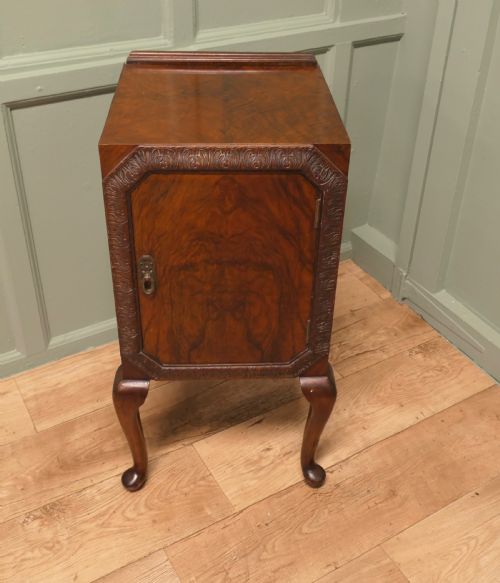
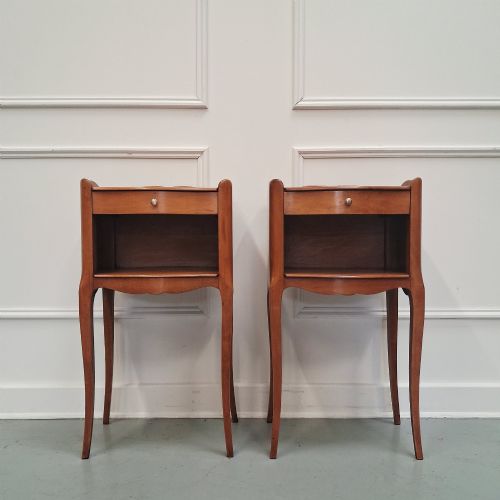
When you search for cabriole leg night tables, you encounter compact bedroom furniture designed to hold bedside necessities while displaying distinct curving legs. The selections on this page span several decades, reaching from late Victorian examples through Edwardian pieces to productions from the 1900s, 1910s, 1920s, and 1930s.
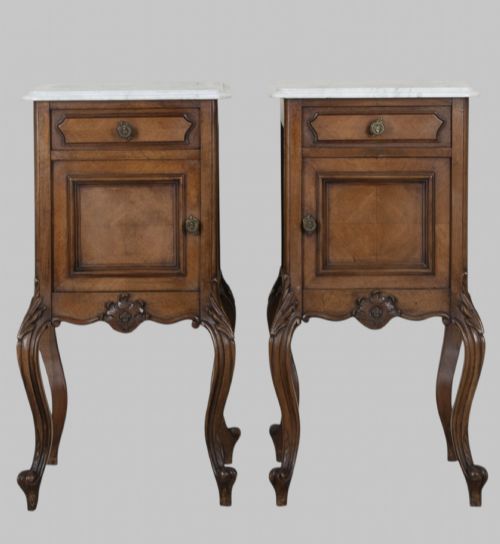
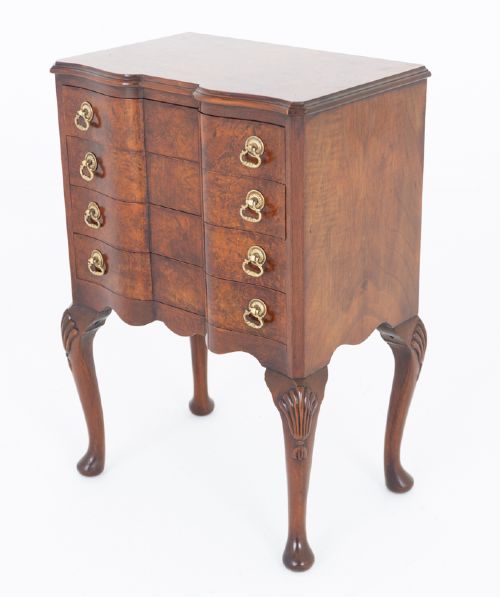
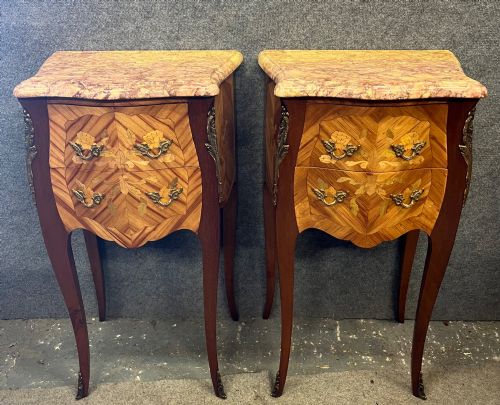
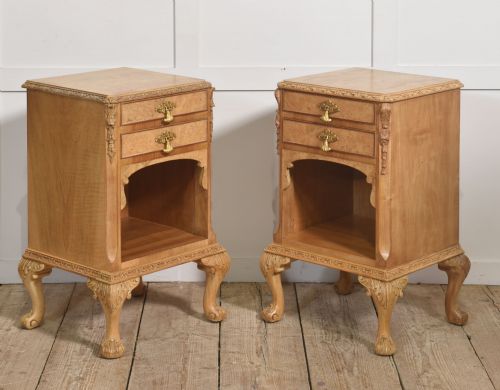
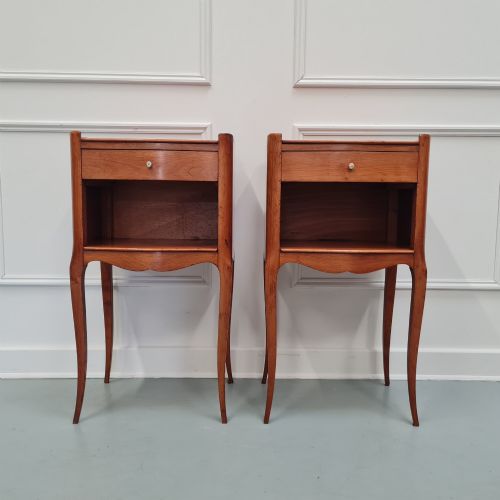
The forms appear chiefly as bedside cabinets, bedside chests, and occasional tables, often featuring enclosed cupboards or small drawers. Many pieces draw upon French Provincial, Louis XV style, and Queen Anne revival aesthetics, reflecting Continental and British design influences.
Pairs appear frequently among the listings, offering matching bedside placement alongside single tables suited to tighter spaces. Materials and surface treatments vary widely, ranging from natural wood grains to painted finishes.
How they were made
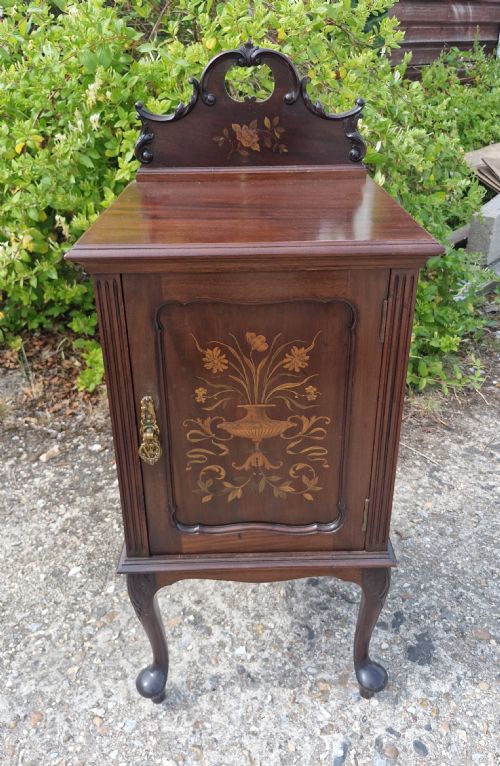
Cabinetmakers utilised timber construction methods, employing solid woods such as walnut, oak, mahogany, cherry, and rosewood. Decorative surfaces often incorporated burr walnut veneers, intricate marquetry, and parquetry patterns to create visual texture on top surfaces and drawer fronts.
Stone and metal components added functional contrast to the wooden frames, with inset marble tops providing durable surfaces alongside brass handles, hinges, and occasional leather accents. Carved details and subtle shaping defined the distinctive profile of the supports.
Keep an eye out for hidden compartments tucked away inside tables designed to keep midnight secrets safe.
What varies in quality
The degree of refinement in cabinetmaking distinguishes different examples, visible in the precision of veneer matching and the intricacy of marquetry inlay work. Finer pieces demonstrate careful attention to the shaping of the curved supports and the seamless integration of hardware.
Material selection plays a significant role in the overall character of each piece, from richly figured burr walnut to select marble inserts and specialised parquetry. The preservation of original surface treatments and structural integrity further separates standard productions from exceptional examples.
The Cabriole Leg Night Tables Glossary
- Cabriole leg
- A furniture support that curves outward at the knee and tapers inward toward the ankle, finishing in a simple foot. This design originates from classical furniture traditions and defines the silhouette of many period tables.
- Marquetry
- A decorative technique where small pieces of veneer are arranged to form pictorial or geometric patterns on wooden surfaces. Craftsmen assemble these wooden elements meticulously before applying them to the core structure.
- Parquetry
- A geometric mosaic of wood pieces used for decorative floors and furniture surfaces. It creates orderly repeating patterns across table tops and cabinet doors.
- Pot cupboard
- A small bedside cabinet originally designed to house a chamber pot behind a single door. Contemporary usage adapts these enclosed compartments for general bedside storage.
- Burr walnut
- Timber harvested from walnut tree growths, yielding intricate swirling grain patterns highly valued for decorative cabinet fronts. Its distinct figure makes each panel unique.
Cabriole Leg Night Tables: Frequently Asked Questions
What is a cabriole leg?
A cabriole leg is a stylistic support that curves outward at the knee and inward toward the foot, mimicking animal limbs.
This form appears frequently on furniture from revival periods and continental designs.
How were these tables used?
These pieces served beside the bed to hold lamps, reading materials, and personal items within enclosed cupboards or drawers.
Many designs incorporated marble tops to protect the wooden surface from spills and hot candle wax.
Are pairs common?
Pairs appear regularly among the selections, offering matching bedside placement for twin or double beds.
Single tables also occur frequently for smaller rooms or asymmetrical bedroom layouts.
What periods do these pieces represent?
The available pieces span from late Victorian and Edwardian eras into the early decades of the twentieth century.
Stylistic influences draw heavily from French Louis XV and Queen Anne traditions interpreted during the 1900s through the 1930s.