


Pink Marble Table Lamps
Pink marble table lamps bring geological weight and colour to a room, turning mineral columns into sources of soft domestic light.
Pink Marble Table Lamps
Pink marble table lamps combine substantial stone bases with period lighting hardware, spanning from the nineteenth century through the art deco era. You will frequently encounter examples set in ormolu, brass, or bronze mounts, reflecting classical revival tastes and twentieth-century design shifts.
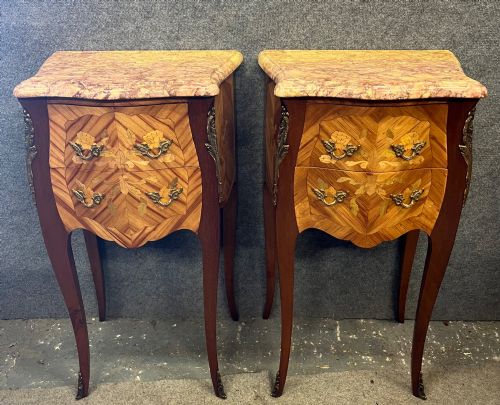
The evidence shows forms that range from carved alabaster columns to repurposed occasional furniture and mounted urns adapted for electricity. These pieces draw on French Louis styles, Italian neoclassical principles, and Chinese export craftsmanship to create decorative focal points.
How they were made
Makers shaped natural stone into columns, urns, and stepped bases, often turning marble and alabaster on lathes before hand-finishing the profiles. Metal components were cast in bronze, spelter, or brass, then finished with gilding, parcel gilt, or cold painting.
Structural integrity relied on threaded metal rods running through the centre of stone sections to secure heavy bases to mountings. Marquetry, ebonising, and painted wood sometimes supplemented the stone elements in related furniture forms.
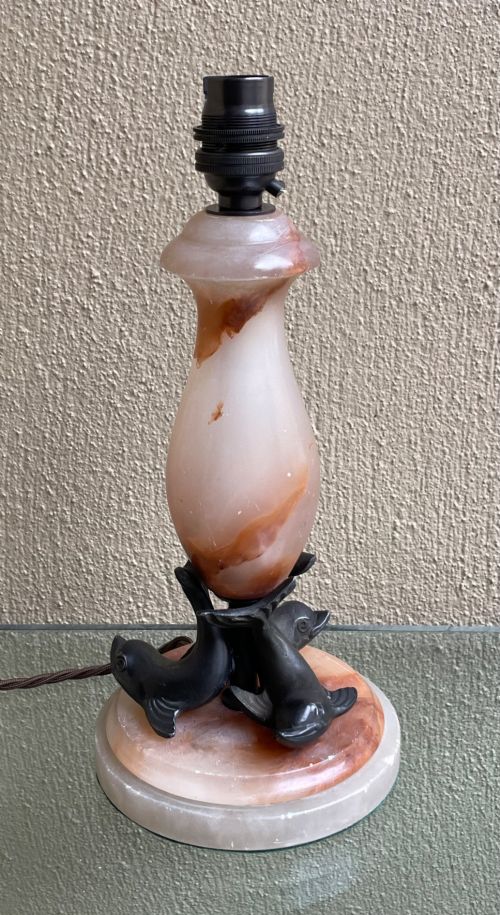
Dolphin forms occasionally swim up from the nineteenth century to support stone lamps.
What varies in quality
Quality rests upon the purity and depth of the stone figure, where tightly veined pink marble commands more visual interest than uniform or muddy material. The precision of the stonemasonry dictates how sharply fluted columns or stepped art deco planes meet their metal mounts.
Mounting hardware reveals the underlying standard of manufacture, distinguishing heavy cast ormolu and hand-chased bronze from lighter stamped brass or spelter. Matching pairs demonstrate greater care in initial selection than single conversions assembled from disparate parts.
The Pink Marble Table Lamps Glossary
- Ormolu
- Gilded bronze applied as decorative mounts and feet on furniture and lamp bases. This technique creates a rich contrast against polished pink marble.
- Alabaster
- A fine-grained stone used for lamp bodies and carved figures. It admits light more softly than dense marble.
- Spelter
- A zinc alloy cast into decorative figures and bases, often painted to imitate bronze. It provides a lighter alternative to heavier metals.
- Neoclassical
- A style drawing inspiration from classical antiquity, prominent in nineteenth-century lamp designs. It favours symmetry, urn forms, and architectural columns.
- Gueridon
- A small round table, frequently utilised to support lamps or decorative objects. French examples often feature marble tops supported by gilt brass mounts.
Pink Marble Table Lamps: Frequently Asked Questions
How do I wire an antique lamp safely?
Rewiring requires passing modern modern three-core flex through the existing central channel without damaging the internal stone or metal assembly. Professional electricians should undertake this work to ensure the antique hardware meets current safety standards.
Older brass sockets and switches can often be retained alongside new internal wiring to preserve the historical exterior. Earth connections must be established properly on any metal body or mount.
What shades suit these lamps?
Simple silk or parchment shades in neutral tones complement the strong colour and natural veining of pink marble bases. Proportion remains key, ensuring the shade diameter matches the widest part of the stone body below.
Avoid overly ornate fringes that compete with classical bronze mounts or art deco geometric lines. Pleated designs often echo the fluting found on nineteenth-century marble columns.
How do I clean marble bases?
Warm water and a soft cloth remove surface dust safely without risking the polished stone surface. Harsh chemical cleaners and acidic substances will etch marble and must be avoided entirely.
Metal mounts require separate care to prevent brass polish from staining adjacent porous stone. Gentle dusting with a dry microfibre cloth keeps gilt surfaces bright.
Are matched pairs difficult to find?
Surviving pairs of nineteenth and early twentieth-century lamps are scarce because many single examples lost their counterparts over decades of domestic use. When matching columns or urns appear together, they usually reflect higher original status.
Subtle variations in stone colour and veining often prove that paired lamps were carved from different blocks of marble. Close inspection under natural light reveals these natural distinctions.