

Walnut Marquetry Lamp Tables
Walnut marquetry lamp tables combine figured timbers with intricate decorative veneers to hold bedside lighting in sitting rooms and bedrooms.
Walnut Marquetry Lamp Tables
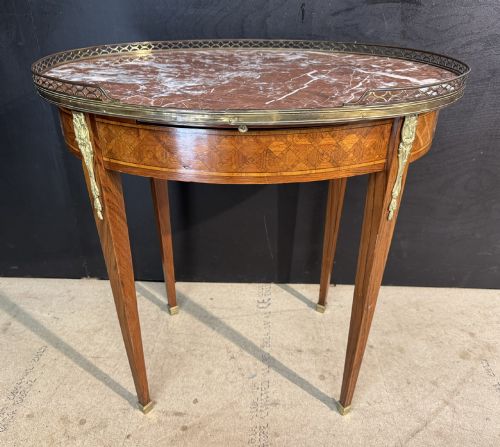
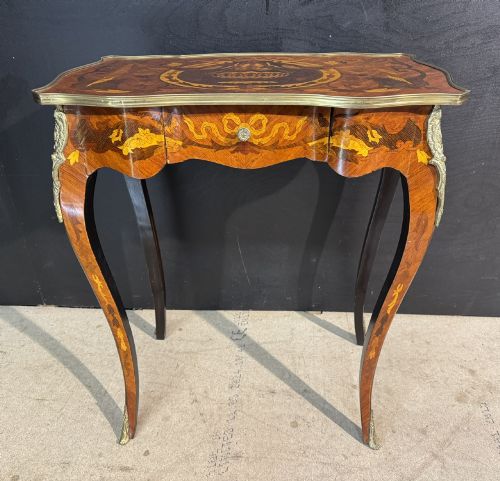
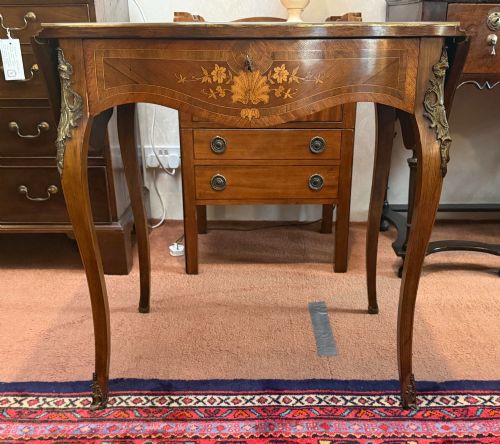
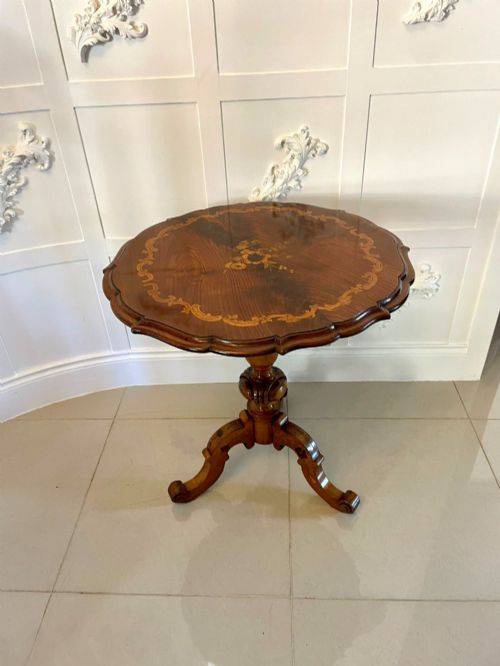
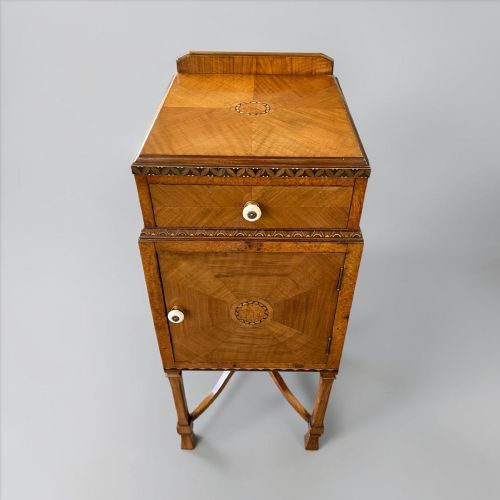
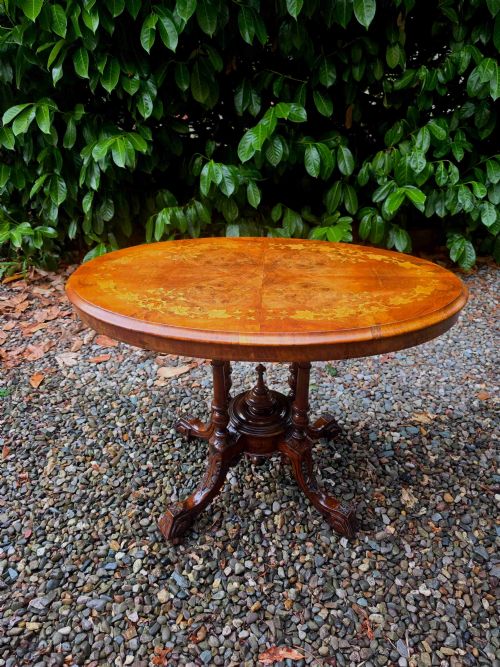
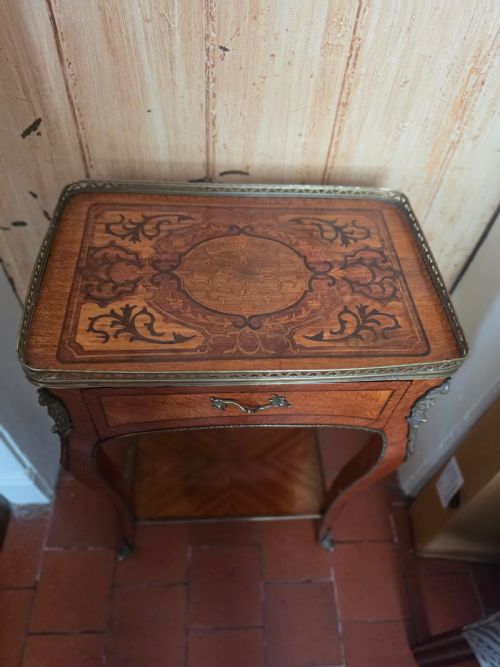
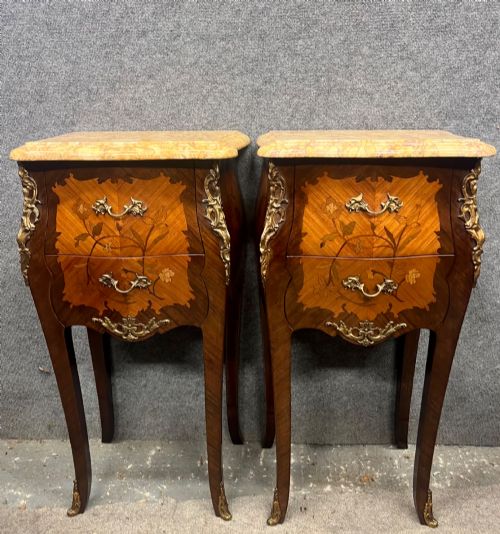
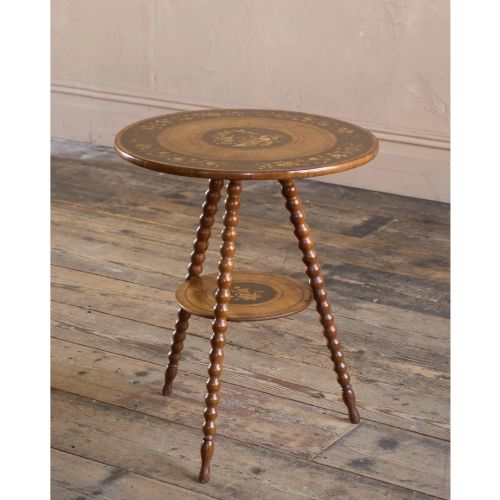
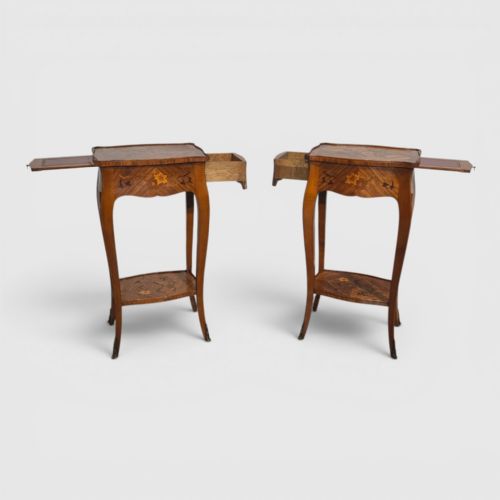
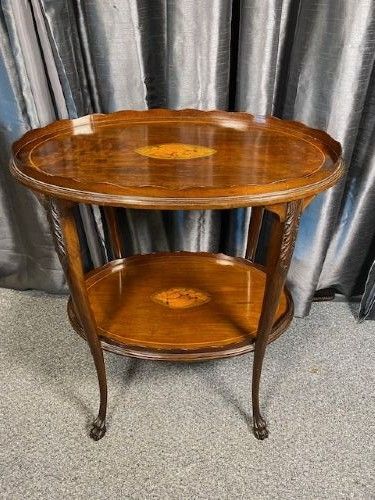
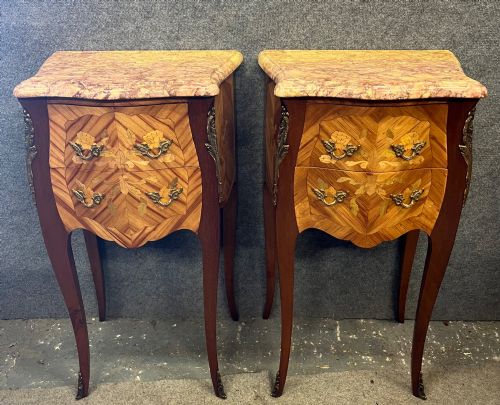
Walnut marquetry lamp tables are small occasional surfaces designed for domestic illumination, frequently appearing in forms like oval, rectangular, or octagonal tables and bedside chests. Buyers searching this phrase meet nineteenth-century Victorian examples alongside French Louis XV style pieces from the nineteen-twenties and nineteen-thirties.
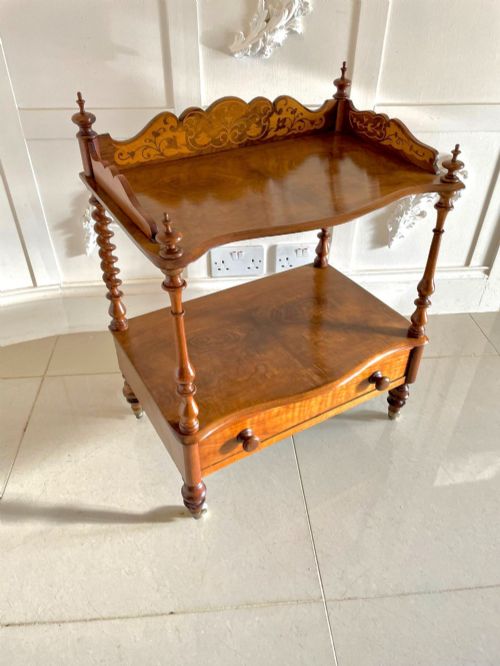
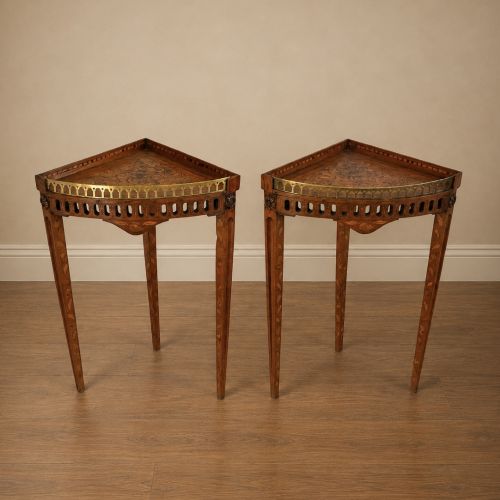
The selection spans various compact formats, including wine tables, side tables, and corner tables. Many pieces date from the mid-nineteenth century, constructed with intricate inlaid veneers and supported by turned or pedestal bases.
How walnut marquetry lamp tables were made
Cabinet makers utilised walnut and burr walnut veneers applied over secondary timber carcases, creating patterned surfaces through precise cutting of contrasting timbers. Ormolu mounts, brass galleries, and marble tops frequently supplement the wooden construction on French style and Edwardian examples.
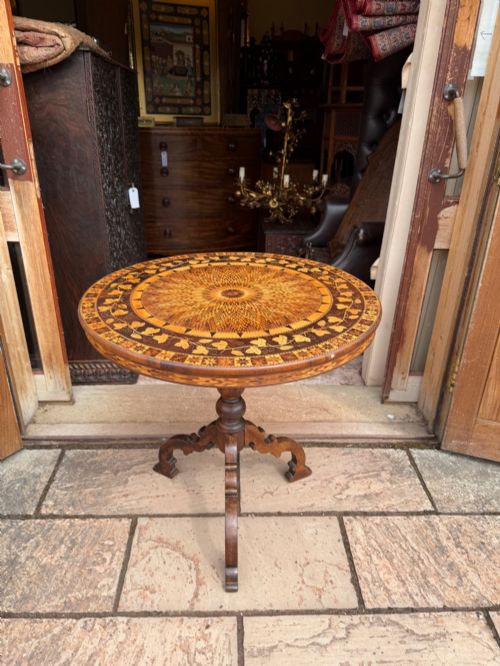
Marquetry and parquetry techniques involve assembling pictorial or geometric wood veneers, often highlighted with satin walnut, kingswood, or specimen woods. Joinery methods combine traditional framing with delicate inlay work secured to table tops and drawer fronts.
Materials recorded across the available pieces include burr walnut, kingswood, brass galleries, marble tops, and ormolu mounts.
What varies in quality
Quality rests in the crispness of the marquetry cutting and the choice of highly figured burr walnut veneers. Superior examples display seamless alignment across the inlaid panels and polished surfaces without excessive timber shrinkage.
The refinement of the supporting structure, whether bobbin legs, slender cabriole supports, or finely cast brass galleries, distinguishes standard production from exceptional pieces. Attention to detail in the secondary woods and interior drawer construction indicates higher workshop standards.
The Walnut Marquetry Lamp Tables Glossary
- Marquetry
- Decorative veneer work arranged in pictorial or geometric patterns across a surface. Craftsmen cut thin slices of various timbers to form intricate designs.
- Burr walnut
- Wood taken from the growth excrescences of walnut trees, yielding highly swirled grain patterns. This timber provides distinctive figuring for table tops.
- Ormolu
- Gilded bronze mounts applied for decorative accent on furniture frames. These metal elements appear frequently on French style pieces.
- Parquetry
- Geometric mosaic woodwork forming repeating patterns such as cubes or triangles. It differs from marquetry through its strict geometric arrangement.
- Specimen wood
- Furniture tops composed of multiple native and exotic timbers arranged to showcase varied natural colours. These surfaces often record specific botanical origins.
Walnut Marquetry Lamp Tables: Frequently Asked Questions
What rooms suit walnut marquetry lamp tables?
These pieces fit comfortably beside seating in drawing rooms or as bedside surfaces in bedrooms. Their compact scale allows placement in corners or narrow spaces.
Their decorative table tops provide a stable platform for lighting while adding warmth through figured timber and inlay.
How do I identify French style lamp tables?
French style examples frequently incorporate curved cabriole legs, floral marquetry, and gilt bronze or ormolu mounts. Many date from the early twentieth century.
They often feature serpentine edges and polished veneer surfaces reflecting Louis XV design influences.
Are these tables sturdy enough for daily use?
The structural stability depends on the leg joints and the condition of the timber frame. Most serve well for holding lamps and small items.
Placing them away from direct heat sources helps protect the veneer and polished finish from drying out.
How do I care for inlaid wood surfaces?
Maintaining these tables involves applying appropriate wax polish and avoiding prolonged exposure to direct sunlight. Gentle dusting preserves the polished finish.
Keeping humidity levels stable prevents the veneer panels from lifting over time.