
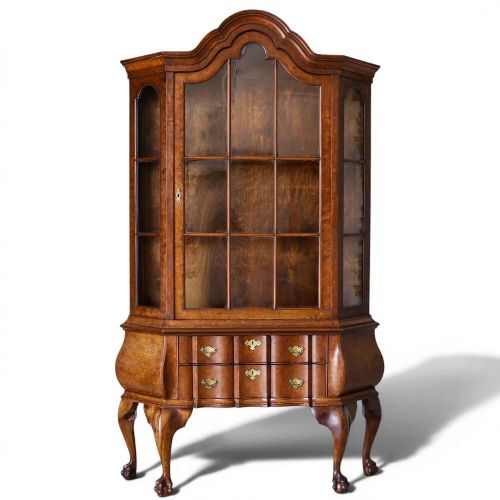
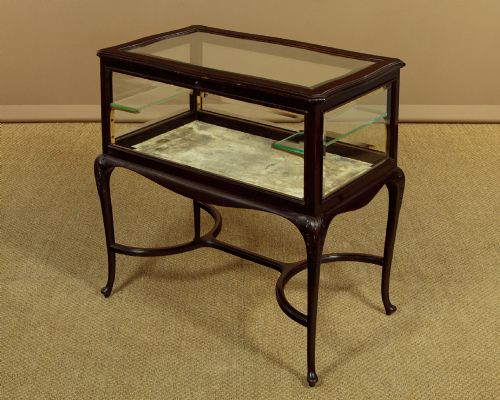
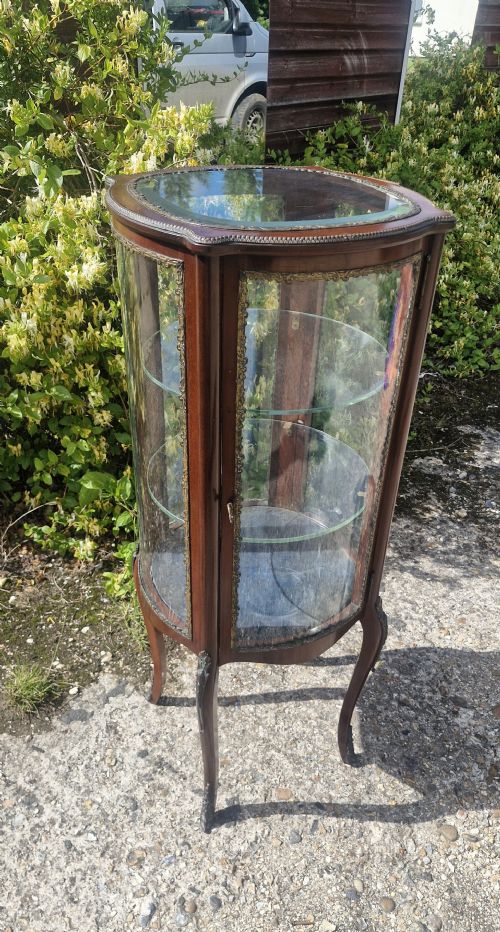

Cabriole Leg Glazed Cabinet
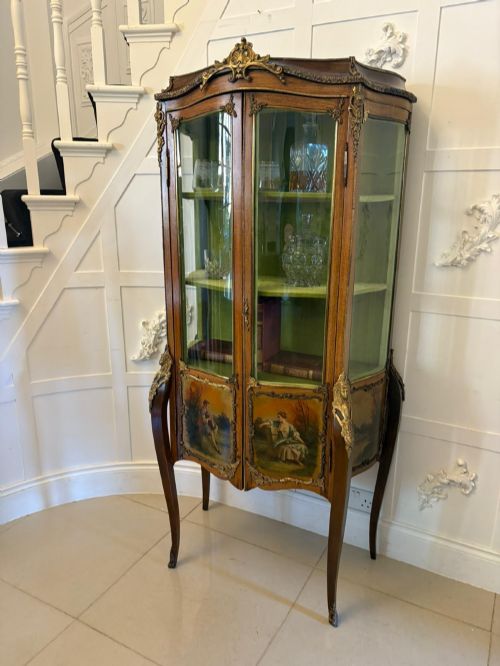
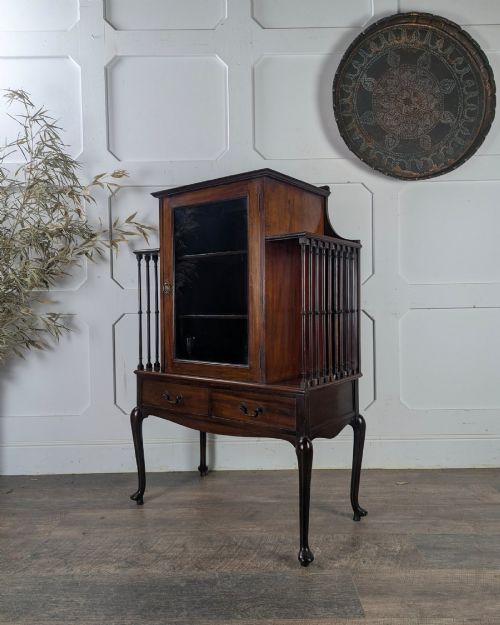
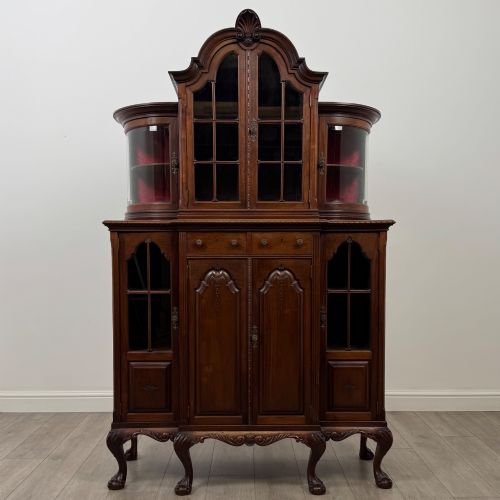
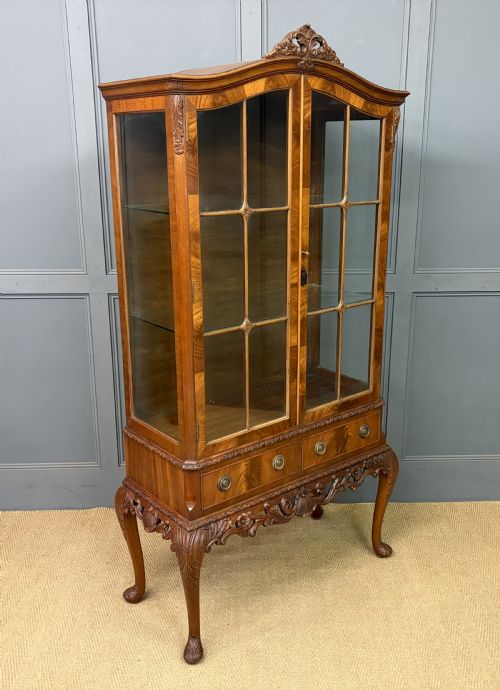
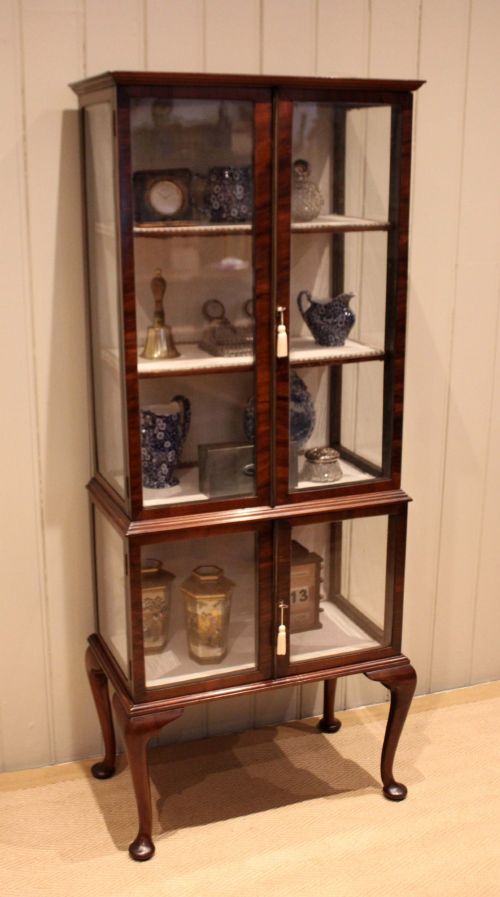
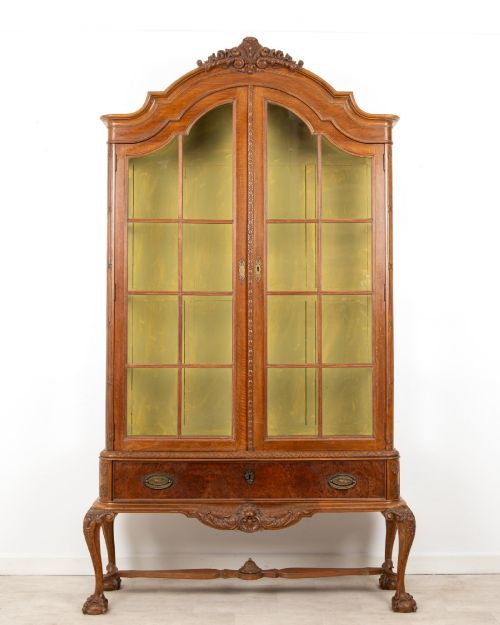
A cabriole leg glazed cabinet brings curved lines and glass display space into a room, originating mostly from Edwardian and Victorian workshops.
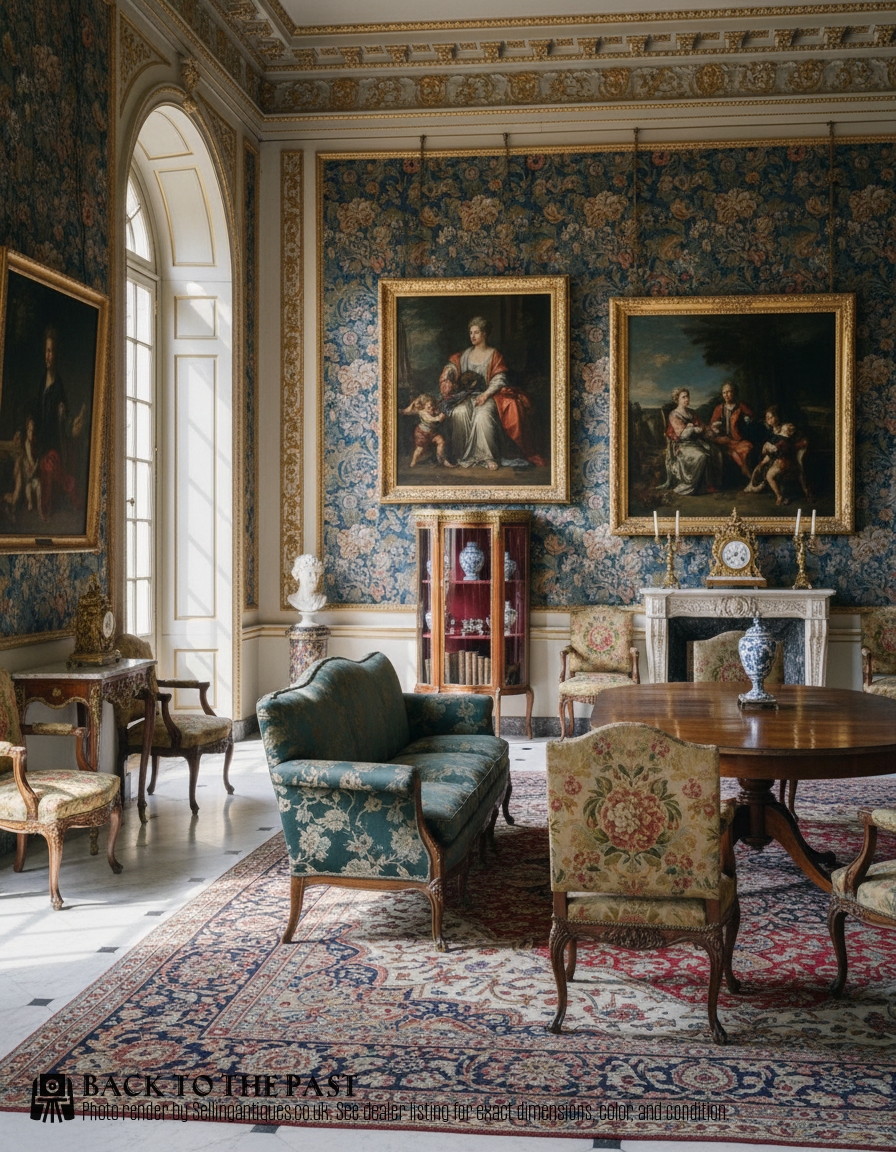
Cabriole Leg Glazed Cabinet
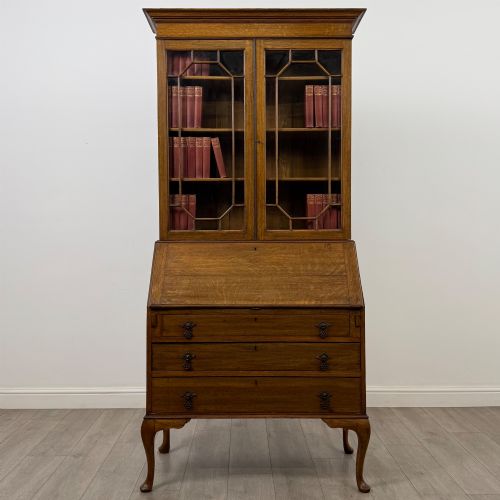
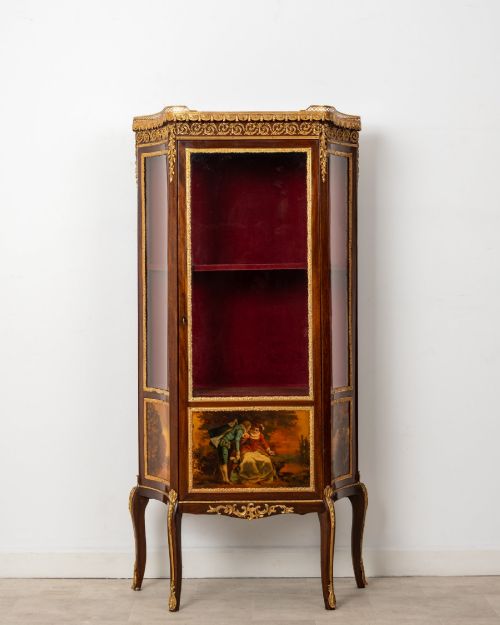
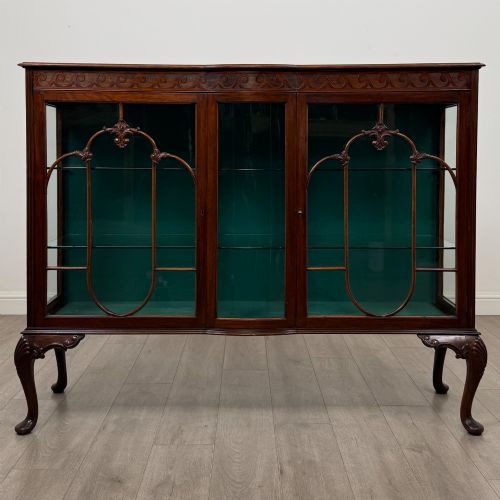
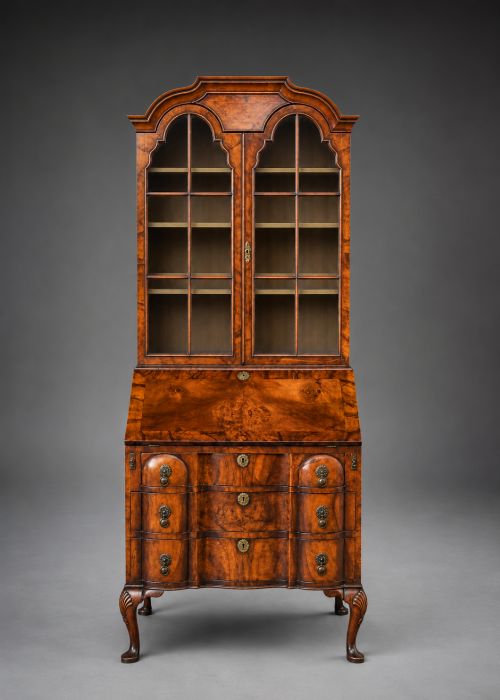
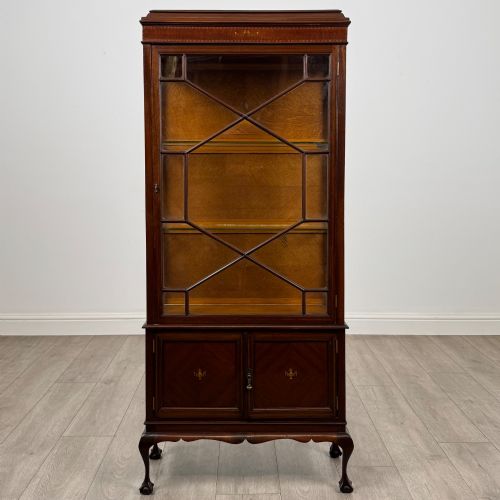
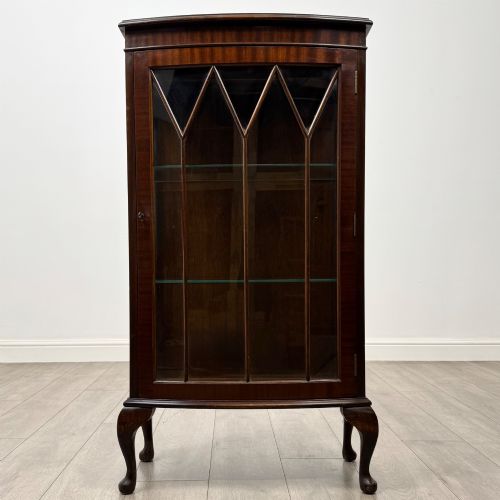
A cabriole leg glazed cabinet combines visible shelving behind glass with slender, curved supports that lift the body off the floor. Buyers searching for a cabriole leg glazed cabinet usually encounter display cabinets, vitrines, and bureau bookcases spanning the Victorian, Edwardian, and 1930s periods.
The selection ranges from small mahogany display pieces to walnut bookcase combinations and corner units. Revival aesthetics dominate, drawing heavily on Queen Anne, Louis XV, and Chippendale forms through the nineteenth and twentieth centuries.
How they were made
Cabinet makers utilised solid timbers and veneers such as mahogany, walnut, and kingwood over carcases, shaping the signature legs with distinct curves and shoulders. Glass panels are fitted into wooden doors or frames, occasionally supported by brass, ormolu, and gilt metal mounts.
Surface decoration relies on wood grain, inlay work, and polished finishes rather than heavy carving. Vernis Martin techniques and Sevres style plaques appear on French inspired pieces from the nineteenth century onwards.
One unexpected cabinet carries later hand-painted signs for Chateauneuf-du-Pape vineyards, proving that even formal furniture occasionally changes career paths.
What varies in quality
The standard of timber selection and veneer matching defines the visual impact of the piece. Finely figured burr walnut or rich mahogany displays greater depth than plain secondary woods.
Mount quality and joinery precision separate standard production from finer cabinet work. Cast ormolu mounts and clean glass rebate fits indicate higher workshop standards.
Maple & Co.·Paul Sormani·Epstein
The Cabriole Leg Glazed Cabinet Glossary
- Cabriole leg
- A furniture support that curves outward at the knee and tapers inward to an ankle, inspired by animal limbs. This form became central to Queen Anne and Louis XV furniture designs.
- Vitrine
- A glass fronted cabinet designed specifically for displaying porcelain, curiosities, or objects of art. These pieces often feature glazed sides to let light reach the interior.
- Bijouterie table
- A glass topped display table used for small valuables, jewellery, and decorative items. They frequently stand on slender legs and include a hinged glass lid.
- Ormolu
- Gilt bronze ornamentation applied to furniture, popular in French-influenced nineteenth century pieces. It provides metallic contrast against dark timber surfaces.
- Vernis Martin
- A simulated Japanese lacquer technique developed in France, utilised on decorative cabinets and vitrines. It creates a smooth, polished finish with painted scenes.
Cabriole Leg Glazed Cabinet: Frequently Asked Questions
What fits inside a cabriole leg glazed cabinet?
These cabinets suit books, ceramics, glassware, and small collections behind glass panels. Shelves hold objects safely while keeping dust away from delicate items.
Larger bookcase versions accommodate heavier volumes, whereas smaller vitrines and corner units display ornaments and tableware in domestic rooms.
How do I identify a Queen Anne style cabinet?
Queen Anne style pieces rely on smooth curved lines, cabriole legs, and understated wood veneers rather than heavy carving. Walnut is the primary timber associated with this aesthetic.
Many examples date from the Edwardian revival period rather than the early eighteenth century, utilising older design vocabulary with twentieth century construction methods.
Where should I place a display cabinet?
Position glass fronted furniture away from direct sunlight to protect interior contents and timber finishes from fading. Adequate floor space is necessary to showcase the curved cabriole legs properly.
Living rooms, dining spaces, and hallways work well, provided the cabinet matches the scale of the surrounding furniture and allows clear door access.