
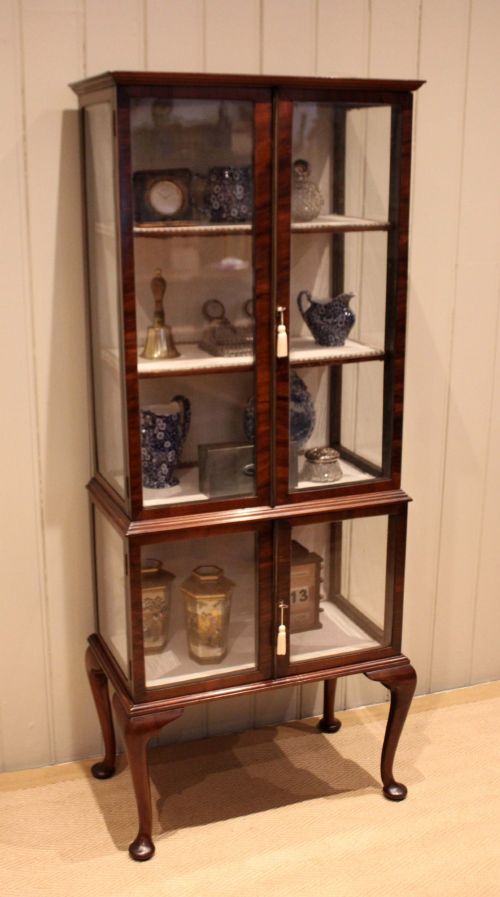
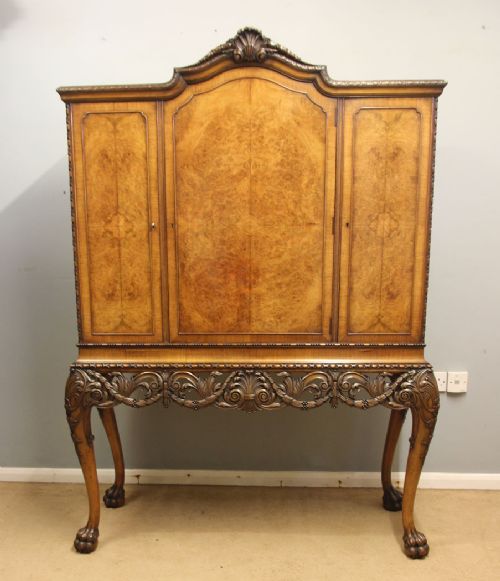
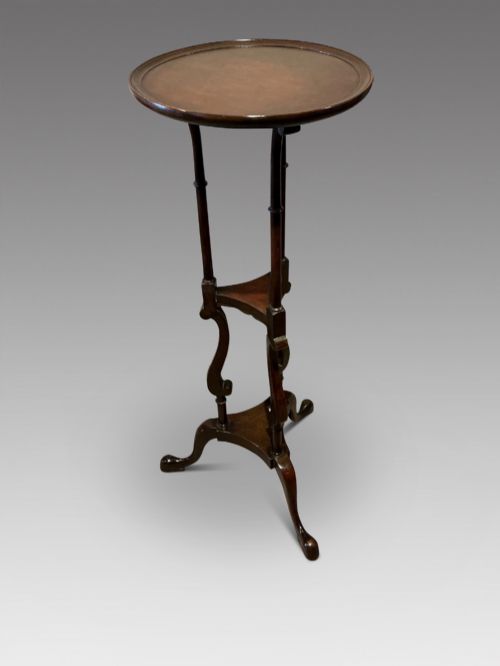
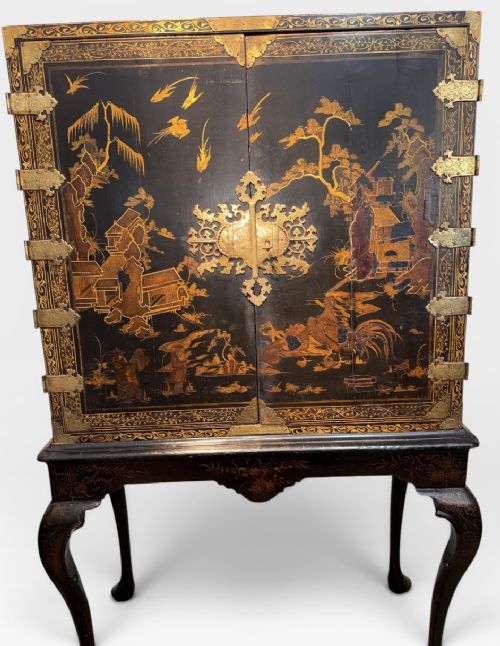
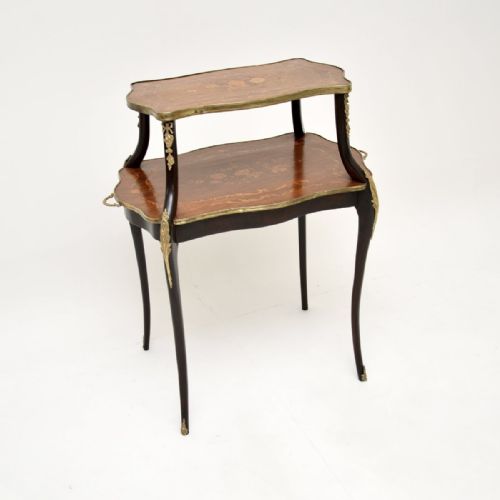
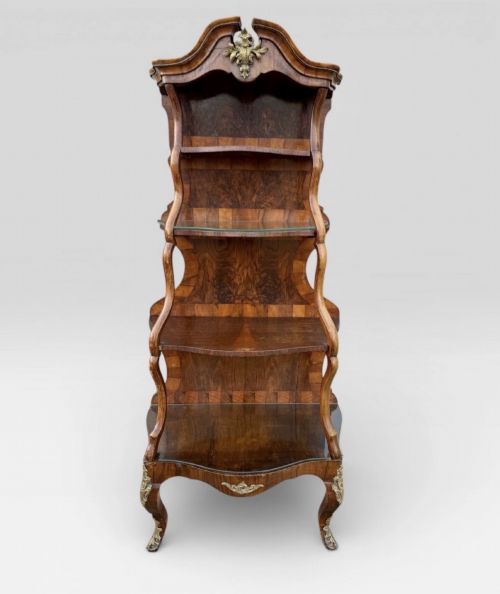
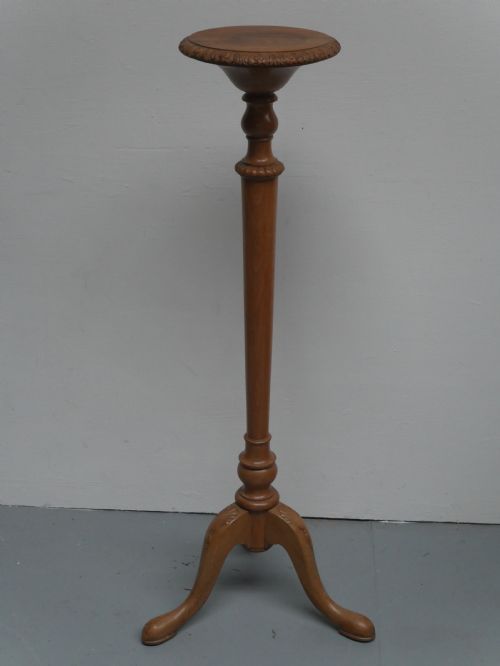


Cabriole Leg Display Stand
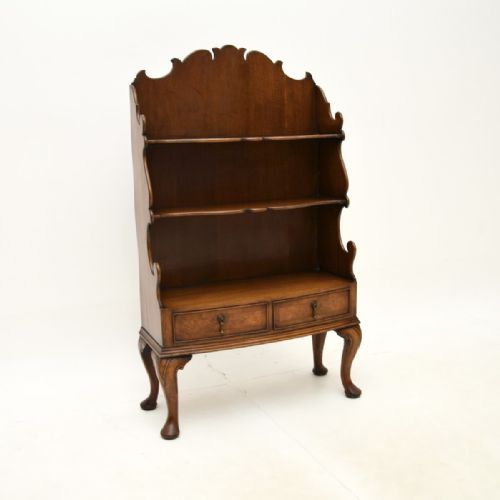
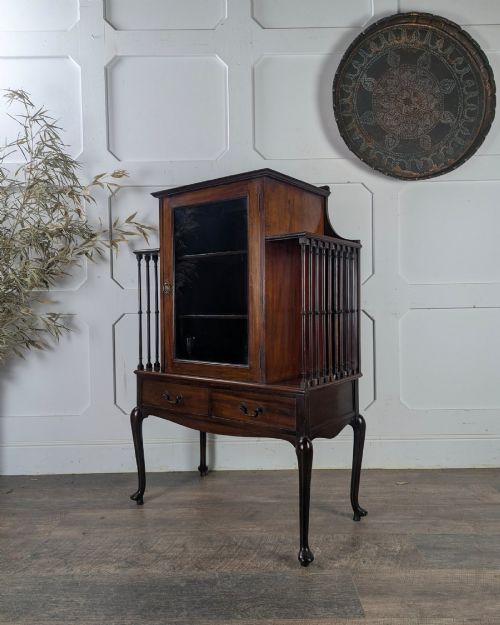
A cabriole leg display stand raises treasured objects on graceful, double-curving supports that bring immediate elegance to any room.
Cabriole Leg Display Stand
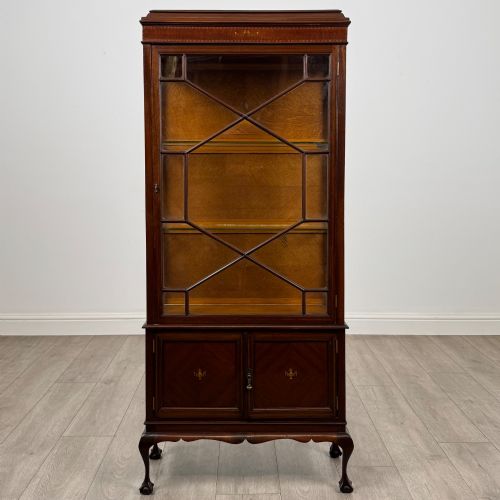
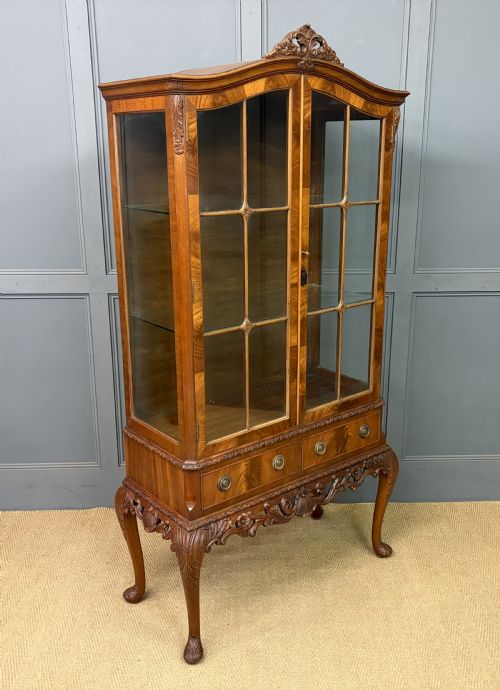
When you search for a cabriole leg display stand, you encounter a refined group of elevated furniture designed to showcase ceramics, books, and decorative objects. These pieces range from compact occasional tables and plant stands to large mahogany and walnut display cabinets.
The versions you meet most frequently on this page belong to the Edwardian period and the early twentieth century, alongside revival styles that echo eighteenth-century forms. They combine practical storage or display surfaces with the characteristic sweeping line of the cabriole leg.
Makers and cabinetmakers across the nineteenth and twentieth centuries adapted these stands into numerous formats, including etageres, vitrines, and corner cabinets. Each variation offers a distinct way to organise and present interior collections.
Markers of distinction
The standard of timber selection and veneer matching governs the visual impact of each cabinet or stand, with continuous grain patterns separating superior pieces from simpler constructions. Precision in the carving of the knees and feet on the cabriole supports indicates the skill of the original workshop.
Hardware integrity, such as original brass locks, hinges, and gilt metal mounts, maintains the structural and aesthetic coherence of the piece. The clarity of the glass and the tightness of the joinery at the frame corners further distinguish finer examples.
Many a Victorian plant stand has spent decades quietly holding a fern without ever knowing it was born a jardiniere.
Maple & Co.·Epstein
The Cabriole Leg Display Stand Glossary
- Cabriole leg
- A furniture leg that curves out in a convex arc at the knee and tapers inward in a concave arc to the foot, inspired by animal limbs. This form became a defining feature of eighteenth-century design and later revival periods.
- Vitrine
- A glass-panelled cabinet or display case designed specifically to show off porcelain, curiosities, and small treasures. They frequently feature glazed sides to allow light from multiple angles.
- Etagere
- A piece of furniture consisting of open shelves for displaying small objects, often standing on slender supports. French examples from the nineteenth century frequently incorporate marquetry and inlaid veneers.
- Torchere
- A tall, slender stand or pedestal originally intended to hold a candle or torch, later adapted to support vases, lamps, or plants. They typically feature a small circular or square top.
- Marquetry
- Decorative patterns formed by fitting together thin veneers of various woods, and sometimes ivory or metal, onto a solid wooden core. This technique creates complex pictorial or geometric designs on cabinet doors and tabletops.
Cabriole Leg Display Stand: Frequently Asked Questions
What fits on a plant stand?
These elevated stands accommodate medium-sized ceramic pots, bronze figures, or decorative glass vases on their upper surfaces.
Their sturdy hardwood construction and marble tops provide a stable base for heavy items while protecting underlying flooring.
How do I clean a mahogany cabinet?
Dust the timber surfaces regularly with a soft, dry cloth and apply a quality beeswax periodically to nourish the grain.
Avoid using harsh chemical sprays or placing the cabinet near direct heat sources to prevent the timber and veneers from drying out.
Where should I place an etagere?
Position your etagere against an interior wall where ambient light highlights the objects arranged across its open shelves.
Keep the piece away from damp areas and direct sunlight to protect delicate marquetry and polished wood finishes.
How do I identify a revival style?
Revival pieces combine the distinctive silhouettes of earlier eras, such as Queen Anne or Chippendale, with the production methods of the nineteenth or twentieth century.
Examination of the interior secondary timbers, screw types, and backboards usually reveals a later manufacturing date despite the historical form.