

Cabriole Leg Carver
A cabriole leg carver brings distinctive curving lines and reliable elbow support to the dining table or desk.
Cabriole Leg Carver
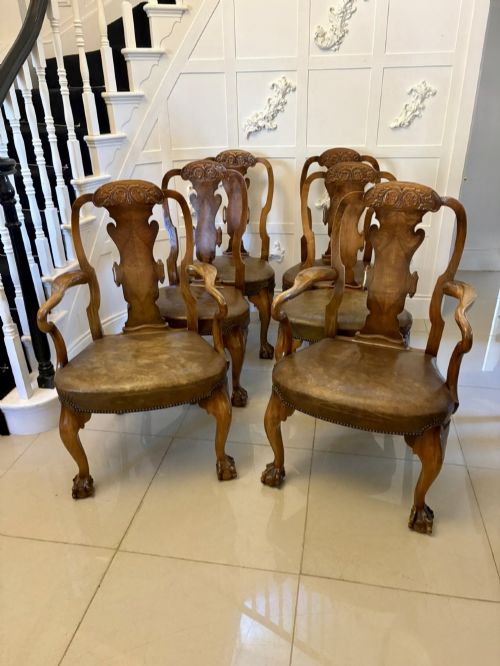
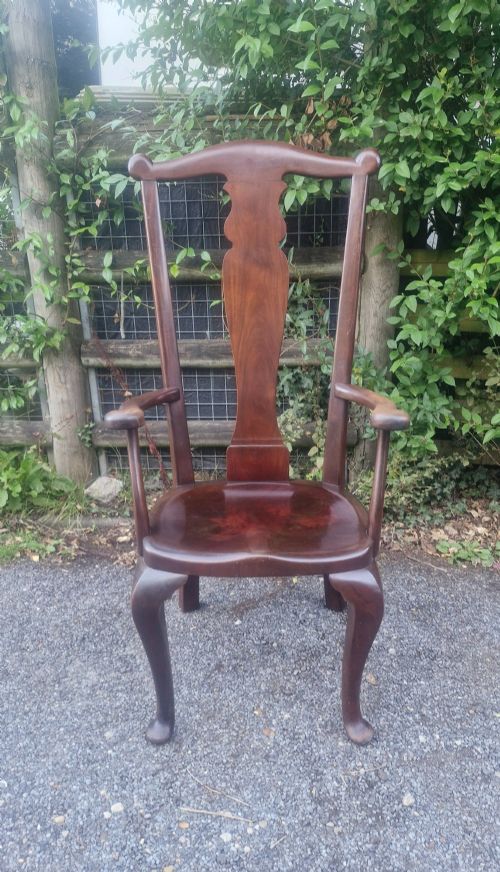
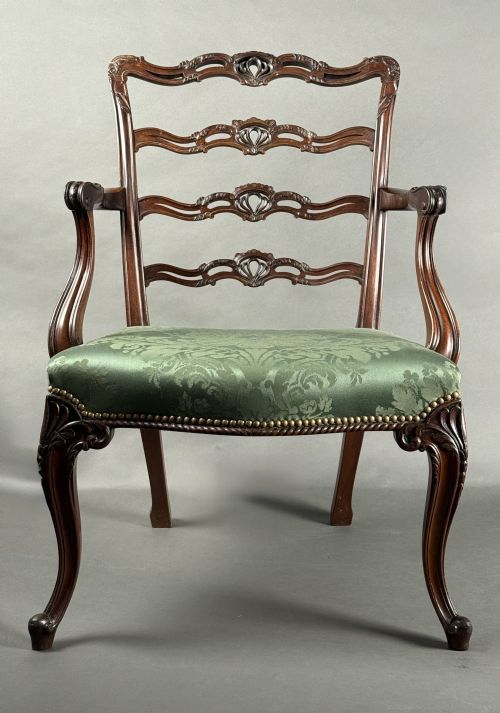
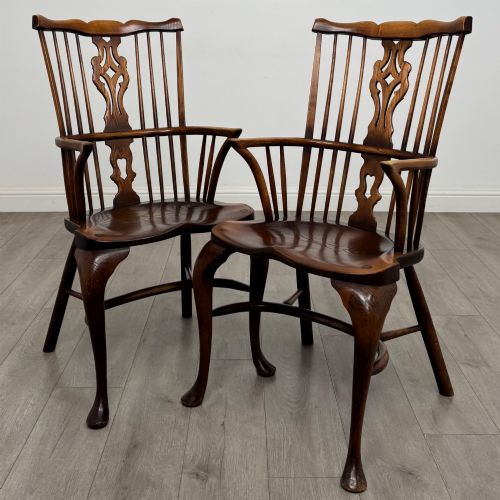
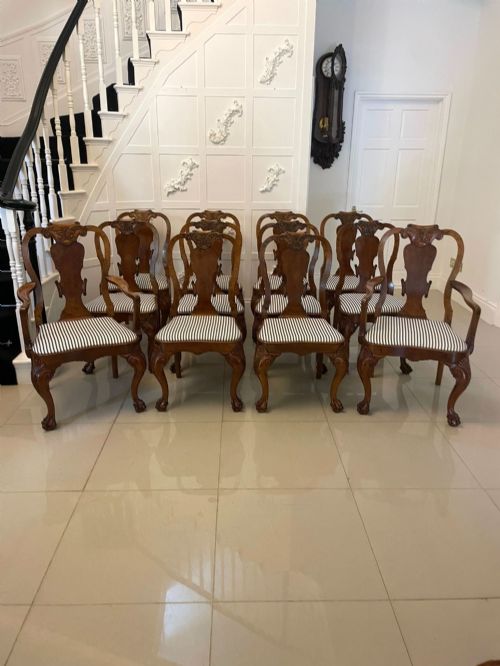
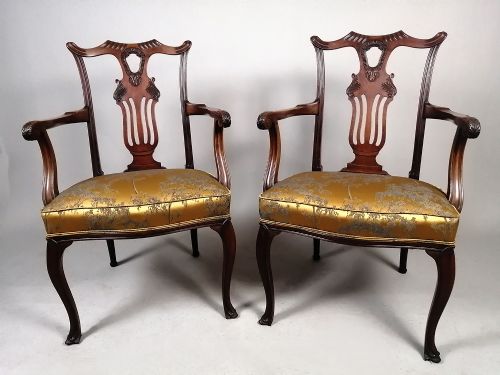
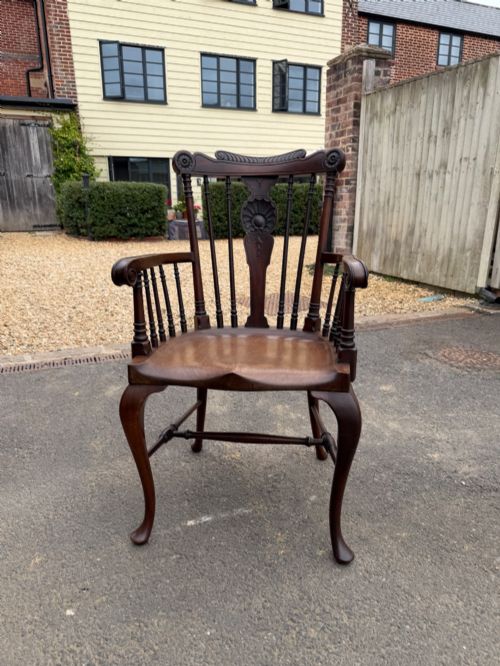
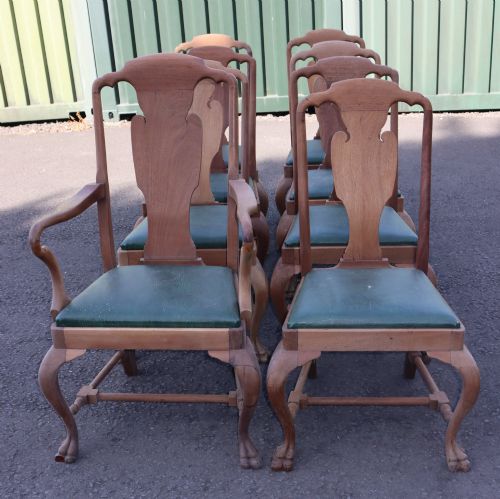
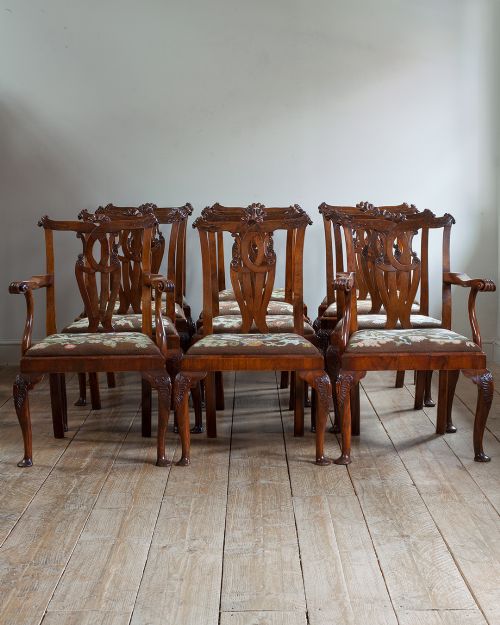
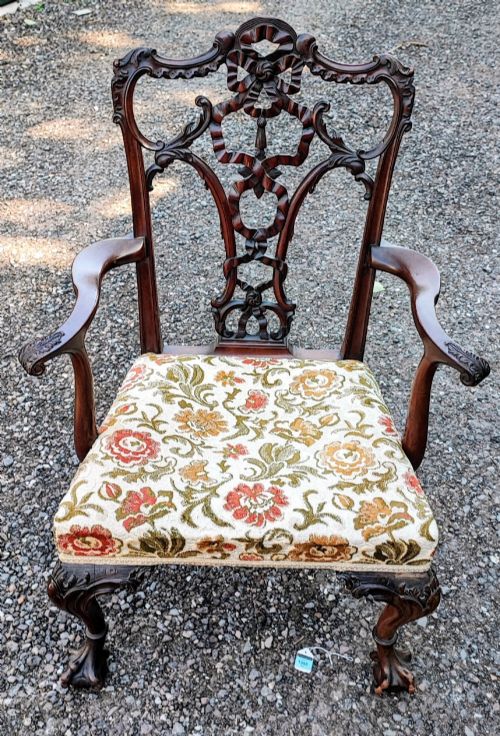
A cabriole leg carver is an armchair designed for the head of a dining table or for use at a desk, distinguished by its double-curved legs that swell outward at the knee and taper inward toward the foot. These seating pieces appear frequently in mahogany and walnut, spanning periods from the eighteenth century through the Victorian and Edwardian eras.
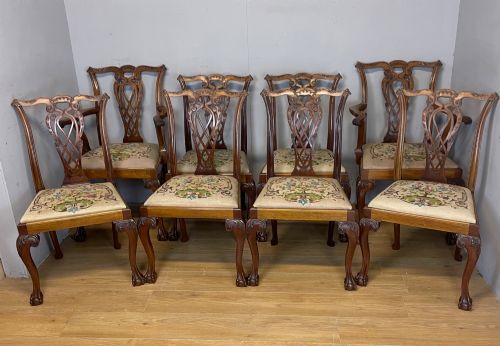
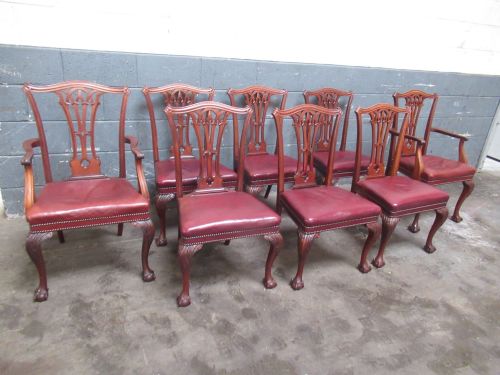
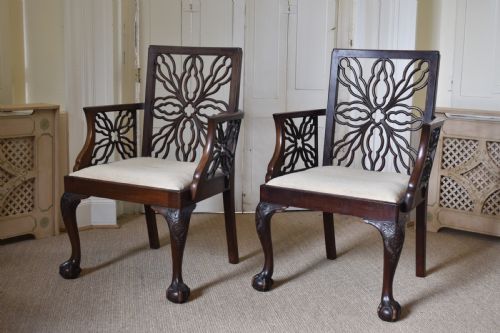
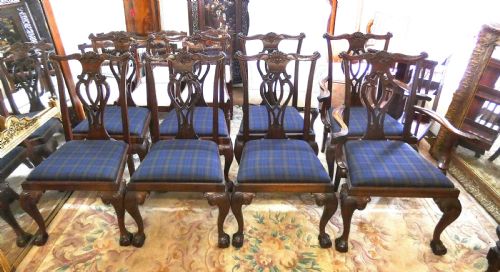
Buyers seeking this form encounter single pieces, pairs, or larger sets that often include matching side chairs. The aesthetic ranges from plain Georgian styles to elaborate revival pieces displaying Queen Anne and Chippendale influences.
Armchairs in this category function practically as desk chairs, library seating, or primary dining chairs. Their robust timber frames and integrated armrests provide sturdy support for daily use.
Materials and construction
Cabinetmakers built these chairs predominantly from dense hardwoods such as mahogany and walnut, alongside occasional examples in elm. Timber selection dictated the structural integrity of the curved legs, which required strong grain to support weight without snapping at the narrow ankle.
Upholstery materials range from original tapestry and leather to modern fabric replacements covering padded drop-in seats. Frame joints relied on traditional mortise and tenon joinery, reinforced where necessary to withstand the leverage exerted on the arms and back.
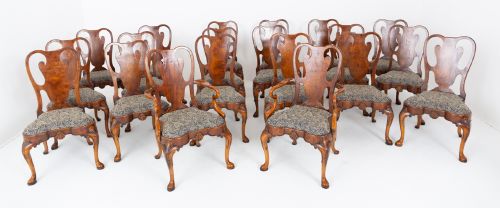
Some twenty-piece dining sets demand a very large dining room indeed.
Distinctions in craftsmanship
Quality rests in the sculptural confidence of the woodwork, particularly the symmetry of the carved knees and the crisp execution of details like ball and claw feet. Lesser examples show flat, mechanical carving, whereas superior pieces display fluent lines shaped entirely by hand.
Timber selection marks another clear division, with burr walnut veneers and richly figured mahogany indicating higher workshop standards. The integrity of the frame joins and the retention of original timber surfaces determine the lasting merit of each chair.
Warings
The Cabriole Leg Carver Glossary
- Cabriole leg
- A furniture leg that curves outward at the knee and inward at the ankle, terminating in a pad, scroll, or claw foot. This form mimics animal limbs and appears widely on eighteenth-century and revival seating.
- Carver
- An armchair designed to match a set of dining chairs, typically placed at the head of the table. These pieces feature supportive elbow rests while sharing the stylistic traits of the smaller side chairs.
- Chippendale style
- A decorative aesthetic drawing on the eighteenth-century designs of Thomas Chippendale, often featuring interlaced ribbon backs and carved cabriole legs. Revival versions from the Victorian and Edwardian periods replicate these classical motifs.
- Queen Anne style
- A graceful furniture design characterised by smooth surfaces, pad feet, and vase-shaped splats. Walnut was the favored timber during the original period, though revival sets frequently utilise mahogany.
- Splat
- The vertical central strip of wood within the back of a chair, often shaped or pierced for decoration. In these armchairs, the splat provides lumbar support while defining the stylistic period.
Cabriole Leg Carver: Frequently Asked Questions
What is a carver chair?
A carver chair is an armchair built with integrated armrests, traditionally used as the head seat at a dining table. These pieces match the smaller side chairs in a set while offering additional comfort.
Makers designed them with sturdy elbow supports for daily dining and writing tasks. They serve equally well today as standalone desk chairs or accent seating.
Are these chairs suitable for a desk?
Many examples function well as desk chairs, offering supportive armrests and comfortable upright postures. Timber frames provide the necessary rigidity for workspace environments.
Buyers often select walnut or mahogany armchairs with upholstered seats for study use. Their historic character adds visual weight to modern or traditional home offices.
How can I tell the period?
Dating relies on timber choice, construction methods, and stylistic revival markers such as Victorian or Edwardian interpretations of Georgian forms. Original eighteenth-century pieces display distinct hand-tool marks and aged patina.
Later revival pieces from the nineteenth and twentieth centuries utilise machinery alongside hand finishing. Examining the underneath structure and joinery reveals the true age of the timber frame.