


Green Leather Carver
A green leather carver brings substance to a room, offering the sturdy arms and upholstered seat needed for daily use at a desk or table.
Green Leather Carver
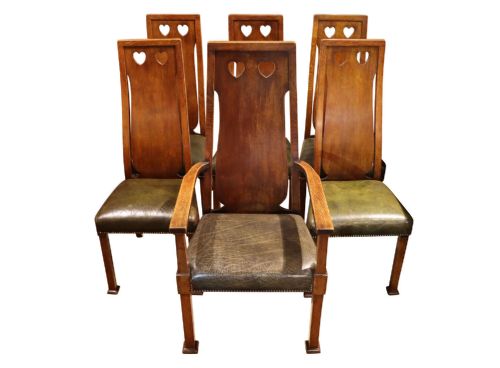
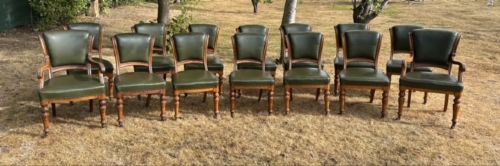
A green leather carver is a seated piece featuring supporting armrests alongside a hide-covered pad, often found in dining sets or library spaces. These pieces span centuries from the Georgian period through to the Edwardian era and the early twentieth century.
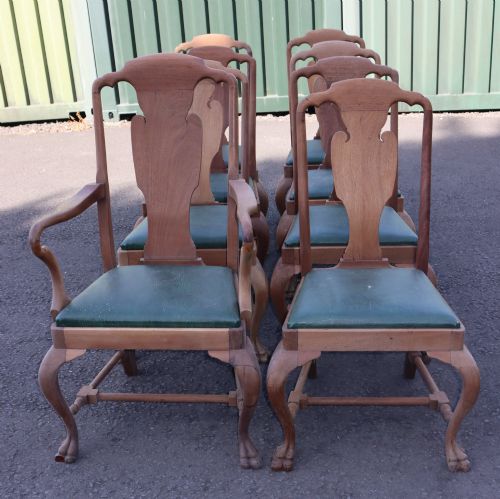
The form appears in various timber frames such as mahogany, oak, and walnut, reflecting revivals of Chippendale, Hepplewhite, and Gothic styles. Buyers most frequently encounter mahogany examples alongside oak variants dating from the nineteenth and early twentieth centuries.
Armchairs and desk chairs dominate the selections, serving both formal dining arrangements and study environments. Each piece demonstrates the functional role of the armchair within historic domestic interiors.
Materials and construction methods
Makers utilised solid timbers including mahogany, oak, and walnut to build the primary chair frames, sometimes incorporating brass, copper, or giltwood details. These woods were shaped into scroll arms, carved backs, and tapered or cabriole legs.
Upholstery involved stretching hide over padded seats, occasionally secured with brass tacks or applied as hand-dyed green leather inserts. Frame construction relied on traditional joinery techniques appropriate to periods ranging from the eighteenth century to the 1930s.
Some nineteenth-century makers evidently expected diners to require serious arm support during lengthy meals.
Variations in quality and execution
Quality reveals itself in the crispness of the timber carving and the selection of dense, well-figured woods like mahogany and walnut. Superior examples display balanced proportions and refined stylistic details that align with specific revival periods.
The finish of the wood and the integration of the leather upholstery separate standard production from finer cabinet work. Attention to structural integrity and period-appropriate joinery defines the upper tier of these armchairs.
Gillows·Cooper and Holt
The Green Leather Carver Glossary
- Carver chair
- An armchair designed with open sides to accommodate clothing styles of earlier centuries, typically used at the head of a dining table. These frames feature sturdy armrests integrated into the main structure.
- Chippendale style
- A decorative design inspired by eighteenth-century cabinet maker Thomas Chippendale, characterised by intricate back splats and cabriole legs. This aesthetic saw widespread revival during the Victorian and Edwardian periods.
- Giltwood
- Timber treated with gold leaf or a gold-coloured metallic finish for decorative effect. It appears on select nineteenth-century frames to highlight carved details.
- Library armchair
- A substantial upholstered seating form designed for reading rooms and studies, offering deep comfort and robust wooden framing. These pieces often incorporate leather seats and padded armrests.
- Scroll arm
- An armrest curved outward in a spiral or scroll contour, commonly seen on nineteenth-century mahogany and walnut chairs. This shape provides both ergonomic support and visual flow.
Green Leather Carver: Frequently Asked Questions
What is a carver chair used for?
A carver chair serves as an armchair placed at either end of a dining table or utilised as a standalone desk seat. The armrests provide additional support compared to standard single chairs.
Historically, these pieces occupied prominent positions in dining rooms and libraries, combining utility with decorative presence.
Are these chairs suitable for daily desk use?
Many of these pieces function effectively as desk chairs, provided the seat height and arm clearance match your workspace. Solid timber frames and supportive leather pads offer the necessary stability.
Consider the depth of the seat and the height of the armrests to ensure comfort during extended periods of sitting.
What wood types are most common?
Mahogany and oak appear most frequently across these listings, alongside occasional examples in walnut. Each timber imparts a distinct colour and grain pattern to the chair frame.
Makers selected these hardwoods for their strength and ability to hold intricate carved details over centuries of use.