
Cabriole Leg Bureau Plat
These nineteenth-century cabriole leg bureau plat desks bring French rococo elegance to a room while offering a practical writing surface.
Cabriole Leg Bureau Plat
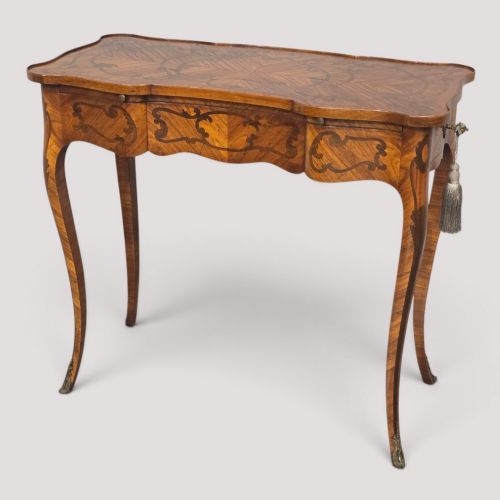
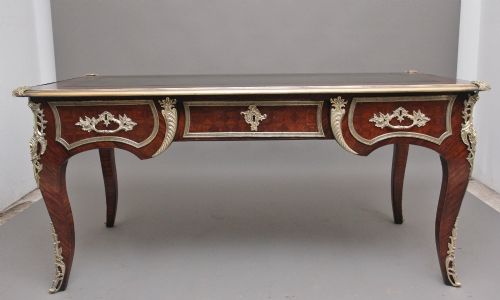
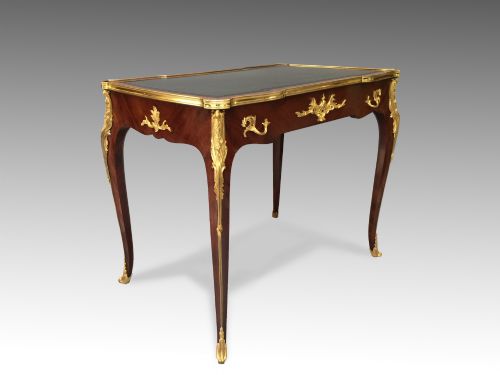
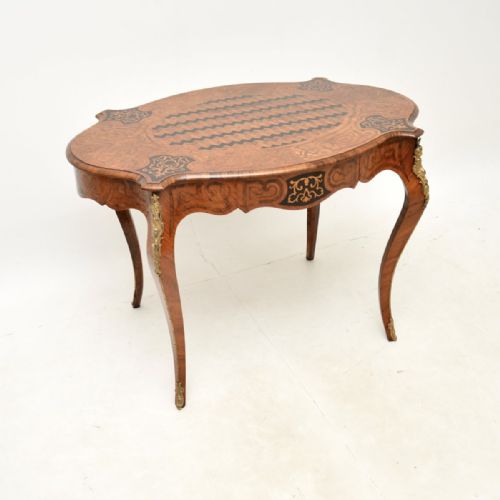
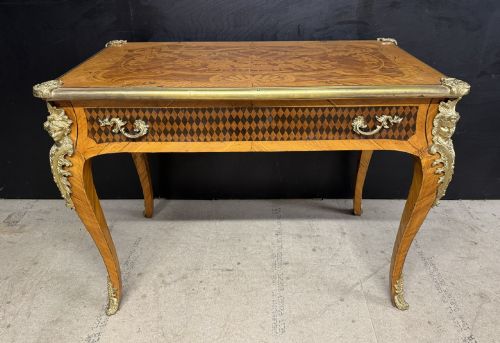
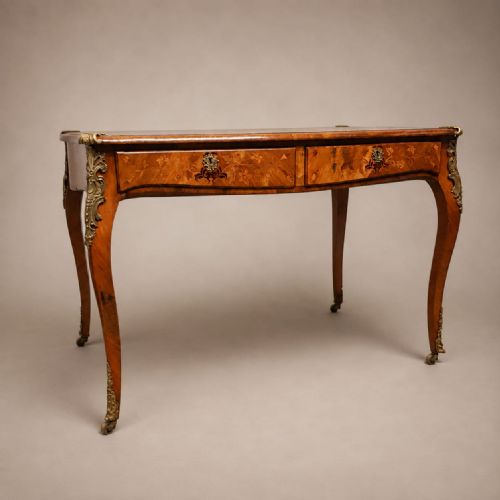
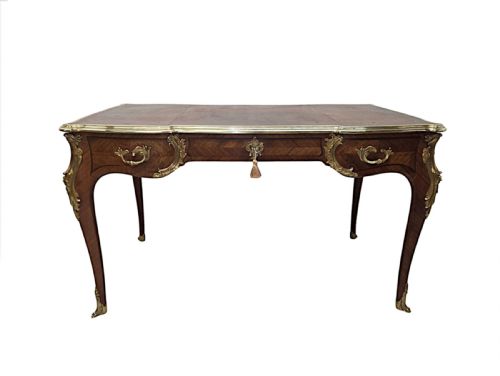
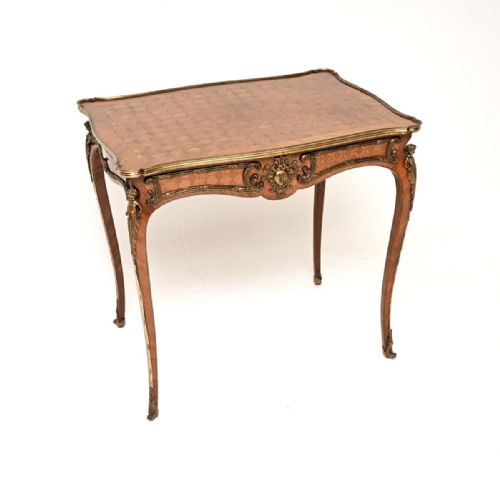
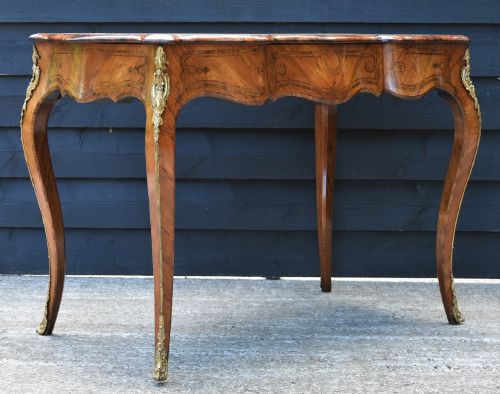
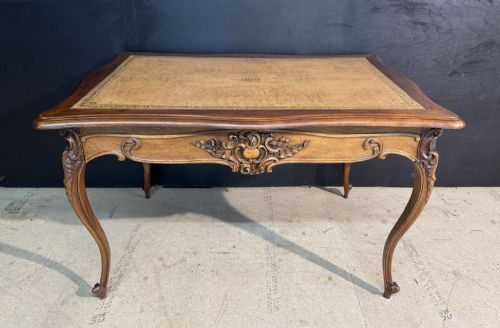
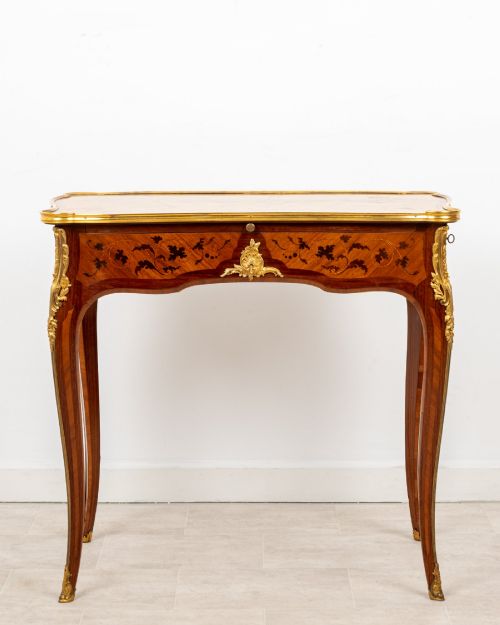
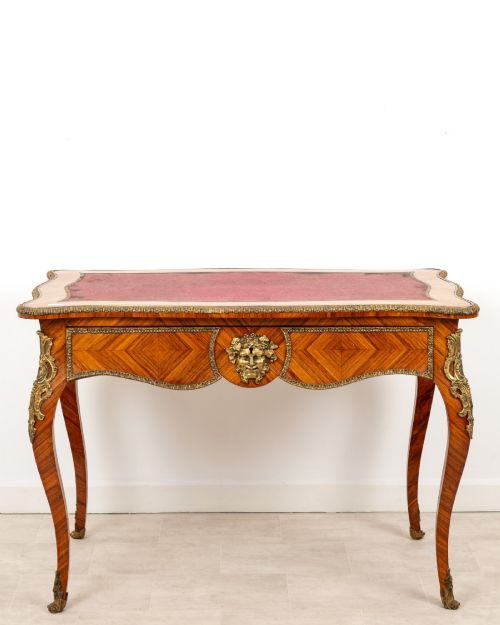
A cabriole leg bureau plat is a freestanding writing desk or table characterised by curved legs and a finished back, designed to sit in the centre of a room rather than against a wall. The examples found here date principally from the nineteenth century, reflecting the strong Victorian and Edwardian appetite for French revival aesthetics.
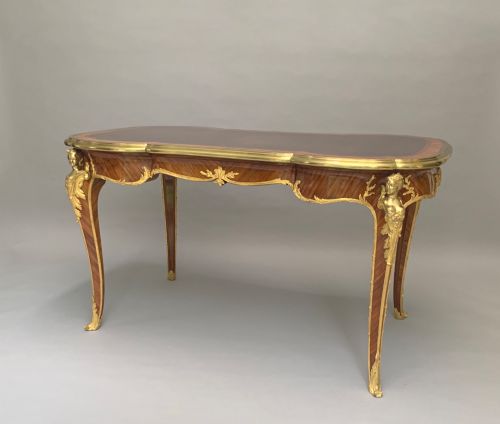
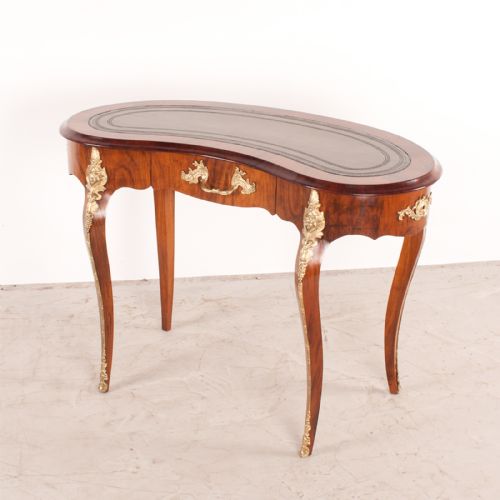
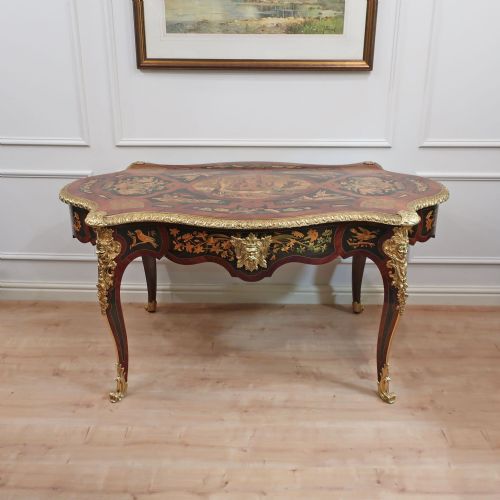
Most pieces follow the Louis XV and French Rococo styles, featuring serpentine outlines and elaborate marquetry or parquetry surface patterns. Alongside standard writing desks, the selection includes related forms such as centre tables, kidney-shaped writing tables, and side tables constructed in similar revival idioms.
How they were made
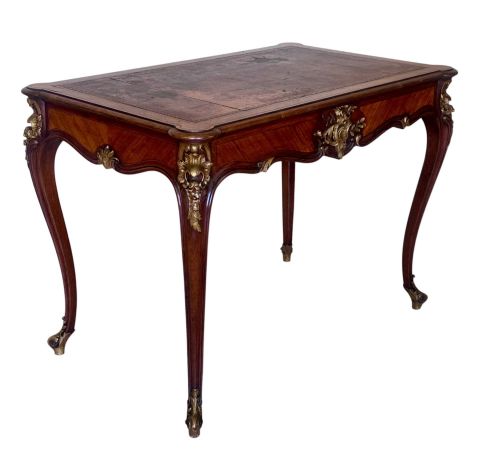
Cabinet makers constructed these desks using a carcase of walnut, mahogany, or burr walnut, overlaid with decorative timbers such as kingwood, rosewood, tulipwood, and intricate marquetry or parquetry veneers. Tops commonly incorporate inset tooled leather writing surfaces framed by timber borders.
Cast gilt bronze and ormolu mounts adorn the corners, drawer fronts, and sabots, complementing the structural curves of the cabriole legs. These metal elements were chased by hand to catch the light and accentuate the organic lines of the revival styles.
Listings feature woods including kingwood, rosewood, walnut, and burr walnut alongside ormolu mounts.
What varies in quality
Quality rests upon the precision of the veneer work and the crispness of the cast ormolu mounts. Finer pieces display seamless marquetry patterns across curved surfaces and heavier, more deeply chiselled bronze fittings produced by notable makers.
The choice of secondary timbers and the integrity of the joinery distinguish workshops of high repute from standard commercial output. A well-balanced serpentine frame with clean drawer construction indicates superior cabinet-making standards.
Francois Linke·Edwards & Roberts·CH Jeanselme & Co·Durand
The Cabriole Leg Bureau Plat Glossary
- Bureau plat
- A freestanding writing table, typically with drawers in the frieze. These tables sit away from walls to display decoration on all sides.
- Cabriole leg
- A furniture leg that curves outward in an arc and tapers inward toward a foot, derived from animal limb shapes. This form defines much eighteenth-century and revival seating and case furniture.
- Ormolu
- Gilded bronze used for decorative mounts and fittings on furniture. The technique involves applying a gold amalgam to bronze before firing.
- Marquetry
- Inlaid wood veneers forming decorative pictures or geometric patterns. Craftsmen piece together contrasting timbers to create floral or abstract designs.
- Sabot
- A metal shoe fitted to the foot of a furniture leg. These mountings protect the timber base and complete the decorative scheme of the piece.
Cabriole Leg Bureau Plat: Frequently Asked Questions
Where should a bureau plat sit?
A bureau plat is designed as a freestanding piece with finished decoration on all sides. It is traditionally placed in the middle of a study or drawing room rather than pushed against a wall.
This placement allows the cabriole legs and ormolu mounts to be viewed from every angle in the room.
How do I care for the leather top?
The leather inset requires gentle cleaning with a slightly damp cloth followed by a neutral leather cream to keep the surface supple. Avoid harsh chemical cleaners that can strip the gold tooling.
Keep the desk away from direct sunlight and heat sources to prevent the leather from drying and cracking over time.
What is the difference between a bureau plat and a writing table?
In practice, the terms overlap significantly in nineteenth-century French revival furniture. A bureau plat strictly denotes a flat-topped writing table with drawers, while a writing table is a broader descriptive term.
Both forms on this page share similar structural traits, including cabriole legs and decorative wood veneers.
How do I identify Louis XV style pieces?
Louis XV style pieces are recognised by their absence of straight lines, featuring asymmetrical curves, serpentine shapes, and floral marquetry. The cabriole leg flows naturally into the apron of the desk.
Ormolu mounts on these pieces typically echo natural leaf and scroll motifs rather than rigid geometric patterns.