
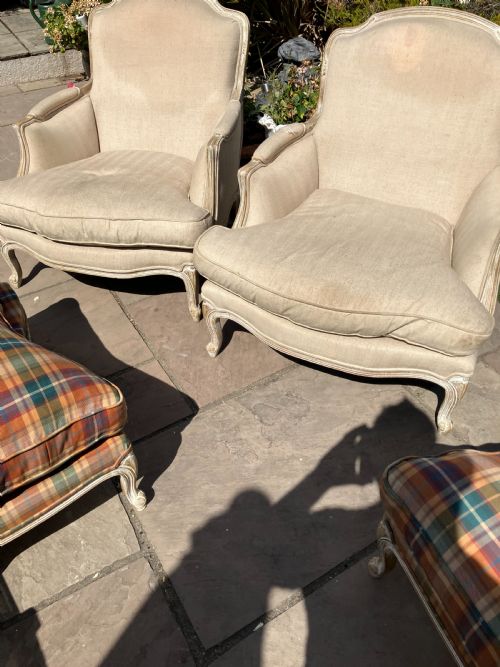
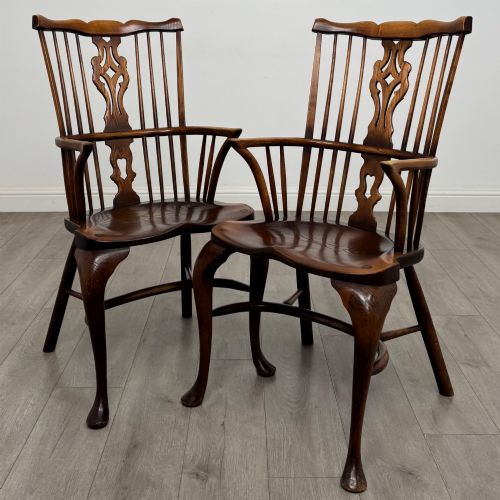
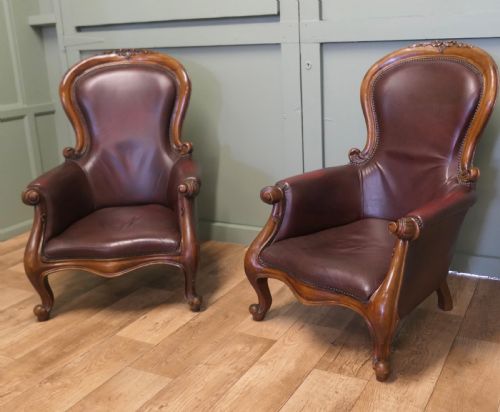
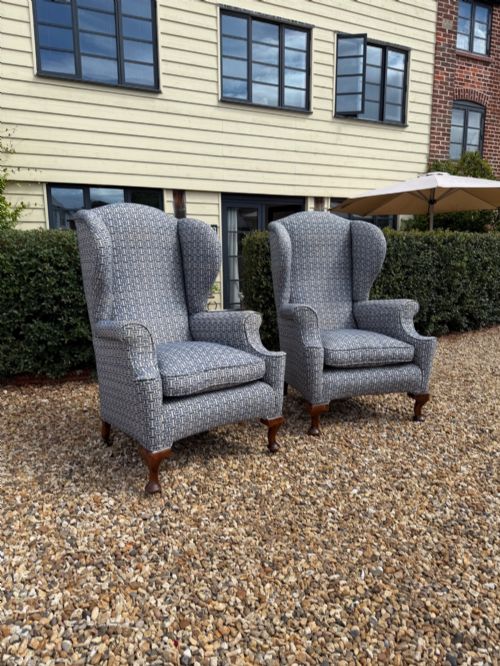
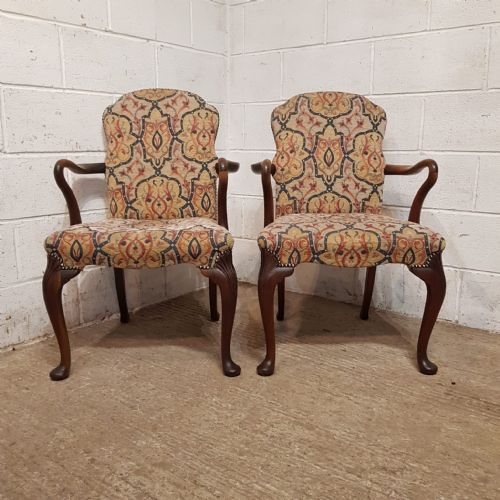
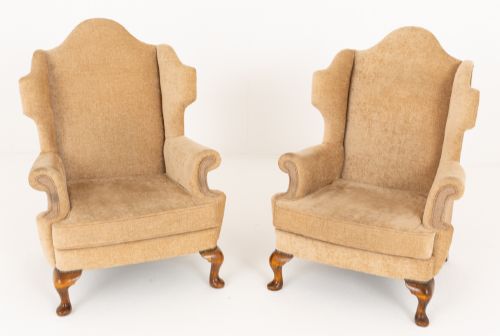
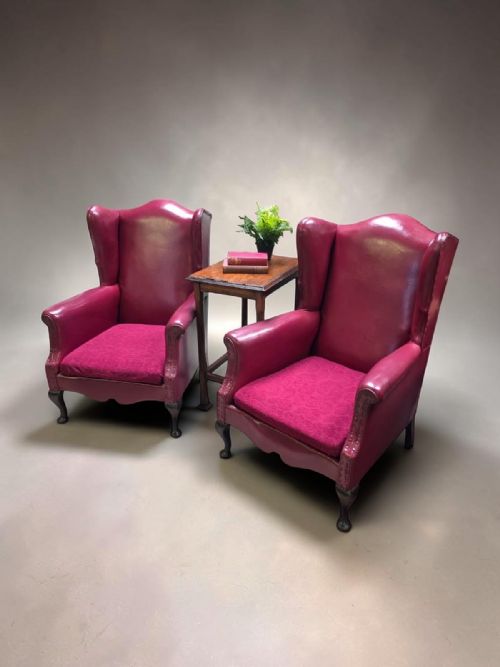
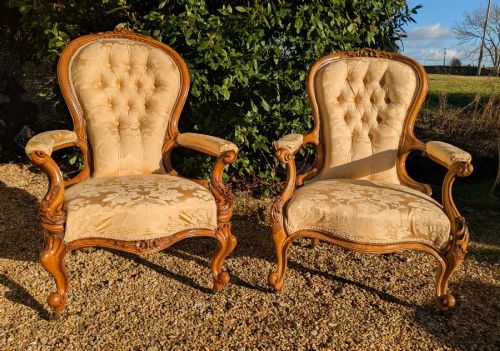
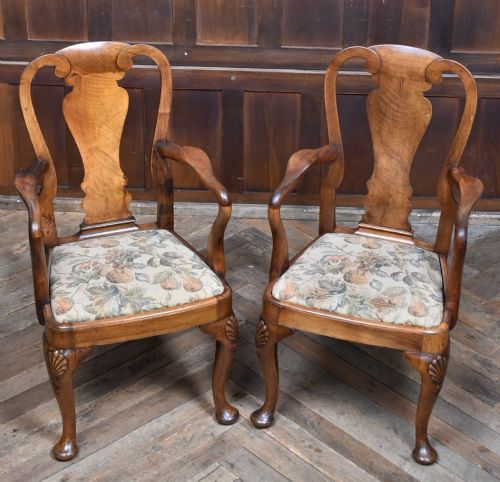
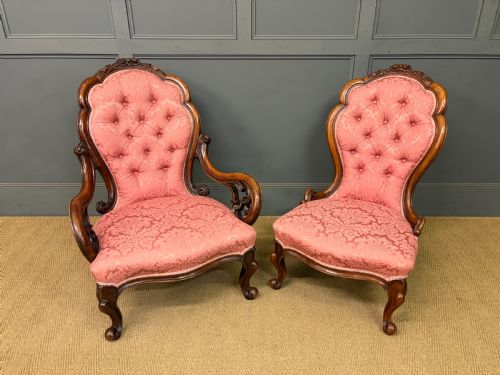
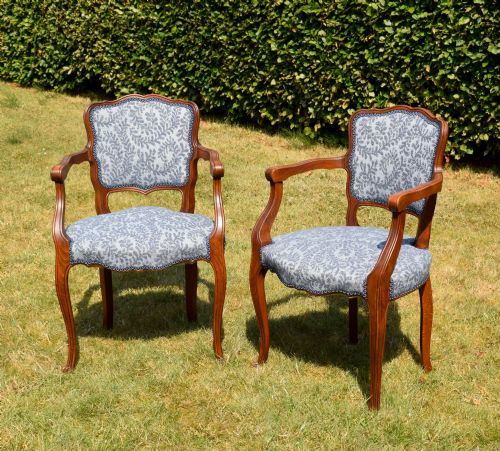
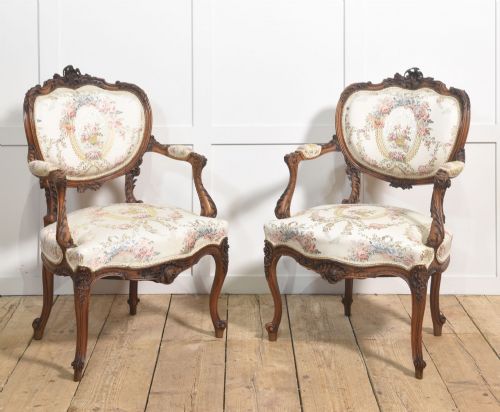
Cabriole Leg Armchairs Pair
When you want a cabriole leg armchairs pair, you are looking for matched seating defined by curved, graceful supports.
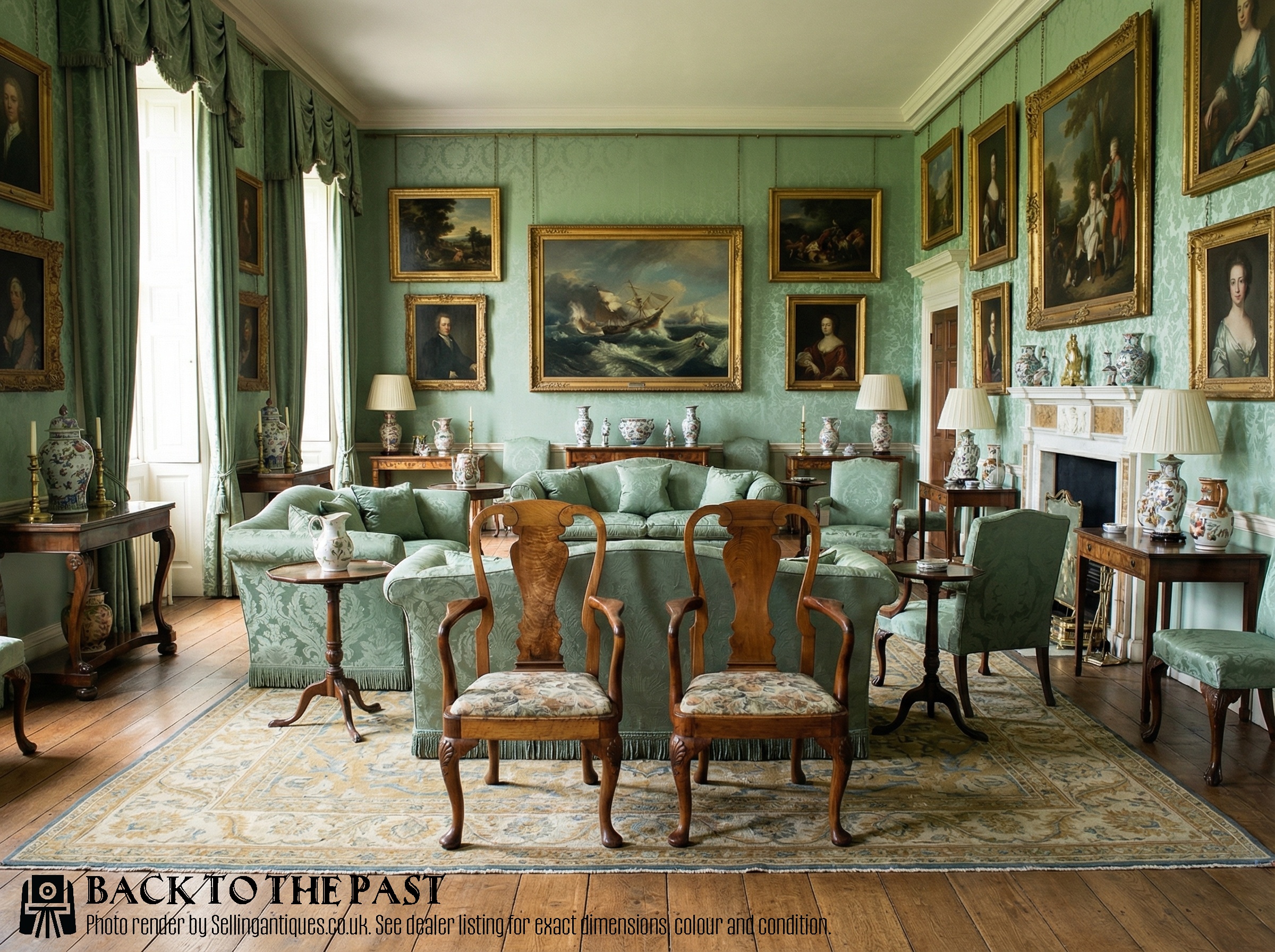
Cabriole Leg Armchairs Pair
A cabriole leg armchairs pair brings matched seating into a room, taking forms such as library chairs, wing chairs, and salon chairs. These sets appear frequently in Victorian, Edwardian, and twentieth-century revivals of earlier aesthetics.
The materials and silhouettes reflect distinct periods, from walnut frames with carved details to mahogany and elm constructions. Buyers encounter French Louis styles alongside English country and Georgian revival pieces.
What varies in quality
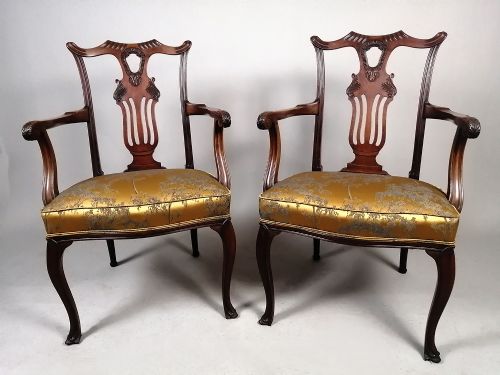
The definition and depth of the wood carving distinguish standard frames from finer examples, especially on the knees and feet of the cabriole supports. Timber selection also plays a role, with choice grains of walnut or mahogany elevating the piece.
The integration of the upholstery with the wooden frame dictates the overall finish, noting whether the covering materials complement the period style of the woodwork.
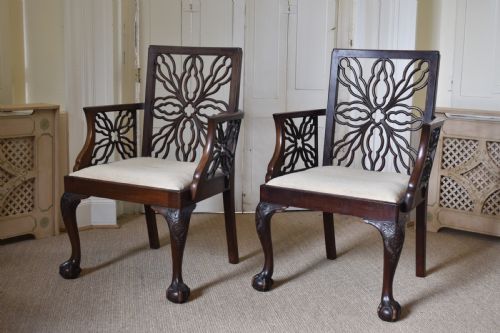
Some chairs sport spider web backs, proving that eighteenth-century design ideas occasionally tangled with Victorian imaginations.
Whytock and Reid
The Cabriole Leg Armchairs Pair Glossary
- Cabriole leg
- A furniture leg that curves out and then in, resembling the leg of an animal. This form typically terminates in a pad, claw and ball, or scroll foot.
- Wingback
- An armchair with side panels attached to the back, designed to shield the occupant from drafts. These chairs frequently feature upholstered bodies and wooden legs.
- Bergere
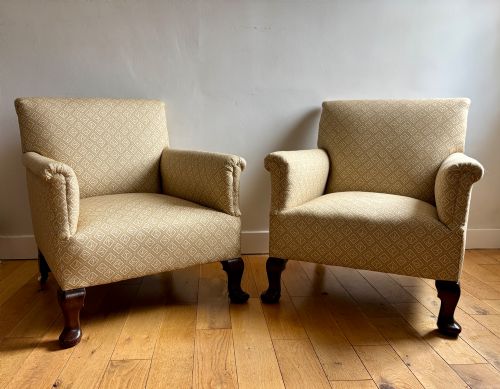
- An enclosed upholstered armchair with wooden framing around the sides and back. The armrests often pad out towards the front.
- Spoon back
- A padded chair back shaped like the bowl of a spoon, common in Victorian seating. This profile provides ergonomic support for the spine.
- Elbow chair
- An armchair designed with open sides and low arms. These pieces often serve as desk or dining seating.
Cabriole Leg Armchairs Pair: Frequently Asked Questions
What periods do these armchairs come from?
The listings include examples spanning the nineteenth century, the Victorian era, the Edwardian period, and into the nineteen-twenties and thirties.
Many pieces also date from revival periods, mimicking eighteenth-century French and English designs.
Where were these chairs used historically?
These armchairs served in libraries, parlours, and drawing rooms as principal seating. Pairs were arranged symmetrically to furnish formal spaces.
Library and desk variants provided supportive seating for reading and writing.
What upholstery materials are common?
Original and replacement upholstery includes leather, velvet, woven fabric, and cane panels. Brass tacks frequently secure the edges of the fabric to the wooden frame.
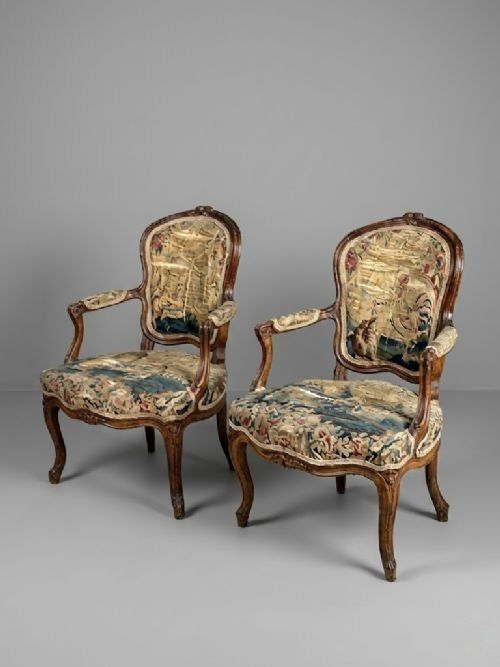
Needlepoint and Aubusson tapestries also appear on French style pieces.