
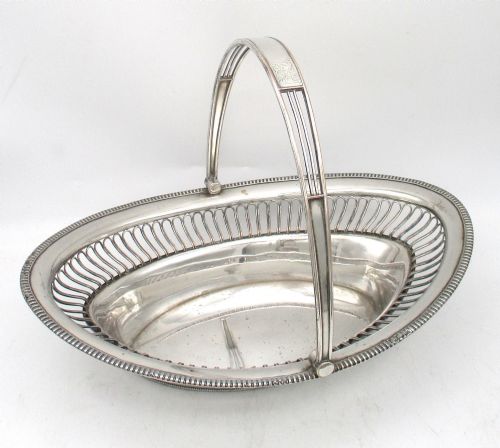


C1800 Sheffield Plate
These c1800 sheffield plate pieces bring Georgian dining and entertaining to life with heavy copper and silver fused surfaces.
C1800 Sheffield Plate
When searching for c1800 sheffield plate, collectors encounter functional items designed for the Georgian dining table, drawing room and parlour. These pieces span the 19th Century and the year 1800, originating from Georgian and Regency styles.
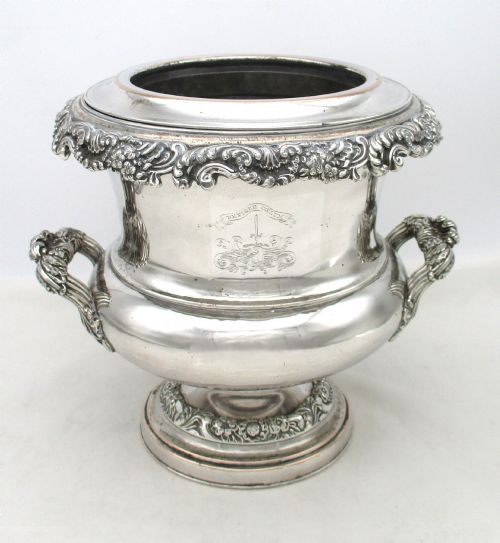
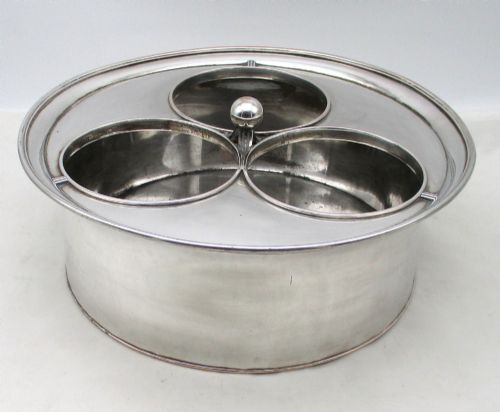
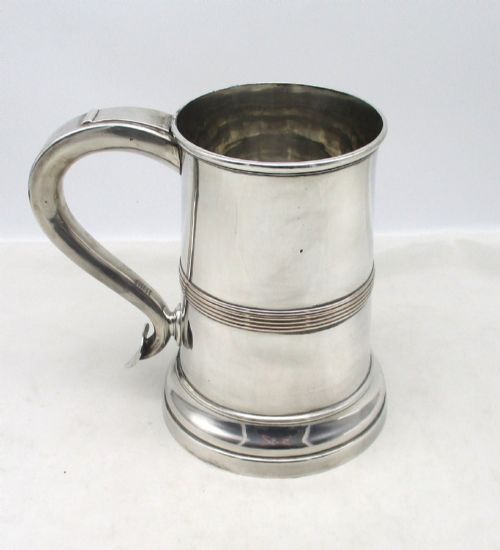
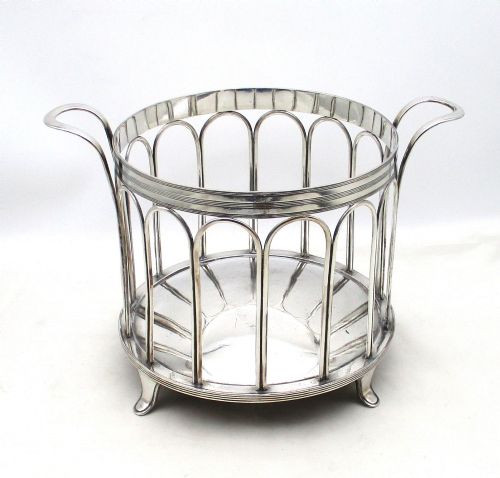
The selection centres heavily on barware and dining accessories, featuring wine coolers, tankards, wirework baskets, and chamber candlesticks. Other forms include warming dishes, trays, argyles, and ink stands, reflecting the domestic habits of the period.
How they were made
The items are made using a fusion process that combines copper and silver, creating old sheffield plate where a thin layer of silver is fused to a thicker copper base. Certain items incorporate wood or mounted coconut alongside the plated metal.
Craftsmen shaped this fused metal into complex forms such as wirework baskets, tankards, and wine coolers, often embellishing them with engraved crests and coats of arms.
Coconut cups mounted in shining silver plate proved that Georgian hosts enjoyed bringing tropical curiosities directly to the dinner table.
What varies in quality
Quality depends upon the crispness of the applied mounts and the preservation of the fused silver layer over the copper substrate. Pieces bearing detailed crests or coats of arms demonstrate a higher level of original commission.
The complexity of the object form dictates the standard of manufacture, separating simpler utility vessels from elaborate multi-bottle wine coolers and wirework pieces.
Matthew Boulton
The C1800 Sheffield Plate Glossary
- Old Sheffield Plate
- A composite metal made by fusing a sheet of silver to a copper ingot, developed in the eighteenth century before electroplating. This technique produces a durable material that shows subtle copper telegraphing at high-wear edges over time.
- Argyle
- A vessel used for serving hot gravy, featuring an internal core or compartment for boiling water to keep the sauce warm. These items are sometimes known as gravy warmers.
- Wirework
- Openwork metal construction formed from soldered wires, seen frequently in baskets and toast racks from this period. This method required precise hand assembly.
- Chamber Candlestick
- A low candle holder fitted with a handle and a pan to catch dripping wax, often accompanied by snips. These were utilised for lighting one's way through a house at night.
C1800 Sheffield Plate: Frequently Asked Questions
What is c1800 sheffield plate?
It is a fused composite of silver and copper produced before the invention of electroplating.
Items from this era include dining vessels, barware, and household accessories designed in Georgian and Regency styles.
How do I clean old sheffield plate?
Clean these pieces gently using mild silver cream and a soft cloth to protect the thin silver layer.
Avoid abrasive dips or harsh scrubbing that might expose the underlying copper base.
What was an argyle used for?
An argyle served gravy or sauces at the dining table while keeping the contents warm.
Hot water was poured into an internal cylinder or jacket to prevent the fat from congealing during long meals.
Why do I see copper on these pieces?
Copper telegraphing occurs when the thin exterior layer of silver wears down through centuries of polishing.
This reveals the warm reddish copper substrate beneath, which many collectors view as an indicator of authenticity for early fused plate.