


Silver Plate Chamberstick
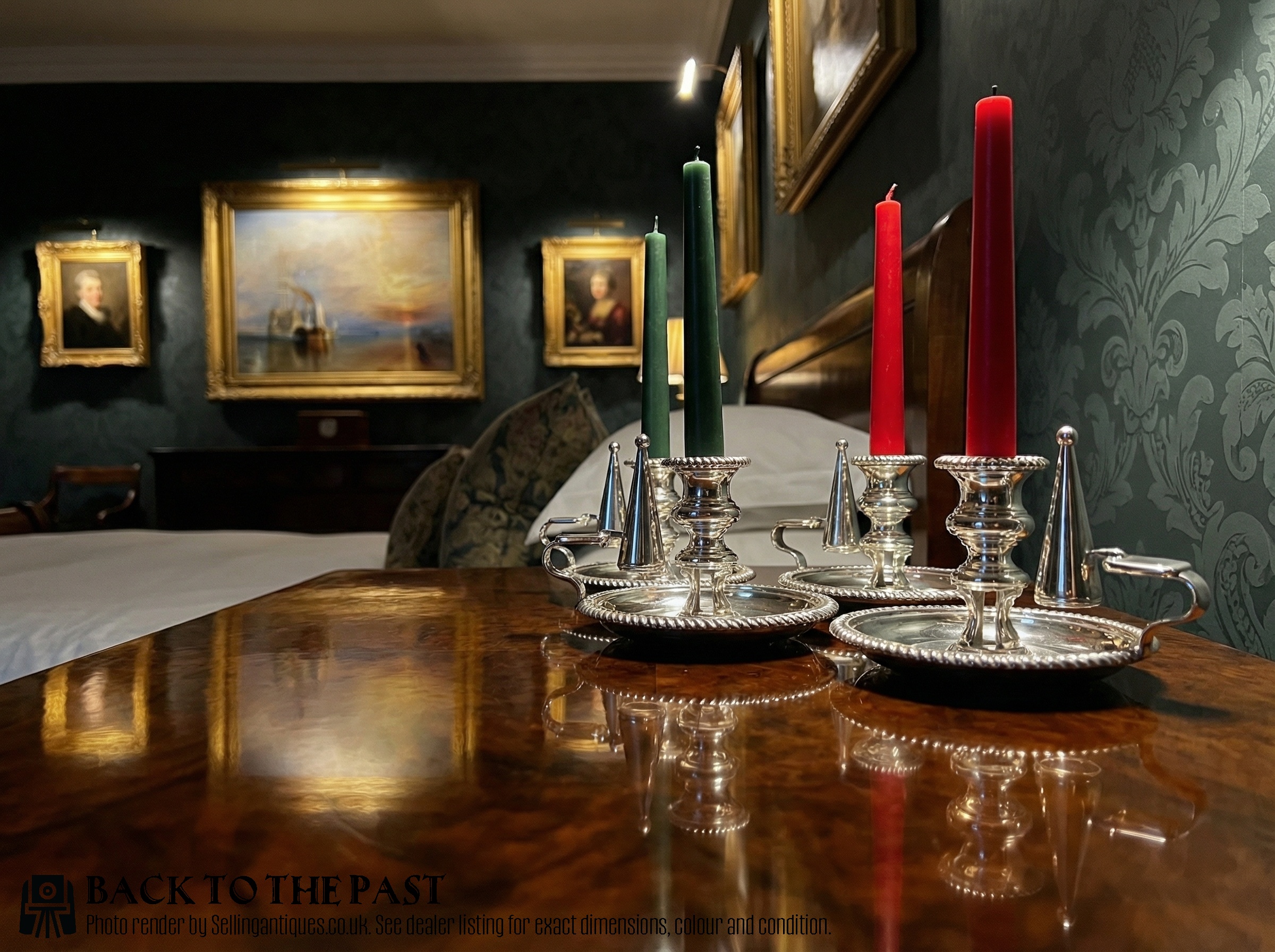
A silver plate chamberstick brings portable bedroom candle-light from earlier centuries directly into your home.
Silver Plate Chamberstick
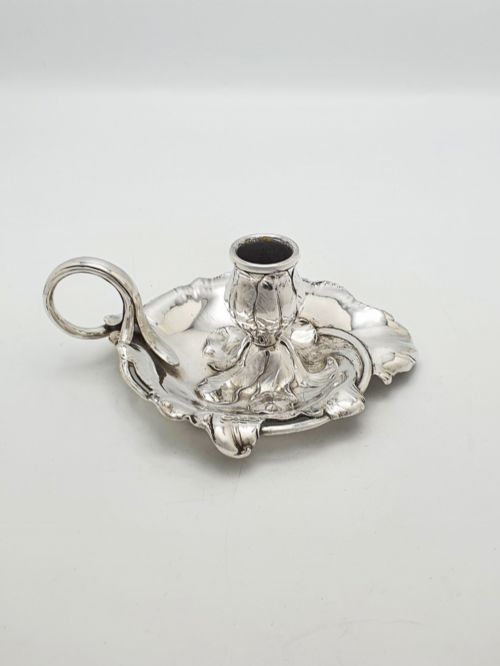
A silver plate chamberstick is a low-profile candle holder designed for carrying through a house at night, typically fitted with a shallow pan to catch melting wax and a ring handle for a secure grip. These pieces appear in forms ranging from plain nineteenth century designs to elaborate Rococo Revival and Art Nouveau examples.
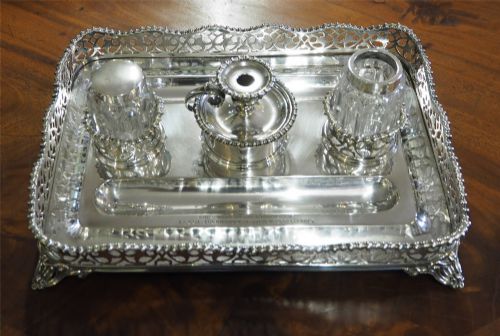
The selections recorded here span the Georgian and Victorian eras, alongside the turn of the twentieth century. Alongside standard chambersticks, buyers encounter related desk accessories, travelling sets with fitted cases, and combinations featuring integrated snuffers or inkstands.
Most examples rely on a sturdy metal base beneath their silver plating, though specific historical pieces demonstrate the heavier warmth characteristic of older Sheffield plate production. Whether discovered singly or in matched pairs, each object reflects the lighting habits of past domestic interiors.
Factors that define quality
The thickness of the applied silver layer and the condition of the underlying base metal dictate the longevity of a piece, particularly where frequent cleaning has caused the silver to wear thin over high points. Superior examples retain crisp cast enrichment around the drip pan and handle, whereas lesser items show softened detail from repetitive polishing or hurried manufacturing.
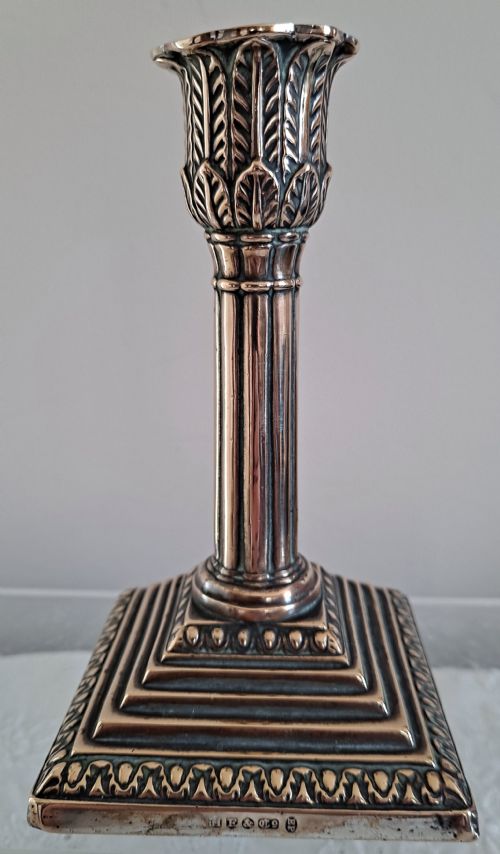
Completeness significantly influences a piece, as original detachable snuffers, match holders, and matching extinguishers are frequently separated from their pans over decades of domestic use. The presence of clear maker marks or engraved armorial crests points to higher grade commissions made for specific households.
Elkington and Company·Hukin and Heath·Walker and Hall
The Silver Plate Chamberstick Glossary
- Chamberstick
- A low candle holder featuring a saucer-like base and a loop handle for carrying a candle through dark corridors. These items were essential bedroom accessories before the widespread adoption of domestic gas and electric lighting.
- Sheffield plate
- An early method of fusing a sheet of silver to a copper core by heating them together. This technique predates modern electroplating and produces a distinct tactile depth.
- EPNS
- An abbreviation for electroplated nickel silver, which became the standard industrial method for silver plating during the Victorian period. The process uses electrical current to bond a thin coat of silver onto a nickel brass alloy base.
- Drip pan
- The shallow saucer or tray surrounding the socket of a chamberstick designed to catch molten wax. This component protects the carrier's hand from hot wax while walking.
- Snuffer
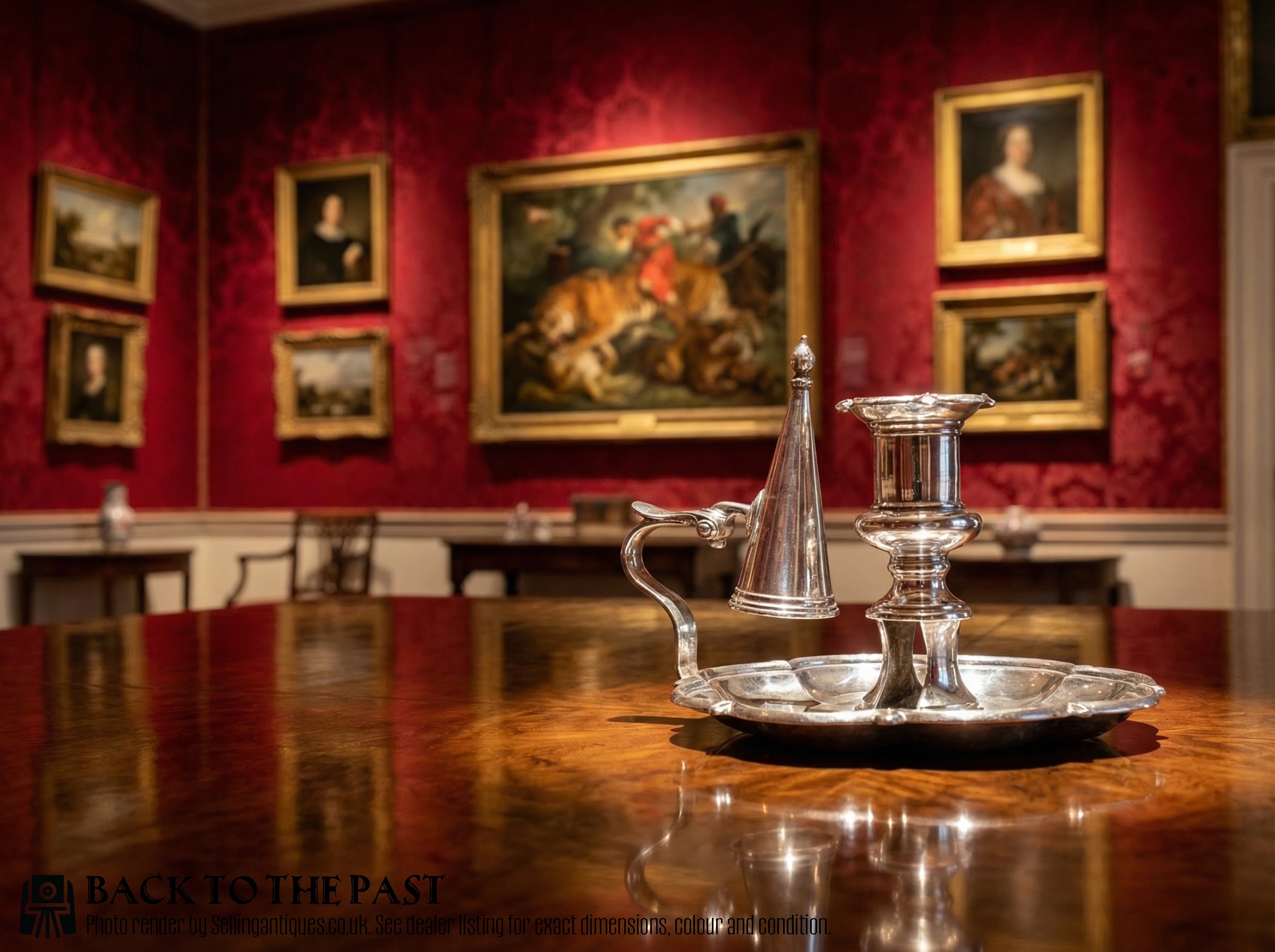
- A small metal cone or scissor-like tool used to extinguish a candle flame and trim the wick. Many chambersticks include a dedicated clip or holder to keep the snuffer close at hand.
Silver Plate Chamberstick: Frequently Asked Questions
Were these chambersticks used in bedrooms?
Yes, these portable holders served primarily as bedroom lighting for navigating dark staircases and hallways before the invention of electric lamps. The wide saucer base caught any stray wax drips while the user walked.
Servants would prepare them each evening with fresh candles, placing them on hall tables for members of the household to carry upstairs at bedtime.
How can I tell Sheffield plate from later electroplate?
Sheffield plate often reveals a faint hint of copper showing through along the cut edges or high wear points because of the older fusion manufacturing technique. The weight and warmth of the copper core also feel distinct in the hand compared to later base metals.
Electroplated items usually display uniform silver coverage and often carry specific maker marks or stamps denoting EPNS or nineteenth century plating firms.
Why do some chambersticks include snuffers?
Candles of the nineteenth century produced considerable smoke and soot if left to smoulder or if the wick grew too long during use. Integrated or matching snuffers allowed the user to extinguish the flame cleanly without filling the bedchamber with smoke.
Many surviving pieces retain a small bracket or central cone designed precisely to hold this extinguisher when not in active service.