
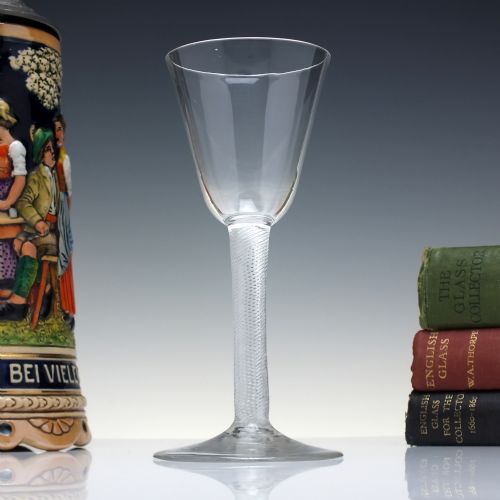


C1750 English Glass
These c1750 english glass pieces are mid-eighteenth century drinking vessels and tablewares that bring tactile weight and historic form to any table.
C1750 English Glass
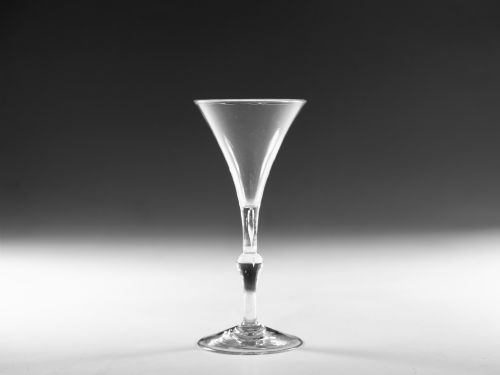
When you search for c1750 english glass, you are looking at drinking vessels and tablewares from the middle of the eighteenth century, broadly spanning the Georgian period. These pieces originate from English workshops and include wine glasses, goblets, stemware, decanters, and jelly glasses.
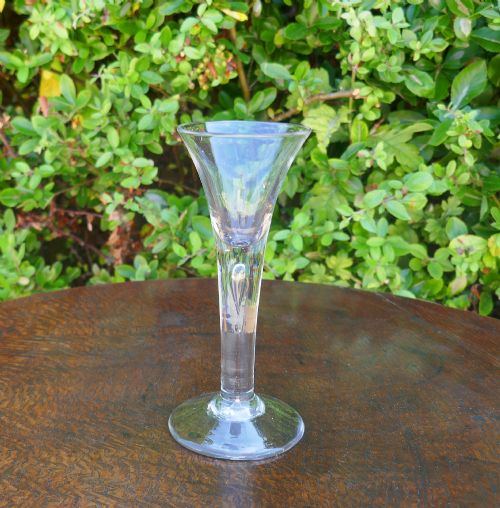
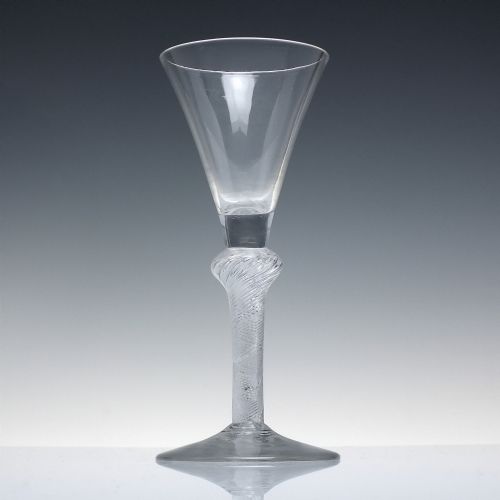
The most common forms you will encounter on this page are wine glasses with plain, balustroid, or air twist stems. Alongside wine glasses, you regularly find cordial glasses, ale glasses, gin glasses, and heavy shaft and globe decanters.
Many examples trace their origins to the Georgian era, representing a high point in domestic glass production. Their functional forms, from heavy balusters to delicate champagne flutes, reflect the social drinking habits of the mid-eighteenth century.
Materials and manufacture
English glass of this period is predominantly lead glass, lead crystal, or flint glass, which gave vessels a distinct refractive quality and substantial weight. Makers utilised high lead content formulations to produce clear, dense metal that allowed for deep ringing tones when struck.
Stem formation involved various techniques, such as drawing out plain stems, incorporating air bubbles or tears, and twisting internal threads to form air twists and mercury twists. Bowls were often blown into moulds, such as nut-moulded patterns, or left smooth and bell-shaped.
An eighteenth-century air bubble trapped inside a wine glass stem turns an accidental manufacturing quirk into a deliberate optical delight.
Assessing quality and character
Quality in c1750 english glass rests on the clarity of the metal, the balance of the stem, and the crispness of any engraving or moulding. Heavier lead content provides a brighter handle, while well-formed air twists and balanced baluster nodes show superior hand-working skill.
Proportion and foot form distinguish finer examples from standard tavern wares. A heavy folded foot and symmetrical bowl shape indicate careful workshop execution, whereas uneven metal distribution or clumsy stem joints lower the distinction of the piece.
The C1750 English Glass Glossary
- Lead glass
- A heavy, brilliant glass made by adding lead oxide to the batch, common in English manufacturing from the late seventeenth century onwards. It provides the material weight typical of Georgian stemware.
- Air twist
- A stem formed by drawing out enclosed air bubbles into spiral threads within the glass. This decorative technique creates internal light refractions along the stem.
- Baluster
- A thick, swelling stem form derived from architectural balusters, often featuring knops or nodes. Light baluster variants offer a more slender silhouette.
- Plain stem
- A straight, unadorned cylindrical stem supporting the drinking bowl. These stems often contain a small tear or air bubble trapped near the base.
- Nut moulded
- A pattern pressed into the lower bowl of a glass using a ribbed mould, resembling the texture of a shelled nut. It adds tactile grip and visual depth to the vessel.
C1750 English Glass: Frequently Asked Questions
How do I identify a c1750 English wine glass?
Look for heavy lead glass construction combined with period-appropriate stem formations like air twists, balusters, or plain stems. The proportions and pontil mark on the underside of the foot also help confirm eighteenth-century origins.
Examine the clarity of the metal and the weight in the hand. Georgian pieces typically feel surprisingly heavy for their size due to the high lead content used by English glasshouses.
What were jelly glasses and sweetmeat glasses used for?
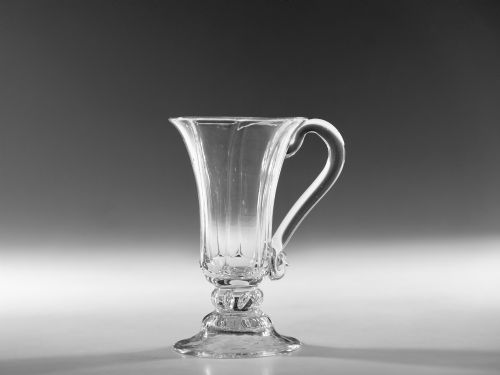
Jelly glasses and sweetmeat glasses held sweet sweetmeats, jellies, and rich desserts served at fashionable eighteenth-century dessert courses. They were often smaller than wine glasses and sometimes featured handles or deep, flared bowls.
These pieces sat on the table alongside tall stemware to present colourful sweet courses at the end of a formal meal. Their sturdy feet kept them stable on heavy timber dining surfaces.
Can I use antique Georgian wine glasses for drinking?
Many collectors use eighteenth-century glasses for special occasions, treating them with careful hand washing rather than modern dishwashers. The lead glass is durable, but thermal shock and modern detergents can damage fragile surfaces.
Handle them by the stem rather than the bowl, and avoid sudden temperature changes when pouring liquids. Enjoying wine from a mid-eighteenth-century glass connects you directly to its original domestic purpose.
How should I display my eighteenth-century glass collection?
Display your glassware in a stable cabinet with good interior lighting to highlight the clarity of the lead crystal and the patterns within the stems. Ensure shelves are level and pieces have adequate space between them.
Avoid placing glass in direct sunlight for extended periods, and keep them away from areas with heavy vibrations or foot traffic. Proper spacing prevents accidental chipping of delicate rims and feet.