


Antique Crystal Ale Glass
These antique crystal ale glass examples bring authentic Georgian drinking history to your table, offering tactile weight and historic charm.
Antique Crystal Ale Glass
An antique crystal ale glass is a drinking vessel designed for malt beverages, typically featuring tall proportions suited to carbonation. The selections available span the Georgian and Regency eras up to the early twentieth century.
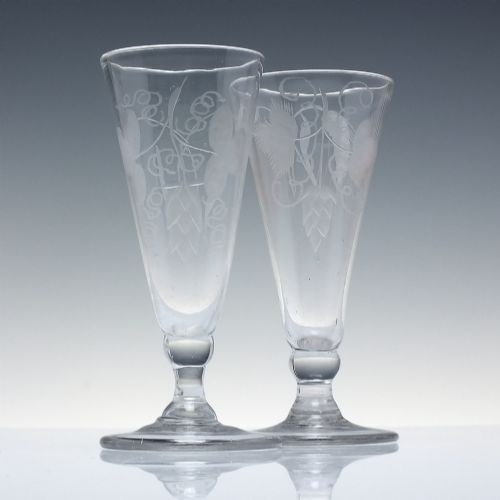
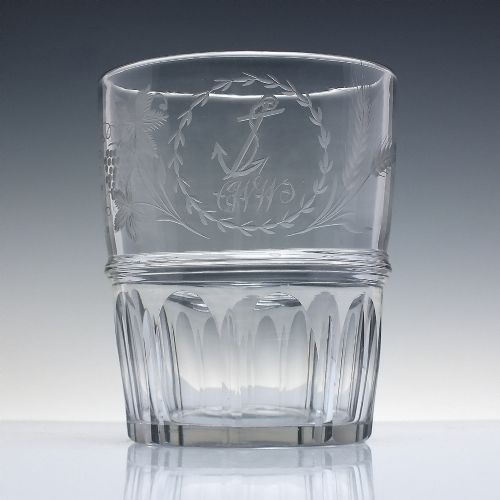
Most examples you encounter on this page date from the eighteenth century, showcasing traditional English forms intended for social consumption. Collectors find slender flutes, heavy rummers, and flip tumblers bearing historic hop and barley motifs.
How they were made
These vessels rely on lead crystal and flint glass compositions shaped by hand-blowing techniques. The resulting material provides the characteristic clarity and heft expected of eighteenth-century glassware.
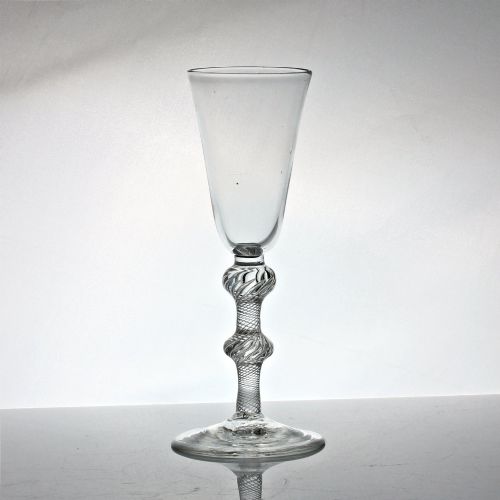
Makers utilised specialised tools to achieve complex details, including multi-spiral air twists inside stems and precise facet cutting. Engraving was applied by hand to depict botanical elements like hops and barley.
Georgian drinkers enjoyed flip glasses so much they occasionally used them in sporting wagers to toss drinks across tavern tables.
What varies in quality
Quality rests upon the delicacy of the optical effects within the glass and the crispness of the hand-engraving. Fine air twists show precise spiral movement without distortion, while superior facet cutting creates sharp, clean edges.
Proportion and metal weight also distinguish finer pieces from standard production. A well-balanced stemware piece displays even wall thickness and an undistorted metal free from heavy inclusions.
The Antique Crystal Ale Glass Glossary
- Air twist
- A decorative stem feature containing elongated bubbles drawn into spiral threads during manufacture. This technique creates a luminous internal pattern.
- Rummer
- A large, heavy drinking glass used for punch, rum, or ale during the Georgian period. They generally feature short stems and capacious bowls.
- Flip glass
- A cylindrical tumbler without a handle, often engraved and tapering slightly toward the base. These pieces were popular for serving beer and cider.
- Facet cut
- Geometric planes ground and polished onto the surface of the glass. This treatment enhances the refractive qualities of lead crystal.
Antique Crystal Ale Glass: Frequently Asked Questions
How do I identify an eighteenth-century ale glass?
Look for heavy lead metal content and characteristic tool marks left by hand-blown manufacture. Air twist stems and engraved hop motifs are typical indicators of this period.
Examine the pontil scar on the underside, which demonstrates the manual separation of the vessel from the blowing iron. These physical traits distinguish period examples from later reproductions.
Can I use these glasses for daily dining?
These historical vessels require careful handling due to their age and delicate material composition. Hand washing in lukewarm water is essential to preserve the fragile glass.
Many collectors reserve them for special occasions or display them to prevent accidental damage. Modern glassware remains better suited for rigorous everyday use.
What is the difference between an ale flute and a rummer?
Ale flutes feature tall, slender bowls designed to maintain the effervescence of the beverage over a narrow opening. They often include air twists or facet-cut stems.
Rummers are substantially larger and wider, built with short, sturdy stems intended for heartier portions of ale or punch. Their robust proportions reflect different tavern drinking habits of the Georgian era.
Why do many glasses feature hop and barley engravings?
Engravings of hops and barley served as a direct decorative reference to the ingredients used in brewing ale. These botanical motifs were popular decorative choices for eighteenth-century tavern and domestic glassware.
Artisans applied these designs using copper wheels to celebrate the agricultural origins of the drink. Such detailing provides valuable contextual clues regarding the intended beverage.