

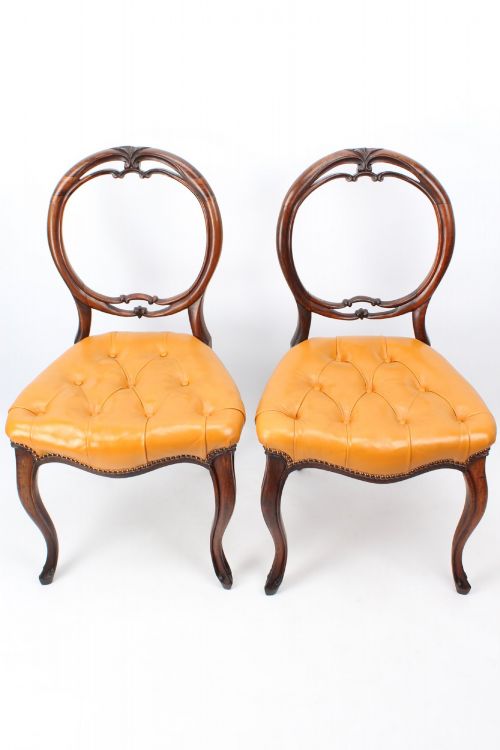
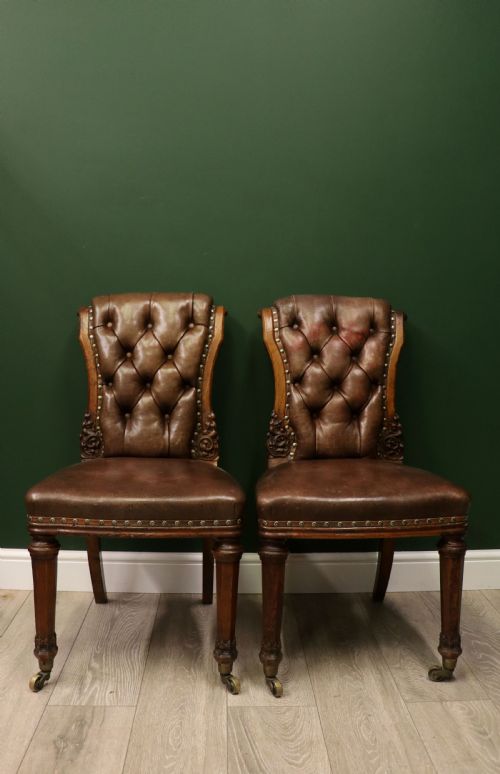


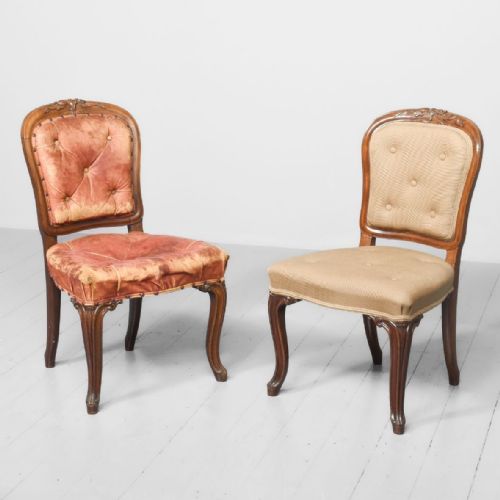
Button Tufted Side Chair
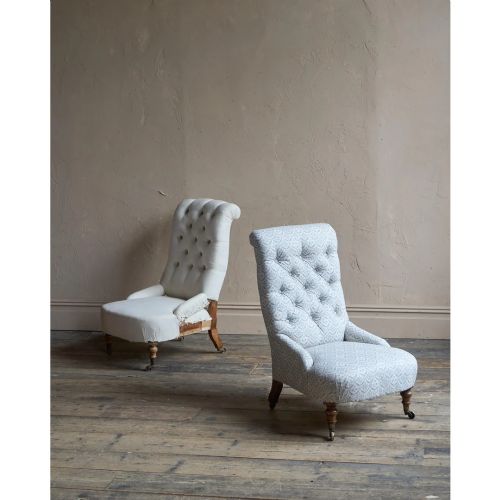
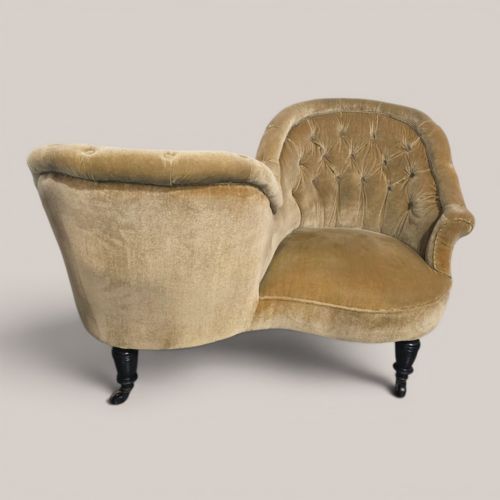
A button tufted side chair brings deep upholstery and distinct padding to any room, offering the classic comfort of nineteenth-century seating.
Button Tufted Side Chair
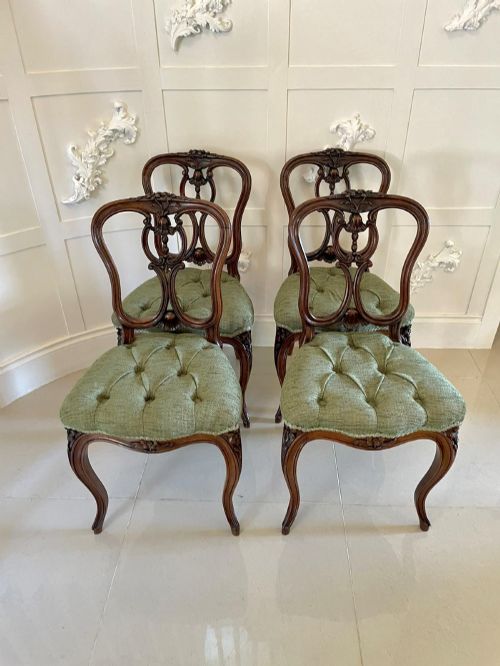
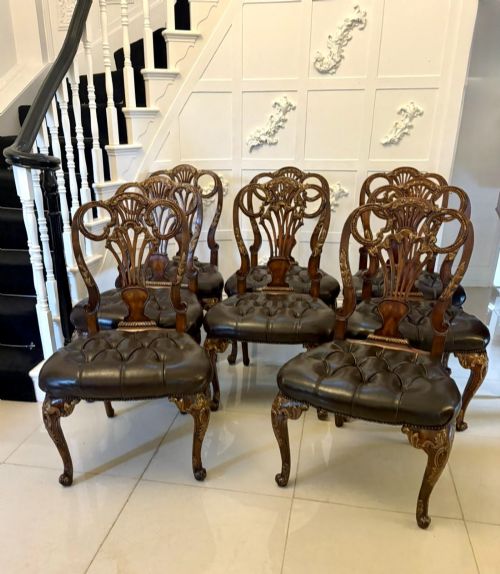
A button tufted side chair is primarily found across Victorian, Edwardian, and Regency periods, dating from the nineteenth century. These seating pieces appear in various forms such as dining chairs, bedroom chairs, and salon chairs.
The materials utilised in these pieces span walnut, mahogany, rosewood, and oak, often paired with leather, velvet, or fabric upholstery. Brass castors and carved details frequently complete the frames.
What varies in quality
The substance of the timber framework dictates much of the standard, with dense woods like rosewood and mahogany representing finer production. Carved ornamentation executed with depth distinguishes superior frames from plain examples.
The execution of the upholstery and the choice of covering material, such as quality leather or velvet, separate standard items from superior commissions. The neatness of the buttoning and the execution of turned wooden elements reflect the maker's skill.
A child's chair in rosewood proves that nineteenth-century Victorians wanted miniature buttoned luxury for the smallest family members.
Howard and Sons·Blyth and Sons·Gillows·C Hindley and Sons
The Button Tufted Side Chair Glossary
- Button tufted
- Upholstery pulled deep with stitches or buttons to form a quilted grid pattern. This technique secures the interior stuffing while creating a distinct textured surface.
- Side chair
- An upright chair without arms designed for dining or occasional placement. These items sit easily against walls or around tables.
- Balloon back
- A rounded, oval-shaped backrest resembling a balloon, popular in nineteenth-century seating. This shape provides gentle support to the spine.
- Castor
- A small wheel attached to the base of furniture legs to aid movement. Brass fittings of this type appear frequently on nineteenth-century seating.
Button Tufted Side Chair: Frequently Asked Questions
What periods do these chairs come from?
The listings span the Victorian, Edwardian, and Regency eras, generally dating through the nineteenth century.
Craftsmanship from these periods incorporates traditional timbers like mahogany, walnut, and rosewood alongside leather and velvet upholstery.
How were button tufted chairs used?
These pieces served multiple functions across the home, appearing as dining chairs, bedroom seats, and salon chairs.
Their substantial upholstery offered comfortable seating for formal rooms and intimate spaces alike.
Are these chairs suitable for daily use?
Sturdy hardwood frames and deep buttoned upholstery provide solid support for regular seating requirements.
Many examples feature brass castors to allow easy movement across dining rooms and libraries.
How do I identify different styles?
Victorian and Edwardian versions often display walnut or mahogany frames with carved details, while Regency examples lean towards polished leather and oak.
Frame shapes range from balloon backs to scroll sides and carved wooden armrests.