





Antique Floral Fireside Chair
Settle into an antique floral fireside chair, where traditional upholstery meets period woodwork to anchor a room.
Antique Floral Fireside Chair
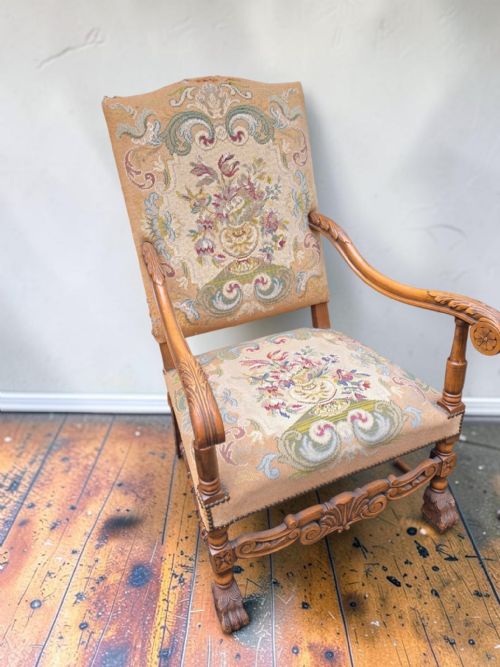
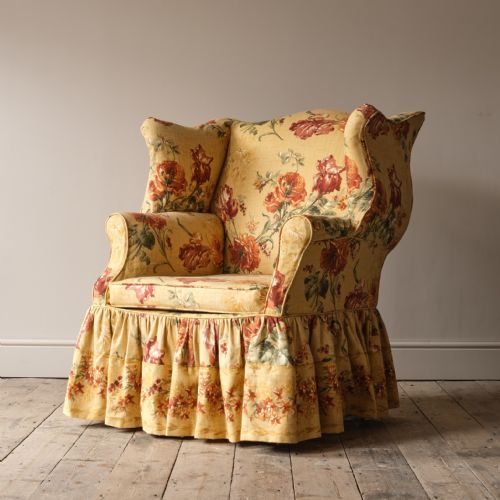
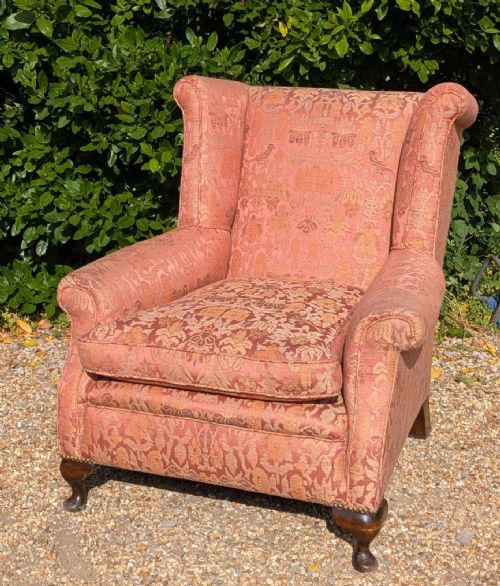
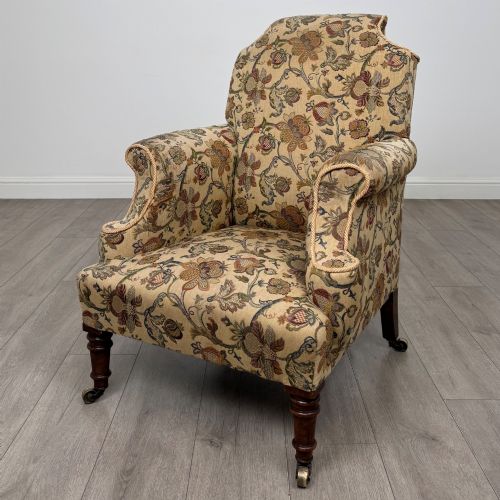
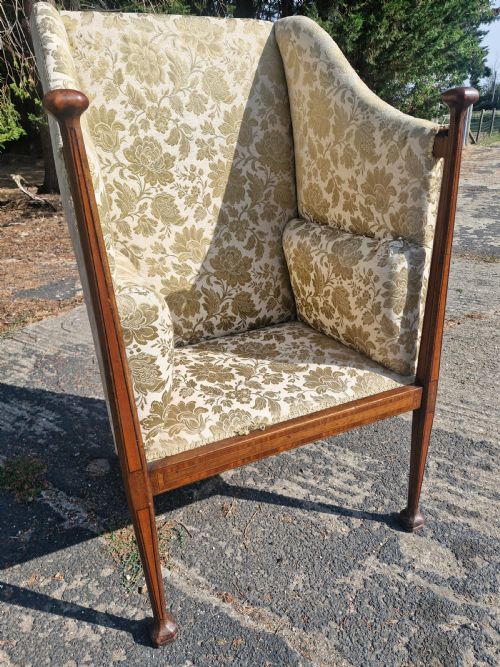
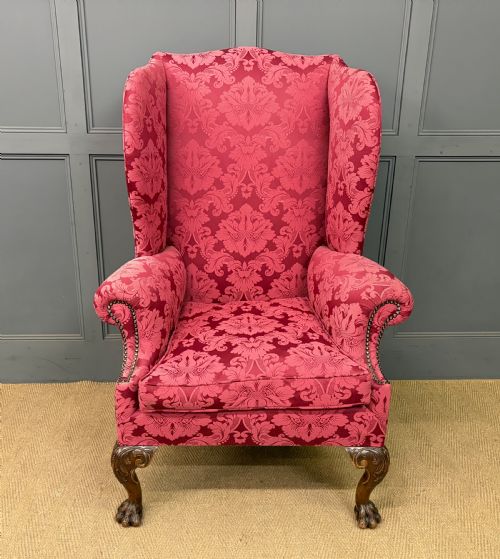
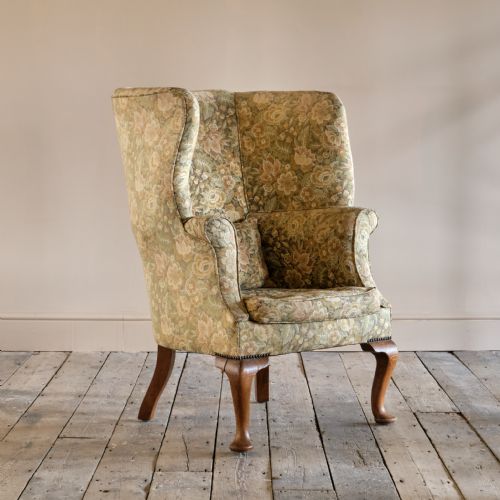
An antique floral fireside chair brings together comfortable upholstered seating and classic period design, often taking the form of a wingback or low-slung armchair designed for warmth near a hearth. These seats appear across multiple eras, ranging from Victorian and Edwardian examples to earlier Georgian and Queen Anne style interpretations.
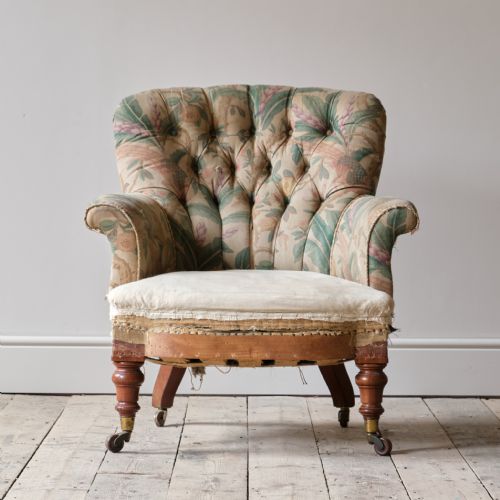
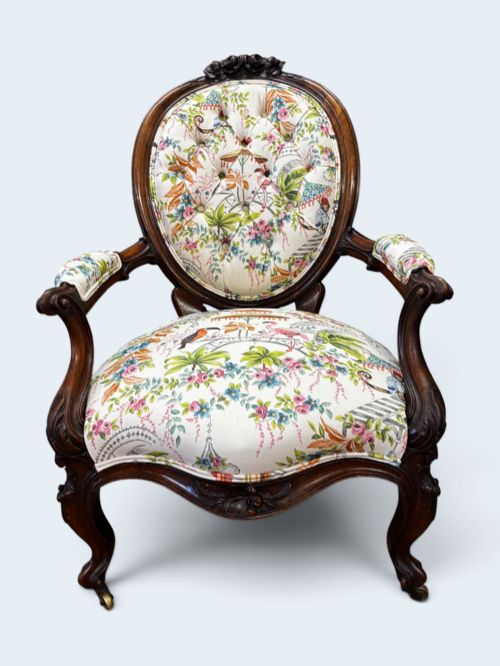
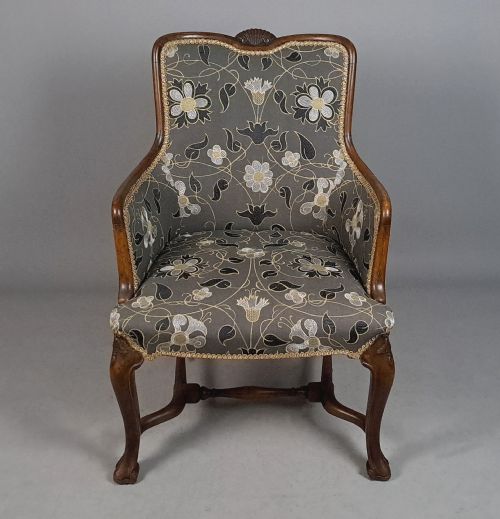
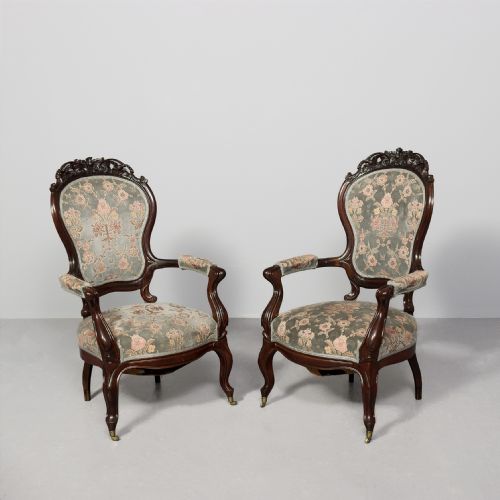
The versions most commonly met on this page combine traditional wooden frames in mahogany, walnut, or oak with patterned fabric coverings such as tapestry, velvet, crewelwork, or floral cotton prints. Forms vary from high-backed wing chairs offering draught protection to compact nursing chairs and barrel back armchairs suited for smaller spaces.
Materials and construction
Makers built the structural frames of these armchairs using sturdy hardwoods including mahogany, walnut, oak, and rosewood, frequently incorporating carved details like cabriole legs. Internal construction often relied on traditional joining methods and iron frames in certain Victorian iterations.
Upholstery techniques combined supportive stuffing with durable outer textiles such as tapestry, velvet, and crewelwork. Decorative touches like button-back tufting and hand-carved woodwork completed the construction process.
Wingbacks were originally designed to trap heat from the fire in your ears, proving that Victorians took toastiness very seriously indeed.
Assessing quality and craftsmanship
The distinction between standard examples and finer pieces rests in the execution of the woodwork and the integrity of the frame. Hand-carved details, substantial timber selection such as figured walnut or solid mahogany, and balanced proportions signal superior craftsmanship.
Upholstery materials and the retention of period textiles also influence the standing of a piece. Original needlework, tapestry, or crewelwork panels demand higher regard than later replacement fabrics, reflecting the original workshop standards.
Howard & Sons·Maple & Co
The Antique Floral Fireside Chair Glossary
- Wingback
- An armchair with side panels designed to shield the sitter from draughts and retain heat from an open fire. These high-backed seats frequently date from the Georgian and Victorian eras.
- Cabriole leg
- A furniture leg that curves out and then narrows down in a graceful S-shape, typically ending in a pad or claw foot. This form appears frequently on walnut and mahogany seating.
- Crewelwork
- Embroidery executed with wool yarn on a plain-weave fabric, often displaying floral and botanical motifs. It surfaces frequently on Victorian armchairs.
- Spoon back
- A padded chair back shaped in the concave contour of a spoon, popular during the mid-nineteenth century. This design supports the human spine while offering a neat silhouette.
- Tapestry
- A heavy hand-woven or needlepoint textile used for upholstery, depicting pictorial scenes or floral patterns. It provides a durable and textured covering for period frames.
Antique Floral Fireside Chair: Frequently Asked Questions
How do I identify a Victorian fireside chair?
Victorian fireside chairs often feature button-backed upholstery, dark timbers such as mahogany or walnut, and robust proportions designed for parlour comfort. Look for iron internal frames or heavy carved detailing that point directly to nineteenth-century manufacturing methods.
Check the legs and underframe for signs of hand-turned wood and traditional joinery. The presence of dense horsehair stuffing or early coil springs also helps confirm a Victorian origin.
What is a country house armchair?
A country house armchair is a deep, comfortable seat traditionally found in British rural estates, prioritising relaxation over formal stiffness. These pieces often exhibit generous proportions and upholstery chosen for durability and comfort.
They frequently display eclectic style influences, combining vernacular woodwork with plush fabric coverings. Their relaxed aesthetic makes them adaptable to both traditional and modern interiors.
Are these chairs suitable for daily use?
Many of these antique armchairs remain robust enough for daily seating, provided the internal webbing and padding are stable. Assessing the structural integrity of the hardwood frame ensures the chair can support regular weight.
While original upholstery adds historical value, modern reinforcement of internal springs may be necessary for frequent lounging. Consulting a professional upholsterer helps preserve fragile fabrics while securing daily usability.
How do I care for antique upholstery?
Protect antique textiles by keeping chairs away from direct sunlight, which causes fading in delicate floral prints and tapestries. Gentle vacuuming with a soft brush attachment removes dust without disturbing fragile fibres.
Avoid harsh chemical cleaners on historic fabrics like velvet or crewelwork. Professional textile cleaning is recommended for deep maintenance to safeguard the integrity of the material.