

Button Backed Leather Chair
A button backed leather chair offers deep upholstery and supportive wings, spanning Victorian, Regency, and later periods in mahogany, oak, and walnut.
Button Backed Leather Chair
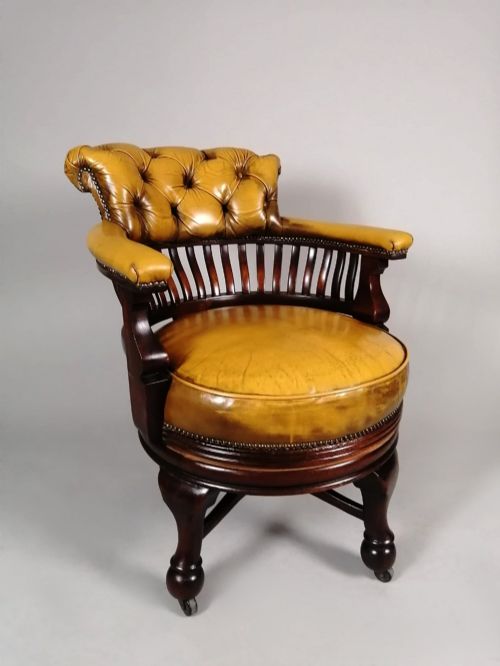
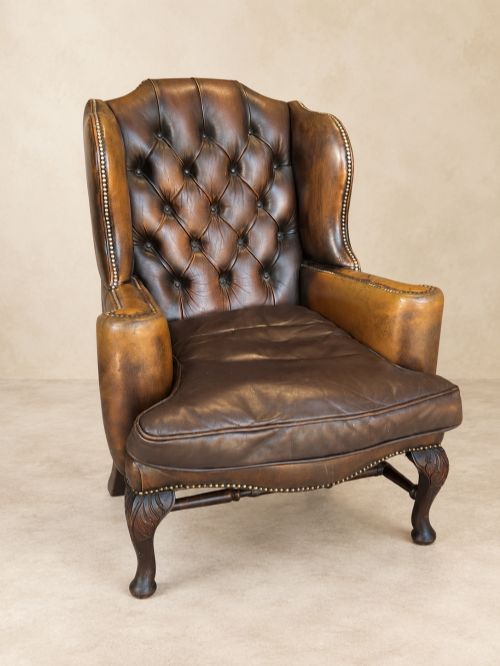
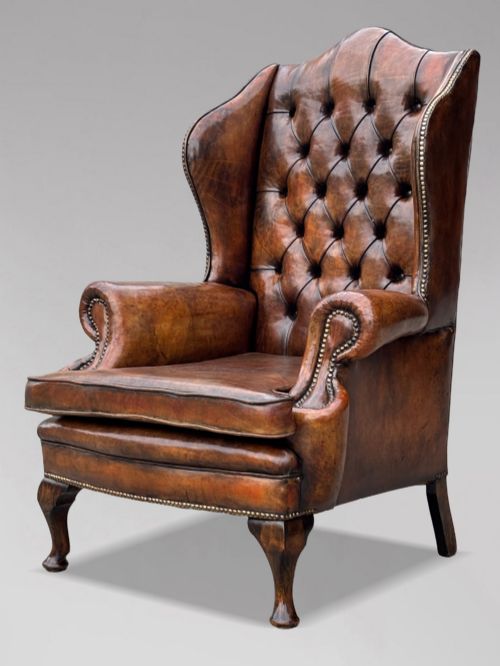
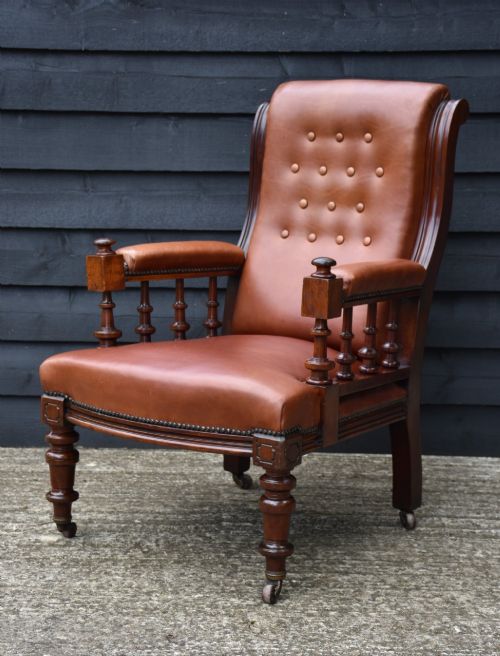
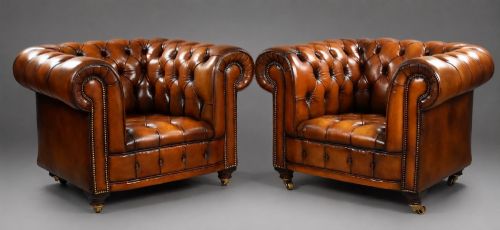
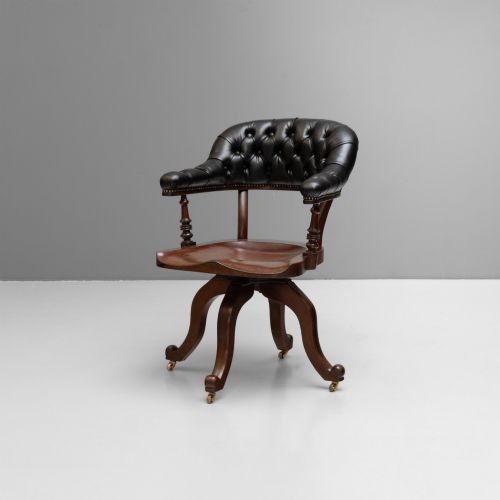
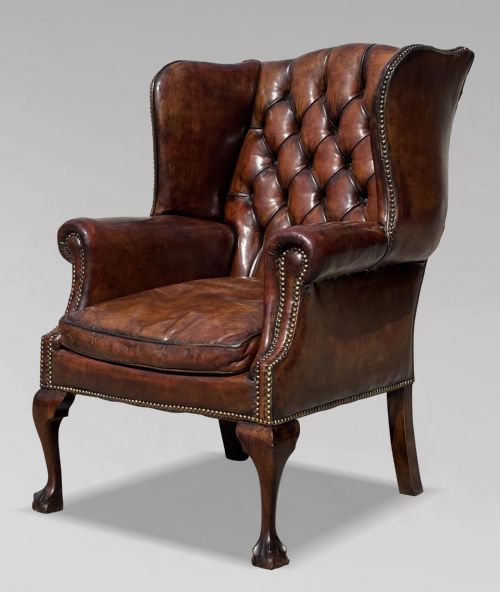
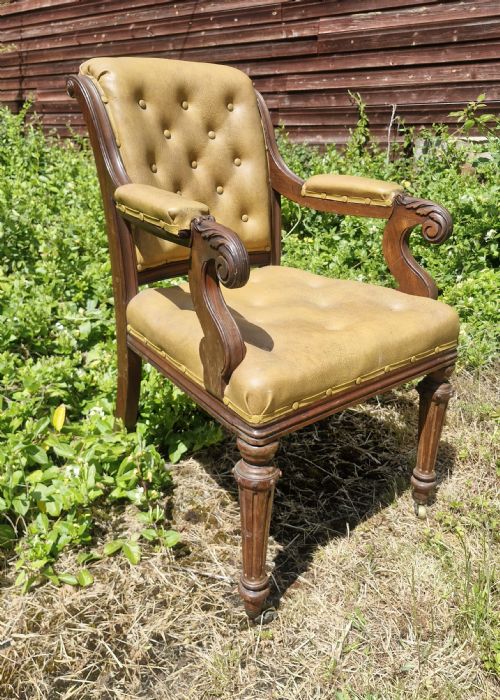
A button backed leather chair is primarily encountered as a library armchair, desk chair, or Chesterfield wing armchair from the nineteenth and twentieth centuries. These seating forms range from substantial brown leather club chairs to mahogany revolving desk chairs and rosewood library seating.
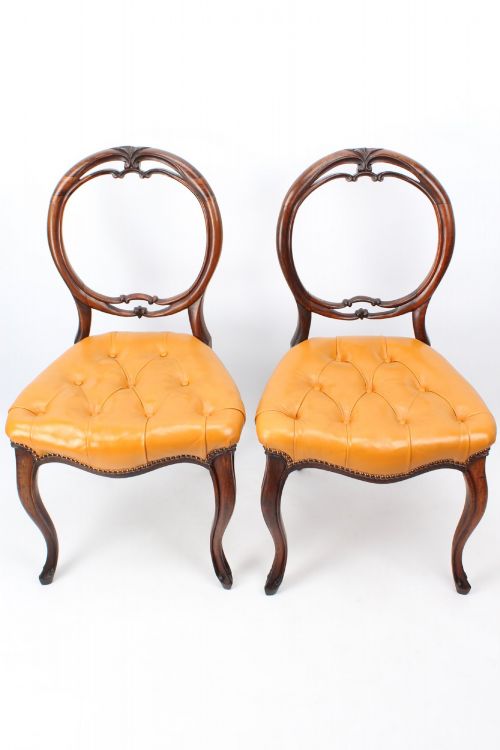
The evidence shows forms spanning armchairs, desk chairs, dining chairs, rocking chairs, and side chairs. Victorian examples appear frequently, alongside Regency period designs, nineteen-twenties club chairs, and Georgian style library seating.
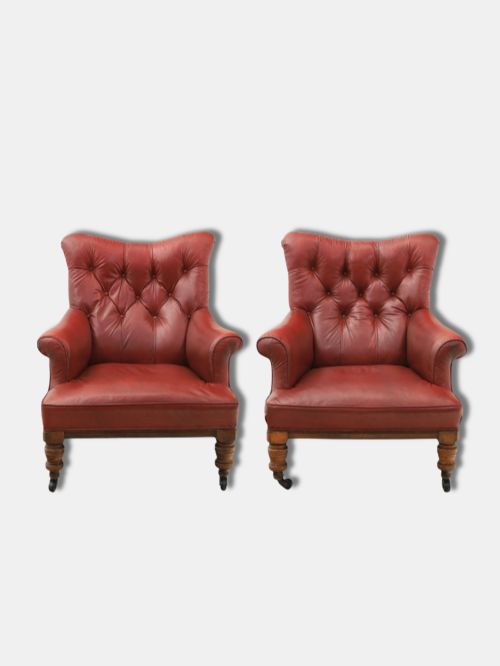
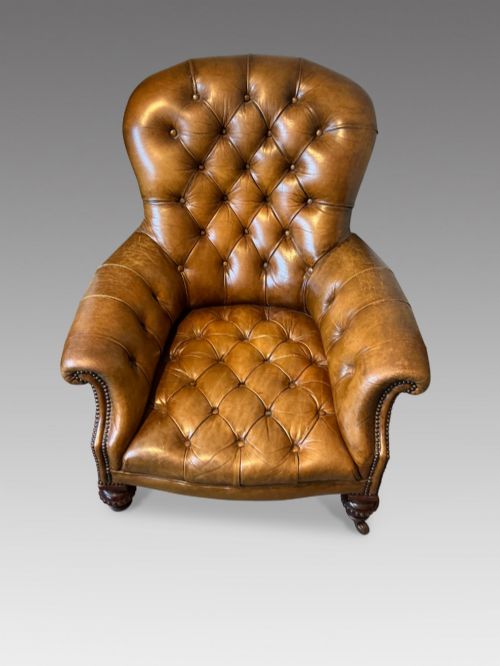
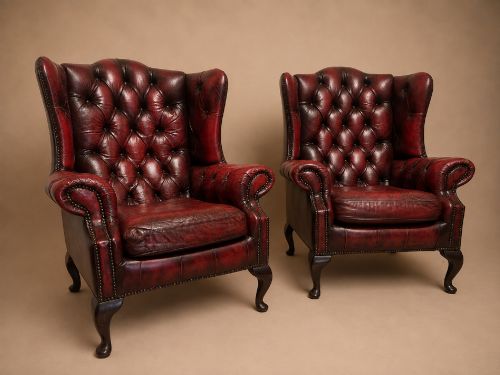
Buyers frequently encounter pairs of Chesterfield armchairs or single library chairs upholstered in tan, brown, red, or green leather. The deep buttoning provides both structural tension to the upholstery and a characteristic quilted appearance across the back.
Materials and construction
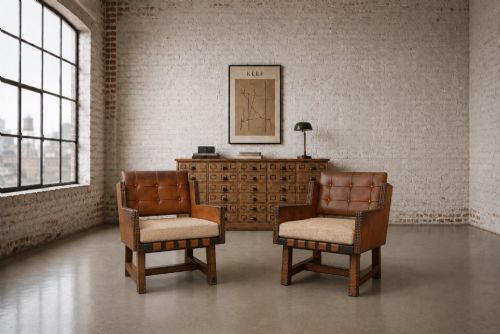
Frames are constructed from hardwoods such as mahogany, oak, walnut, and rosewood, providing a sturdy skeleton for the upholstered body. Some variants incorporate cane panels or brass inlay alongside the primary timber structure.
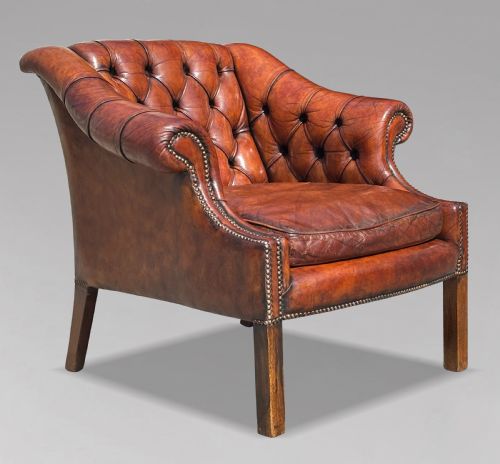
Upholstery relies on durable leather stretched over padding and secured with deep buttoning, often accented with brass studding along the framework. The combination of dense wood frames and supple leather creates a heavy, enduring piece of furniture designed for sustained use.
Listings feature woods including mahogany, oak, walnut, rosewood, and cane, paired with leather and brass.
Assessing quality and finish
Quality rests upon the selection of timber and the depth and regularity of the buttoning across the leather backrest. Fine examples demonstrate precise joinery in the mahogany or oak frames and patinated leather that shows honest age without structural compromise.
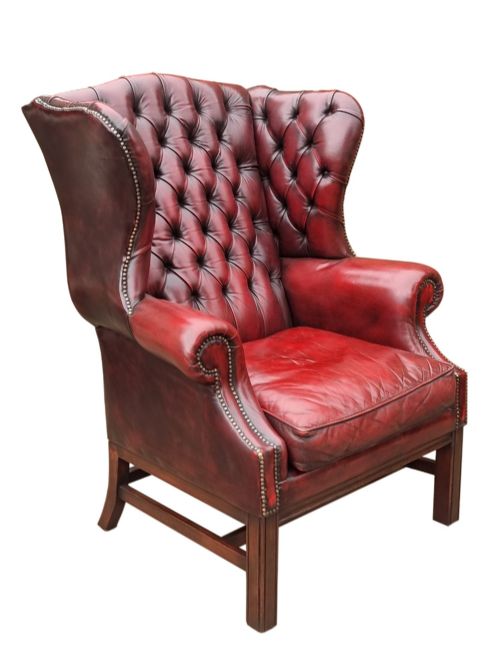
The proportion of the arms and the sweep of the wings in library and Chesterfield chairs dictate the visual balance of the piece. Superior construction maintains firmness in the seat and back while preserving the soft tactile qualities of the hide.
Howard and Sons·Daws Patent
The Button Backed Leather Chair Glossary
- Chesterfield armchair
- A deep-buttoned, heavily upholstered seat with arms of the same height as the back. This form is typically upholstered in leather and dates across the Victorian and later periods.
- Bergère
- An enclosed armchair with a wooden frame and cane or upholstered panels to the sides and back. Regency and nineteenth-century examples often combine mahogany frames with leather seating.
- Library armchair
- A substantial, comfortable seat designed for reading rooms and studies. These pieces frequently feature mahogany or oak frames with leather upholstery and supportive armrests.
- Wing armchair
- A high-backed seat featuring projecting side pieces designed to shield the occupant from drafts. They appear in nineteenth and twentieth-century listings upholstered in leather with deep buttoning.
- Rexine
- A leathercloth material used as an artificial leather substitute. It is found on certain twentieth-century armchairs recorded in the inventory.
Button Backed Leather Chair: Frequently Asked Questions
How do I date a button backed leather chair?
Dating relies on examining the timber of the frame, the turning of the legs, and the style of the upholstery. Victorian and nineteenth-century examples often display mahogany or oak construction with hand-tooled leather.
Later pieces from the nineteen-twenties show different proportions and stitching techniques. Comparing the woodwork to documented period pieces helps narrow the decade of manufacture.
Where were these chairs originally used?
These seating forms were primarily placed in libraries, studies, drawing rooms, and professional offices. Library armchairs and desk chairs provided comfort for reading and writing.
Larger wing chairs and Chesterfield designs were positioned near fireplaces or in gentleman's clubs to offer warmth and seclusion.
Are these chairs suitable for daily use?
Solid hardwood frames and sturdy leather upholstery make these traditional seats robust enough for everyday seating. Regular conditioning keeps the leather supple and prevents drying over time.
Checking the internal webbing and padding ensures the seat maintains proper support during daily occupation.