

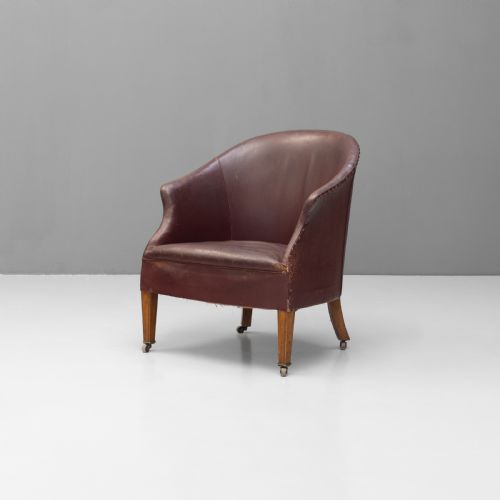


Traditional Leather Tub Chair
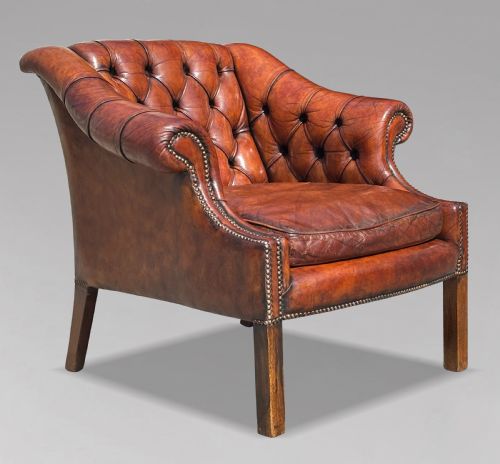
These traditional leather tub chair examples offer deep buttoned comfort and sturdy timber frames for your study or library.
Traditional Leather Tub Chair
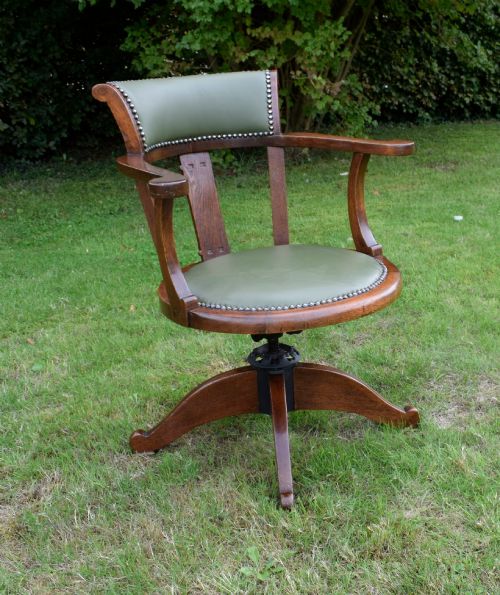
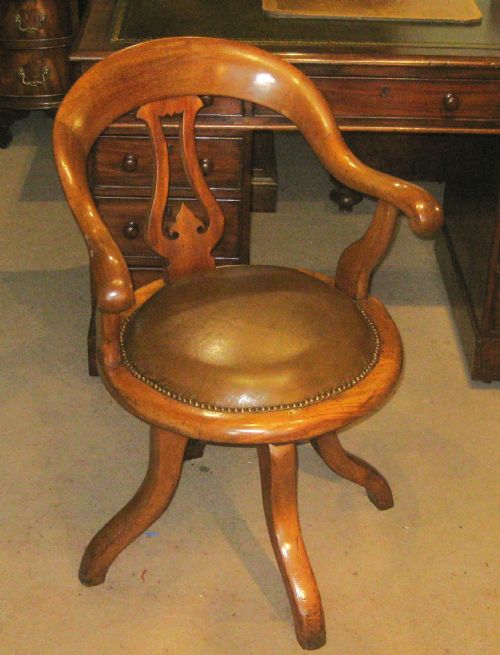
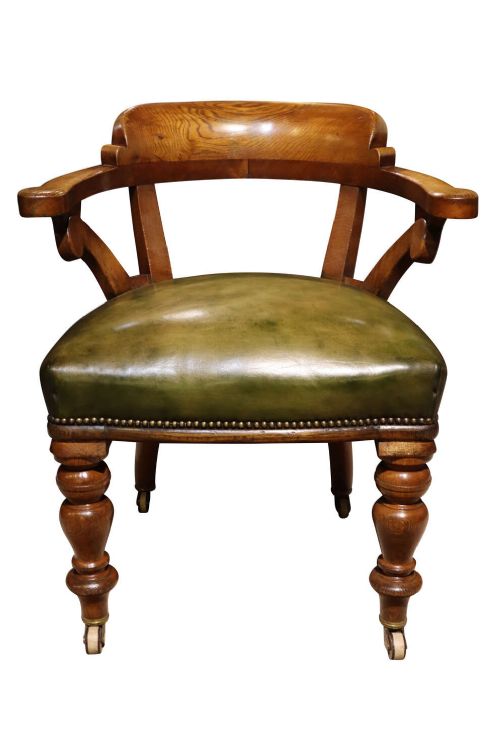
A traditional leather tub chair combines a curved enclosing back with a low profile, offering a supportive seat for a library or study. You will find these pieces appearing in forms such as desk armchairs, revolving swivel seats, and club armchairs.
The selection ranges across the nineteenth century and into the Edwardian period, drawing on Victorian and Georgian revival styles. Most examples on this page utilise mahogany or oak frames paired with leather upholstery.
Makers adapted these forms for various uses, producing library chairs, captain's chairs, and smokers bows alongside standard armchairs. The curved tub back provides a characteristic wrap-around shape designed for long periods of sitting.
How they were made
Frames rely on dense timbers such as mahogany and oak, joined to support the weight and movement of a desk or swivel chair. Brass fittings and cast iron mechanisms appear on revolving models from the nineteenth century.
Upholstery centres on leather and tan hide, secured to the timber frame with brass tacks or studs. Wood surfaces receive polished finishes that highlight the natural grain of the mahogany or oak.
Listings span the nineteenth century through to the nineteen-twenties, incorporating oak, mahogany, beech, brass, and cast iron materials.
What varies in quality
The timber selection dictates the initial strength of the frame, with dense mahogany and quarter-sawn oak holding up better than softer woods like beech. Fine joinery ensures the curved tub back remains rigid under daily use.
The grade of leather determines how well the upholstery ages, particularly on the high-contact areas of the arms and seat. Smooth operation of swivel mechanisms and stability in the legs separate standard utility seating from finer library pieces.
Thomas Chippendale
The Traditional Leather Tub Chair Glossary
- Tub chair
- An armchair featuring a low, curved back that wraps continuously around the sides to form enclosed armrests. This shape offers compact seating with supportive lumbar coverage.
- Smokers bow
- A sturdy, low-backed Windsor-style wooden armchair with a turned spindle gallery and a solid contoured seat. These often incorporate a leather seat pad for added comfort.
- Captain's chair
- A revolving or stationary timber desk chair with a low, rounded back rail supported by vertical spindles. They provide practical seating for office and library desks.
- Bergère
- An enclosed upholstered armchair with wooden frames and woven cane or solid upholstered side panels. The style originates in France and influences later revival pieces.
- Swivel desk chair
- A revolving office seat mounted on a central wooden or iron spindle mechanism, often featuring an adjustable height screw. They allow movement while seated at a partner desk or library table.
Traditional Leather Tub Chair: Frequently Asked Questions
How do I identify a Victorian desk chair?
Victorian desk chairs typically employ dense timbers like mahogany or oak, often combined with hand-dyed leather and brass hardware. Look for robust turned legs and traditional joinery typical of the nineteenth century.
Revolving versions frequently feature heavy iron or wooden central screw mechanisms concealed beneath the seat. These details mark them out from lighter Edwardian or later revival pieces.
What is a tub back armchair?
A tub back armchair is a seat where the backrest curves downwards to form continuous arms, creating an enclosed barrel shape. This design provides compact support and isolates the sitter from drafts.
They appear frequently in libraries and studies as reading chairs or paired with executive desks.
Are swivel chairs from the nineteenth century?
Yes, revolving desk chairs were produced in significant numbers during the Victorian era to meet the demands of offices and counting houses. They utilised wooden or cast iron spindles to allow rotation.
Makers paired these mechanical bases with upholstered leather seats and curved wooden backs for functional daily use.
How should I care for antique leather upholstery?
Antique leather requires regular dusting with a dry cloth and occasional treatment with appropriate conservation balms to prevent drying. Avoid placing leather furniture in direct sunlight or near heat sources.
Gentle care preserves the natural grain and historic patina developed over the nineteenth and early twentieth centuries.