

Butler Tray Table
A butler tray table combines a portable serving tray with a folding stand to create a versatile table.
Forms and Origins
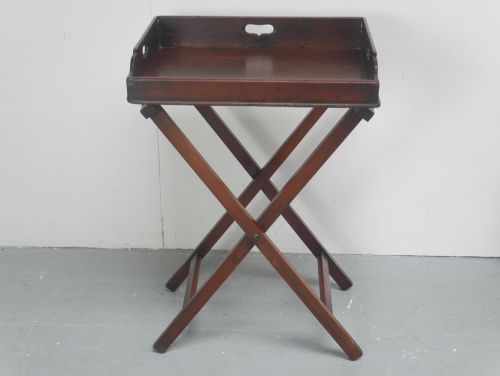
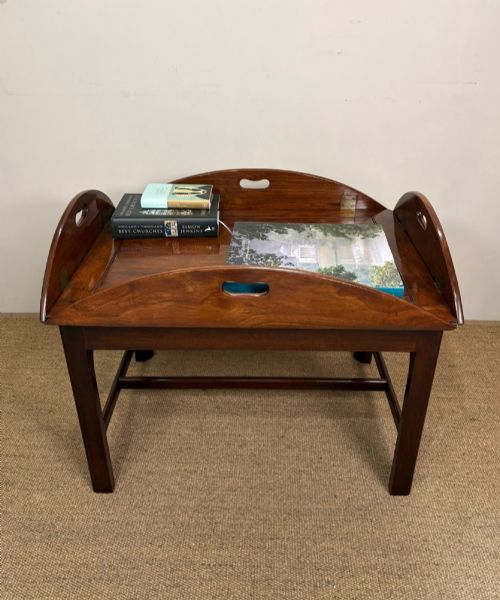
A butler tray table serves as both a removable tray and a supporting stand, originating primarily in the Georgian and Victorian eras. These pieces appear frequently in mahogany and oak, often adapted later in life to function as coffee tables. Examples range from plain serving boards to elaborately decorated papier-mache versions.
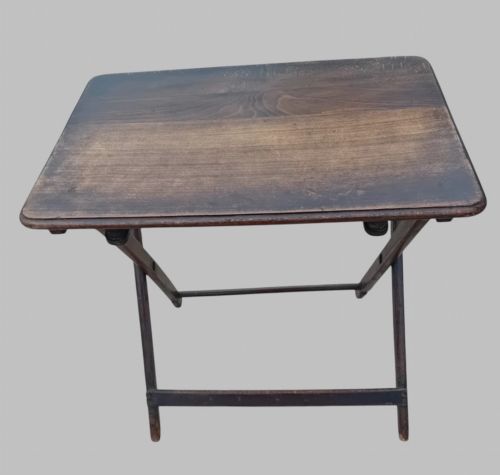
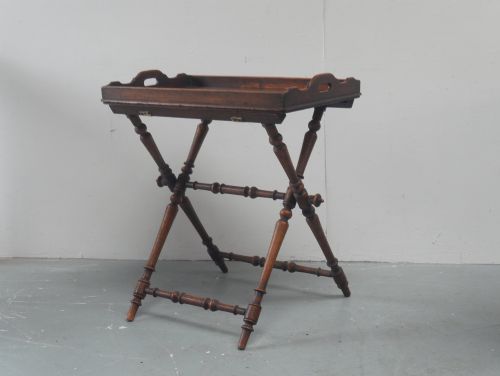
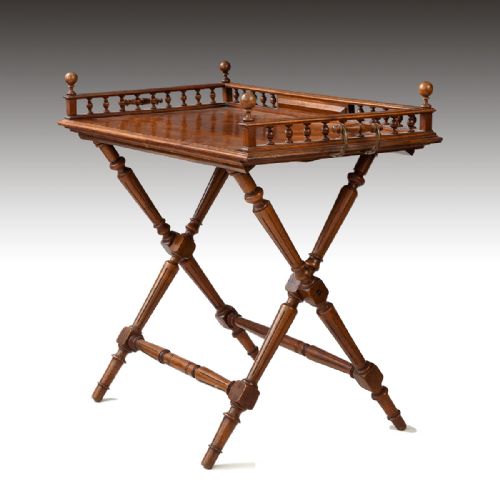
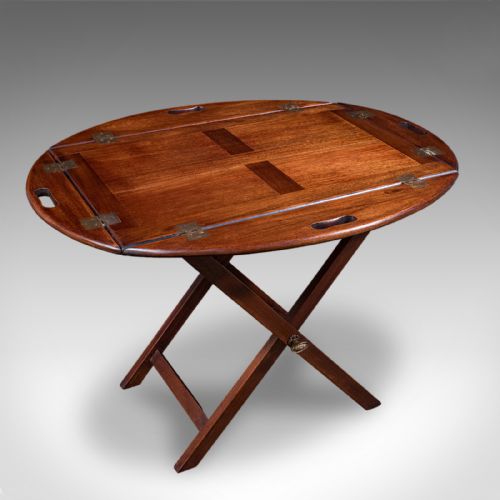
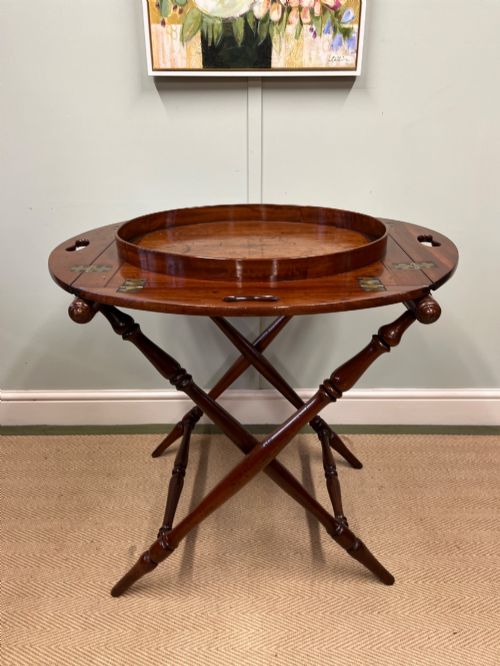
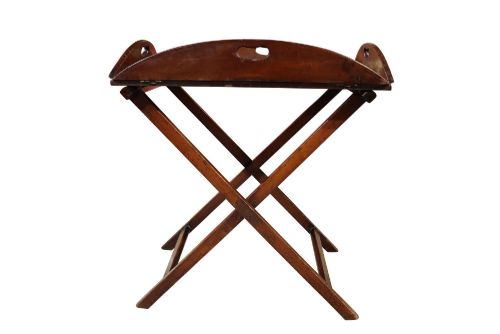
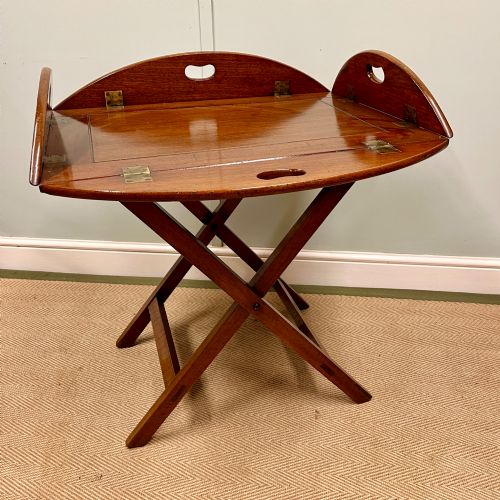
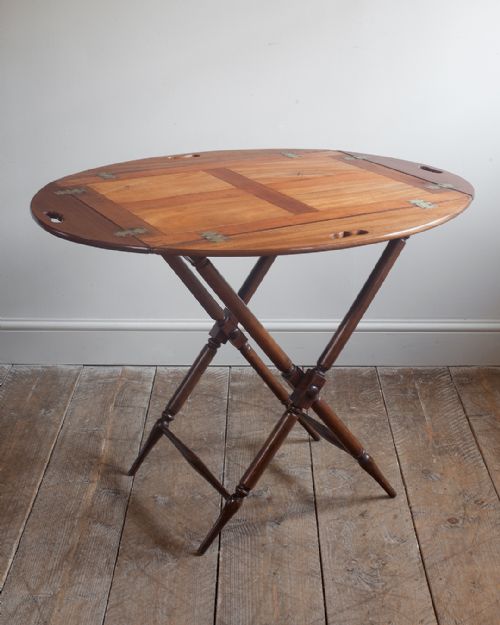
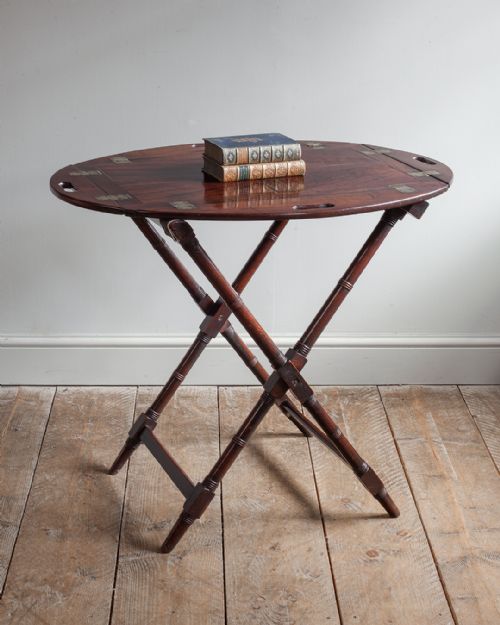
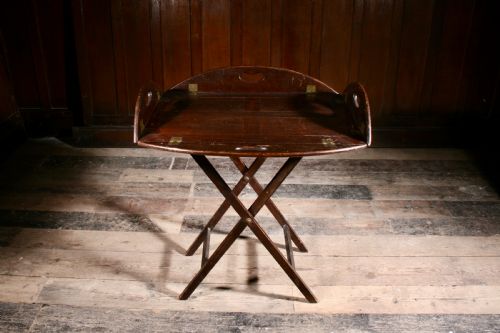
The standard form comprises a rectangular or oval tray with hinged sides that lift to carry drinks or silver. When placed upon its folding X-frame stand, the assembly provides a stable surface for afternoon tea or side service.
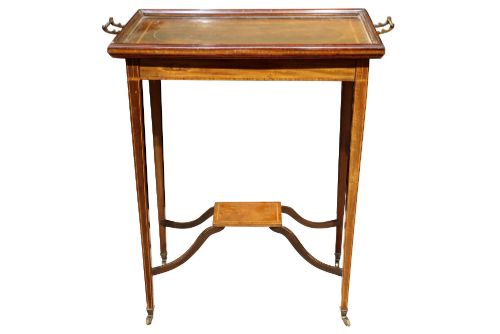
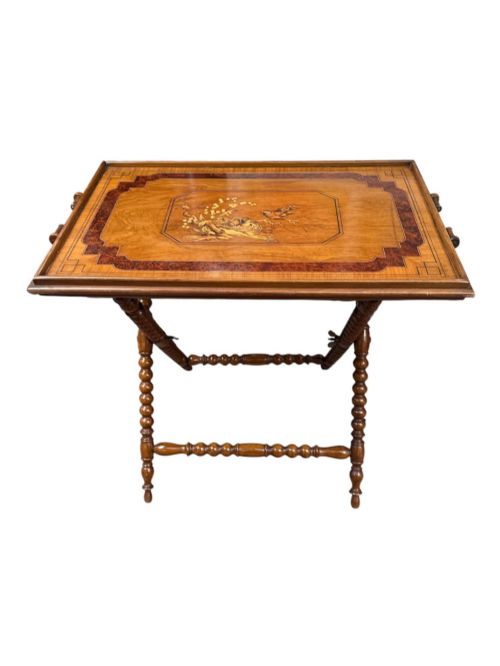
Evidence shows pieces spanning the George III period, the nineteenth century, and later revivals such as Regency Revival and Art Deco. Walnut, satinwood, and gilt examples also occur, demonstrating the form's evolution from utilitarian service item to domestic furniture.
Materials and Construction
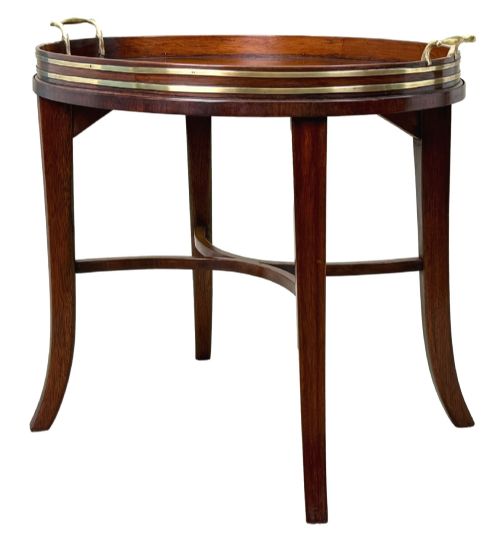
Cabinetmakers constructed the main trays from solid timbers like mahogany, oak, and walnut, frequently incorporating brass hinges for the drop-sides and carrying handles. Some sophisticated surfaces feature satinwood banding or intricate carving around the gallery edge.
Papier-mache examples involve moulded paper pulp treated with lacquer and finished with gilt or Chinoiserie decoration. These specialist trays rest upon separate wooden stands designed to hold the curved edges securely.
Retail Price Guide 2026
Typical UK retail prices for butler tray table, calculated from the Sellingantiques database of over a million retail prices indexed since 2003. This retail price guide relies exclusively on Sellingantiques data; no external sources or auction records are used, so the figures do not describe the wider market.
Some nineteenth-century trays swapped practical tea service for glossy papier-mache painted with golden pagodas.
Assessing Quality
Quality rests in the timber selection, the crispness of any carved detailing, and the integrity of the folding stand mechanism. Pieces featuring matched grain patterns and original brass hardware command greater appreciation among collectors.
The presence of original hand-painted decoration, such as Chinoiserie on papier-mache surfaces, distinguishes superior decorative examples from plain utilitarian serving boards.
Army & Navy CSL
The Butler Tray Table Glossary
- Butler tray table
- A portable wooden tray with hinged sides, designed to sit upon a folding stand for serving or display.
- Gallery
- The raised edge or rim surrounding a tray to prevent items from sliding off during transport.
- Campaign
- A descriptor for furniture constructed to fold or dismantle easily for travel during military service.
- Chinoiserie
- European imitation of traditional Chinese artistic styles, commonly found in gold leaf and lacquer on papier-mache trays.
- X-frame
- A folding support structure formed by two intersecting legs that cross in the middle like the letter X.
Frequently Asked Questions
What is a butler tray table?
A butler tray table is a portable serving tray featuring hinged flaps, designed to rest upon a separate folding wooden stand.
Historically utilised for carrying food or drinks, the design allows the tray to be lifted off the base for easy transport.
How were butler tray tables used?
These pieces served domestic households during tea service, drinks parties, and general serving duties in formal reception rooms.
The folding stands allowed servants to clear rooms quickly by packing away the support structures when the service concluded.
Can I use one as a coffee table?
Many historical butler trays are adapted for modern living by placing them on appropriate stands to serve as coffee tables.
The raised edges and manageable proportions make them practical surfaces for everyday domestic spaces.
What materials are common?
Mahogany and oak form the vast majority of surviving wooden trays, often accented with brass hinges, handles, and campaign mounts.
Alternative materials include walnut, satinwood, and papier-mache finished with lacquer and gold leaf decoration.