


Burr Yew Wood Table
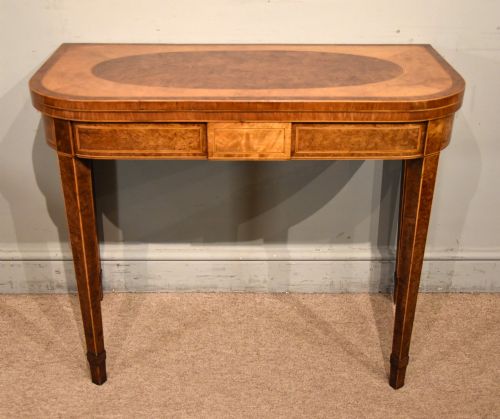
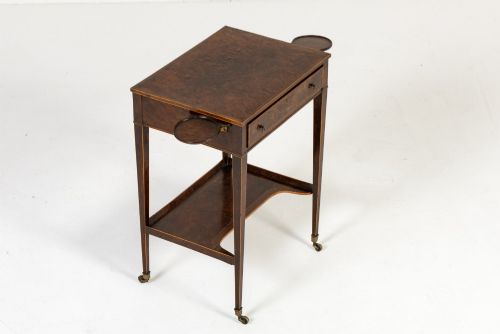
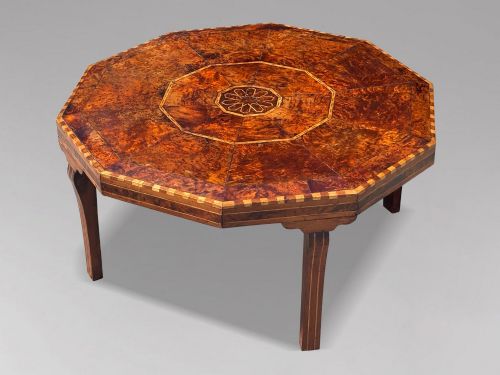
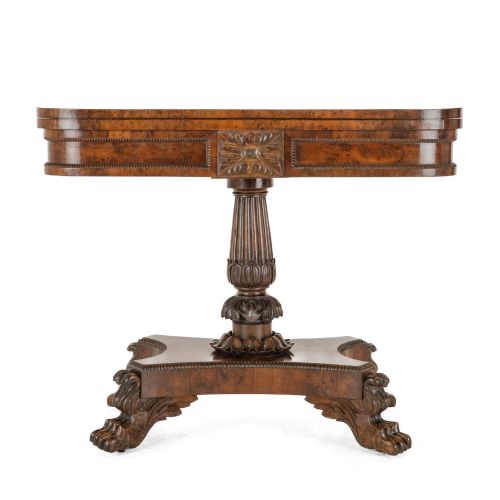
A burr yew wood table offers undulating timber grain and rich golden tones that draw the eye immediately.
Burr Yew Wood Table
A burr yew wood table brings together centuries of cabinet-making skill and distinctive root timber. When you search for a burr yew wood table, you encounter forms ranging from compact occasional and card tables to larger centre and writing pieces.
The material appears across several periods, with Georgian, Regency, and Victorian examples appearing frequently alongside occasional 20th-century items. Card tables, drop-leaf work tables, and occasional tables dominate the available forms.
Makers utilised the intricate knot growths of the yew tree to create striking patterned surfaces on tabletops. These tables suit both traditional settings and understated modern interiors.
Quality factors
The density and tightness of the burr pattern dictate visual appeal, with closely clustered eyes commanding greater attention. Exceptional pieces display a continuous, unbroken flow of grain across the entire surface without clumsy joins.
Secondary wood selection and the precision of cross-banding reveal the maker's competence. Higher-grade tables retain original polish surfaces that highlight the natural depth of the timber.
Some Victorian burr yew boxes include hidden compartments that slide open only when you press a secret wooden peg.
The Burr Yew Wood Table Glossary
- Burr yew
- An excrescence or growth on a yew tree that produces highly figured, knotty wood veneer. This timber yields intricate patterns prized by cabinet-makers.
- Cross-banding
- A border of veneer laid around the perimeter of a tabletop with the grain running perpendicular to the central panel. This technique frames the primary wood.
- Card table
- A folding table designed for playing games, featuring a hinged top that opens to reveal a baize-lined surface. These tables date predominantly from the Georgian and Regency periods.
- Centre table
- A freestanding table finished on all sides so it can stand in the middle of a room. These often feature pedestal bases or tripod legs.
- Satinwood
- A durable, yellowish timber native to India and the West Indies used for contrasting inlay and banding. It provides a bright edge against darker woods.
Burr Yew Wood Table: Frequently Asked Questions
How do I clean a burr yew wood table?
Dust the surface regularly with a soft, dry lint-free cloth to prevent particle buildup. Avoid harsh chemical sprays and water, applying a quality beeswax polish sparingly when the wood appears dry.
Buff the wax gently with a clean cloth to maintain the natural sheen of the vintage finish. Keep the timber away from direct heat sources and strong sunlight to prevent fading and cracking.
Can I use a card table every day?
These tables were built for regular use in period homes, featuring folding tops supported by swing legs or gates. Take care when pivoting the hinged top to avoid stressing the original timber joints.
Place the table on an even floor so the weight distributes evenly across the frame. Limit heavy loads on the extended leaves of drop-leaf or card variants.
What is the difference between yew and burr yew?
Straight yew wood shows growth rings and modest figuring with a fine, even texture. It was frequently used for solid elements like chair backs and table legs.
Burr yew comes from the gnarled burls on the tree trunk, producing chaotic, swirling patterns of knots and eyes. Cabinet-makers reserved this scarce material for visible tabletops and decorative veneers.
How do I identify a Regency period table?
Regency tables often incorporate classical architectural motifs, sabre legs, and brass paw feet. Proportions tend to be refined and balanced, reflecting early nineteenth-century design tastes.
Construction methods include hand-cut dovetails in drawers and traditional timber shrinkage patterns. Look for dense mahogany or rosewood framing the burr yew top panels.