
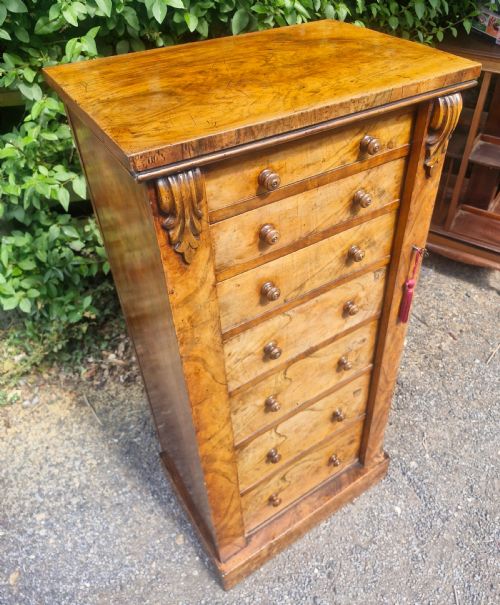


Burr Walnut Wellington Chest
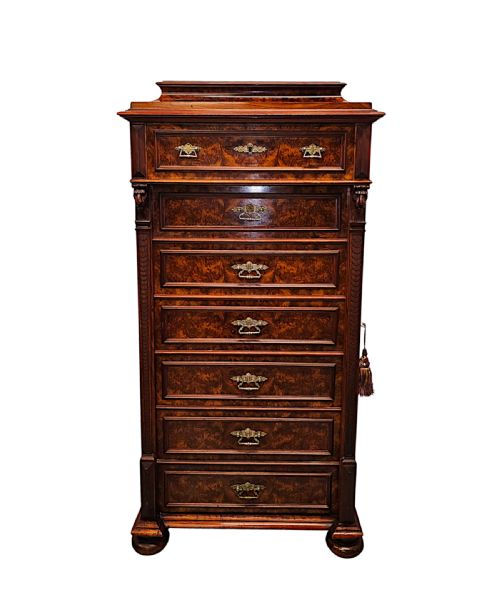
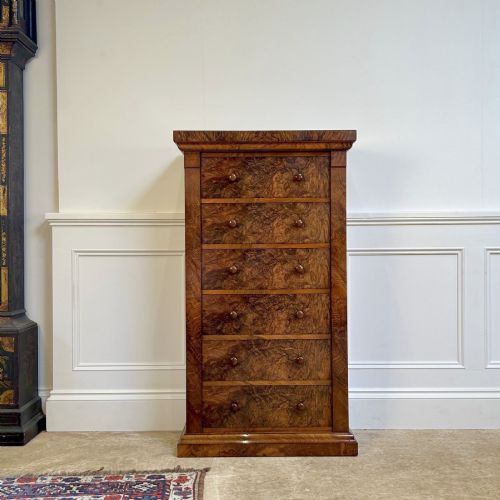
Burr walnut wellington chests are slender nineteenth-century drawer units locked by a hinged vertical side pilaster.
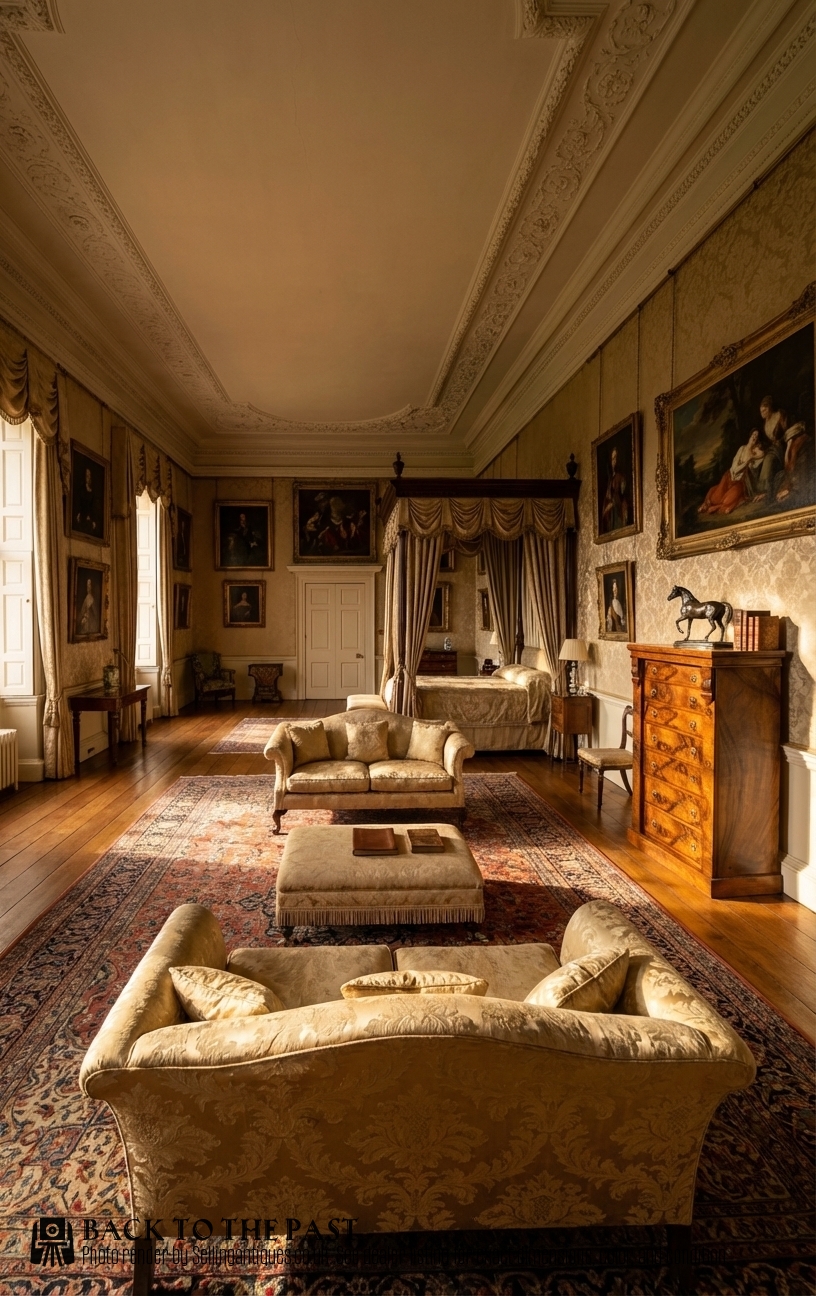
Burr Walnut Wellington Chest
A burr walnut wellington chest stands tall and narrow, designed originally to fit into restricted bedroom spaces during the nineteenth century. Most examples seen here date from the Victorian period, spanning the mid-to-late decades of that era.
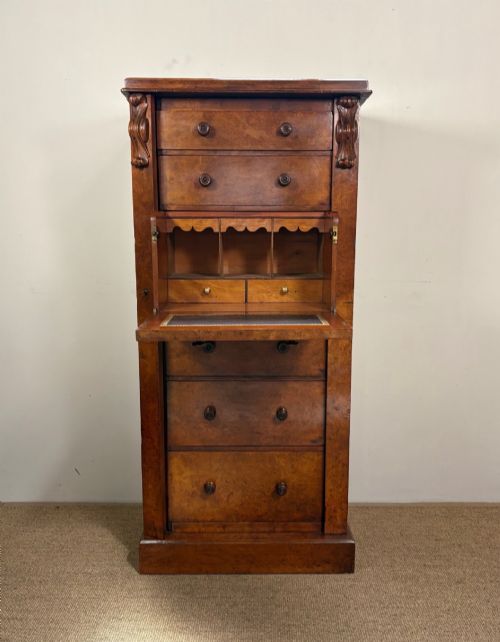
The defining mechanical feature is a locking side arm or pilaster, which swings or lifts away to release the stack of graduated drawers inside. Variations include secretaire drawers with drop-front writing surfaces, miniature collector cabinets, and specimen chests.
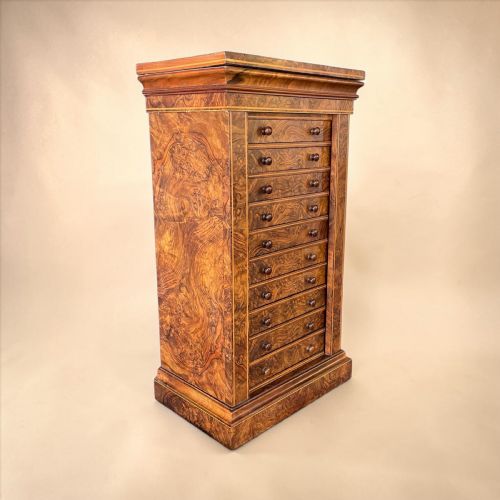
Makers and workshops of the period utilised the dense grain patterns of burr walnut timber to cover the front elevations. These chests of drawers balance vertical proportions with rich, swirling wooden surfaces.
Gradations of quality
Quality rests heavily upon the selection and matching of the burr walnut veneer across the front drawers, where richly figured timber commands greater visual presence. The tightness of the burl clusters and the continuity of the grain pattern separate standard workshop production from exhibition pieces.
Mechanical precision in the locking pilaster and smooth drawer action indicate superior original carpentry. Fine interior fitments, such as fitted writing desks or leather-lined secretaire compartments, elevate the standing of an individual cabinet.
Listings feature Victorian period walnut and burr walnut timbers, complemented by brass hardware and leather inserts.
Gillows·Holland & Sons·S Mordan & Co·S & H Jewells of London
The Burr Walnut Wellington Chest Glossary
- Burr walnut
- Timber taken from the growth excrescences of walnut trees, yielding highly figured, swirling veneer patterns. It creates decorative surfaces prized by nineteenth-century cabinet makers.
- Wellington chest
- A tall, narrow chest of drawers secured by a hinged locking side pilaster. The design originates from the mid-nineteenth century.
- Secretaire
- A desk disguised as a drawer, featuring a drop-front writing flap. Inside, small pigeonholes and letter drawers organise correspondence.
- Pilaster
- A vertical architectural member attached to the side of the chest that swings outward to release the drawers. It holds the locking mechanism.
- Specimen chest
- A specialised cabinet housing shallow drawers for natural history collections, coins, or small objects. These variants often feature glass or partitioned interiors.
Burr Walnut Wellington Chest: Frequently Asked Questions
What is a wellington chest?
A wellington chest is a tall, narrow set of drawers distinguished by a hinged locking side pilaster that secures every drawer simultaneously.
Originating in the nineteenth century, these pieces maximise vertical storage while occupying minimal floor space in a room.
How do you open the drawers?
The locking side pilaster must be unlocked with a key and swung or lifted clear of the drawer edges. Once this bar moves aside, individual drawers slide open freely.
Closing the pilaster and turning the key locks the entire chest stack back into place.
What is burr walnut?
Burr walnut is decorative timber sliced from tree growths that produce dense, swirling grain patterns. Cabinet makers prized this material for veneer work on important nineteenth-century furniture fronts.
The irregular knot formations catch the light and create complex visual textures across flat surfaces.
Were these chests used for clothes?
While many served as bedroom chests of drawers for linen and garments, others functioned as collector cabinets or secretaires. Interior partitions and drop-front writing desks accommodated paperwork, valuables, or natural history specimens.
Different internal layouts reflect the varied domestic and professional tasks assigned to them.
How do I date a Victorian piece?
Dating relies on stylistic shifts, construction methods, and timber choices recorded across the nineteenth century. Mid-Victorian examples often display rich burr walnut veneers and robust locking mechanisms.
Later Victorian pieces introduce subtle variations in proportion, plinth design, and handle hardware.