

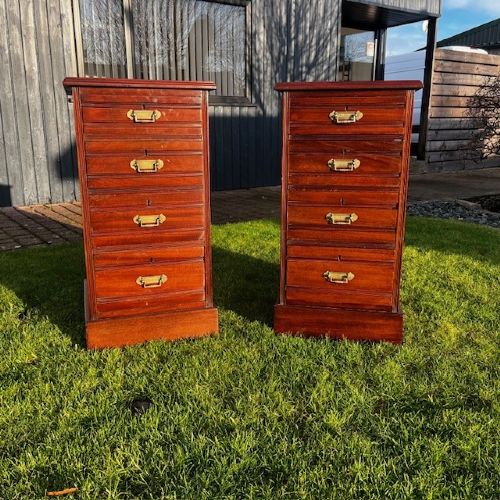


Vintage Wellington Chest Drawers
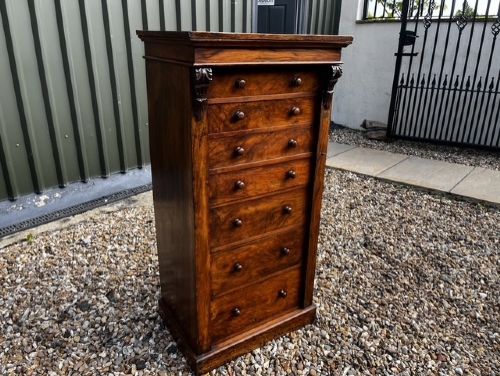
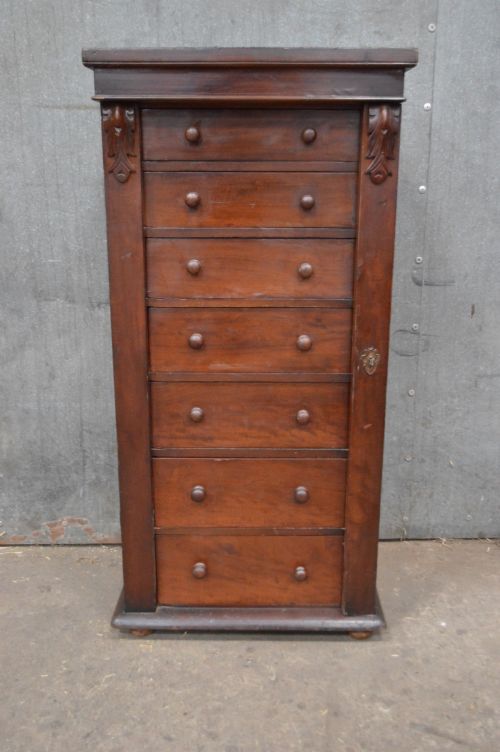
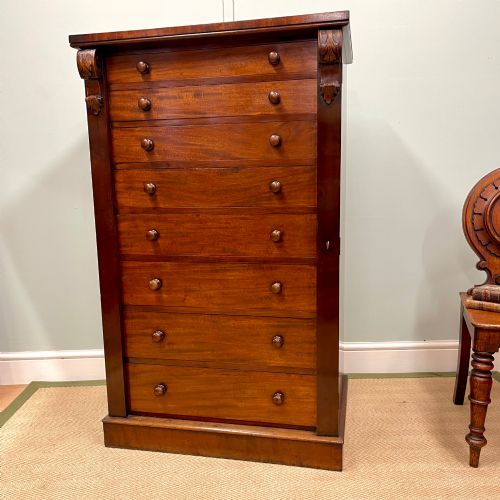
These vintage wellington chest drawers are tall, narrow locking pieces designed for compact spaces and secure storage.
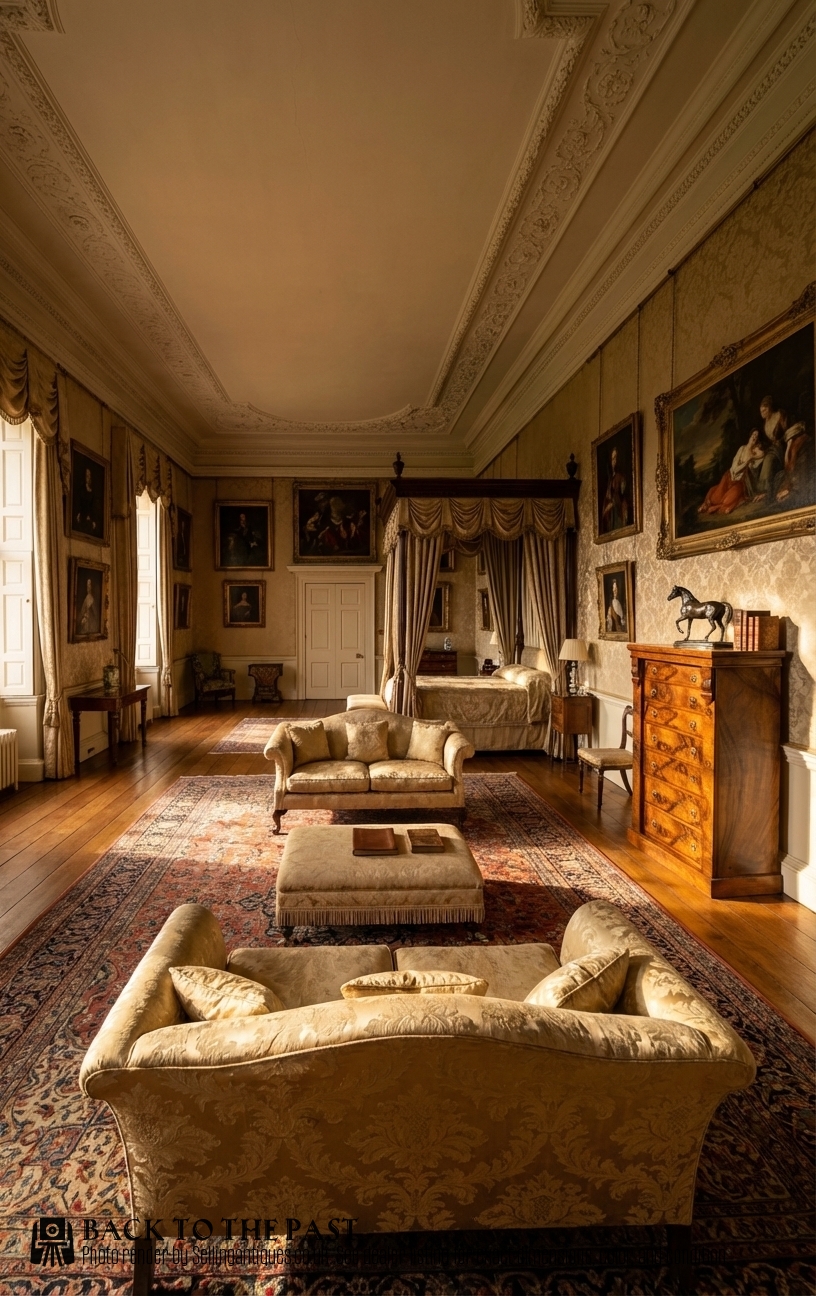
Vintage Wellington Chest Drawers
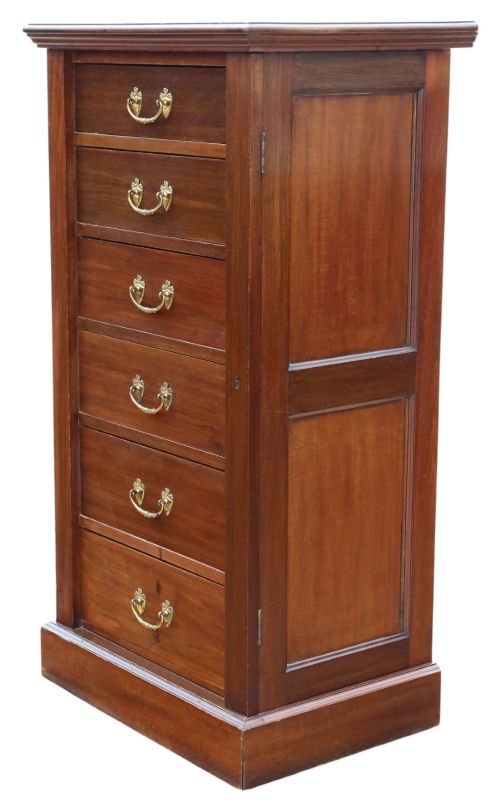
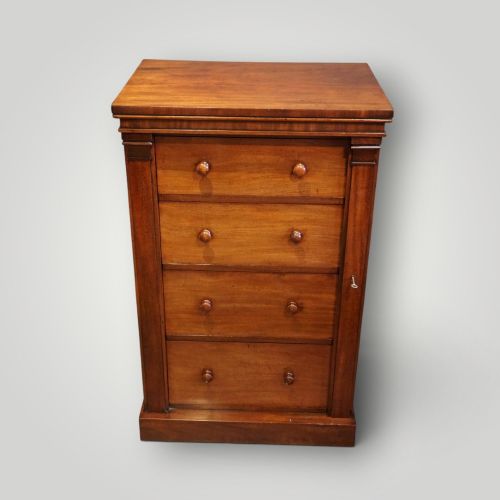
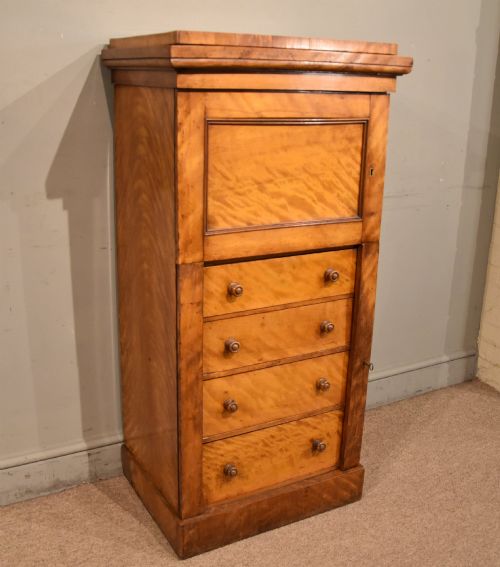
A vintage wellington chest drawers search brings up tall, narrow case pieces featuring a signature hinged locking stile down one side. You are most likely to encounter Victorian mahogany examples with multiple graduated drawers, alongside walnut, oak, and satinbirch variants.
The form spans the nineteenth century and into the twentieth, including Edwardian iterations and occasional collectors chests or bedside formats. These pieces typically offer six or seven drawers within a slender vertical footprint designed to maximise storage without consuming floor space.
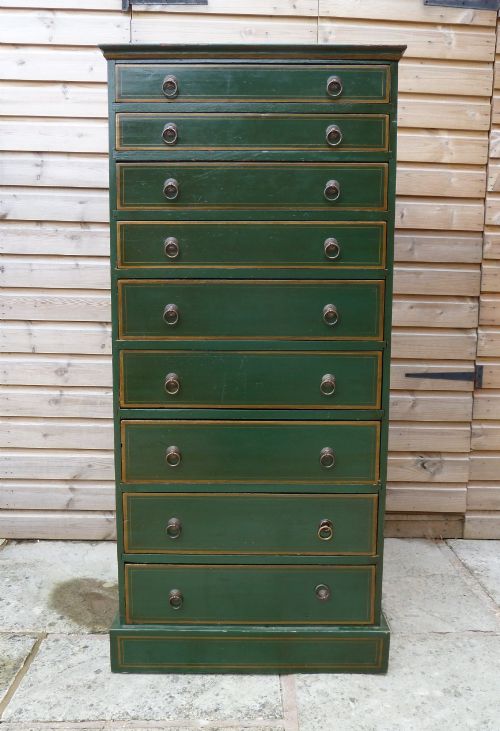
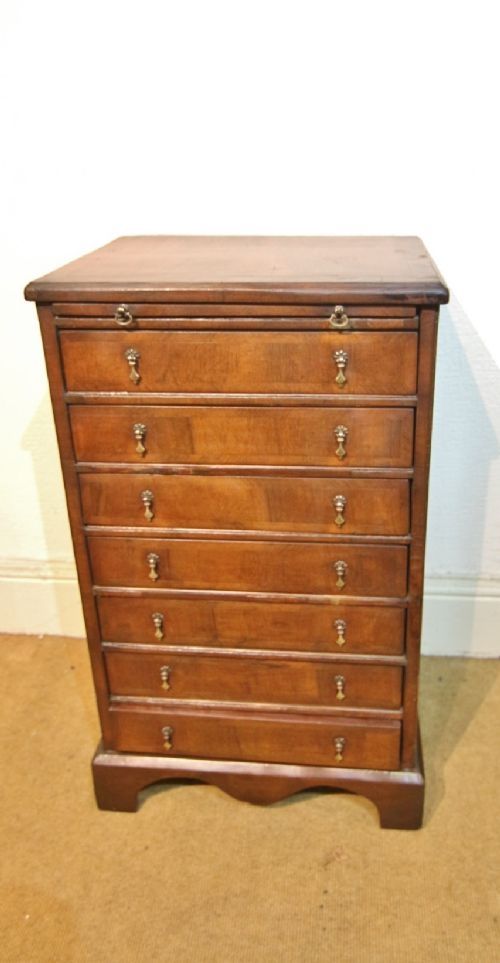
Variations in the evidence range from standard mahogany tallboys to secretaire models with folding writing surfaces, as well as pairs of bedside chests and country house pieces finished in scumble paint.
How they were made
Cabinetmakers built these chests primarily using solid timber frameworks and drawer linings of mahogany, walnut, oak, and pine, frequently enhanced with flame mahogany veneers or satinwood inlays. The characteristic locking mechanism relies on a hinged wooden bar secured by a side-mounted lock, which bars the drawer edges when closed.
Construction techniques emphasise tight joinery to support the deep, narrow proportions, with drawer fronts often displaying figured grains or geometric boxwood stringing. Surfaces finished in polished hardwood or painted finishes show the reliance on traditional shellac and hand-rubbed techniques.
One diminutive child's wellington chest proves that even historic children were expected to keep their socks extremely secure.
What varies in quality
Quality in these chests rests upon the choice of timber and the complexity of the internal fittings, such as secretaire drawers or specialised collector compartments. Finely figured flame mahogany and pollard oak elevate the status of a piece above standard utility pine or plain hardwood.
The crispness of the drawer dividers, the integrity of the locking stile mechanism, and the retention of original brass hardware and working keys distinguish superior examples. Pieces bearing documented workshop attributions or unusual proportions demonstrate greater ambition in their original design.
Gillows of Lancaster
The Vintage Wellington Chest Drawers Glossary
- Wellington chest
- A tall, narrow chest of drawers secured by a hinged vertical locking bar on one side. This design is traditionally said to be named after the first Duke of Wellington.
- Secretaire
- A cabinet or chest incorporating a hinged writing flap that drops down to reveal a fitted interior of small drawers and pigeonholes. It combines desk functionality within a standard chest format.
- Scumble paint
- A decorative surface treatment involving translucent or opaque glaze manipulated with combs or brushes to imitate richer wood grains. It appears on country house furniture.
- Stile
- A vertical framing member in cabinetwork, which in this context forms the hinged locking bar that secures the drawer stack. It fastens against the drawer edges when locked.
Vintage Wellington Chest Drawers: Frequently Asked Questions
Why do these chests have a locking side bar?
The locking stile swings over the drawer edges to secure all drawers simultaneously with a single key.
This security feature kept personal papers and valuables safe in nineteenth-century bedrooms and offices.
What is a secretaire wellington chest?
It is a variant where one of the drawer fronts folds down on hinges to create a writing surface.
Behind this flap sit small pigeonholes and letter drawers for correspondence.
Are all these chests made of mahogany?
While mahogany is the most common timber seen, many examples utilise walnut, oak, satinbirch, and pine.
Some pieces also feature decorative veneers like flame mahogany or pollard oak.
How do you date a wellington chest?
Dating relies on timber choices, construction methods, and stylistic details like handles and inlay.
Victorian and Edwardian versions dominate, with earlier nineteenth-century pieces showing heavier proportions.