


Burr Walnut Top Table
A burr walnut top table brings a rich, swirling grain pattern into a room through historic forms designed for display or daily use.
Burr Walnut Top Table
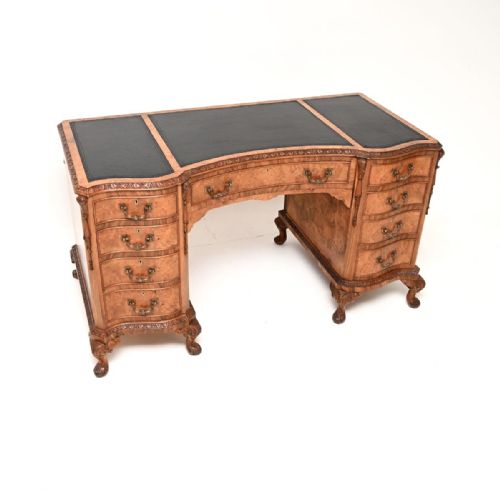
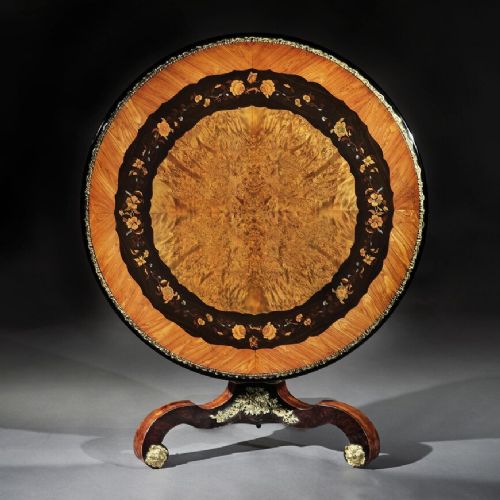
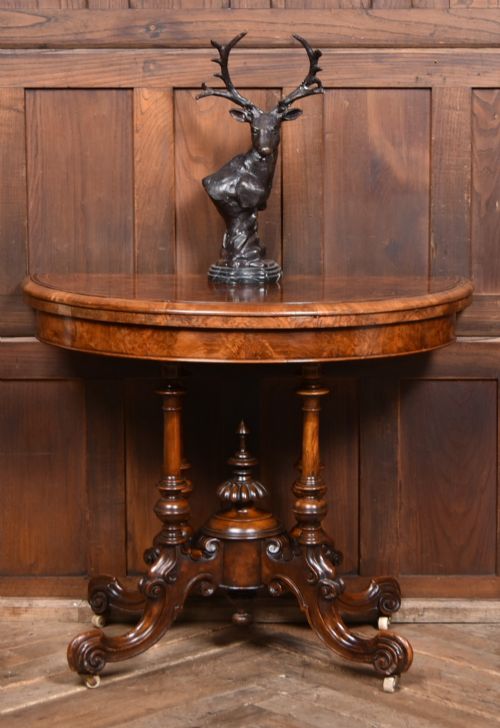
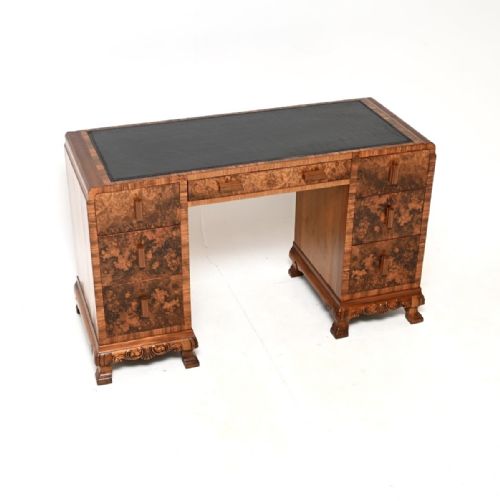
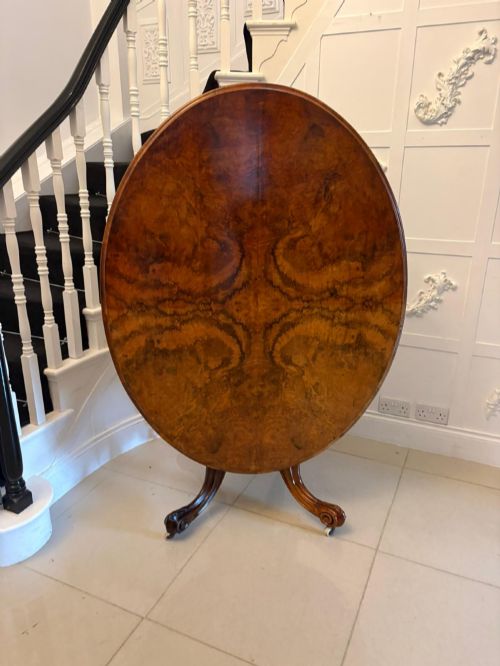
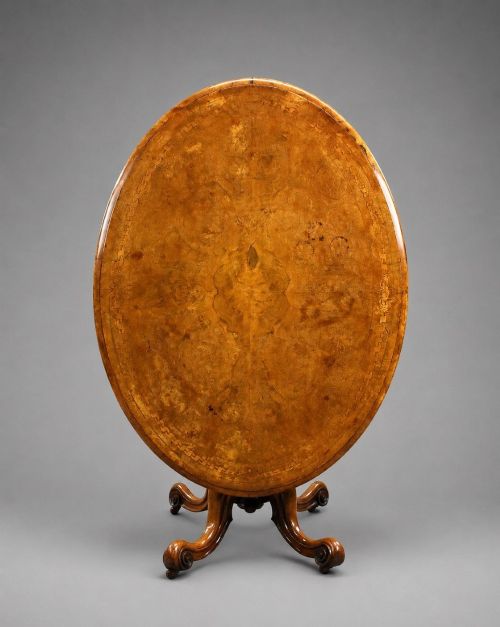
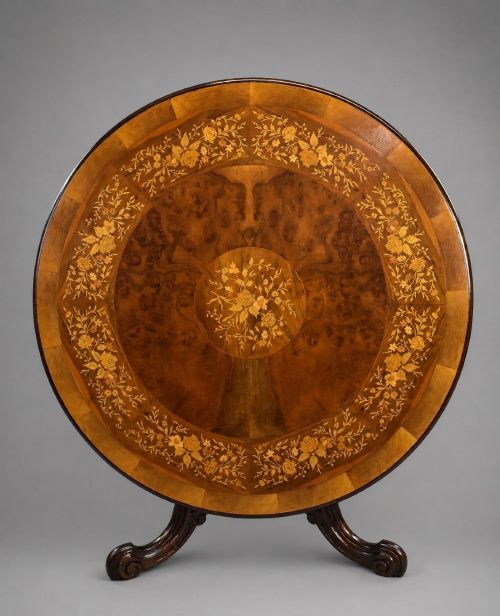
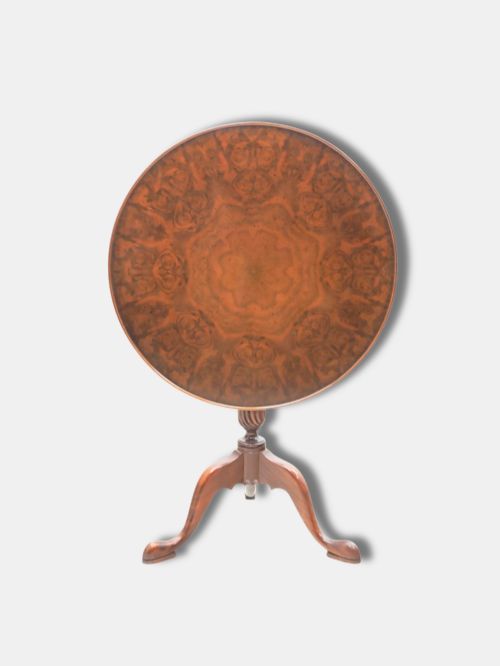
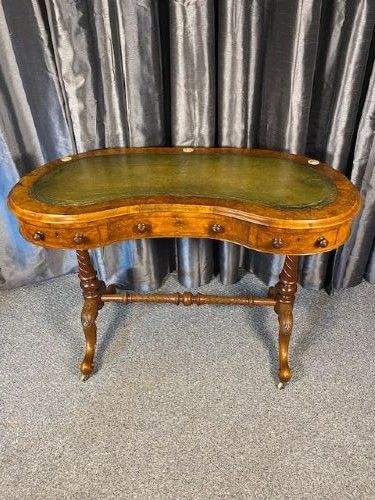
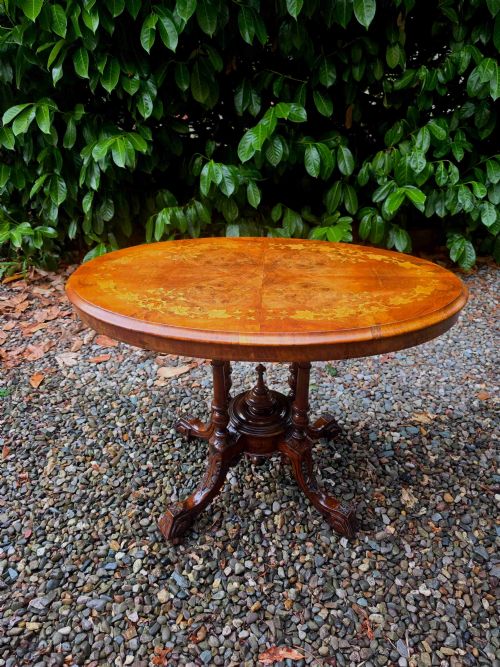
A burr walnut top table draws the eye through the intricate clusters of knots and growth rings that define the timber surface. The selection spans Victorian tilt-top breakfast and loo tables, alongside 1930s Art Deco coffee tables and occasional pieces.
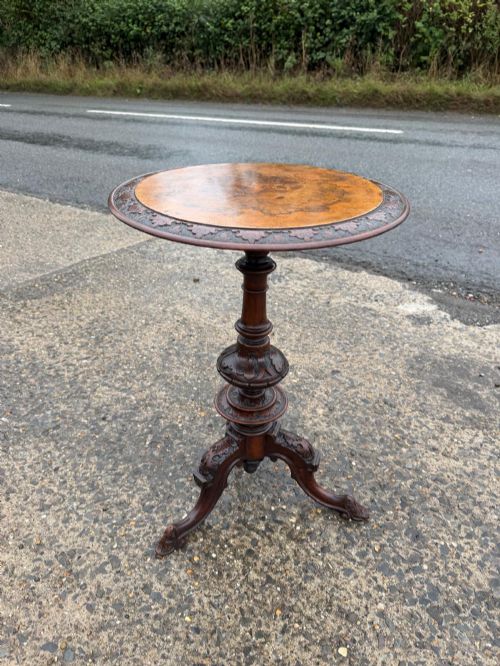
Victorian examples often feature oval or circular tops on carved pedestals, while twentieth-century pieces lean towards clean lines or geometric pedestal forms. These tables served various functions, from formal dining and card games to bedside placement and tea service.
Construction and Materials
Cabinetmakers applied thin slices of burr walnut veneer over secondary woods like mahogany or pine, securing the figured grain patterns across large surfaces. Marquetry inlay, brass mounts, and glass or leather inserts frequently accompany the timber.
Tilt-top mechanisms utilise heavy brass catches and solid wood block pivots, allowing the circular or oval tops to rotate and store flat against pedestals. Carved quadrapod or tripod bases provide stable support for the weighty walnut tops.
Some nineteenth-century tables hide ingenious concertina folding actions beneath their burr walnut tops to serve multiple rooms.
Distinctions in Quality
The density and continuity of the swirling burl pattern dictate the visual impact of the surface, with tightly packed knot clusters commanding greater appreciation. Expert matching of veneer segments across a centre seam creates a symmetrical mirror image that elevates the piece.
Underframe stability and the crispness of hand-carved pedestal details reveal the original maker's skill. Fine marquetry work and intact original brass or leather components indicate high-status production from established workshops.
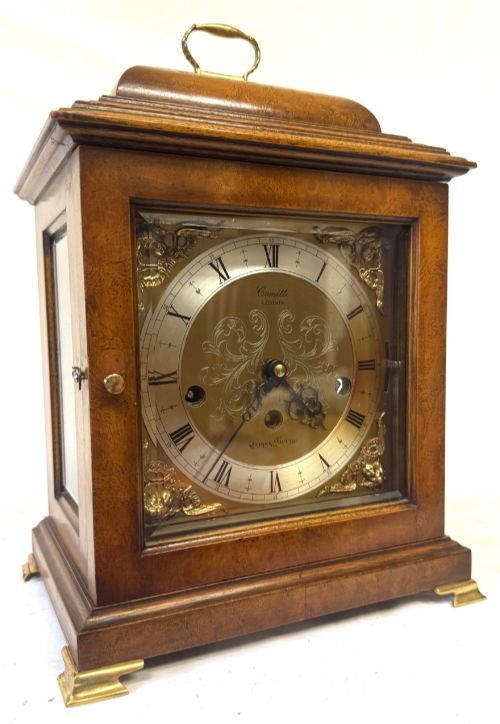
Edward Holmes Baldock·Maple and Co·Mappin and Webb·Wylie and Lochhead Glasgow·Comitti Of London
The Burr Walnut Top Table Glossary
- Burr Walnut
- A wood harvested from the wart-like growths on walnut trees, prized for its complex, swirling knot patterns. It yields highly decorative veneer sheets rather than straight planks.
- Tilt-Top
- A hinged table top that pivots to a vertical position when not in use. This mechanism saved space in nineteenth-century drawing rooms.
- Loo Table
- A large Victorian centre table designed for the card game loo. These round or oval surfaces frequently feature tilt mechanisms.
- Marquetry
- The art of applying thin pieces of wood veneer to a structure to form decorative patterns. Craftsmen use contrasting timbers and mother-of-pearl to create floral or geometric designs.
Burr Walnut Top Table: Frequently Asked Questions
How do I clean a burr walnut top?
Dust the surface regularly with a soft, dry cloth to prevent grit accumulation on the veneer. Apply a mild beeswax polish sparingly to maintain the sheen and nourish the historic timber.
Avoid placing these tables near direct heat sources or strong sunlight, which can dry out the old polish and crack the delicate burr veneer.
Can I use a tilt-top table flat?
The tilt mechanism locks securely into a horizontal position using a brass catch or wooden wedge beneath the top. This allows normal daily use for lamps, books, or drinks without movement.
Release the catch only when you need to move the table or store the top flat against the pedestal to save floor space.
What is the difference between an occasional table and a loo table?
Occasional tables are smaller, lighter pieces built for specific spots in a room, such as beside a chair or in a hallway. Loo tables are large, substantial centre tables with tilting tops designed for entertaining and games.
An occasional table stays fixed in position, whereas a traditional loo table often tilts upright when the evening ends.
How do I date a burr walnut table?
Examine the pedestal base, leg carving, and construction techniques beneath the top for period clues. Victorian examples usually show heavier carved tripod or quadrapod bases with brown wood framing, while 1930s pieces display streamlined Art Deco geometry.
Timber thickness and secondary woods like mahogany or oak also help distinguish mid-nineteenth-century items from twentieth-century revivals.