
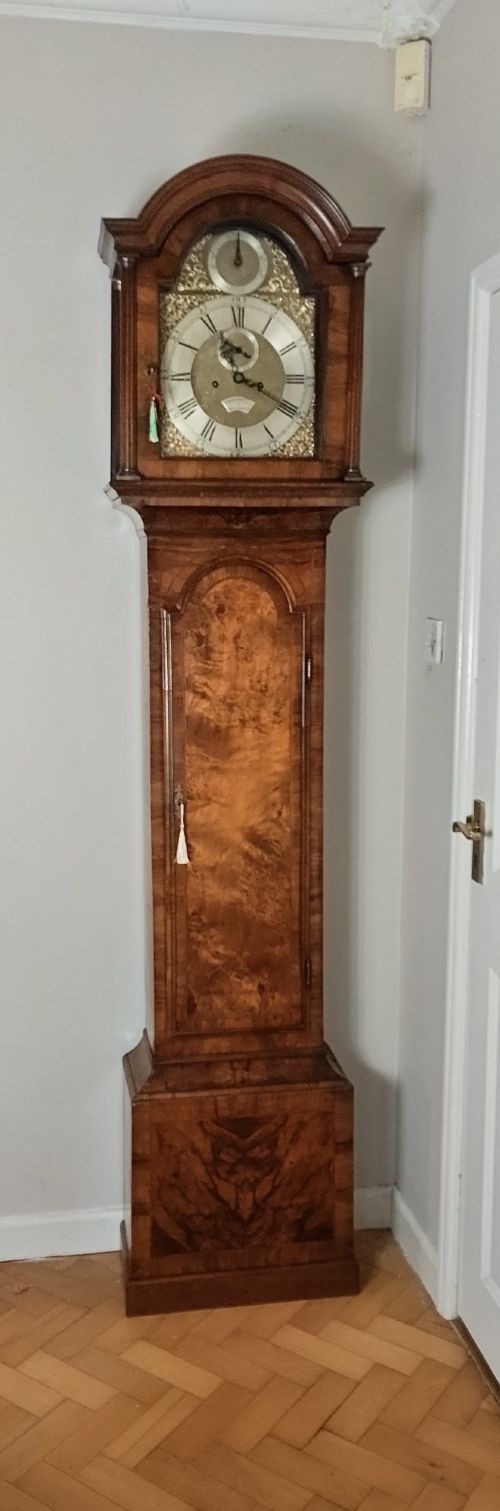
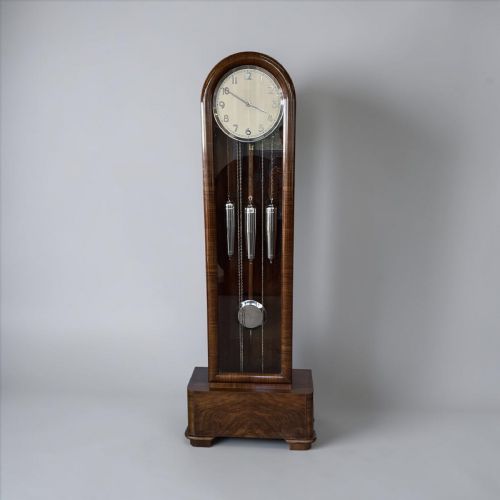
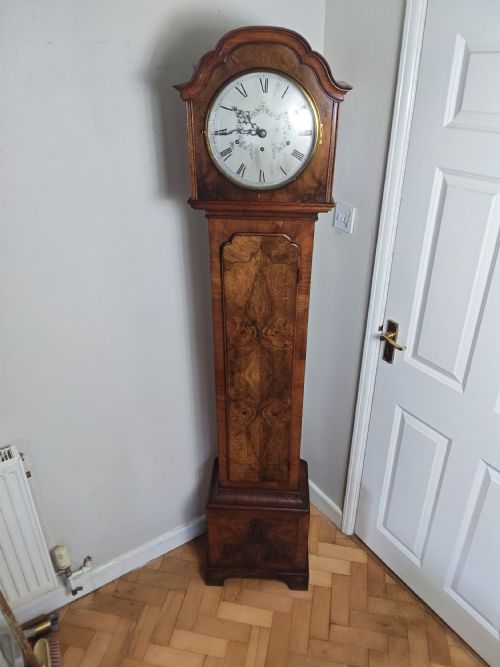
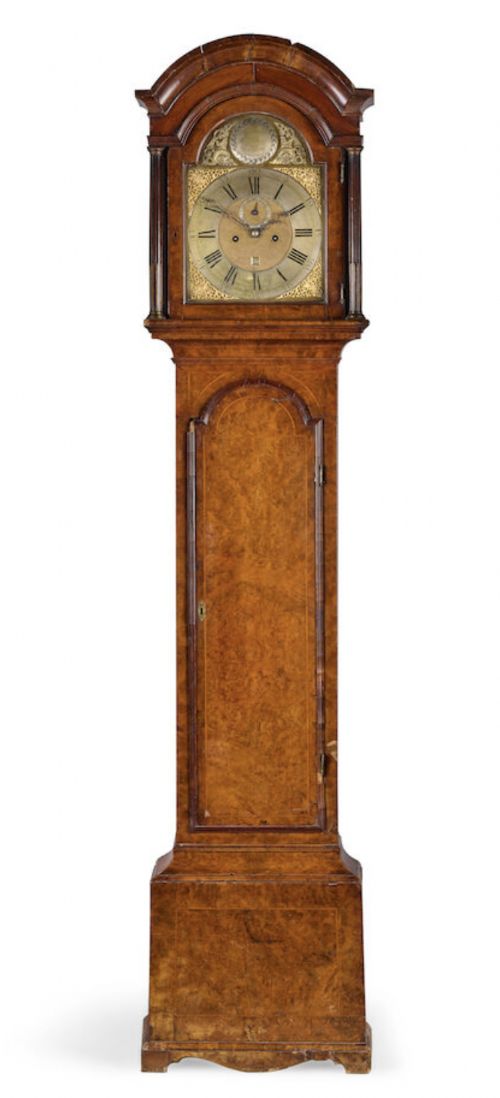
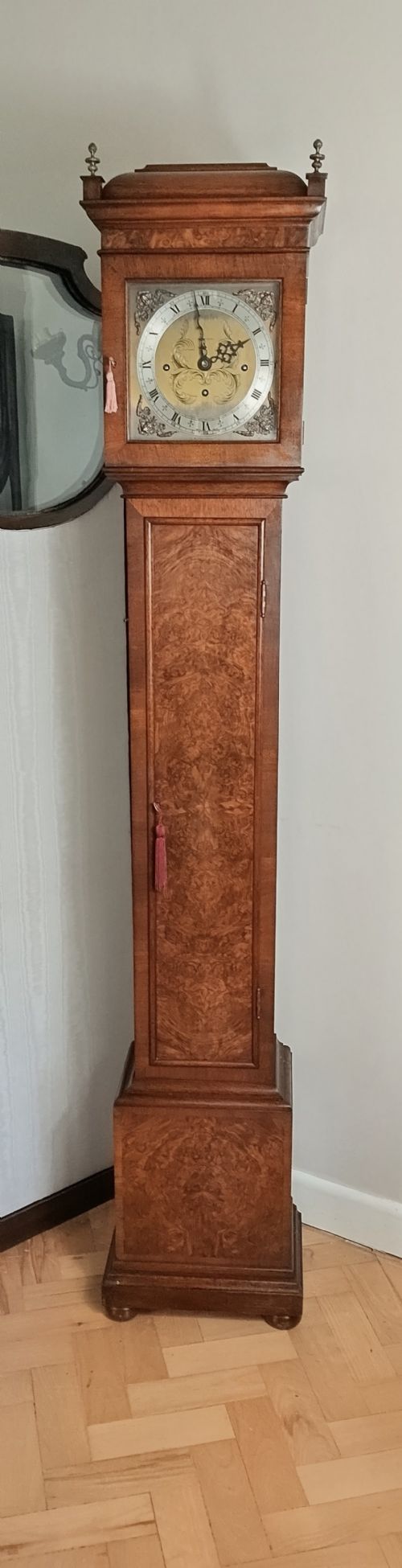
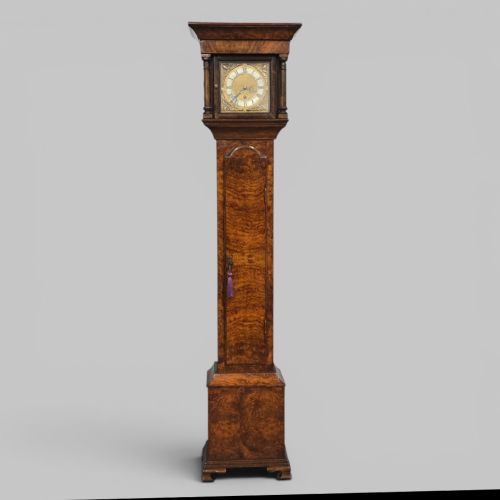


Burr Walnut Tallcase Clock
A burr walnut tallcase clock brings remarkable timber movement and gravity to a room, driven by brass and steel mechanics.
Burr Walnut Tallcase Clock
A burr walnut tallcase clock stands as a towering piece of furniture housing intricate timekeeping mechanisms. These tall items serve both as functional horology and commanding architectural presence within a domestic interior.
Buyers encountering this page meet pieces spanning the seventeenth century through to the mid-twentieth century. Forms range from full-sized grandfathers down to smaller grandmother and miniature versions.
Origins stretch from early English workshops by makers such as London and Norwich masters up to later revival periods. The dominant aesthetic relies on the dramatic figuring of burr walnut timber veneers.
How they were made
Craftsmen built tallcase bodies primarily using oak or walnut carcasses finished with decorative veneers of burr walnut. These figured surfaces create complex, swirling patterns across the trunk and door of the case.
Internal movements combine brass, steel, and glass components to drive timekeeping, striking, and chiming trains. Dials often feature applied brass work and detailed engravings signed by the maker.
Some models are small enough to be called grandaughters, proving that tallcase timepieces can occasionally come in miniature proportions.
What varies in quality
Quality rests heavily on the depth and symmetry of the burr walnut figuring across the front panels. Superior examples display carefully matched veneer quarters that create harmonious patterns.
The refinement of the movement and the reputation of the original maker elevate the standing of a clock. Signed dials from notable seventeenth and eighteenth-century makers command greater attention than later or unsigned iterations.
Windmills and Wightman·Henry Massy·Edin Burgis·Langley Bradley·Edward East·Bentley London·James Drury·Joseph Oxley
The Burr Walnut Tallcase Clock Glossary
- Tallcase clock
- A weight-driven timekeeper housed in a tall wooden case standing directly on the floor. These items are frequently called grandfather or longcase clocks.
- Burr walnut
- A prized timber veneer harvested from walnut tree growths that produce chaotic, swirling grain patterns. This material forms the primary decorative surface on high-status cases.
- Grandmother clock
- A smaller, more slender version of the traditional longcase clock produced in various twentieth-century periods. They offer similar mechanical complexity in a reduced vertical footprint.
- Quarter chiming
- A mechanical capability allowing the clock to sound musical notes or bell sequences at every quarter hour. This involves intricate trains of gears and multiple weights or springs.
- Veneer
- A thin layer of figured wood applied over a secondary timber carcass to provide a decorative exterior. Quarter veneering involves arranging four matching slices to form a symmetrical pattern.
Burr Walnut Tallcase Clock: Frequently Asked Questions
How do I wind a tallcase clock?
Winding involves using a key or pulling cords to raise the internal weights depending on the specific mechanical train. Care must be taken not to overwind the springs or pull weights too high.
Most movements require attention at regular weekly or monthly intervals to maintain accurate timekeeping and chiming functions.
Where should I place a grandfather clock?
Tallcase clocks require a stable, dry interior location away from direct sunlight and temperature fluctuations that affect wood and veneer. Placing them against an interior wall helps avoid vibrations from heavy household traffic.
Level flooring is essential to ensure the pendulum swings freely and the escapement ticks evenly.
What is the difference between a grandfather and grandmother clock?
Grandfather clocks represent the full-sized tallcase format typically produced in earlier centuries with tall proportions. Grandmother clocks are noticeably shorter and more slender, often dating from later twentieth-century revival periods.
Both utilise similar weight-driven or spring-driven mechanics housed in timber cases.
How do I identify the age of walnut clocks?
Dating relies on examining the construction methods of the internal oak or walnut carcass, the style of the brass dial, and the type of movement. Earlier seventeenth and eighteenth-century pieces display distinct hand-engraved dial signatures and simpler anchor or verge escapements.
Later nineteenth and twentieth-century examples often incorporate modern mass-produced components or revival stylistic cues.