


Traditional Chime Longcase Clock
A traditional chime longcase clock anchors a room with mechanical presence and melodic timekeeping.
Traditional Chime Longcase Clock
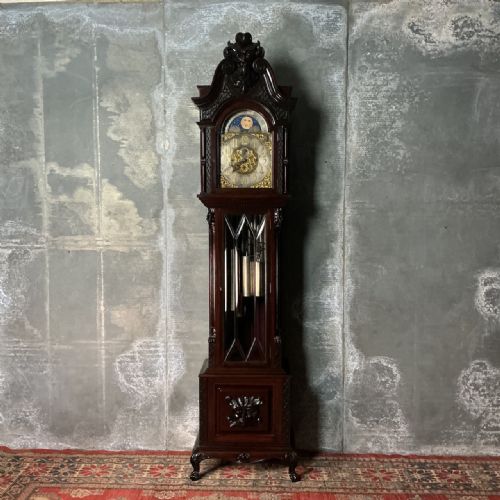
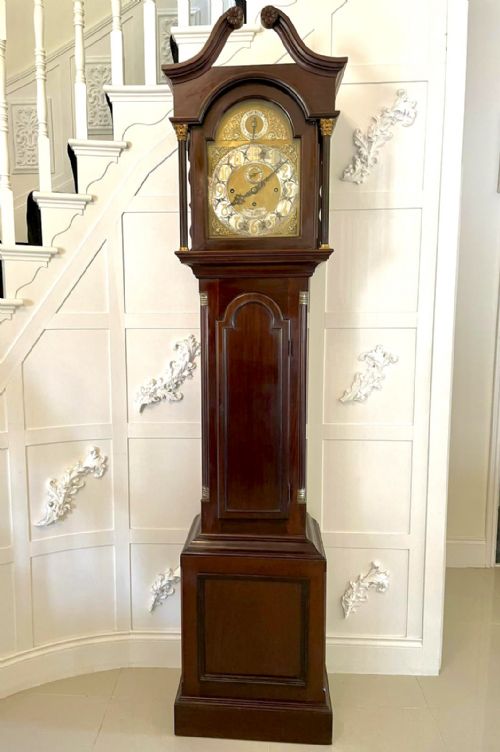
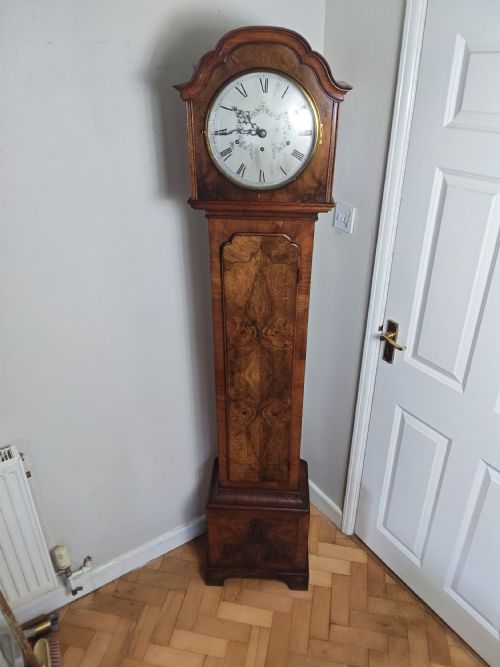
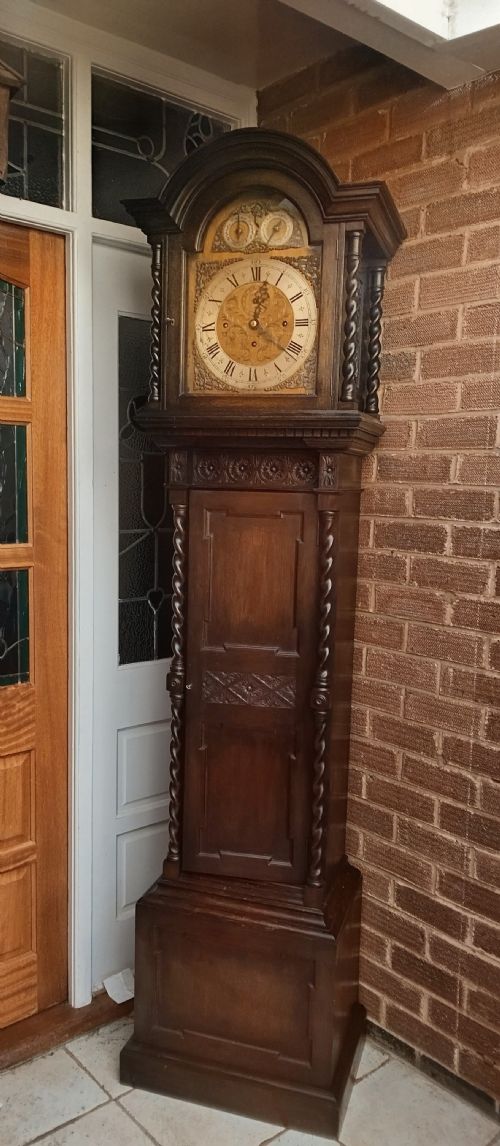
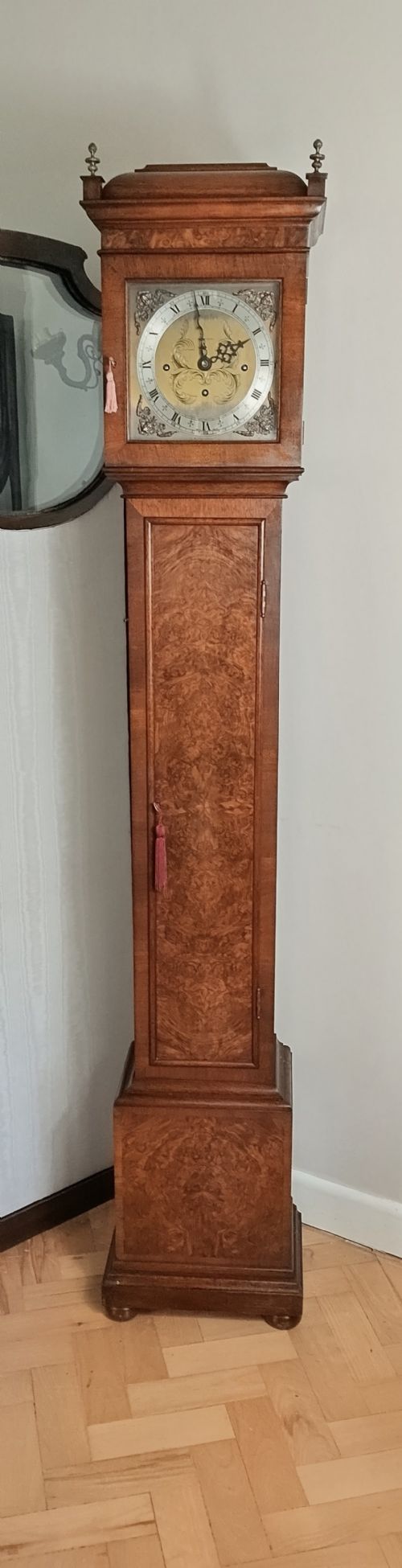
A traditional chime longcase clock combines tall wooden cabinetry with weighted mechanical movements that sound the hours and quarters. When exploring this phrase, buyers encounter substantial grandfather clocks alongside more compact grandmother clocks dating from the Victorian era through the early twentieth century.
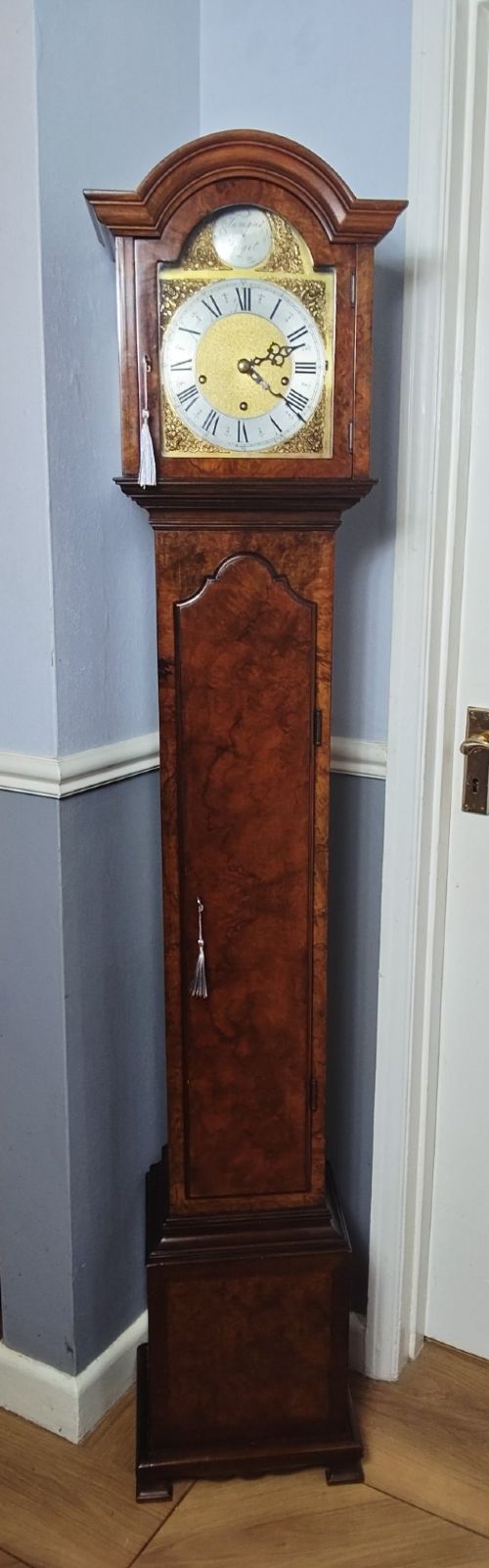
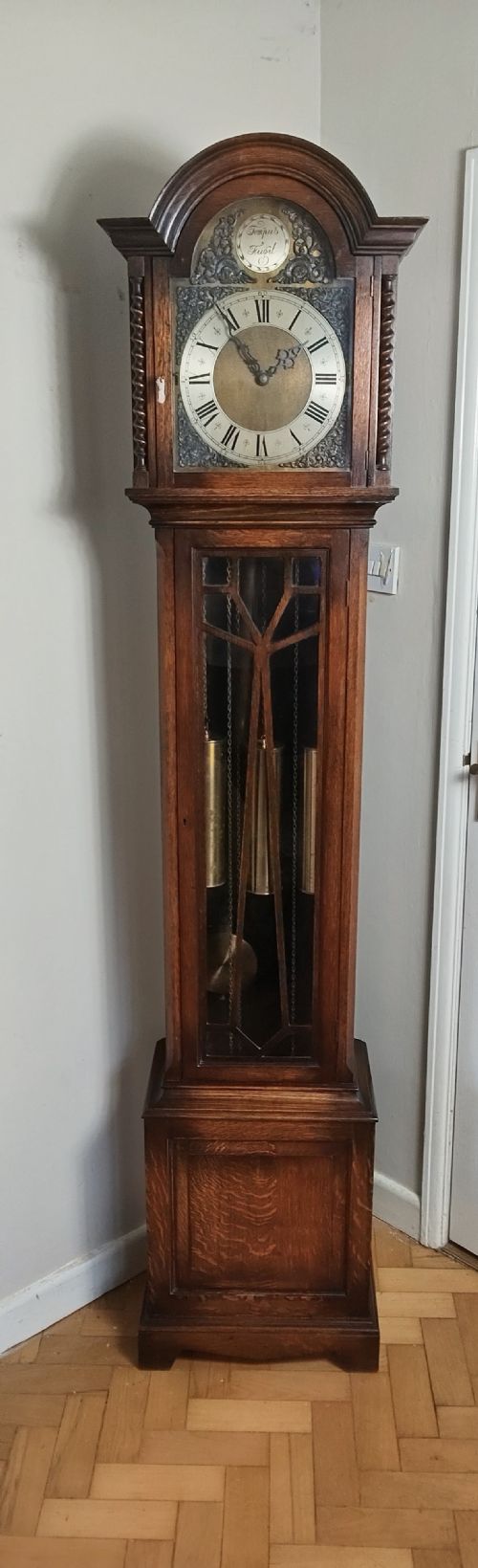
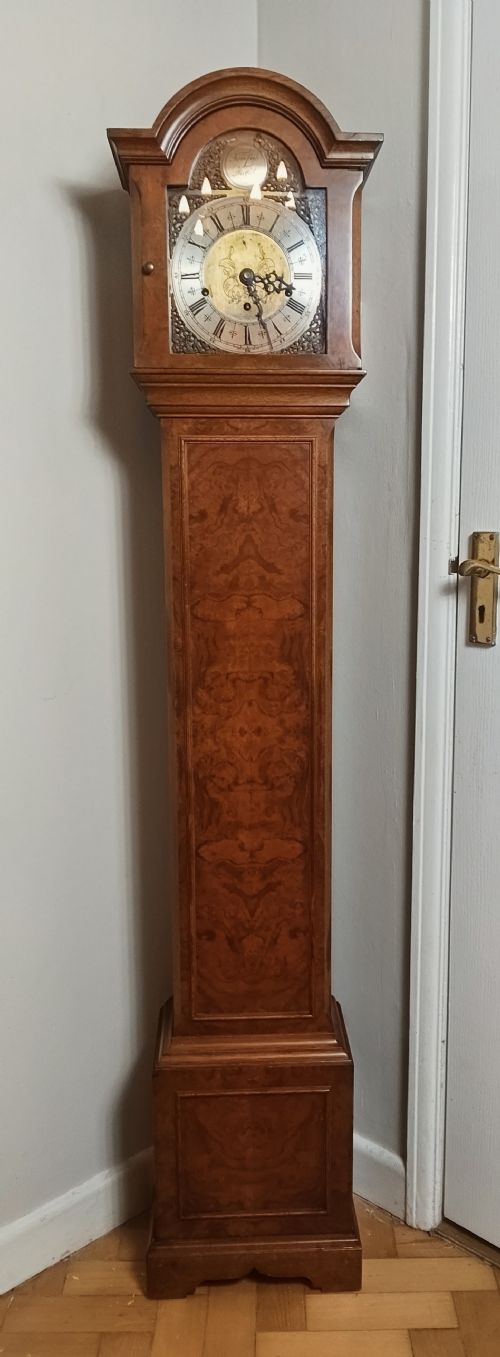
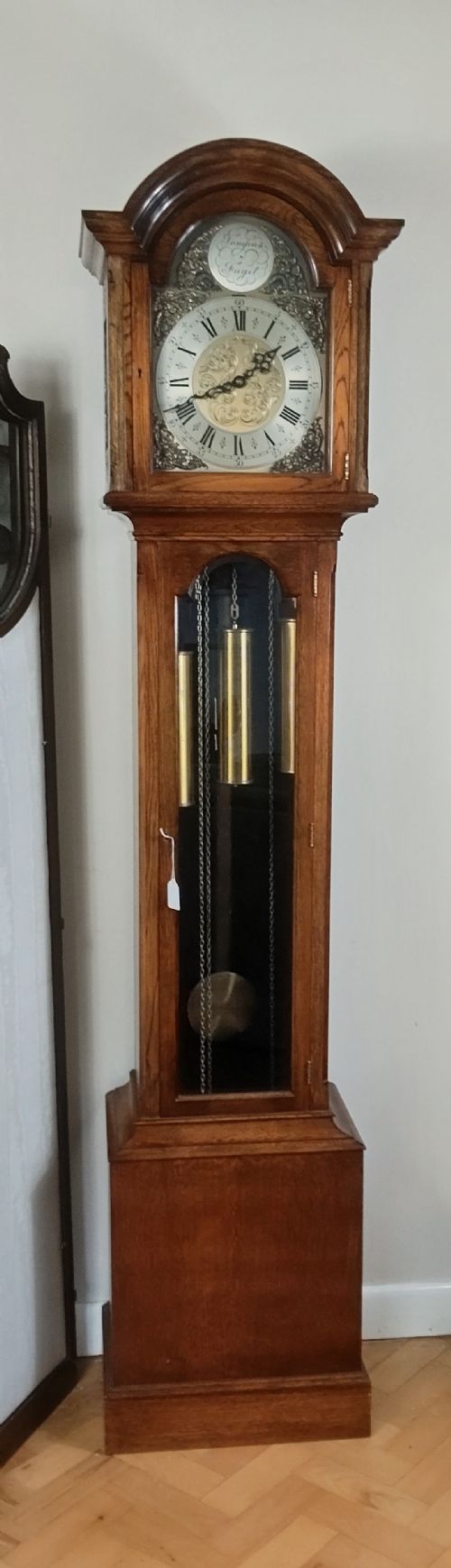
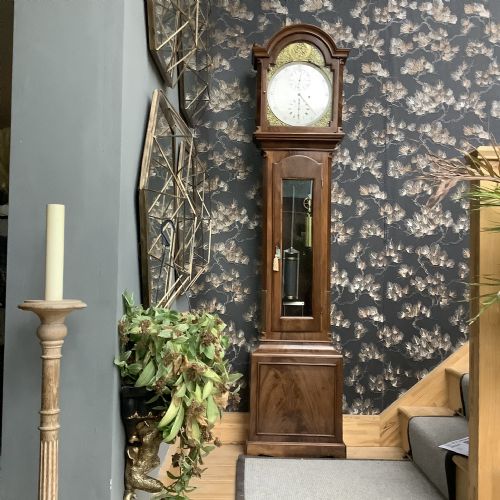
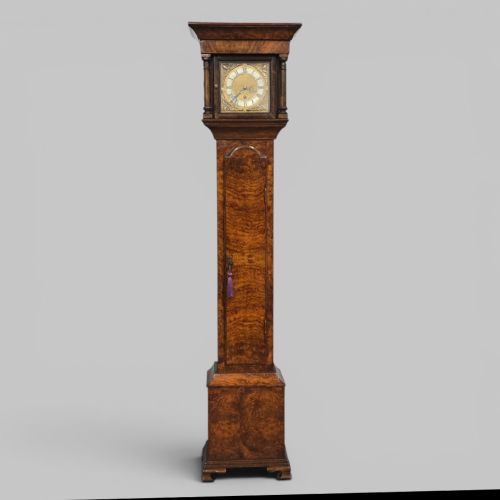
The selection ranges from robust oak and mahogany floor clocks to richly figured walnut and burr walnut examples. Many incorporate musical pins, multiple chimes, or tubular bells housed behind glazed brass-faced dial doors.
How they were made
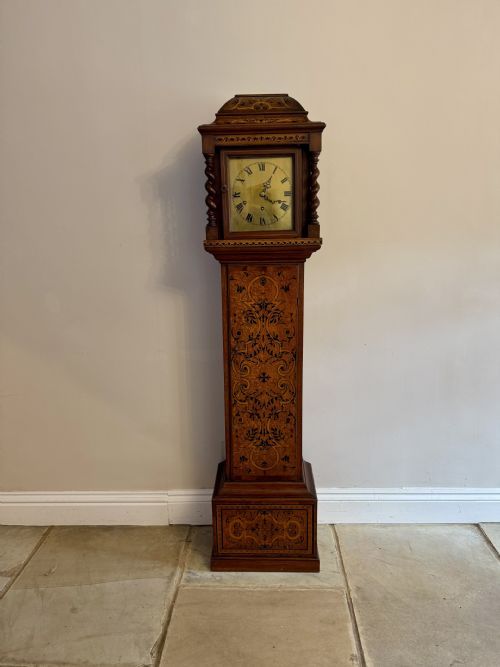
Cabinetmakers constructed the tall floor cases using solid timbers like oak and mahogany, often applying decorative veneers such as burr walnut and satinwood inlay. Glass panels protect the dial and pendulum trunk, while brass components form the visible face, movement gears, and bells.
Movements rely on weight-driven systems requiring two, three, or eight days of winding to power complex train mechanisms, hour strikes, and quarter chimes.
Some models pack up to nine tubular bells inside a slender walnut case to transform a quiet hallway into a cathedral belfry.
What varies in quality
Quality rests in the complexity of the internal movement and the precision of the case construction. Simpler striking mechanisms sit below multi-train musical movements that play specific tunes on bells or tubular gongs.
Cabinet work separates standard production from superior pieces through choice veneer matching, intricate marquetry inlay, and carved architectural details on the hood and trunk.
Winsor Bishop Norwich·Elliott·Bravingtons·Enfield·Gillett Johnston·Harrods·Lister Sons·W Prior Skipton
The Traditional Chime Longcase Clock Glossary
- Grandmother clock
- A smaller, more slender version of the traditional longcase clock, typically standing shorter and popular during the early twentieth century.
- Longcase clock
- A tall pendulum clock enclosed in a wooden case that rests directly on the floor, frequently called a grandfather clock.
- Quarter chiming
- A movement mechanism that plays a musical melody on bells or gongs every fifteen minutes.
- Three train
- A clock movement with three separate gear trains to drive the timekeeping, the hour strike, and the chiming melody.
- Tubular bell
- Long metal tubes suspended inside the clock case that are struck by hammers to produce deep, resonant chimes.
Traditional Chime Longcase Clock: Frequently Asked Questions
Where should I place a traditional chime longcase clock?
These tall floor clocks require a stable, level surface against a solid wall to ensure the pendulum swings evenly. Keeping them away from direct sunlight and heavy foot traffic preserves the wood case and delicate internal mechanics.
Allow enough clearance around the hood doors for regular winding and time adjustments. A quiet hallway, study, or living room allows the chimes to resonate clearly without competing with household noise.
How do I wind a traditional chime longcase clock?
Winding involves raising the internal weights using a crank key inserted into the winding holes on the dial face. Most movements require attention every eight days, though triple-weight musical versions need careful handling across each separate train.
Take care not to over-wind the mechanism and support the weight slightly if necessary to ease the strain on the lines. Regular consistent winding keeps the beat steady and prevents the chime sequence from falling out of sync.
What is the difference between a grandfather and grandmother clock?
Grandfather clocks are the traditional full-size tall case clocks that dominate floor space with imposing proportions. Grandmother clocks are scaled-down versions introduced later, featuring slimmer profiles suited to lower ceilings and smaller rooms.
Both utilise similar weight-driven movements and chime mechanics, but the smaller proportion defines the grandmother variation.
How can I date a traditional chime longcase clock?
Dating relies on examining the timber veneers, dial styling, and cabinet proportions recorded across Victorian and early twentieth-century periods. Oak and mahogany cases often align with late nineteenth-century Victorian production, while burr walnut and refined marquetry point toward Edwardian and 1920s workshops.
Maker signatures inscribed on the brass dials or movement plates provide further historical context.