

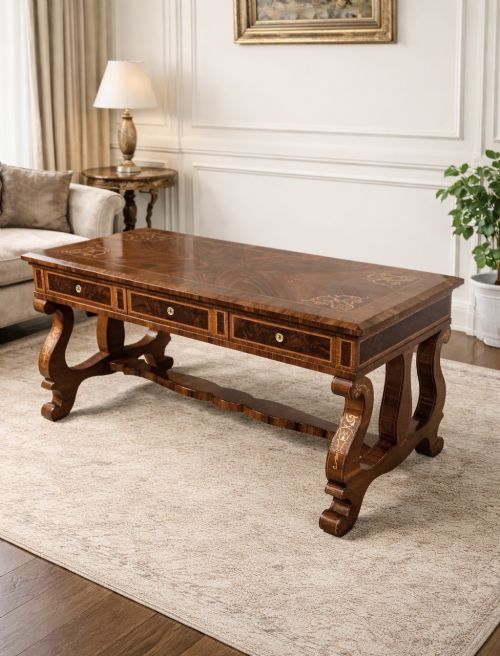
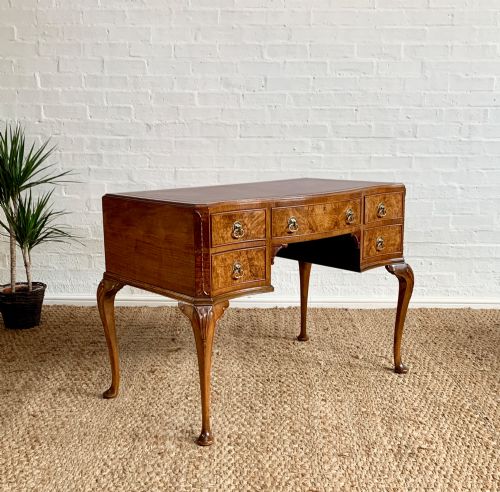
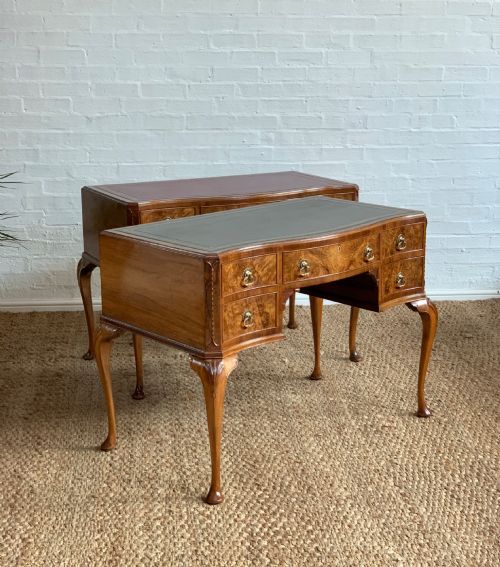
Burr Walnut Study Table
A burr walnut study table brings deep figured grain and rich warmth into a room, offering a functional workspace with undeniable presence.
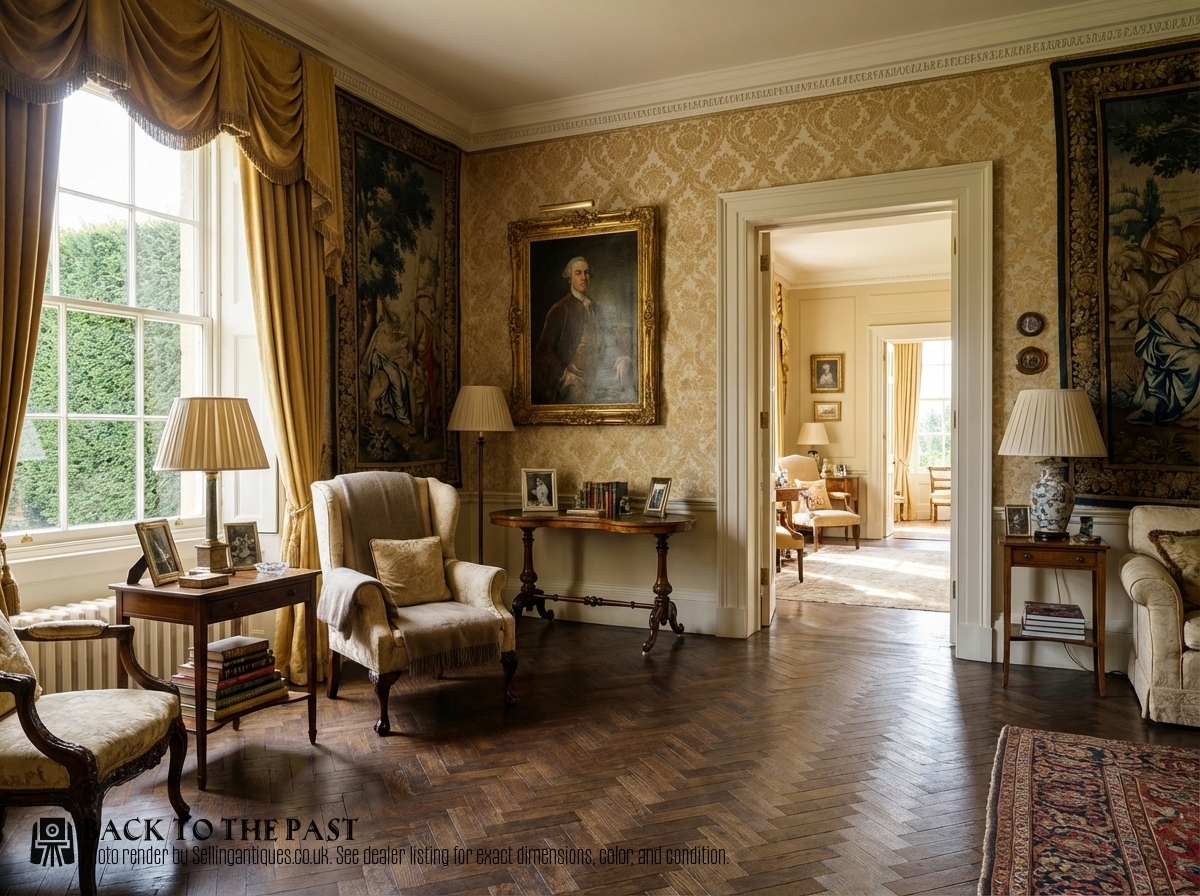
Burr Walnut Study Table
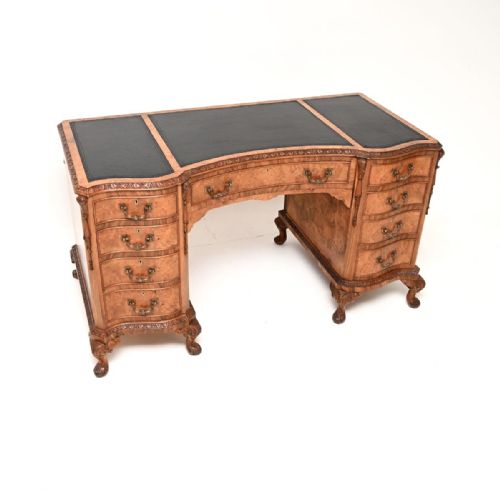
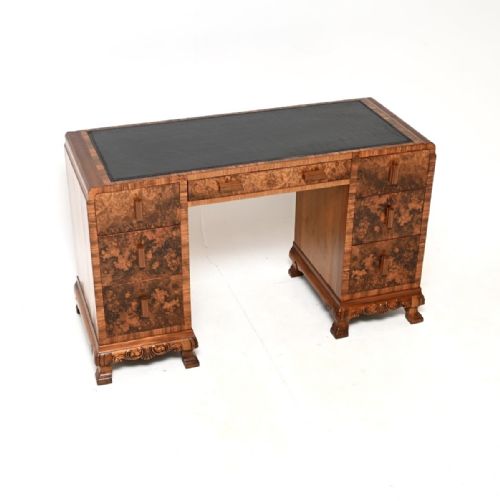
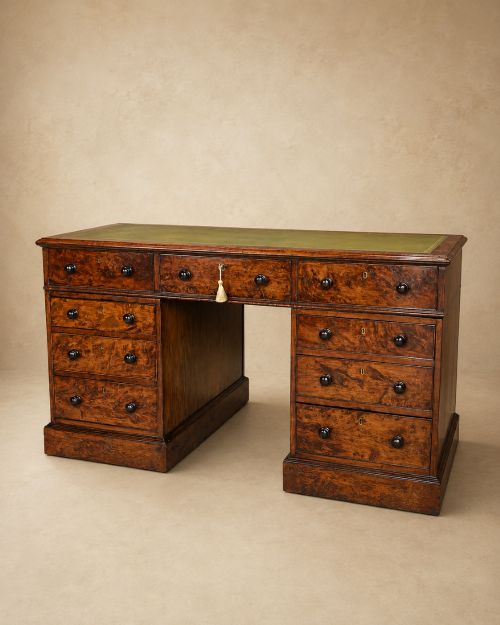
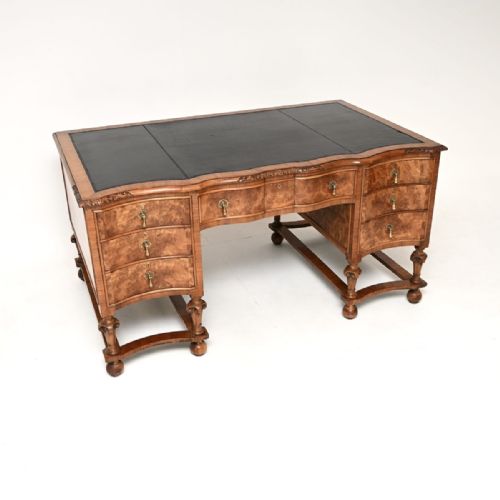
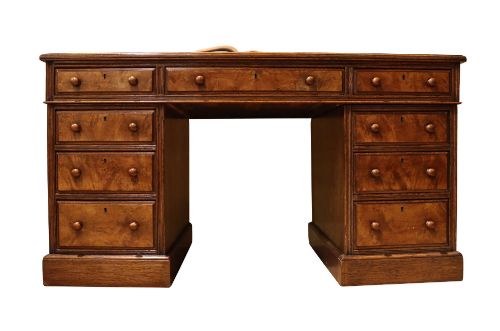
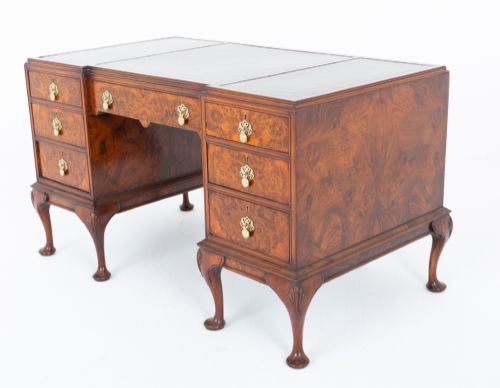
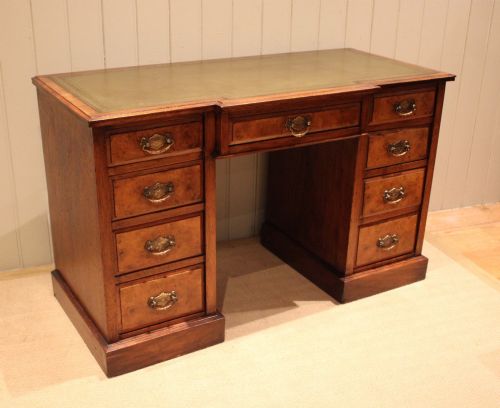
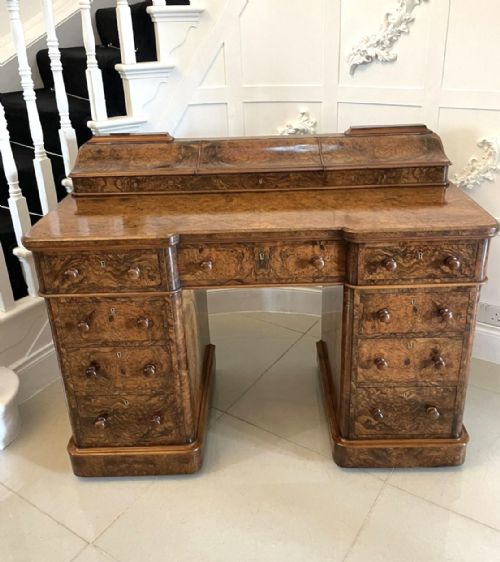
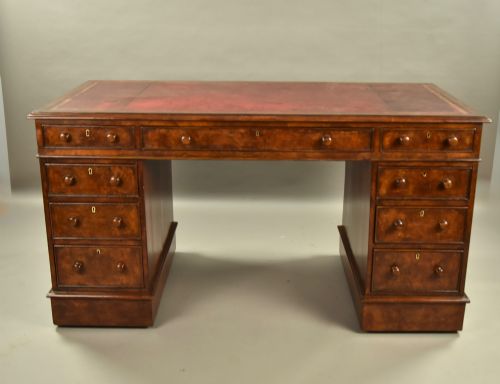
A burr walnut study table is a dedicated piece of antique or vintage furniture designed for writing and clerical work, distinguished by the swirling, knotty patterns of walnut burl timber. These surfaces range from simple freestanding writing tables to substantial pedestal desks, kneehole desks, and partners desks fitted with multiple drawers.
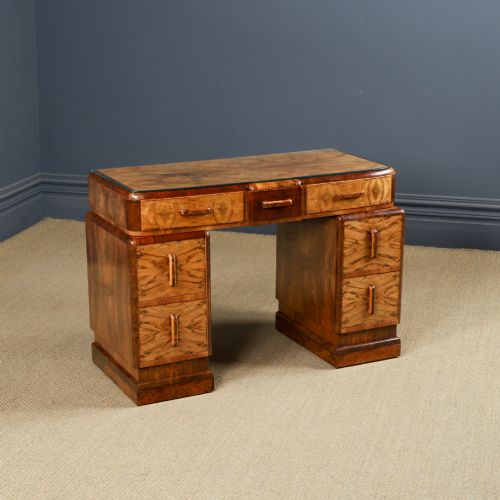
The pieces appearing on this page span from the eighteenth century through the Victorian era and into the Art Deco and early twentieth-century periods. Buyers are most likely to encounter nineteenth-century Victorian examples and 1930s Art Deco interpretations, alongside revival styles that borrow from Queen Anne and Georgian aesthetics.
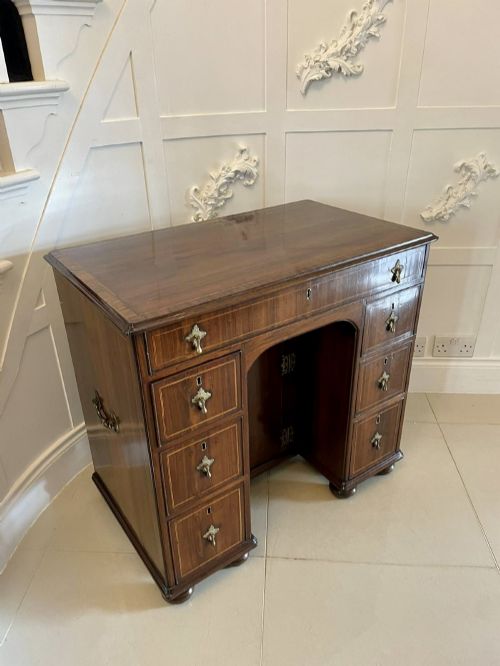
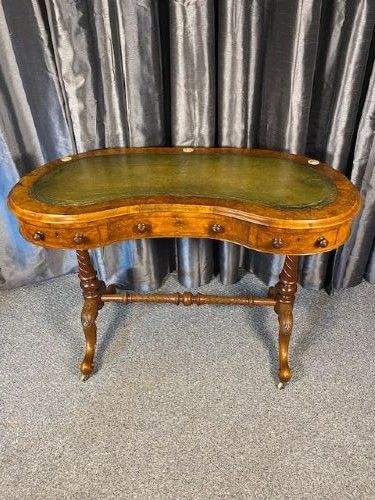
Forms vary from compact writing tables with turned legs to large breakfront and serpentine pedestal desks equipped with leather writing inserts. Alongside traditional desks, related variants such as bureaus, Davenport desks, and library tables appear within the selection.
How they were made
Cabinet makers constructed these tables using a solid secondary timber like oak or pine for the internal framing and drawer carcasses, applying thin veneers of burr walnut to the visible exterior surfaces. This technique allowed craftsmen to display the highly figured, ornamental grain across large flat areas without risking the structural instability of solid burr wood.
Writing surfaces were frequently inset with tooled leather panels, often bordered with gold leaf tooling, providing a durable and refined writing plane. Accents of brass hardware, ormolu mounts, and glass elements appear on specific pieces, particularly within Victorian library tables and twentieth-century Art Deco designs.
Several desks feature secret compartments hidden within the kneehole architecture, offering discrete storage for private correspondence.
What varies in quality
The visual impact of a burr walnut study table depends heavily on the selection and matching of the veneer. Superior pieces display symmetrical, book-matched grain patterns that flow evenly across drawers and tops, whereas lesser examples show disjointed or plain timber with minimal figure.
Construction methods and secondary woods also dictate the tier of a piece. Finer desks utilise solid oak drawer linings and precise dovetail joinery, while simpler or later items rely on lighter construction and secondary woods like pine.
Maple and Co·Wylie and Lochhead Glasgow
The Burr Walnut Study Table Glossary
- Burr walnut
- A veneer sliced from the knotty growths or burls of a walnut tree, prized for its swirling, highly figured grain patterns. It creates a decorative, mottled surface that defines the aesthetic of these tables.
- Pedestal desk
- A heavy freestanding desk consisting of a central writing slab supported by two banks of drawers or cupboards down to the floor. They offer substantial storage and a commanding presence in a study.
- Partners desk
- A large double-sided pedestal desk designed so that two people can sit opposite each other and work simultaneously. They feature drawers and cupboards accessible from both sides.
- Kneehole desk
- A compact desk with a central recess for the sitter's legs, flanked by narrow banks of drawers. Eighteenth-century and Victorian versions often include a single long drawer above the kneehole space.
- Ormolu
- Gilded bronze ornamentation applied to furniture mounts, corners, and handles, commonly found on formal nineteenth-century pieces. It adds metallic contrast to the dark, warm tones of the walnut timber.
Burr Walnut Study Table: Frequently Asked Questions
How do I date a burr walnut desk?
Dating relies on examining the construction methods, drawer dovetails, secondary timbers, and stylistic markers such as hardware and leg shapes. Victorian pieces often display heavier proportions and rich ormolu or brass details, whereas 1930s Art Deco examples favour streamlined geometric silhouettes and modernist lines.
Secondary woods inside the drawers also offer clues, with oak typically pointing to earlier or higher-quality English cabinetmaking. Comparing the overall form against documented revival styles helps narrow down whether a piece originates from the nineteenth century or the interwar period.
What is the difference between a writing table and a pedestal desk?
A writing table generally stands on four legs, resembling a large decorative table with one or more shallow drawers beneath the top. It offers an open, lighter silhouette suited for occasional writing or placement in a reception room.
By contrast, a pedestal desk rests on two substantial columns of drawers rather than legs, providing enclosed storage space and a heavier, more permanent footprint. Pedestal formats were built for intensive administrative work and heavier daily use.
How do I care for a leather writing surface?
Leather top inserts require gentle maintenance to prevent drying and cracking over time. Dust the surface regularly with a soft, dry cloth and avoid placing hot cups or liquids directly onto the leather.
Occasional treatment with specialist leather balms or saddle soap helps preserve suppleness and protects the gold leaf tooling around the edges. Keep the table away from direct sunlight and radiators to protect both the leather and the underlying walnut veneer.
Can I use a study table as a dressing table?
Many compact writing tables and kneehole desks function successfully as dressing tables within a bedroom setting. Their drawer configurations provide convenient storage for cosmetics and accessories, while the flat top accommodates a mirror.
Smaller Victorian and Art Deco variants lend themselves particularly well to this adaptive use without looking out of place in domestic interiors.