

Burr Walnut Slant Desk
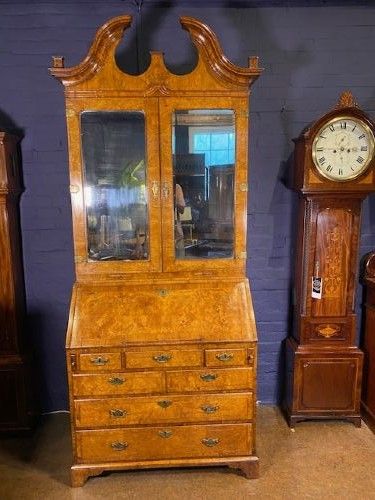
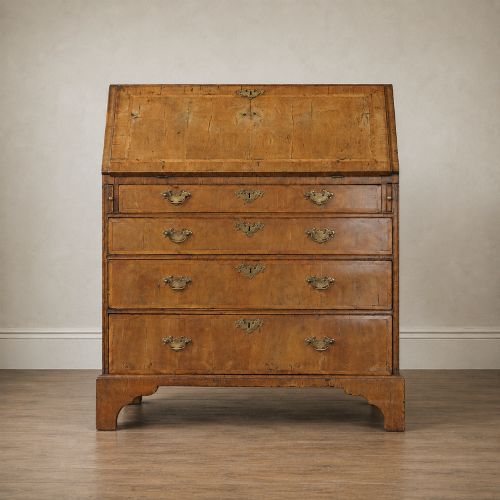
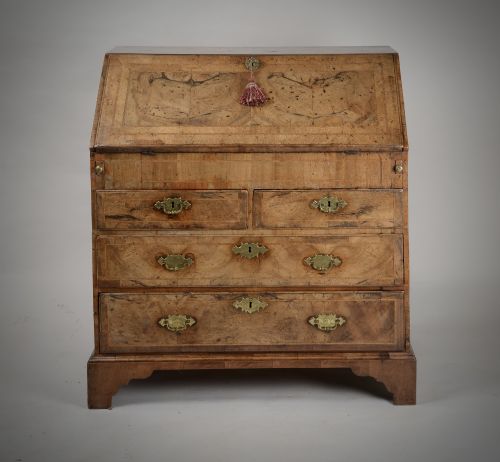
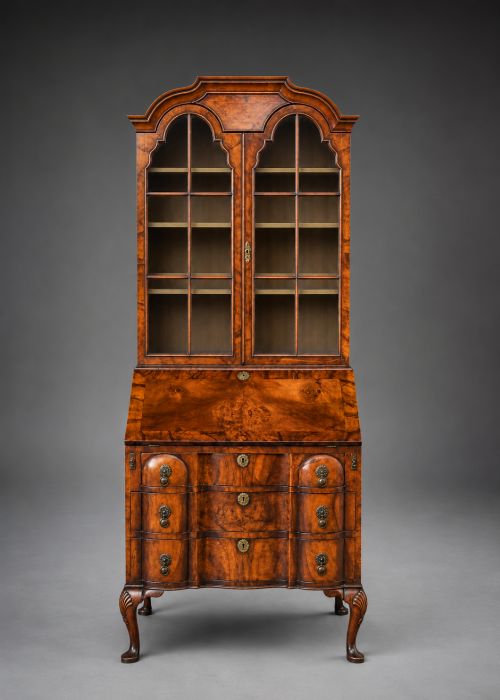
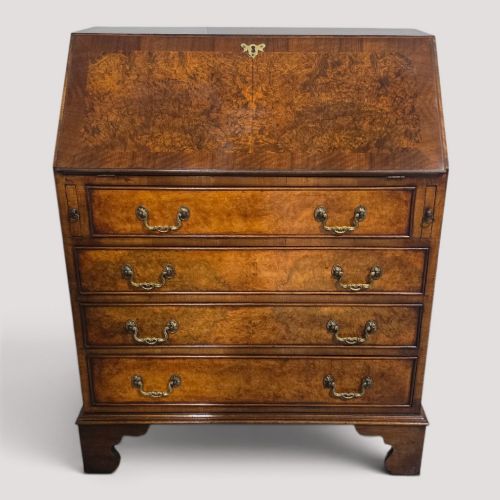
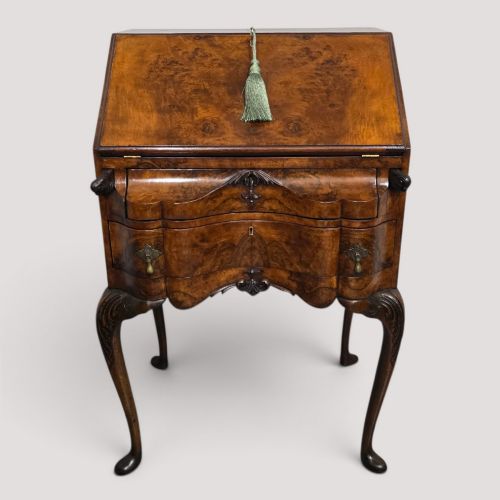
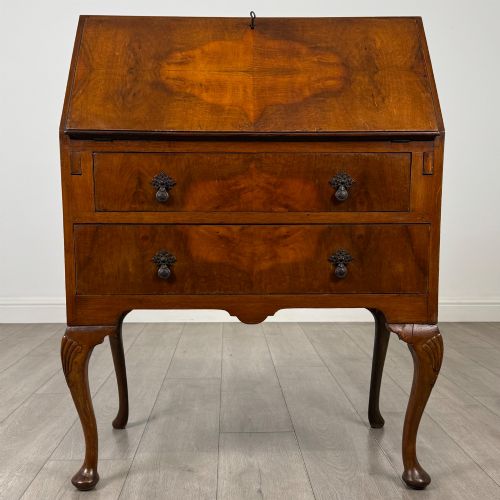
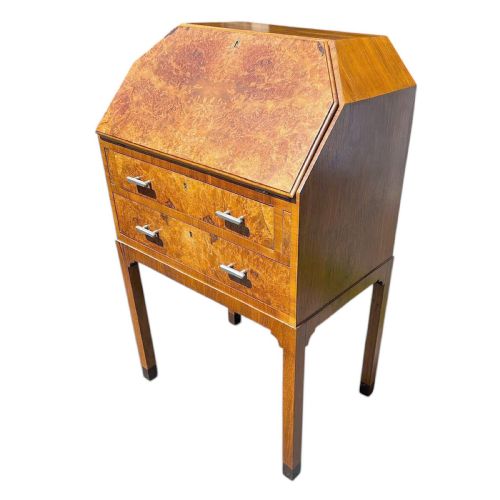
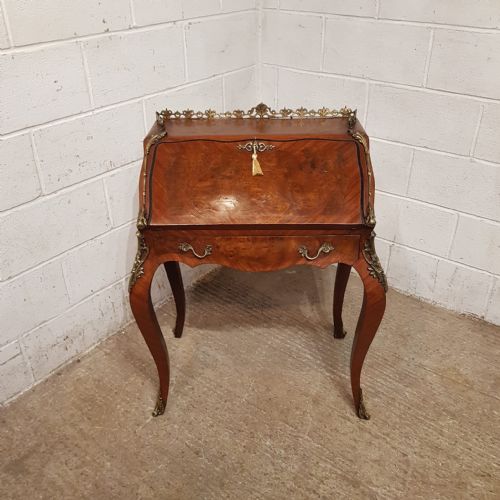
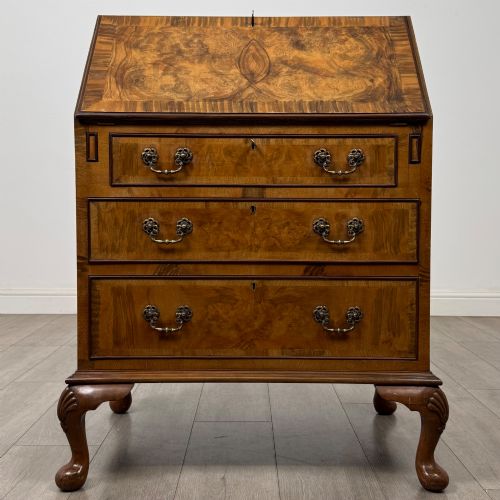
A burr walnut slant desk provides a sloping writing surface over drawers, housing papers within figured timber.
Burr Walnut Slant Desk
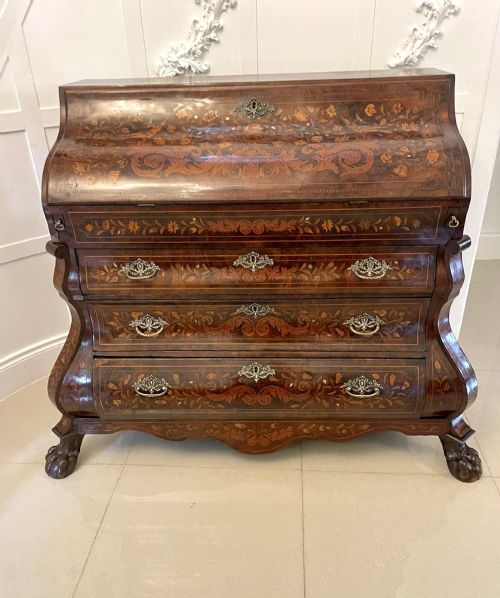
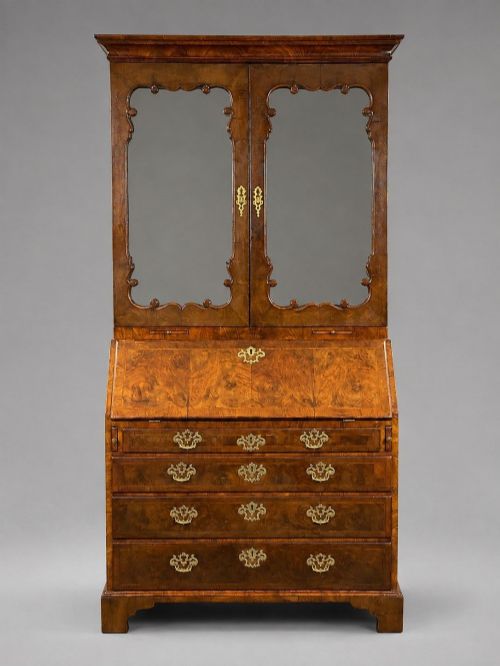
A burr walnut slant desk, also termed a bureau or bureau bookcase, combines a sloping fall front with internal compartments for writing and storage. Pieces appearing here span the seventeenth century through the Edwardian period, encompassing styles from Queen Anne and George I to Dutch Baroque and Victorian.
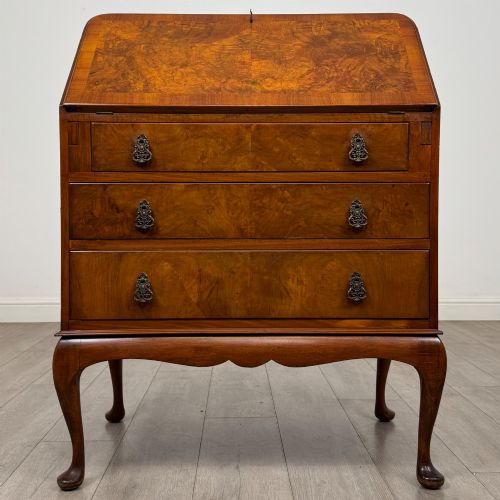
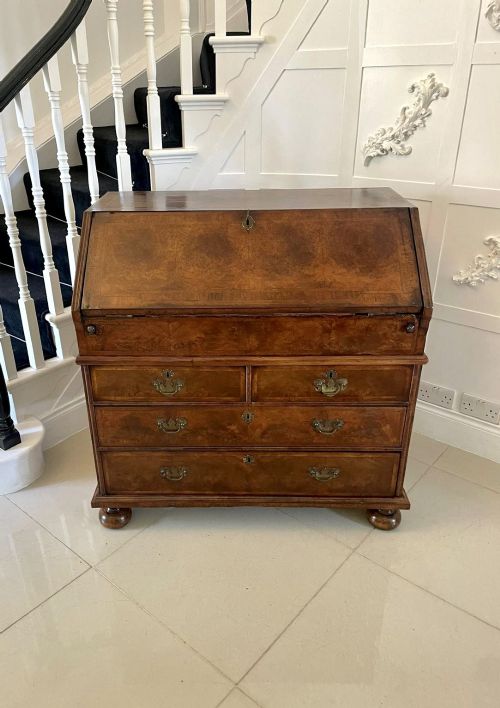
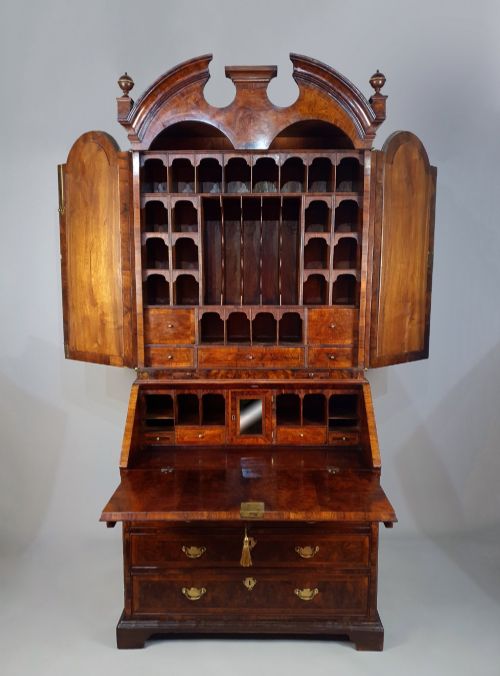
The most prevalent forms on this page include compact fall front writing desks alongside larger bureau bookcases featuring glazed upper sections. Materials typically comprise solid oak or walnut carcass frames veneered with figured burr walnut, often accented with herringbone banding or floral marquetry.
Construction and Materials
Cabinetmakers constructed these desks by applying thin veneers of burr walnut to secondary timbers such as oak and pine. The distinctive swirling grain patterns of the burr wood were sliced from tree growths and arranged symmetrically across the fall front and drawer faces.
Joinery techniques relied on dovetail construction for internal drawer boxes and solid timber framing for carcass stability. Secondary decorative elements incorporated brass drop handles, escutcheons, leather writing inserts, and occasionally mirror glass or ormolu mounts.
Burr Walnut Slant Desk Retail Price Guide 2026
Typical asking prices for burr walnut slant desk among the pieces listed under this phrase on Sellingantiques today, from the lower quarter to the upper quarter. They describe what is for sale here now, not the wider market.
Listings incorporate examples spanning from the seventeenth-century William and Mary period through the Georgian and Edwardian eras to the twentieth century.
Judging Quality and Execution
The distinction between tiers of craftsmanship lies primarily in the selection and matching of the burr walnut veneer. Superior examples display continuous, book-matched grain patterns across entire drawer fronts and fall flaps, demonstrating careful planning by the maker.
Interior architecture also signals grade, where higher-quality desks feature intricate secret compartments, shaped pigeonholes, and small drawers framed by fine secondary woods like satinwood. The crispness of marquetry inlay and the retention of original brass hardware further elevate a piece.
Gillow and Co
The Burr Walnut Slant Desk Glossary
- Burr walnut
- A wood harvested from tree growths or burls, yielding complex, swirling grain patterns highly valued for decorative veneering. It is sliced thinly and applied to carcass furniture.
- Fall front
- A hinged writing flap that drops forward to create a horizontal desk surface. It conceals fitted pigeonholes and small drawers when closed.
- Bureau bookcase
- A combination furniture form featuring a sloping desk compartment beneath glazed or panelled upper shelving doors. These dual-purpose cabinets served for both writing and library storage.
- Herringbone
- A decorative banding inlay arranged in a zig-zag pattern, frequently bordering drawer edges and panel margins on early walnut furniture. It contrasts sharply with the surrounding grain.
- Marquetry
- The art of applying pieces of veneer to a structure to form decorative patterns or pictorial scenes. Floral motifs appear commonly on Dutch and English examples.
Burr Walnut Slant Desk: Frequently Asked Questions
What is a burr walnut slant desk?
A burr walnut slant desk is a writing cabinet featuring a hinged sloping lid that opens to reveal compartments for correspondence and documents. The exterior surfaces utilise highly figured burr walnut veneer applied over a sturdy timber carcass.
These pieces range from compact standalone writing boxes on stands to large bureau bookcases with shelving sections above. They serve as functional writing spaces while displaying decorative wood grain patterns.
How do I date an old bureau?
Dating relies on examining construction methods, hardware types, and prevailing architectural styles seen across periods from the seventeenth century onward. Early pieces often exhibit herringbone banding, candle slides, and stepped interior drawers.
Later Victorian and Edwardian examples adopt different internal layouts and secondary woods, reflecting the manufacturing shifts of those eras. Comparing hardware fixings and dovetail joints helps confirm the period of origin.
Where were these desks placed?
Historically, these desks occupied private studies, withdrawing rooms, and master chambers where household accounts and personal letters were managed. Their dual function allowed owners to conceal private papers simply by closing and locking the fall front flap.
In modern interiors, they function effectively in living spaces or home offices as practical writing surfaces with substantial built-in storage. Their compact footprints suit placement against walls in various room layouts.
How do I care for walnut veneer?
Walnut veneer requires protection from direct sunlight and extreme humidity fluctuations to prevent warping or fading of the timber. Maintaining a stable indoor climate preserves the stability of the adhesive beneath the thin decorative wood layers.
Occasional dusting with a soft, dry cloth and minimal application of appropriate furniture wax keeps the polished surface conditioned. Avoid harsh chemical cleaners that can degrade antique finishes.