


Burr Walnut Dry Bar
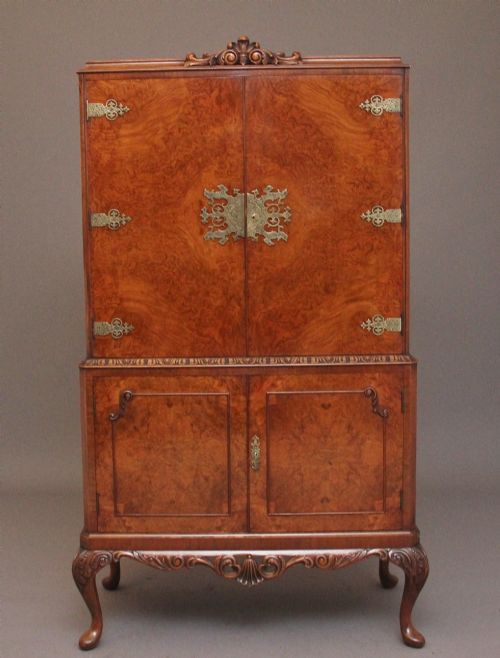
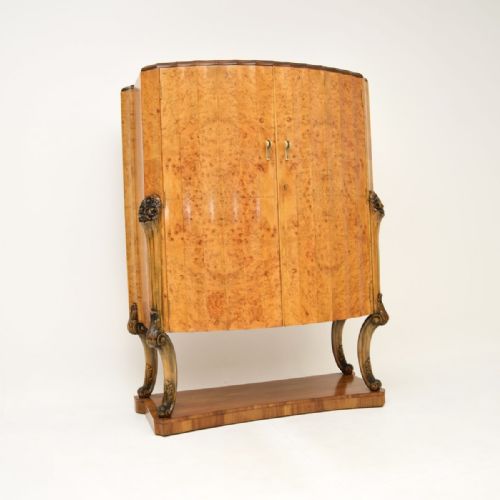
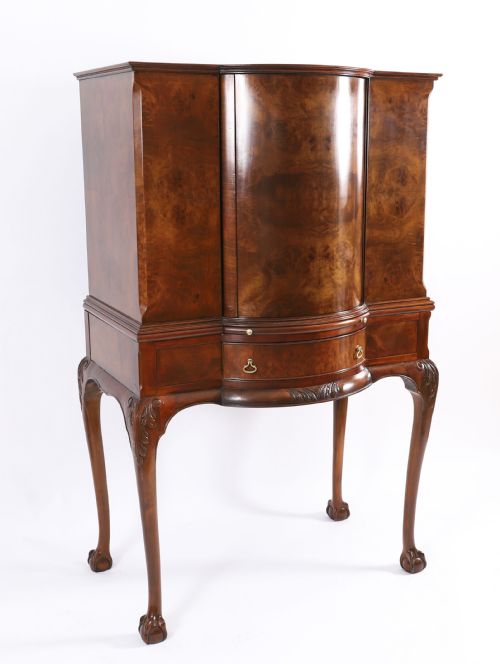
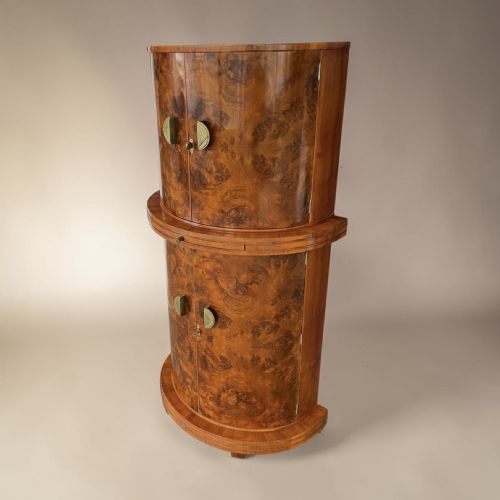
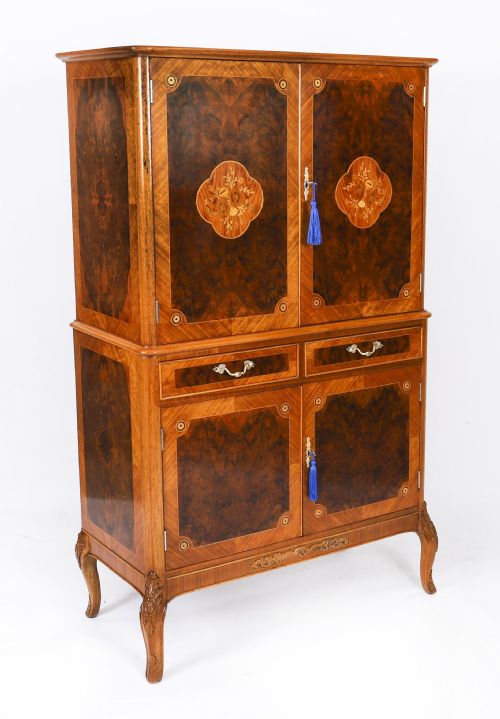
A burr walnut dry bar brings striking grain patterns and dedicated hospitality storage into a room.
Materials and construction methods
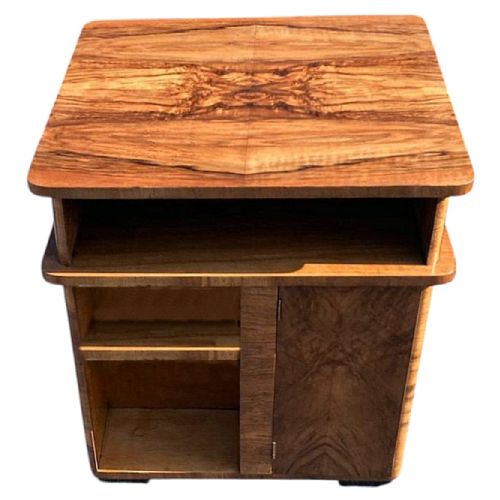
Makers applied burr walnut veneer over solid timber carcases to produce dramatic, swirling grain patterns across the main surfaces. Walnut veneer and plain walnut frames provide structural stability alongside the decorative outer layers.
Interiors often incorporate mirrored backs, glass shelving, and preparation pull-outs to handle glassware and bottles safely. Brass hardware, bakelite details, and occasional electric fittings complete the functional setup of these cabinets.
Markers of superior quality
The visual impact of the burr walnut veneer depends entirely on the symmetry and matching of the grain across doors and panels. Higher quality examples display thoughtful book-matching that turns natural timber growths into deliberate geometric patterns.
Internal joinery and the complexity of fitted compartments separate standard production from master workshops. Fitted mirrors, integrated lighting, and intact original glassware indicate a higher tier of cabinetmaking.
Burr Walnut Dry Bar Retail Price Guide 2026
Typical asking prices for burr walnut dry bar among the pieces listed under this phrase on Sellingantiques today, from the lower quarter to the upper quarter. They describe what is for sale here now, not the wider market.
Listings span the nineteen-twenties and nineteen-thirties, showcasing Art Deco design alongside Queen Anne Revival forms.
Epstein·Harry and Lou Epstein·Hille·Waring and Gillow
The Burr Walnut Dry Bar Glossary
- Burr walnut
- A figured timber harvested from walnut tree growths, prized for its swirling, mottled grain patterns. Cabinetmakers slice this wood into thin veneers for decorative surfaces.
- Veneer
- A thin layer of superior wood glued to a secondary timber base. This technique permits intricate patterns without warping solid timber.
- Art Deco
- A design style spanning the nineteen-twenties and nineteen-thirties characterised by sleek geometric lines and modern ornamentation. Many cocktail cabinets adopt this aesthetic.
- Tantalus
- A locking wooden frame holding decanters to secure contents from unauthorised access while displaying the crystal bottles. These often feature silver mounts.
- Marquetry
- The art of applying pieces of veneer to a structure to form decorative patterns. Craftsmen use contrasting woods to create pictorial designs.
Burr Walnut Dry Bar: Frequently Asked Questions
What is a dry bar cabinet?
A dry bar cabinet is a specialised piece of furniture designed to store wine, spirits, cocktail shakers, and glassware. It typically includes internal shelves, a mirrored preparation surface, and lockable doors.
These cabinets emerged strongly during the interwar period to accommodate home entertaining. They keep all necessary hospitality equipment contained within a single decorative unit.
How do I identify Art Deco style?
Art Deco pieces display clean geometric lines, stepped cornices, and symmetrical forms. The aesthetic moves away from heavy historic revivalism towards streamlined modernity.
In these cabinets, the style combines with striking burr walnut veneers to create a bold visual presence. Hardware tends to be minimalist or geometric to match the overall design.
How should I clean burr walnut veneer?
Burr walnut veneer requires gentle maintenance using a soft, dry cloth to remove dust. Moisture should be avoided to protect the thin wood layer and underlying glue.
Periodic application of appropriate furniture wax helps preserve the sheen of the timber. Direct sunlight should be avoided to prevent the walnut from fading over time.
What period do these cabinets date from?
The majority of these pieces originate from the nineteen-twenties and nineteen-thirties. This era saw a significant rise in the popularity of home cocktail cabinets.
Earlier nineteenth-century examples also exist in the form of crystal decanter tantalus sets. Revival styles like Queen Anne Revival also appear alongside modernist designs.