





Burr Walnut Dressing Glass
These burr walnut dressing glass pieces combine rich timber grain with practical mirrors, offering a touch of period elegance to any tabletop.
Burr Walnut Dressing Glass
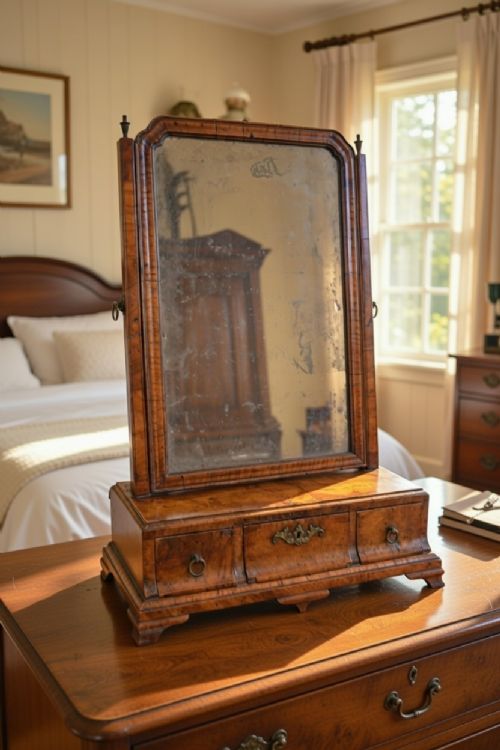
A burr walnut dressing glass is a tabletop mirror designed for grooming and vanity use, typically featuring a pivoting glass plate set within a supportive wooden frame. These pieces often incorporate small drawers or compartments in their stepped bases for storing trinkets and accessories. You will encounter various iterations spanning from the Georgian and Victorian eras through to later Queen Anne revivals.
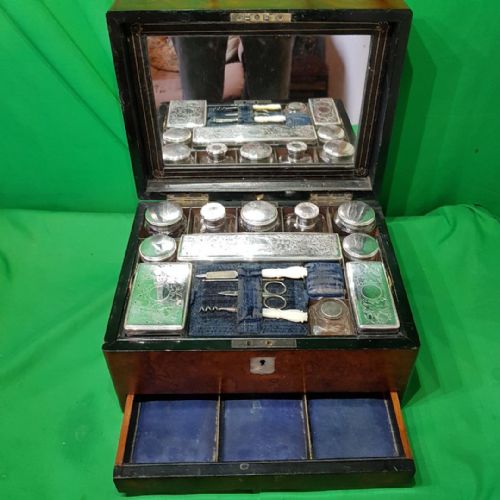
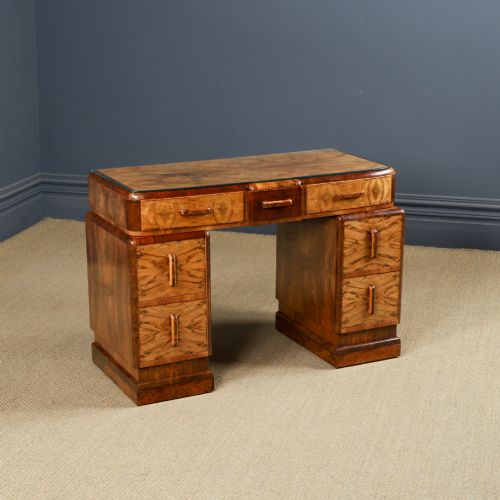
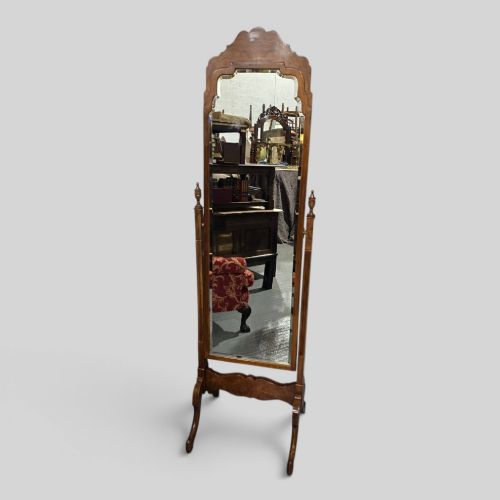
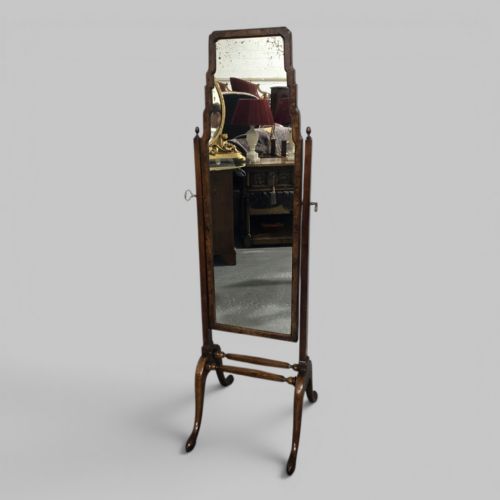
The selection here encompasses several distinct forms, including freestanding dressing table mirrors alongside full-length cheval mirrors and related vanity boxes. Materials frequently include burr walnut veneer with rich figuring, complemented by secondary timbers like plain walnut and occasional brass hardware. These items originated across multiple centuries, showing how cabinet makers adapted the form from early eighteenth-century designs onward.
How they were made
Craftsmen built these mirrors by applying highly figured burr walnut veneers over solid secondary woods, creating striking patterns across the surfaces. The swirling grain of the burr sections required careful hand-sawing and precise matching by skilled joiners during construction.
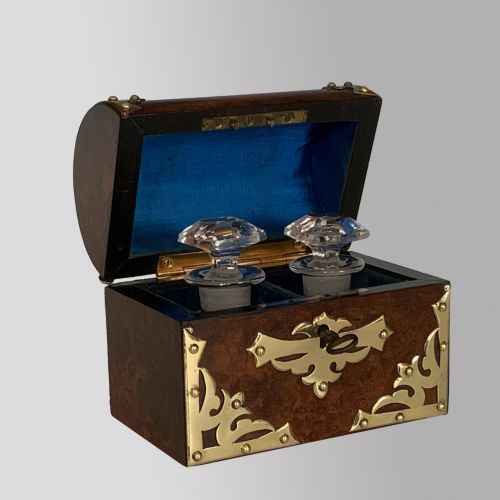
Hardware such as brass hinges, screw caps, and mounting arms were integrated to allow the mirror glass to tilt smoothly to the desired angle. Silvered glass plates were fitted into rebated frames, while velvet linings sometimes furnished the interior compartments of associated boxes and drawers.
Materials appearing across current inventory include burr walnut, plain walnut, burr elm, brass, glass, and velvet.
What varies in quality
The visual appeal depends largely on the symmetry and richness of the burr walnut veneer selected for the principal display surfaces. Superior examples display dense, highly figured grain patterns that wrap continuously around the frame or drawer fronts without jarring disruptions.
Construction methods and timber selection set apart the finer items, particularly the choice of solid secondary woods and the refinement of the edge mouldings. Original hardware, well-proportioned mirror plates, and intact internal fittings further distinguish the better pieces from simpler utilitarian versions.
The Burr Walnut Dressing Glass Glossary
- Burr walnut
- A wood harvested from the burl growth of a walnut tree, yielding complex, swirling grain patterns. It is prized for decorative veneer work on high-end furniture.
- Dressing glass
- A portable mirror set upon a small box or stand, intended for use on a dressing table. These pieces became popular in the seventeenth century and evolved through successive stylistic periods.
- Cheval mirror
- A full-length freestanding mirror supported on a vertical frame with four legs or feet. The plate swings on pivot pins, allowing the user to view their entire outfit.
- Veneer
- A thin slice of decorative wood applied over a sturdier secondary timber base. This technique allowed cabinet makers to utilise expensive grain patterns efficiently.
- Ormolu
- Gilded bronze ornamentation applied to furniture and decorative objects. It was frequently cast and chased to add metallic contrast to wooden surfaces.
Burr Walnut Dressing Glass: Frequently Asked Questions
What is a burr walnut dressing glass?
A burr walnut dressing glass is a tabletop mirror mounted on a wooden stand or small box, designed for personal grooming. The frames and bases showcase the distinctive swirling grain of burr walnut timber.
These pieces range from eighteenth-century Georgian examples to twentieth-century revivals. They often include small drawers beneath the glass for storing jewellery and accessories.
How do I date a dressing mirror?
Dating a mirror involves examining the construction techniques, timber choices, and edge profiles of the frame. Earlier Georgian and Queen Anne examples often feature hand-cut dovetails and distinct secondary woods.
Later Victorian and Edwardian pieces show different manufacturing methods and hardware styles. Comparing the mirror plate bevelling and backboards helps confirm the period of the piece.
Where should I place it?
These mirrors suit placement on top of a chest of drawers, sideboard, or dedicated dressing table. Their compact footprints make them versatile additions to bedrooms and hallways.
Positioning them near natural light sources helps maximise their reflective utility. Ensure the supporting surface is stable enough to bear the weight of the pivoting frame.
How do I care for burr walnut?
Maintain burr walnut by dusting gently with a dry, soft cloth to prevent grime accumulation. Avoid placing the timber in direct sunlight or near heat sources to prevent veneer lifting and wood drying.
Occasional light polishing with appropriate traditional furniture wax helps preserve the sheen of the finish. Avoid using harsh chemical sprays or excess moisture on the antique wood.